
Planting
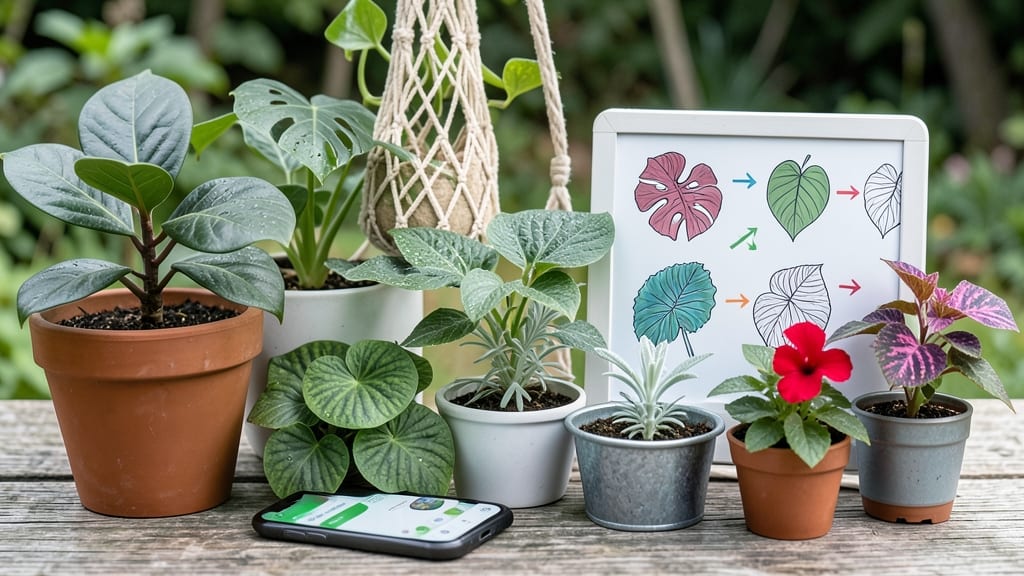
Plant identification by leaf pictures saved my garden from a disastrous overcrowding mistake last spring. 🌿 I thought that fuzzy-leafed plant was lamb's ear—turned out to be ground ivy, which took over my entire bed within months. The right ID means the difference between a thriving garden and a weed jungle.
Start by studying three key features: leaf shape (lobed, smooth, serrated), vein patterns (parallel or branching), and edge texture (toothed, smooth, or wavy). Snap clear photos in daylight, focusing on mature leaves—not just the newest growth.
Most plants reveal their true identity once you compare these details to reference guides or apps like PlantNet.
You'll quickly spot common mistakes: mistaking hosta for lily pads, or assuming all broadleaf plants need full sun. Correct ID means you'll match plants to their ideal sunlight, soil, and water needs. My garden's productivity doubled once I stopped guessing.
For tricky cases, compare side by side with similar plants—like oak vs. maple leaves—and note subtle differences in color, size, and arrangement. The more you practice, the easier it gets. Start with your backyard's mystery plants today!
The Science Behind Leaf Misidentification
Identifying plants by leaf pictures might seem straightforward, but several scientific and practical factors can lead to confusion. Understanding these causes helps gardeners avoid mistakes and improve accuracy. Here’s why leaf-based plant identification sometimes fails—and how to work around it.
Not all leaves of the same species look identical. Even the same plant can produce leaves with subtle differences due to:
- Genetic diversity: Some plants exhibit intraspecific variation, meaning individual plants within a species may have slightly different leaf shapes, sizes, or textures. For example, a single Quercus robur (English oak) tree can have leaves that vary in lobing depth or serration.
- Age-related changes: Young seedlings often have simpler, smoother leaves that develop into more complex forms as the plant matures. A Ficus elastica (rubber plant) might start with smooth-edged leaves that later grow lobed.
- Environmental stress: Drought, poor soil, or extreme temperatures can cause leaves to curl, shrink, or develop irregular edges. A Hosta leaf under water stress might look entirely different from one grown in ideal conditions.
Actionable tip: 🔍 Compare multiple leaves from different parts of the plant (top, middle, bottom) and at various growth stages. Use high-resolution images showing the full plant, not just isolated leaves.
Leaves aren’t static—they change with the seasons and environmental conditions. These factors can drastically alter their appearance:
- Seasonal growth: Spring leaves often emerge smaller and less distinct, while summer leaves reach their full size and complexity. A Magnolia grandiflora’s leaves might look broad and glossy in summer but appear narrower and less pronounced in spring.
- Light exposure: Plants grown in shade develop larger, thinner leaves to maximize light absorption, while those in full sun produce smaller, thicker leaves. A Heuchera (coral bell) in shade might have pale, delicate foliage compared to its sun-exposed counterpart.
- Water availability: Overwatered plants can develop yellowing or drooping leaves, while underwatered plants may have crispy, curled edges. A Sansevieria (snake plant) under stress might look entirely unrecognizable compared to its healthy, upright form.
Actionable tip: 📅 Note the season and growing conditions when taking reference photos. Include close-ups of leaf undersides, stems, and growth patterns—these details often remain consistent even when leaves change.
Nature loves a good disguise. Many plant species evolve similar leaf shapes due to convergent evolution, where unrelated plants adapt to similar environments independently. This can make identification tricky:
- False positives: Toxicodendron radicans (poison ivy) and Rhus typhina (staghorn sumac) both have compound leaves with three leaflets, but their arrangement, bark, and fruit differ. A quick glance might lead to confusion.
- Hybrids and cultivars: Gardeners often grow hybrid plants (e.g., Hosta × hybrids) or cultivars bred for specific leaf traits. A Coleus cultivar might have leaves that look nothing like its wild relatives.
- Juvenile vs. mature forms: Some plants, like Aralia elata (Japanese angelica tree), start with simple leaves that later develop into compound forms. Misidentifying a young plant as a different species is common.
Actionable tip: 🌐 Cross-reference leaf images with other plant features: flower structure, bark texture, fruit, or root systems. Use databases like iNaturalist or Pl@ntNet, which allow users to upload multiple plant parts for verification.
Even the best-intentioned leaf photo can be misleading if lighting or camera settings distort reality:
- Shadows and glare: Overcast days or direct sunlight can create unnatural contrasts, making veins appear thicker or colors look washed out. A Calathea’s intricate pattern might lose definition in harsh light.
- Low resolution or blurriness: Zooming in too close or using a shaky hand can obscure key details like hairiness, glandular dots, or fine serrations. A Lamium leaf’s toothed edges might appear smooth in a blurry photo.
- Color inaccuracies: Camera sensors and phone cameras often misrepresent true leaf colors. A Purple Heart (Tradescantia pallida) might appear purple in person but greenish-blue in a photo due to lighting.
Actionable tip: 📸 Take photos under natural, diffused light (e.g., on a cloudy day or in shade). Include a color reference object (like a white card or colored marker) to calibrate true colors. For critical details, use a macro lens or a phone with optical zoom.
By recognizing these common pitfalls, gardeners can refine their leaf-matching skills and avoid costly misidentifications. The key is to treat leaf pictures as a starting point—not a definitive answer.
Quick fixes for leaf matching mistakes
Identifying plants by leaf pictures can be tricky, but most mistakes boil down to a few common issues—like poor lighting, vague descriptions, or relying too much on one app. Here’s how to troubleshoot and prevent them with practical, step-by-step solutions tailored to each problem.
Cause: Blurry, low-light, or distorted images make leaves unrecognizable.
Fix It:
- 📸 Take Better Photos
- Use natural light (avoid flash or shadows).
- Hold the leaf flat against a plain background (white paper or a white wall works best).
- Get close-ups of veins, edges, and texture—these are key identifiers.
- Snap multiple angles: top, bottom, and side views.
- 🖼️ Edit for Clarity (Quick Tricks)
- Crop out unnecessary background clutter.
- Adjust brightness/contrast in your phone’s editing app (try Snapseed or Lightroom Mobile).
- If the leaf is wrinkled, gently press it flat before photographing.
Prevent It: ✅ Use a macro lens (or your phone’s macro mode) for ultra-clear details. ✅ Shoot in daylight—avoid overcast or artificial lighting. ✅ Label your photos with the plant’s location (e.g., "Sunny Patio – Leaf Sample 1").
Cause: Over-reliance on one app, or the plant isn’t in its database.
Fix It:
- 🔄 Try Multiple Apps
- PlantNet (great for weeds/unknowns)
- PictureThis (user-friendly, good for common plants)
- iNaturalist (crowdsourced, best for rare species)
- Google Lens (quick but sometimes inaccurate—double-check!)
- 📝 Narrow Down with Descriptions
- If the app fails, describe the leaf’s shape, edges, and arrangement (e.g., "lobed like a maple, fuzzy texture").
- Note leaf attachment (alternate vs. opposite) and stem hairiness.
Prevent It: ✅ Bookmark a few apps for cross-verification. ✅ Learn basic botany terms (e.g., "palmate" vs. "pinnate") to describe leaves accurately. ✅ Check local plant databases (e.g., your state’s agricultural extension site).
Cause: Some leaves (like poison ivy vs. Virginia creeper) or tree species (e.g., ash vs. boxelder) have subtle differences.
Fix It:
- 🔍 Zoom in on Key Features
- Leaf edges: Serrated (like a saw) vs. lobed (deep cuts).
- Venation: Parallel (monocots like grasses) vs. netted (dicots like roses).
- Underside: Hairy, smooth, or glandular spots?
- 🌳 Compare with a Field Guide
- Use physical guides (e.g., National Audubon Society Field Guide) for side-by-side comparisons.
- Look for flower/fruit clues (if present)—some apps ignore these but they’re critical!
Prevent It: ✅ Take a "leaf portfolio"—photograph the whole plant, not just the leaf. ✅ Join gardening forums (Reddit’s r/whatsthisplant) for expert opinions. ✅ Note the plant’s habitat (shady vs. sunny, moist vs. dry soil)—this narrows options.
Cause: Bugs, slow updates, or missing regional plants in the app’s library.
Fix It:
- 🔄 Update the App & Clear Cache
- Go to Settings > Storage > Clear Cache (for Android) or reset the app (iOS).
- Check for app updates in your store.
- 🌍 Use Regional-Specific Tools
- Search for "[Your State/Country] plant ID"—some apps (like Seek by iNaturalist) focus on local flora.
Prevent It: ✅ Download offline databases (e.g., PlantSnap has a downloadable pack). ✅ Report errors to the app developer to improve future accuracy.
If all else fails, treat plant ID like solving a mystery:
- Observe (shape, color, texture).
- Measure (length/width ratio—e.g., "3x longer than wide").
- Compare (use a Venn diagram to match traits across apps).
- Ask Experts (post in local gardening groups or visit a botanical garden).
Remember: No single tool is perfect—combine photos, descriptions, and real-world clues for the most accurate ID. Happy identifying! 🌱🔍
Frequently asked questions
What are the most important leaf features to photograph for accurate identification?
Focus on leaf shape (lobed, smooth, serrated), vein pattern (parallel or branching), and edge texture (toothed, smooth, or wavy). Also capture the leaf underside (hairy, smooth, or glandular), stem attachment (alternate vs. opposite), and size ratio (e.g., "3x longer than wide"). These details eliminate 90% of confusion.
Why does the same plant look different in my photo than in the app's examples?
Lighting, camera settings, and seasonal growth cause variations. For example, a Hosta leaf might appear paler in shade or curl under stress. Always take photos in natural light and include a color reference card (like a white business card) to calibrate true colors.
What if my plant isn't in any identification app's database?
Try iNaturalist or Pl@ntNet for rare species, or check regional databases like your state's agricultural extension site. For hybrids or cultivars, describe traits like leaf hairiness or flower structure—these often narrow it down even if the exact match isn't listed.
Can I identify a plant just from a single leaf?
It's risky! Some plants (like poison ivy vs. Virginia creeper) have nearly identical leaves but differ in leaflet arrangement or bark texture. For accuracy, photograph the whole plant, including stems, flowers, and fruit (if present), and compare with field guides.
How do I handle ambiguous cases where two plants look very similar?
Use a Venn diagram to compare traits across apps, then check habitat clues (e.g., "grows in wet soil" vs. "drought-tolerant"). For tricky pairs like ash vs. boxelder, examine the leaf base shape or seed pod structure—these often reveal the difference.