
Planting
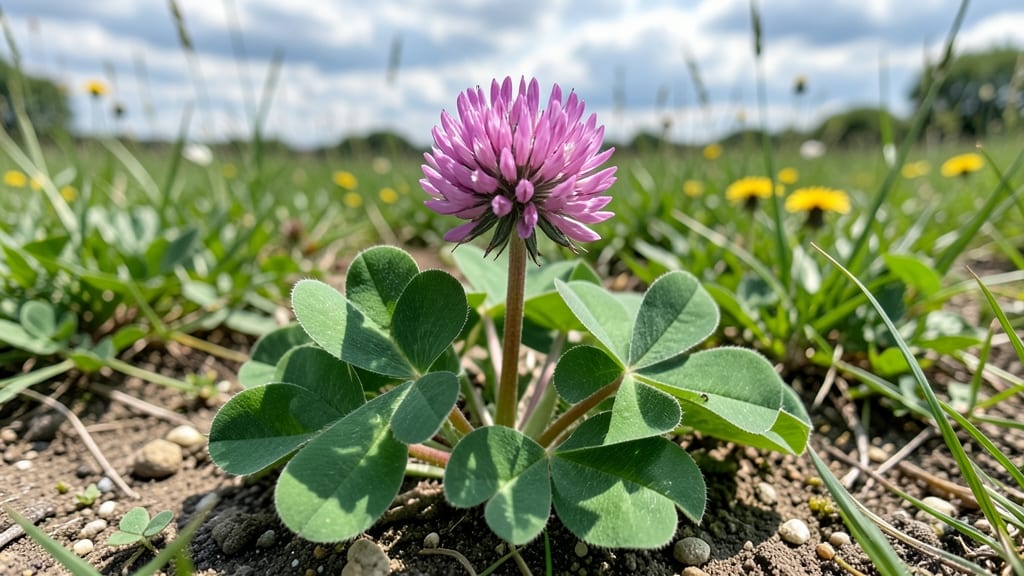
The identification of three-leaf plants can be your garden’s best friend—or its biggest headache. 🌿 The moment I spotted that familiar trio on a weed, I knew I needed a foolproof way to tell friend from foe.
Parsley, clover, and poison ivy all share this leaf pattern, but their fates couldn’t be more different. Start by examining the leaf edges: smooth or serrated? The stems? Hairy or smooth? Poison ivy’s leaves glow shiny and grow in clusters, while parsley’s are fern-like with delicate lobes.
Clover’s trifoliate leaves have rounded edges and grow low to the ground—perfect for lawns but not your vegetable patch. A magnifying glass helps spot tiny details that apps might miss.
Once you master these visual cues, you’ll spot them instantly—whether it’s the parsley you planted or the ivy creeping into your garden bed. I’ve used this method to clear my yard of unwanted guests without a single rash.
The key is paying attention to those three little leaves and what they’re really telling you. For tricky cases, snap a photo and compare it side by side with trusted resources. Apps like PlantNet or iNaturalist can back up your guesses, but your eyes are the first line of defense.
Now go put those leaf secrets to work!
📚 In This Guide
- What you need
- Instructions
- Tips and common mistakes
- Wrapping up and next steps
What you need
- ● Magnifying glass (3x–10x) – For inspecting fine details like leaf veins, edges, and textures.
- ● Field guide or plant ID app (e.g., iNaturalist, PictureThis, or LeafSnap) – Digital or printed references for cross-checking.
- ● Notebook & pencil – To sketch leaf shapes, note measurements (length/width), and jot down observations.
- ● Ruler or measuring tape – Record leaf dimensions (e.g., length in inches/cm).
- ● Camera (smartphone or DSLR) – Capture high-res photos of the whole plant, leaves, and stem in natural light.
- ○ Pruning shears or small scissors – Optional but helpful for safely collecting a small leaf sample (if permitted).
- ● Gloves (nitrile or gardening) – Protect your hands from thorns, sap, or irritants (e.g., poison ivy!).
- ● Leaf press – Preserves samples for long-term study (or use heavy books!).
- ● UV flashlight – Reveals hidden patterns (e.g., poison ivy’s glowing veins).
- ● Field journal with a magnifying loupe attachment – Combines sketching and inspection in one.
- ● Local plant database or Facebook groups – Crowdsourced help from fellow gardeners!
How to identify plants by their three-leaf patterns
Here's how I break down leaf shapes to recognize plants instantly—no botany degree required.
🌿 Step 1: Observe the Leaf Arrangement First
Start by checking how the three leaves connect at the stem. If all three leaves meet at a single point where the stem attaches, that's called a palmate arrangement. This is your first clue—many poisonous plants like poison ivy use this pattern. If the leaves alternate along the stem in threes, it's a whorled arrangement, common in plants like aloe vera.
Gently run your fingers along the stem to feel where the leaves attach. Palmate leaves will feel like a hand with fingers spreading out, while whorled leaves will have three distinct nodes along the stem. I always check this first because it narrows down possibilities dramatically. If the leaves grow in pairs or singles, you're dealing with a different pattern entirely.
🌱 Step 2: Examine Leaf Shape and Edges
Next, focus on the leaf shape. Are the edges smooth, lobed, or serrated? Three-lobed leaves with pointed tips often belong to plants like clover or poison ivy. Smooth-edged leaves with rounded tips might be part of the mint family or a type of basil. I like to compare the leaves to common objects—like a maple leaf or a heart shape—to visualize the pattern.
Pay attention to the leaf's texture too. Is it fuzzy, waxy, or smooth? Poison ivy leaves, for example, have a slightly rough texture, while many houseplants like pothos have smooth, shiny surfaces. Hold the leaf up to light to see if it's translucent or thick—this can help distinguish between similar-looking plants.
🌿 Step 3: Check the Leaf Venation
Look at the veins running through the leaves. If the veins spread out from a central point like fingers on a hand, that's palmate venation, common in plants like castor bean or some types of philodendron. If the veins branch out from a central vein running the length of the leaf, that's pinnate venation, which you'll find in plants like aloe vera or certain types of ivy.
Trace the veins with your finger to visualize the pattern. Palmate venation often indicates a broader leaf shape, while pinnate venation usually means a longer, narrower leaf. This step is key because venation patterns are unique to certain plant families and can help you rule out others quickly.
✂️ Step 4: Compare to Known Patterns
Now, compare what you've observed to known leaf patterns. If you have a three-lobed leaf with smooth edges and palmate venation, it’s likely a clover or a similar plant. If the leaf is elongated with serrated edges and pinnate venation, it might be a type of ivy or a member of the smartweed family. I keep a small notebook with sketches of leaves I encounter to build my reference library over time.
Use a plant identification app or a field guide to cross-reference your observations. Apps like PlantNet or iNaturalist let you upload photos and get instant matches. If you're still unsure, take note of the plant's overall structure—stem thickness, flower shape, and growth habit can provide additional clues.
💧 Step 5: Note the Plant's Habitat and Growth Habit
Where is the plant growing? Is it a houseplant, a garden annual, or a wild weed? Three-leaf patterns in houseplants like pothos or philodendron are often heart-shaped and grow in a trailing habit. Wild plants like poison ivy tend to grow in clusters along fences or forest edges. I always jot down the location because habitat clues can confirm or refute your earlier observations.
Observe how the plant grows—does it climb, spread, or stay compact? Poison ivy, for example, climbs with aerial rootlets, while clover stays low to the ground. These growth habits can help you distinguish between plants that might look similar at first glance. If you're unsure, take a photo from multiple angles and compare it to trusted sources later.
Tips & tricks for mastering three-leaf plant identification
These practical insights will help you become a leaf-pattern pro in no time—once you know what to watch for.
Visualize the Patterns: I always sketch a rough outline of the leaf arrangement on a small notepad. Drawing the palmate arrangement as a hand with three fingers or the whorled pattern as three leaves stacked vertically helps solidify the memory. This visual trick makes it easier to recall patterns when you're out in the field. For venation, imagine a handprint for palmate or a feather for pinnate—it sticks better than memorizing terms.
Texture is Your Secret Weapon: The texture clue is often overlooked but can be game-changing. Run your fingers along the leaf surface—smooth leaves like those on pothos often belong to non-toxic houseplants, while rough or fuzzy textures (like poison ivy) are red flags. I keep a small magnifying glass in my pocket for close-up texture checks on tricky leaves. This tactile approach builds muscle memory faster than just looking.
Habitat Cross-Checking: Where the plant grows tells you half the story. Houseplants with three leaves often have heart-shaped leaves and grow upward, while wild plants like poison ivy cling to trees or spread along the ground. I've found that noting the plant's height and growth direction in my field journal helps me eliminate half the possibilities immediately. For example, a three-leaf plant climbing a fence is far more likely to be poison ivy than clover.
App Backup Strategy: While I love using apps like PlantNet, I always take three photos: one of the leaves from above, one of the leaf arrangement, and one of the plant's overall structure. This triple-angle approach gives the app's algorithm more context to work with. I've had cases where a single photo led to multiple possibilities, but the combination of all three angles narrowed it down instantly.
Pro Tips for Three Leaf Plant Identification
- These practical insights will help you become a leaf-pattern pro in no time—once you know what to watch for.
- Visualize the Patterns: I always sketch a rough outline of the leaf arrangement on a small notepad.
- Texture is Your Secret Weapon: The texture clue is often overlooked but can be game-changing.
Frequently asked questions
Got questions about identifying plants by their three-leaf patterns? You’re not alone! Here are some of the most common queries—and their answers—to help you master the art of leaf shape recognition.
What are the most common plants with three leaves?
Classic three-leaf plants include shamrock (Trifolium), clover, and poison ivy. Other notable examples are three-leaf yam (Dioscorea) and Virginia creeper (though it has five leaves, it’s often confused with three-leaf plants). Always verify with a second identifier—like leaf edges or stems—to avoid mistakes!
How can I tell if a plant’s leaves are truly three-leafed?
Look for a central stem (petiole) with three distinct leaflets radiating outward. Avoid plants with compound leaves (multiple leaflets on one stem) or simple leaves (single, undivided blades). A quick trick: Gently pinch the stem—if three leaflets detach together, it’s likely a true three-leaf plant.
Is poison ivy a three-leaf plant? How do I avoid confusion?
Yes! Poison ivy has three glossy, pointed leaflets with a reddish stem and white berries. To differentiate it from harmless lookalikes (like boxelder or Virginia creeper), remember the rhyme: “Leaves of three, let it be!” Wear gloves when handling unfamiliar plants, and wash your skin afterward.
Can I grow a three-leaf plant from cuttings or seeds?
It depends! Shamrocks (clover) and three-leaf yam grow well from seeds or cuttings, while others (like poison ivy) spread aggressively—best left undisturbed. For cuttings, use a sterilized knife, dip in rooting hormone, and plant in moist soil. Seeds may take weeks to sprout, so patience is key!
Are there edible three-leaf plants I should know about?
Three-leaf yam (Dioscorea) and wild garlic (Allium) are edible, but never eat a plant unless 100% identified. Stick to cultivated varieties like microgreens (e.g., pea shoots) or clover sprouts for safe, nutritious options. When in doubt, consult a local foraging guide or app.
What should I do if I can’t identify a three-leaf plant?
Start with a plant ID app (like PlantNet or iNaturalist) or snap a photo for a local nursery/extension office. Note details like leaf texture, growth pattern, and location (shady vs. sunny). If it’s in your yard, observe it over time—some plants change with seasons!
Wrapping up and next steps
Mastering three-leaf plant identification unlocks a world of greenery—whether you're a gardening newbie or a seasoned plant parent! 🌿 By focusing on leaf shape, texture, and arrangement, you’ve got the power to spot plants like a pro.
Now that you’re armed with these secrets, why not put your skills to the test?
Your next step? Grab a notebook (or your phone!) and snap photos of local plants—then match them to your newfound knowledge. Or, if you’re feeling bold, visit a nursery and challenge yourself to ID 5 plants on sight. Happy exploring—your green thumb is growing stronger every day! 🌱