
Pruning
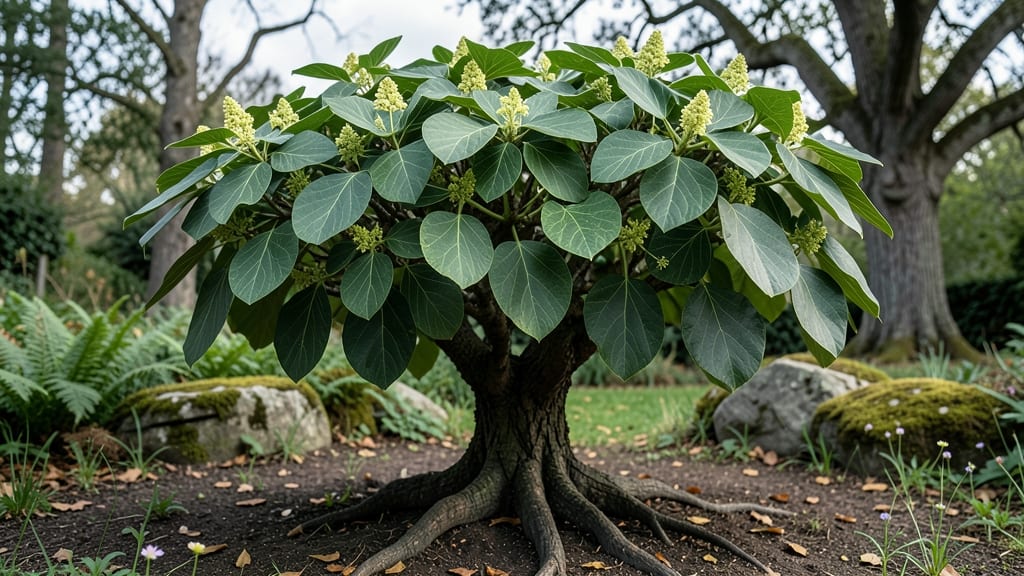
That five-leaf tree identification might be poison ivy—or it could be a stunning native vine you’d love to keep. 🌿 The key to telling them apart lies in the leaf arrangement, stem texture, and where the plant grows.
I’ve spent years untangling these lookalikes, and I’ll show you exactly how to spot the differences in minutes.
Poison ivy’s leaves grow in groups of three (sometimes five), with smooth edges and a glossy finish. But that’s not always the case—boxelder maple (Acer negundo) and Virginia creeper (Parthenocissus quinquefolia) also sport five leaves, though their stems and growth habits reveal their true identities.
Virginia creeper clings to walls like a purple-fingered climber, while boxelder maples have compound leaves with serrated edges.
Once you know what you’re dealing with, you can decide whether to remove it, embrace it, or replace it. Native Virginia creeper adds fall color, while poison ivy needs immediate care to protect your skin. I’ll walk you through the safest ways to handle each—no guesswork, just clear steps.
This works for backyard trees, urban landscapes, or even that mysterious vine choking your fence. By the end, you’ll recognize these plants instantly and know exactly what to do next—whether that’s pruning, planting alternatives, or admiring a new favorite shade tree.
Behind The Leaf Patterns
Understanding why trees develop five-leaf clusters—or any specific leaf arrangement—boils down to a mix of genetics, growth mechanics, and environmental cues. Here’s a breakdown of the key factors shaping these distinctive foliage patterns:
Some trees, like the **horse chestnut (Aesculus hippocastanum) or sweet gum (Liquidambar styraciflua), are hardwired to produce palmate leaves—where multiple leaflets radiate from a single central point.
This isn’t random; it’s an evolutionary adaptation for: - Efficient sunlight capture: Five leaflets maximize surface area without overcrowding branches. - Structural stability: The central stem (rachis) distributes weight evenly, reducing breakage in wind or snow. - Species recognition: Unique leaf shapes act as a built-in ID tag for pollinators and seed dispersers.
Actionable tip: 🔍 If you spot a tree with five leaflets all connected at one base, it’s a strong clue it’s genetically programmed that way—no environmental trickery involved.
Leaf arrangement isn’t just about genes—plant hormones like auxin and cytokinin orchestrate the show.
Here’s how: - Auxin dominance: Produced at the tip of growing shoots, auxin suppresses side leaf development, forcing leaflets to cluster tightly around the central stem. - Cytokinin balance: This hormone, often produced in root tips, promotes cell division.
In five-leaf species, it ensures equal spacing between leaflets, preventing uneven growth.
What goes wrong? ⚠️ Hormonal imbalances—from over-fertilization (especially with nitrogen) or root damage—can disrupt this pattern, leading to lopsided or malformed leaves. Think of it like a conductor missing cues: the "music" (leaf shape) gets messy.
While genetics and hormones set the stage, environmental factors can tweak the final act.
Common culprits: | Stress Factor | Effect on Leaf Shape | How to Fix It | |-------------------------|---------------------------------------------------|--------------------------------------------| | Drought | Leaflets may curl or shrink, reducing to 3–4. | Deep watering + mulch to retain moisture. | | Poor Soil Nutrition | Yellowing or stunted growth (e.g., iron deficiency). | Test soil; amend with chelated iron or compost. | | Wind or Physical Damage | Torn or uneven leaflets from abrasion. | Prune to reduce exposure; stake young trees. | | Pests (e.g., leaf miners) | Irregular holes or discoloration. | Apply neem oil or introduce predator insects. |
Pro tip: 🌡️ Temperature swings (e.g., late frost) can stunt leaf development entirely. If your five-leaf tree suddenly sports three-leaf clusters, check for springtime cold snaps.
Occasionally, a tree defies its genetic script, producing leaves with more or fewer than five leaflets.
This happens due to: - Chimeric mutations: A rare genetic glitch where only part of the plant expresses the "normal" trait (e.g., a branch with six leaflets on a horse chestnut). - Viral infections: Some viruses (like apple mosaic virus) can alter leaf morphology unpredictably.
What to do? 🚨 If your tree’s leaves are consistently abnormal, consult a plant pathologist—it might need treatment, not just pruning.
Poor pruning can mimic (or mask) natural five-leaf patterns. For example:
- Over-pruning young trees can stunt hormone production, leading to smaller, fewer leaflets.
- Topping (cutting back to a stub) forces sprouts with chaotic growth, often reducing leaflet count.
Best practice: ✂️ Prune in late winter (before new growth) and never remove more than 25% of foliage at once. Aim to open the canopy** for airflow—this preserves the tree’s natural leaf architecture.
Quick Fixes for Five-Leaf Tree Confusion
If you’ve ever stared at a tree with five leaflets and wondered, "Is this a maple? A buckeye? Or something else entirely?"—you’re not alone. Misidentifying five-leafed trees can lead to incorrect pruning, pest control, or even planting the wrong species in your yard. The good news? With a few simple steps, you can turn confusion into confidence. Below, we’ll break down the most common causes of misidentification and provide clear, actionable solutions to nail down your tree’s identity like a pro.
Five-leafed trees often share similar shapes, but subtle differences can reveal their true identity. Here’s how to tell them apart:
🍃 1. Leaf Arrangement: Opposite or Alternate?
- Cause: Many five-leafed trees (like maples and horse chestnuts) have opposite leaves, while others (such as ash or hickory) have alternate leaves.
- Fix:
- Look at where the leaves attach to the stem.
If they grow directly across from each other (like a pair of gloves), it’s opposite. If they spiral up the stem, it’s alternate. - Pro Tip: 💡 Snap a photo of the leaf arrangement—it’s an easy way to double-check later!
🌿 2.
Leaflet Shape: Lobed, Toothed, or Smooth? - Cause: Some five-leafed trees have deeply lobed leaves (like sugar maples), while others have serrated or smooth edges (like boxelder or ash). - Fix: - Maples (Acer spp.): Look for palmately lobed leaves with pointed tips (e.g., sugar maple has 5 lobes with U-shaped notches). - Horse Chestnut (Aesculus): Leaves are large, compound, and often have a glossy finish with 5-7 leaflets. - Boxelder (Acer negundo): Smaller leaves with 3-5 leaflets and a rough, uneven edge. -
Tree Type
Leaflet Shape
Key Feature
Sugar Maple
5 lobed
U-shaped notches, bright green
Boxelder
3-5 leaflets
Serrated edges, smaller size
Horse Chestnut
5-7 leaflets
Glossy, broad leaflets
🌳 3.
Bark and Branch Clues - Cause: Ignoring bark or branch patterns can lead to misidentification, especially in young trees. - Fix: - Maples: Bark is often shaggy or furrowed as they age (e.g., silver maple has greenish bark). - Horse Chestnut: Young branches may have thorns or a smooth, grayish bark. - Ash Trees: Compound leaves with opposite branches and diamond-shaped bark ridges. - Pro Tip: 🌡️ Run your hand along the bark—rough or smooth textures can be a game-changer!
🍂 4.
Seasonal Changes: Fall Foliage and Fruit - Cause: Some trees only reveal their true identity in autumn or when they produce seeds/fruit. - Fix: - Maples: Vibrant fall colors (red, orange, or yellow) and samaras (helicopter seeds). - Buckeyes: Spiky seed pods (buckeyes) that resemble small conkers. - Boxelder: Small, maple-like seeds that cluster together. - Pro Tip: ✨ If you’re unsure, wait until fall—color and seed patterns are dead giveaways!
Don’t rely on memory alone!
Use these tools to cross-reference your findings: - Plant ID Apps: Download PictureThis or LeafSnap to upload photos and get instant matches. - Field Guides: Carry a pocket-sized tree guide (like National Audubon Society Field Guide to Trees) for quick checks. - Local Arboretum Resources: Many cities have free tree ID workshops or online databases.
Once you’ve mastered the basics, keep these tips in mind to stay ahead: - Label Your Trees: 🎯 Use stakes or paint to mark newly planted trees with their species name. - Take Seasonal Notes: Jot down changes in leaf color, bark, or fruit production throughout the year. - Join a Gardening Group: 🌱 Local Facebook groups or gardening clubs often host tree ID challenges—great for learning! - Prune with Purpose: If you’re unsure, consult a local arborist before cutting.
Some trees (like boxelder) are more resilient than others.
With these fixes, you’ll go from guessing to knowing in no time. Next time you spot a five-leafed tree, you’ll be the one pointing it out—and nailing the ID every time. Happy identifying! 🌳🔍
Frequently asked questions about five-leaf trees
Why do some trees have exactly five leaflets while others vary?
Most five-leaf trees (like boxelder maples) have it genetically hardwired for efficiency in sunlight capture and structural stability. However, some species (such as poison ivy) can show 3-5 leaflets due to environmental stress or growth phase. Always check the leaf arrangement on the stem - true five-leaf trees usually have all leaflets radiating from one central point.
Is Virginia creeper the same as poison ivy?
No! Virginia creeper has five leaflets with smooth edges and grows as a climbing vine with purple berries, while poison ivy has three leaflets (sometimes five) with jagged edges and no berries. The key difference: Virginia creeper is harmless and adds beautiful fall color, while poison ivy causes skin irritation. Always examine the leaf arrangement and growth habit.
Can I safely prune a five-leaf tree I can't identify?
Only prune if you're 100% certain of the species. For unknown trees, consult a local arborist or use a plant ID app first. Some five-leaf trees (like boxelder) are more resilient, while others may have specific pruning needs. Never remove more than 25% of foliage at once, and avoid cutting during active growth seasons.
What's the best time of year to identify five-leaf trees?
Spring and fall are ideal! In spring, new leaves show their full structure, while fall reveals distinctive seed patterns and bark changes. Summer can be tricky as some trees (like boxelder) may look similar to poison ivy. If you're unsure, take photos of leaves, bark, and any fruit/seeds to compare later.
How do I know if my five-leaf tree is native or invasive?
Check your region's native plant database first. In the U.S., boxelder maples are native but aggressive, while Virginia creeper is native and beneficial. Invasive lookalikes include Celastrus orbiculatus (Asian bittersweet), which has five leaflets but grows as a woody vine. Always verify with local extension offices before planting or removing.