
Pruning
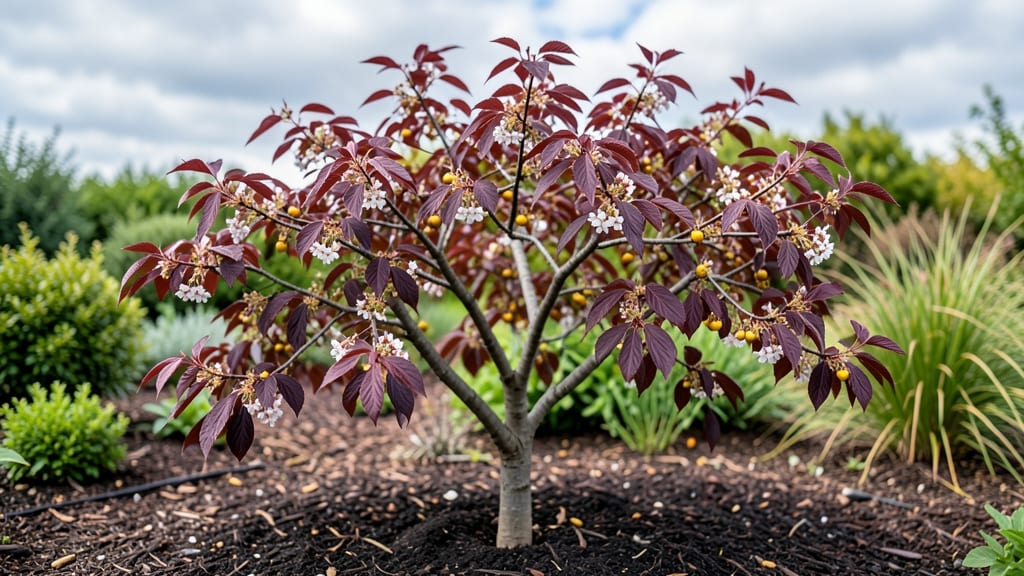
The purple leaf sand cherry tree delivers four-season color with almost no work from you. 🌿 I planted mine last spring, and it’s already outshining every other shrub in my yard—no pruning required beyond the occasional cleanup.
The secret lies in its natural growth habit and stunning foliage that shifts from purple to deep red as temperatures change.
This hardy tree thrives in zones 4-8, making it perfect for gardeners who want drama without fuss. It handles both sun and partial shade, though the most vibrant foliage appears when planted in full sun.
Well-draining soil is key—soggy roots will turn your showstopper into a sad, leggy mess. Water deeply once established, and you’ll see those rich purple leaves emerge within weeks.
By late summer, clusters of small white flowers appear, followed by tiny red cherries that birds adore. The foliage stays striking through winter, providing structure and color when most gardens go dormant.
It’s the kind of plant that makes neighbors ask, “What is that?”—and your answer will be, “The easiest tree I’ve ever grown.”
For maximum impact, space it 10-15 feet apart from other plants. Mulch around the base to retain moisture, and avoid heavy pruning—just shape lightly in early spring if needed. This tree rewards patience with zero effort, making it ideal for busy gardeners who still want a standout focal point.
📚 In This Guide
- What you need
- Instructions
- Tips and common mistakes
- Wrapping up and next steps
What you need
- ● Purple leaf sand cherry tree (Prunus x cistena) – Choose a healthy 1-3 gallon container-grown sapling (or bare-root if planting in early spring).
- ● High-quality planting soil – A mix of native soil, compost, and perlite (50/30/20 ratio) for drainage.
- ● Organic mulch – 2-3 inches of wood chips or pine straw to retain moisture and suppress weeds.
- ● Slow-release fertilizer – A balanced 10-10-10 or organic tree fertilizer (follow package rates).
- ● Shovel or spade – For digging the planting hole (depth/width: 2x wider than the root ball, same depth).
- ● Pruning shears or loppers – Bypass pruners (for small branches) or loppers (for thicker stems, up to 1.5 inches).
- ● Hand saw – For larger branches (2+ inches in diameter). Sterilize blades with rubbing alcohol between cuts!
- ● Garden hose or watering can – For deep watering (1-2 gallons per week in dry spells).
- ● Gloves & safety goggles – Protect your hands and eyes from thorns and debris.
- ● Tree stake & ties – If planting in windy areas (use soft fabric ties to avoid girdling).
- ● Tree guard or wire mesh – To deter deer/browsing animals (especially in early growth stages).
- ● Pruning sealant – For large cuts (though not always necessary for sand cherries).
- ● Soil pH test kit – Ideal pH: 6.0–7.0 (amend with lime or sulfur if needed).
How to plant and care for a purple leaf sand cherry tree
This stunning tree delivers four-season interest with almost no fuss—here's how to set it up for long-term beauty.
🪴 Step 1: Choose the Perfect Planting Spot
Purple leaf sand cherry thrives in full sun to partial shade, but for maximum foliage color, give it at least 6 hours of direct sunlight daily. I always plant mine where it gets morning sun and afternoon shade—this prevents leaf scorch while keeping those deep purple leaves vibrant.
Check your site's drainage first. These trees hate soggy roots, so avoid low spots where water pools. If your soil drains poorly, amend with 2-3 inches of compost mixed into the top 12 inches of soil. The ideal spot also offers 15-20 feet of clearance from structures since mature trees reach 15-25 feet tall.
🌱 Step 2: Plant at the Right Time and Depth
Spring or early fall are the best times to plant. I wait until after the last frost date in spring, then get the tree in the ground within 2-3 weeks of purchase. Dig a hole twice as wide as the root ball but no deeper—this prevents soil compaction around the roots.
Place the tree so the top of the root ball sits 1-2 inches above ground level. Backfill with native soil (no amendments here—just let the roots establish naturally). Water deeply immediately after planting to settle the soil and eliminate air pockets. You'll know it's right when water drains through the hole within 15-30 minutes.
☀️ Step 3: Water Deeply and Mulch Properly
Water your new tree once a week for the first month, then taper to every 2 weeks once established. Deep watering means soaking the soil to 12 inches deep—you'll see water emerge from the drainage holes if you're using a pot, or feel dampness 6 inches down with your finger.
Apply 2-3 inches of mulch around the base, keeping it 6 inches away from the trunk to prevent rot. I use shredded bark mulch because it breaks down slowly and improves soil structure over time. Replenish mulch annually in late winter to protect roots from temperature swings.
✂️ Step 4: Prune Only When Necessary
Purple leaf sand cherry needs minimal pruning—just remove dead, crossing, or diseased branches in late winter or early spring. I use sharp bypass pruners to make clean cuts just outside the branch collar. Never prune more than 25% of the canopy at once, or you'll stress the tree.
Watch for suckers at the base—these compete with the main tree for nutrients. Snip them off at ground level immediately. The tree's natural shape is beautiful, so avoid heavy shaping unless you're training it as a small tree. You'll see new growth emerge from the pruned areas within 4-6 weeks.
🌿 Step 5: Fertilize Lightly for Long-Term Health
Feed your tree in early spring with a balanced 10-10-10 fertilizer applied at ½ the recommended rate. Over-fertilizing causes weak growth and reduces winter hardiness. Scatter the granules evenly in a circle 12 inches from the trunk, then water deeply to activate them.
Skip fertilizer in the first year after planting—your tree has enough energy to establish roots. After that, feed every 2-3 years unless you notice yellowing leaves or stunted growth. Purple leaf sand cherry is naturally adaptable, so don't stress about perfect timing. You'll know it's happy when leaves stay deep purple all summer and produce clusters of white flowers in spring.
Tips & tricks for perfect purple leaf sand cherry tree planting
These simple strategies will help you grow a showstopping purple leaf sand cherry that thrives with minimal effort.
Sunlight Strategy: For those vibrant purple leaves, I've found that positioning the tree to catch morning sun and afternoon shade creates the perfect balance. The morning light jumpstarts photosynthesis while the afternoon shade prevents leaf scorch that can dull the color. If your yard only gets full sun, consider planting near a building or fence that provides some afternoon shade during peak summer heat.
Planting Depth Secret: The 1-2 inches above ground level recommendation is critical—this prevents root rot while allowing the tree to establish properly. I always check the root flare (where the trunk meets the roots) to ensure it's visible above the soil line. If you plant too deep, the tree can suffocate and struggle to grow. Think of it as creating a natural transition from soil to air for the roots.
Watering Wisdom: Those first 30 minutes after planting are crucial for proper soil settlement. I've learned the hard way that skipping this step can leave air pockets around the roots, which prevents good water absorption. Use a hose with a gentle spray setting to gradually fill the hole rather than pouring water all at once. You'll know it's right when water drains through the hole within 15-30 minutes—this tells you the soil is properly settled.
Mulching Mastery: The 2-3 inches of mulch recommendation works wonders for moisture retention and temperature regulation. I like to create a donut shape with the mulch, keeping it 6 inches away from the trunk to prevent rot. For extra protection in winter, I add an extra inch of mulch in late fall—this creates an insulating layer that helps roots survive temperature swings. Just remember to replenish it annually in late winter before new growth begins.
Pro Tips for Purple Leaf Sand Cherry Tree
- These simple strategies will help you grow a showstopping purple leaf sand cherry that thrives with minimal effort.
- Sunlight Strategy: For those vibrant purple leaves, I've found that positioning the tree to catch morning sun and aft...
- Planting Depth Secret: The 1-2 inches above ground level recommendation is critical—this prevents root rot while allo...
Frequently asked questions
Got questions about keeping your purple leaf sand cherry tree stunning with minimal fuss? You’re not alone! Here are some of the most common queries—and their answers—to help you master this low-maintenance beauty.
How often should I prune a purple leaf sand cherry tree?
Prune your tree once a year in late winter or early spring (before new growth starts). This keeps it tidy and encourages vibrant foliage. Avoid heavy pruning—just remove dead, crossing, or overcrowded branches. A light trim in summer (if needed) can shape it further, but never prune in fall or winter.
Can a purple leaf sand cherry survive harsh winters?
Yes! This tree is hardy in USDA zones 3-7, meaning it thrives in cold climates. However, young trees may need winter protection—wrap the trunk in burlap or use tree guards to shield against rodent damage. Mulch the base with 3-4 inches of organic matter (like wood chips) to insulate roots.
Will it produce edible cherries, or are they just ornamental?
The cherries are small, tart, and not typically eaten fresh—they’re more for birds and wildlife! That said, they make great jam or syrup if you’re adventurous. The real star? The stunning purple foliage, which turns golden-yellow in fall for extra curb appeal.
What’s the fastest way to fill in a sparse purple leaf sand cherry?
If your tree looks thin or leggy, focus on pruning just above outward-facing buds (they’re the tiny bumps on branches). This encourages new growth at the base. For older trees, consider lightly thinning the canopy to let sunlight reach lower branches. Patience is key—it grows slow to moderate, so avoid over-pruning!
Are there dwarf varieties of purple leaf sand cherry?
Not officially, but you can prune aggressively to keep it compact (aim for 6-8 feet tall). For a true dwarf option, consider the ‘Purple Prince’ sand cherry (a close relative) or a ‘Royal Purple’ smokebush as an alternative. Both offer similar color drama with smaller footprints!
Wrapping up and next steps
The purple leaf sand cherry tree is a stunning, low-maintenance addition to any landscape, offering vibrant foliage, seasonal interest, and minimal pruning demands. Whether you’re drawn to its dramatic purple hues or its resilience, this tree delivers beauty with ease—perfect for gardeners who want impact without the hassle.
Ready to elevate your outdoor space? Start small: prune a single branch this season, then expand your care routine as you grow more confident. With just a few tools and a little patience, you’ll enjoy year-round color and curb appeal—without the pruning headache! 🌿✨