
Leaf Blower
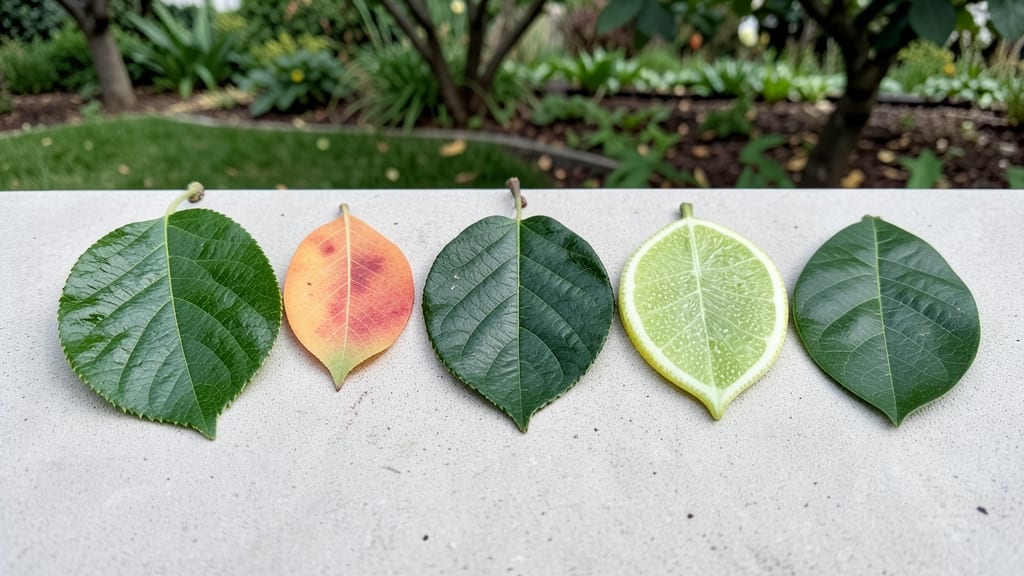
Fruit tree identification by leaf saves you from guessing—and my first mistake was assuming every oval leaf belonged to an apple tree. 🌳 The truth? Leaf shape, edges, and vein patterns reveal the species long before fruit appears, and I’ll show you exactly what to look for in 20 common trees.
Start with the basics: leaf edges (smooth, serrated, or lobed) and arrangement (alternate or opposite). A peach tree’s fine-toothed edges and fuzzy undersides set it apart from an apple’s jagged lobes, while citrus leaves shine with glossy, leathery texture.
Seasonal variations trip up beginners—young leaves often look different, so compare with mature ones.
You’ll spot the differences in minutes: apple leaves are 5-8 inches with rough edges, while pear leaves are 2-4 inches with a delicate, almost wavy shape. Cherry trees have smooth, pointed leaves that smell faintly bitter when crushed—a trick that works even when no fruit is in sight.
Still unsure? Pair this with bark texture or bud shape for confirmation. Local extension offices often have databases, and a simple photo comparison with trusted sources (like the USDA’s tree ID tool) seals the deal. Prune back tangled branches in late winter for clearer visibility next season.
Nature’s Leaf Code Explained
Identifying fruit trees by their leaves isn’t just about memorizing shapes—it’s about understanding the evolutionary and ecological strategies that make each leaf unique. From survival adaptations to reproductive quirks, here’s why leaves differ so dramatically across species, and how those traits help you decode them like a pro.
Leaves aren’t just solar panels for trees—they’re a living record of how a species has adapted to its environment. Here’s what’s really going on under the bark:
- Climate Adaptations:
Trees in arid regions (like the Pomegranate or Fig) often have thick, waxy, or leathery leaves to conserve water. Think of them as nature’s waterproof jackets. Meanwhile, tropical fruit trees (e.g., Mango or Banana) sport large, thin leaves to maximize sunlight capture in humid, high-light conditions.
- Toxins as Defense:
Some leaves (like those of the Persimmon or Loquat) contain chemical deterrents—bitter compounds or sharp edges—to discourage herbivores. These aren’t just random traits; they’re the result of millions of years of predator-prey arms races. 🐛🚫
- Sunlight Optimization:
Ever notice how Apple or Cherry leaves often have serrated (toothed) edges? Those aren’t just for show—they increase surface area for photosynthesis while reducing water loss. It’s like a built-in cooling system for the leaf’s metabolism.
Actionable Tip: 🌡️ Check leaf texture and edge shape first. A smooth, glossy leaf might signal a tropical origin, while rough, hairy leaves often mean the tree’s from a drier climate.
Not all leaves are created equal—and that’s because trees grow in very specific ways. Here’s how biology shapes leaf identity:
- Alternate vs. Opposite Arrangement:
Leaves grow in alternate patterns (one leaf per node, like Peach or Plum trees) to minimize shading of lower leaves. Opposite arrangement (pairs at each node, e.g., Citrus or Pawpaw) is rarer but helps stabilize branches in windy areas.
- Compound vs. Simple Leaves:
A compound leaf (like the Black Walnut or Hazelnut) is essentially one leaf divided into leaflets, which reduces wind damage and allows for flexible movement to avoid sunlight overload.
Simple leaves (e.g., Apple or Pear) are single, undivided units, often found in trees that prioritize efficient photosynthesis over durability.
- Venation: The Leaf’s Circulatory System:
The vein pattern (palmate, pinnate, or reticulate) isn’t random—it’s a hydraulic design. Palmate veins (like in Mulberry leaves) radiate from a central point for even water distribution, while pinnate veins (common in Cherry or Almond) run parallel along the leaf’s length, optimizing support for larger surfaces.
Pro Tip: ✨ Look at the midrib (main vein). A prominent, thick midrib often means the leaf is adapted to high winds, while a thin, flexible one suggests a tree that grows in sheltered, humid microclimates.
Leaves aren’t just about survival—they’re also part of the tree’s reproductive toolkit. Here’s how:
- Leaf Shape and Pollination:
Trees that rely on wind pollination (like Apple or Pear) often have smaller, simpler leaves to reduce drag and allow pollen to disperse efficiently. In contrast, animal-pollinated trees (e.g., Fig or Mango) may have larger, showier leaves to attract pollinators indirectly by hosting insects or providing nectar.
- Early Leaf Drop: A Fruit-Focused Trick:
Some trees (like Citrus) retain leaves year-round to keep photosynthesizing, while others (e.g., Peach) drop leaves before fruiting. This isn’t laziness—it’s a metabolic reset. By shedding leaves, the tree redirects energy to fruit development, ensuring sweeter, more abundant harvests.
- Leaf Color Cues for Ripeness:
Ever notice how Apple or Pear leaves sometimes turn red or purple before the fruit ripens? This isn’t a coincidence—it’s a chemical signal that boosts antioxidant production in the fruit, making it more appealing to animals (and humans!) for seed dispersal. 🍎🐦
Key Takeaway: 🎯 If a tree’s leaves are unusually vibrant or aromatic, it’s often a hint that the fruit is nearing maturity—or that the tree is using leaves to “advertise” its presence to pollinators.
Quick Fixes for Leafy Confusion
Now that you understand why identifying fruit trees by leaf can feel overwhelming, let’s tackle the practical solutions to simplify the process—whether you're a gardener, landscaper, or just a curious nature lover.
Below, we’ve broken down common challenges and their fixes, plus pro tips to keep your leaf ID skills sharp.
---
Problem: Some fruit trees (like apple vs. crabapple or peach vs. plum) have leaves that seem nearly identical at first glance.
Solution: - Compare leaf edges 🍃 – Serrated (jagged) vs. smooth? Apple leaves often have fine serrations, while crabapple leaves may be more rounded. - Check vein patterns 🌿 – Peach leaves typically have a silvery underside and a distinct midrib, while plum leaves are usually glossier and more oval. - Look at the base 📏 – Plum leaves often taper to a point, while cherry leaves have a more rounded base.
Prevention Tip: 💡 Carry a small notebook or use a leaf ID app (like PictureThis or LeafSnap) to snap photos and compare side by side.
---
Problem: Leaves change shape, color, and texture with the seasons, making identification tricky.
Solution: - Focus on evergreen clues 🍋 – Citrus trees (like oranges or lemons) keep their leaves year-round, so their glossy, oval shape is easier to spot. - Note bud shapes ❄️ – In winter, dormant buds can reveal a tree’s identity (e.g., pear buds are plump and pointed, while cherry buds are slender). - Use bark as a backup 🌲 – Young fruit trees often have distinct bark textures (e.g., smooth for apple, scaly for peach).
Prevention Tip: ✨ Take reference photos in spring, summer, and fall to track how leaves evolve.
---
Problem: Weather, pests, or disease can distort leaves, making them hard to recognize.
Solution: - Examine healthy leaves 🍎 – If some leaves are intact, use those as your guide. - Check for scars or spots 🦠 – Rust spots on a leaf might hint at a blackberry or raspberry bush, while mildew could signal an apple tree. - Look at the stem 🌱 – Hairy stems often belong to peach or nectarine trees, while smooth stems may indicate plum.
Prevention Tip: 🌡️ Prune damaged leaves in early spring to keep your tree’s true form visible.
---
Problem: Fruit trees grown in different climates can develop slight leaf differences (e.g., thicker leaves in hotter areas).
Solution: - Cross-reference with fruit 🍒 – If you spot small, tart berries, it’s likely a cherry; large, fuzzy fruits point to peaches. - Consult local guides 🗺️ – Some regions have unique varieties (e.g., Asian pears in the Pacific Northwest vs. European pears elsewhere). - Ask local experts 👨🌾 – Nursery staff or gardening forums (like Gardeners.com) can confirm regional quirks.
Prevention Tip: 🎯 Bookmark climate-specific plant databases (e.g., USDA Plant Hardiness Zone Map) for accuracy.
---
Problem: Still unsure? Technology can save the day!
Solution: - Use leaf ID apps 📱 – PlantNet or Google Lens can scan and identify leaves in seconds. - Compare with online databases 🌐 – Websites like ArborDay.org or Floridata.com offer side-by-side leaf comparisons. - Join plant communities 💬 – Reddit’s r/whatsthisplant or Facebook groups often provide crowd-sourced IDs.
Prevention Tip: 🔥 Save your finds! Create a digital scrapbook of identified leaves for future reference.
--- Final Thought: 🌟 With these fixes, you’ll go from guessing to confidently naming fruit trees—no botanist degree required. Start with one tree, master its leaf, and expand your skills like a pro!
Frequently asked questions
Can I identify fruit trees from leaves in winter when there are no leaves?
Yes! Look at the bud shapes and bark texture instead. Apple buds are plump and pointed, while peach buds are smaller and fuzzy. Cherry bark is smooth and dark, while plum bark often has horizontal lenticels (pores). Citrus trees keep their glossy leaves year-round, so those are easy to spot.
What if my leaf sample is damaged or diseased?
Focus on the healthiest leaves you can find. Look at the vein pattern and leaf base—these features often remain recognizable even if edges are torn. For example, peach leaves have a silvery underside, while plum leaves are glossy and oval, even when damaged.
How do I tell the difference between apple and crabapple leaves?
Apple leaves are 5-8 inches with fine serrations along the edges, while crabapple leaves are smaller (2-4 inches) with rounded lobes. The stems also differ: apple stems are hairless, while crabapple stems may have fine hairs. Check for tiny fruit clusters—crabapples produce smaller, tart berries.
Are there any fruit trees with compound leaves?
Yes! Trees like Black Walnut and Hazelnut have compound leaves with multiple leaflets. Walnut leaves have 7-9 leaflets with serrated edges, while hazelnut leaves have 5-9 rounded leaflets. These are easy to spot compared to simple leaves like those of apple or cherry trees.
Why do some leaves smell when crushed?
Crushing leaves releases volatile oils that act as natural insect repellents. Cherry leaves smell faintly bitter, while citrus leaves release a strong, sweet aroma. This scent can help confirm the tree type—just sniff carefully! Avoid crushing poisonous leaves like those from Yew or Oleander.