
Pruning
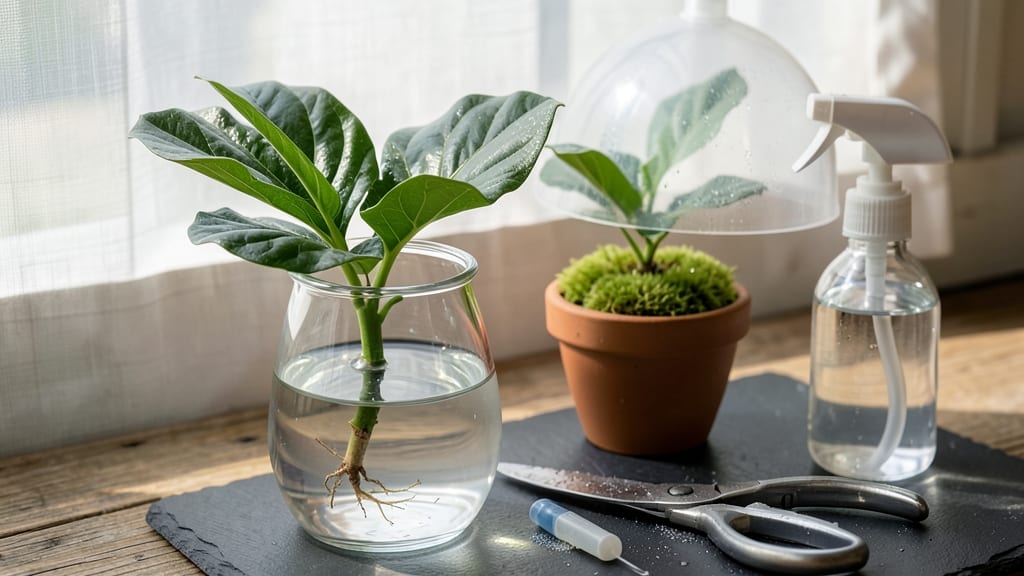
Fiddle leaf fig cuttings root fast—I’ve turned leggy stems into thriving new plants in just 4-6 weeks using these simple methods. 🌱 The key? Healthy cuttings, the right tools, and patience while roots establish.
Whether you choose water or soil propagation, the process is straightforward once you know the steps that actually work (and which ones don’t). Most people overthink this—it’s not about fancy setups, but timing and clean cuts.
Take your cuttings in spring or early summer when the plant is actively growing, and always use sharp, sterilized tools to avoid damaging the stem. A 4-6 inch cutting with at least 2-3 nodes (those little bumps where leaves grow) is perfect for rooting.
Water propagation is the easiest way to watch roots grow—just place your cutting in a jar of room-temperature water, keeping the nodes submerged but leaves dry. For soil propagation, use a well-draining mix and keep it lightly moist.
Both methods work, but water lets you track progress daily (which is oddly satisfying). Once roots appear, transplant to soil and give your new plant bright, indirect light. Avoid direct sun at first—it can stress the young roots.
With the right care, your cutting will grow into a full-sized fiddle leaf fig in 1-2 years, and you’ll have a backup plant if anything happens to your original.
📚 In This Guide
- What you need
- Instructions
- Tips and common mistakes
- Wrapping up and next steps
What you need
- ● Healthy fiddle leaf fig plant: Choose a mature plant with at least 3-4 leaves per cutting.
- ● Clean, sharp pruning shears: Sterilize with rubbing alcohol to prevent disease (avoid dull blades!).
- ● Cutting: 4–6 inch stem with at least 2–3 nodes (leaf junctions) and 1–2 leaves.
- ● Clean glass or jar: 8–12 oz size (e.g., mason jar or vase).
- ● Room-temperature water: Filtered or distilled (tap water can harm roots).
- ○ Optional rooting hormone: Speeds up root growth (follow label instructions).
- ● Well-draining potting mix: 50% perlite/pumice + 50% peat or coco coir.
- ● Small pots or propagation tray: 3–4 inch diameter with drainage holes.
- ● Plastic bag or humidity dome: Keeps moisture high (80–90% humidity).
- ● Hydrogen peroxide (3%) – for sterilizing water or tools.
- ● Rooting hormone gel – boosts success in soil.
- ● Grow lights – if natural light is insufficient.
- ● Label markers – to track cuttings by date!
Step-by-step instructions for fiddle leaf fig propagation
Here's how I get strong, fast roots—whether in water or soil—without losing my sanity.
🌱 Step 1: Select and Prepare Your Cuttings
Choose a healthy stem with at least 4-5 leaves and a 4-6 inch length. The cut should be made just below a node (that little bump where leaves grow out)—this is where roots will sprout. Use clean, sharp pruning shears to avoid crushing the stem. I always sterilize my tools with rubbing alcohol first to prevent infection.
Let the cut end dry for 1-2 hours before placing it in water or soil. This callusing step prevents rot. You'll see the cut surface turn slightly darker as it forms a protective layer. If you're impatient, just wait—skipping this step leads to mushy stems that refuse to root.
💧 Step 2: Root in Water (Fastest Method)
Fill a clean glass with room-temperature water and place your cutting so only the bottom 1-2 inches are submerged. Change the water every 3-4 days to prevent bacterial growth. I use a small jar because fiddle leaf figs root quickly—usually within 2-4 weeks—but larger containers work too.
Position the cutting in bright, indirect light (no harsh sun). You'll know roots are forming when tiny white tendrils appear at the nodes. Once roots reach 2-3 inches, they're ready to transplant. Don't rush this—waiting ensures strong, established roots that won't break when you move them.
🪴 Step 3: Root Directly in Soil (More Stable Method)
Fill a small pot with well-draining cactus/succulent mix and make a hole deep enough to bury 1-2 inches of the stem. Dip the cut end in rooting hormone (optional but helpful) before planting. Press the soil gently around the stem—you want firm contact but no compaction.
Keep the soil lightly moist (not soggy) and place the pot in bright, indirect light. Roots take 4-8 weeks to form, so patience is key. You'll see new growth at the top leaves first—that's your sign roots are working. Water only when the top inch of soil feels dry to the touch.
☀️ Step 4: Care for New Plants
Once roots establish (whether in water or soil), treat your new fiddle leaf fig like a mature plant. Give it bright, indirect light and water when the top 2 inches of soil are dry. Avoid cold drafts or temperature swings—fiddle leaf figs hate sudden changes.
After 4-6 weeks of stable growth, fertilize lightly with a balanced houseplant food. You'll know it's thriving when new leaves emerge shiny and healthy. Real talk: The first few leaves might be smaller, but don't panic—this is normal as the plant adjusts.
Tips & tricks for fiddle leaf fig propagation success
Here's what I learned after propagating dozens of fiddle leaf figs—these tricks speed up rooting and prevent the most common failures.
Cutting Selection: Look for stems with 4-5 mature leaves and 4-6 inches between nodes. The thicker the stem, the faster it roots—thin stems under 1/4 inch diameter take twice as long. I always check for crisp, green leaves without yellowing or brown spots, because those indicate stress that'll slow down rooting.
Callusing is Non-Negotiable: That 1-2 hour drying time in Step 1 is where most people mess up. I've seen cuttings rot within days when skipped. Place your cuttings on a paper towel in a dry, shaded spot. You'll know it's ready when the cut end looks slightly dull and no longer glistens—this protective layer is what prevents rot in water or soil.
Water Quality Matters: For the water method, use room-temperature water (not tap water straight from the faucet). Chlorine and fluoride can stress the cutting. I let tap water sit out for 24 hours before using it. Also, change the water every 3-4 days—stale water breeds bacteria that'll attack your cutting before roots form.
Light Positioning: Bright, indirect light is crucial for both methods, but placement makes all the difference. I place my water cuttings on an east-facing windowsill where they get morning sun but no harsh afternoon rays. For soil cuttings, I use a grow light on a timer for 12 hours/day if natural light isn't sufficient. Yellowing leaves mean too much direct sun, while slow growth means insufficient light.
Pro Tips for Fiddle Leaf Fig Cutting
- Here's what I learned after propagating dozens of fiddle leaf figs—these tricks speed up rooting and prevent the most common failures.
- Cutting Selection: Look for stems with 4-5 mature leaves and 4-6 inches between nodes.
- Callusing is Non-Negotiable: That 1-2 hour drying time in Step 1 is where most people mess up.
Frequently asked questions
Got questions about propagating your fiddle leaf fig? You’re not alone! Here are answers to the most common queries to help you grow those lush, leafy cuttings with confidence.
When is the best time to take fiddle leaf fig cuttings?
The ideal time to take cuttings is during the spring or early summer, when the plant is actively growing. Avoid pruning in fall or winter, as the plant enters dormancy and may struggle to root. If you must propagate outside this window, ensure your cutting has at least 3-4 healthy leaves to support new growth.
How do I know if my cutting is healthy enough to root?
A healthy cutting should have at least 3-5 mature leaves and a clean, sharp cut (about 4-6 inches long) just below a node. Look for plump stems and no signs of yellowing or browning. Avoid cuttings with dry, mushy, or damaged sections, as these won’t root well.
Water vs. soil propagation—what’s easier for fiddle leaf figs?
Both methods work, but water propagation is beginner-friendly because you can monitor root growth easily. For soil, use a well-draining mix (like perlite and peat) and keep it slightly moist. Water propagation speeds up rooting (2-4 weeks), while soil may take 4-8 weeks. Transition water-rooted cuttings to soil once roots are 2-3 inches long.
Why is my fiddle leaf fig cutting turning yellow or rotting?
Yellowing or rotting usually means overwatering, bacterial infection, or poor airflow. If your cutting is in water, change the water every 3-5 days and use a small glass to prevent stagnation. For soil, ensure the mix is moist but not soggy and avoid placing cuttings in humid, enclosed spaces. Trim any mushy or blackened sections immediately to save the cutting.
How long does it take for fiddle leaf fig cuttings to root?
With the right conditions, fiddle leaf fig cuttings typically root in 2-6 weeks. In water, you’ll see tiny white roots within 2-3 weeks. In soil, roots may take longer (4-8 weeks) but often establish more robustly. Patience is key! Keep cuttings in bright, indirect light and maintain consistent moisture (or humidity) until roots form.
Can I propagate a fiddle leaf fig from a single leaf?
No—fiddle leaf figs cannot be propagated from a single leaf. Each cutting needs at least one node (the bump where leaves grow) to produce roots. If you accidentally take a leaf-only cutting, don’t toss it! Try placing it in water to see if a tiny stem sprouts, but success is rare. Stick to stem cuttings with leaves for reliable propagation.
Wrapping up and next steps
You’ve now got all the tools—and confidence—to propagate your fiddle leaf fig like a pro! 🌱 Whether you choose water or soil, the key is patience, consistency, and a little green thumb love.
Watching those cuttings grow into thriving plants is incredibly rewarding, so don’t hesitate to experiment and share your new plants with fellow plant parents.
Ready to take the next step? Start with just one cutting—your future fiddle leaf fig jungle awaits! 🌿