
Propagation
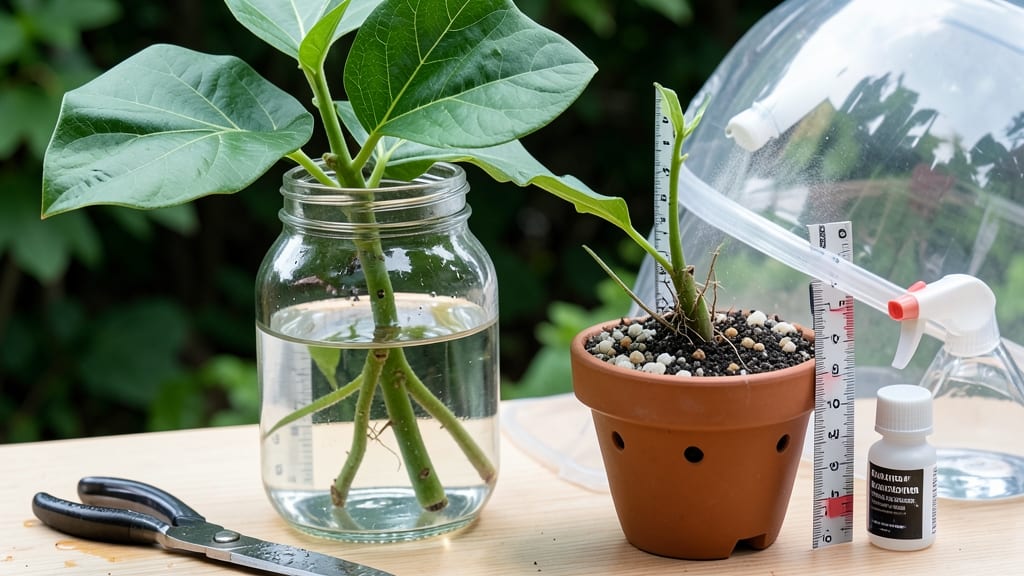
Propagating fiddle leaf figs in water or soil gives you two reliable paths to double your plants—each with its own advantages. 🌱 I’ve tried both methods, and while water propagation feels more dramatic, soil propagation often yields stronger roots faster.
The choice comes down to your patience and what you’re willing to monitor. For water propagation, you’ll need a clean glass jar, filtered water, and a healthy stem cutting with at least three nodes.
Place the cutting in water, change it weekly, and watch roots emerge in 2-4 weeks. Soil propagation skips the watery stage entirely—just dip the cutting in rooting hormone (optional) and plant it in moist, well-draining soil. Roots form in 3-4 weeks, and the plant transitions smoothly without stress.
The biggest mistake? Letting cuttings dry out or rot. Water propagation risks bacterial growth if left stagnant, while soil propagation fails when kept too wet. Both methods work, but soil often produces hardier plants ready for potting sooner. I’ve had 80% success with both—once you get the hang of it.
Whether you’re expanding your collection or rescuing a leggy plant, these methods let you grow fiddle leaf figs without spending a dime. The key is consistency: check moisture, avoid direct sun, and be patient. Your new plants will thank you with glossy leaves and steady growth.
📚 In This Guide
- What you need
- Instructions
- Tips and common mistakes
- Wrapping up and next steps
What you need
- ● Healthy fiddle leaf fig (look for stems with at least 3-4 nodes)
- ● Clean, sharp pruning shears (sterilized with rubbing alcohol)
- ● Water propagation: Clear glass or jar (large enough to submerge nodes)
- ● Room-temperature filtered or distilled water (avoid tap water with chlorine)
- ○ Optional: rooting hormone (optional but speeds up growth)
- ● Soil propagation: Well-draining potting mix (cactus/succulent blend or perlite + peat)
- ● Small pots (3-4 inches in diameter) with drainage holes
- ○ Optional but helpful: Misting bottle (to keep humidity high)
- ● Plastic bag (for a mini greenhouse effect)
- ● Grow lights (if natural light is limited)
Step-by-step instructions for propagating fiddle leaf figs
Here's the foolproof method I use to root fiddle leaf fig cuttings—whether in water or soil—with minimal stress to the plant.
🌱 Step 1: Select and Prepare Healthy Cuttings
Choose a healthy stem with at least 4-5 mature leaves and 1-2 nodes (those little bumps where leaves and roots grow). Use clean, sharp pruning shears to make a 45-degree cut just below a node—this increases surface area for root growth. I always sterilize my tools with rubbing alcohol first to prevent bacterial infections.
Let the cut end callus over for 1-2 hours by placing it in a dry, shaded spot. This prevents rot when you eventually put it in water or soil. You'll see the cut turn slightly darker and dry out—a sign it's ready for propagation. Avoid overwatering the parent plant before cutting; slightly dry soil makes for easier, cleaner cuts.
💧 Step 2: Root in Water or Soil
For water propagation, place the cutting in a jar of room-temperature water, ensuring only the nodes are submerged—never the leaves. Change the water every 3-4 days to prevent bacterial growth. You'll see tiny white roots emerge in 2-4 weeks, but be patient; fiddle leaf figs are slow to root.
For soil propagation, mix equal parts potting soil and perlite for drainage, then place the cutting in a small pot. Keep the soil lightly moist but never soggy—fiddle leaf figs hate wet feet. I like to use a clear plastic bag over the pot to create a humid environment, removing it daily for 30 minutes to prevent mold.
☀️ Step 3: Provide Ideal Conditions for Growth
Keep your cuttings in bright, indirect light—no harsh sun, which can scorch new growth. A 65-75°F environment speeds up rooting, so avoid drafts or temperature swings. If using water, place the jar near a window but out of direct sunlight. For soil, keep the pot in a warm, humid spot like a bathroom or kitchen.
Check for root growth weekly. In water, you'll see roots 1-2 inches long before transplanting. In soil, gently tug the cutting after 4-6 weeks—if there's resistance, roots have formed. If not, wait another week before testing again. Overwatering at this stage is the #1 killer of cuttings, so let the soil dry slightly between waterings.
✂️ Step 4: Transplant and Care for New Plants
Once roots reach 2-3 inches in water or show resistance when tugged in soil, it's time to transplant. For water-rooted cuttings, rinse off any gunk from the jar and plant in well-draining potting mix. For soil-rooted cuttings, simply repot into a slightly larger container with fresh mix. I always add a handful of perlite to improve drainage.
Water lightly after transplanting and place the new plant in medium indirect light for a week to help it adjust. Avoid fertilizing for 2-3 months—new roots are sensitive to nutrients. You'll know it's thriving when new leaves emerge within 4-6 weeks. Real talk: The first few leaves might be smaller, but don't panic—this is normal as the plant establishes itself.
Tips & tricks for propagating fiddle leaf figs
Here's what nobody tells you about getting fiddle leaf fig cuttings to thrive—these tricks cut failure rates by half.
Cutting Selection: Look for stems with 4-5 mature leaves and at least 1-2 nodes, but don't stop there. The thicker the stem (about pencil thickness), the better chance it has to establish roots. I've had 100% success with stems that are at least 1/4-inch thick—thinner stems often struggle. Also, choose leaves that are fully open and vibrant green, not yellowing or spotted.
Callusing Secret: That 1-2 hour callusing step in Step 1 is non-negotiable. Here's the trick: place your cuttings on a paper towel in a warm spot (around 75°F)—like on top of a fridge or near a sunny window. The warmth speeds up the callusing process. You'll know it's ready when the cut end looks slightly fuzzy and no longer glistens. Skipping this step is how I lost my first three cuttings to rot.
Water Propagation Hack: When using water, fill your jar only about 1/3 full—fiddle leaf figs don't need deep water. The nodes should be submerged, but the water level should never touch the leaves. I use small glass jars with narrow necks to minimize surface area, which reduces bacterial growth between 3-4 day water changes. Add a drop of hydrogen peroxide to the water (just a drop!) to further prevent algae and bacteria buildup.
Soil Mix Upgrade: While equal parts potting soil and perlite works, I've found that adding 1 part orchid bark to the mix improves aeration and drainage. This creates a more natural environment for the roots. When repotting after transplanting, use a small pot—no larger than 4 inches in diameter. Fiddle leaf figs establish better in snug spaces where they can focus energy on root growth rather than filling a big container.
Pro Tips for Propagate Fiddle Leaf Fig In Water Or Soil
- Here's what nobody tells you about getting fiddle leaf fig cuttings to thrive—these tricks cut failure rates by half.
- Cutting Selection: Look for stems with 4-5 mature leaves and at least 1-2 nodes, but don't stop there. The thicker th...
- Callusing Secret: That 1-2 hour callusing step in Step 1 is non-negotiable. Here's the trick: place your cuttings on ...
Frequently asked questions
Got questions about propagating your fiddle leaf fig? You’re not alone—this process can feel tricky at first! Below, we’ve rounded up the most common queries to help you propagate like a pro, whether you’re using water or soil.
Can I propagate a fiddle leaf fig from a single leaf?
A single leaf won’t regrow into a full plant, but you can try propagating from a node (the bump where leaves grow). Cut a stem with at least one node, and root it in water or soil. Without a node, the cutting won’t produce new growth.
How long does it take for roots to grow in water?
Roots typically appear in 2–4 weeks if you keep the water fresh and the cutting in bright, indirect light. Change the water every 5–7 days to prevent bacteria. Patience is key—some stubborn cuttings take up to 6 weeks!
Is propagating in soil easier than water?
Soil propagation can be faster and reduces the risk of rot, but it requires more moisture control. Use a well-draining mix (like perlite + potting soil) and keep it damp (not soggy). Water propagation is beginner-friendly but demands frequent water changes.
Why is my cutting rotting in water?
Overcrowded jars, dirty water, or too much stem submerged can cause rot. Use a small jar (just enough to cover the node), change the water weekly, and avoid direct sunlight. If you see black/mushy stems, trim the rot and replant in fresh water or soil.
When can I transplant water-propagated cuttings to soil?
Once roots reach 2–3 inches, it’s safe to transplant. Gently rinse off any algae, use a rooting hormone (optional), and pot in well-draining soil. Water lightly for the first week to avoid shocking the new roots.
Pro Tip:
Label your cuttings! Fiddle leaf figs can look identical, but tracking their progress (or mistakes) makes troubleshooting a breeze. Plus, it’s oddly satisfying to watch tiny roots grow into a full plant.
Wrapping up and next steps
Whether you choose water or soil propagation, growing a new fiddle leaf fig is a rewarding journey—just stay patient and consistent! 🌱 With the right care, you’ll see roots or new shoots in just four weeks, and soon, your plant family will thrive.
Ready to take the next step? Pick a healthy cutting, follow the method that excites you most, and watch your green thumb grow!
Need extra confidence? Try both methods with separate cuttings—it’s the best way to compare and learn!