
How To
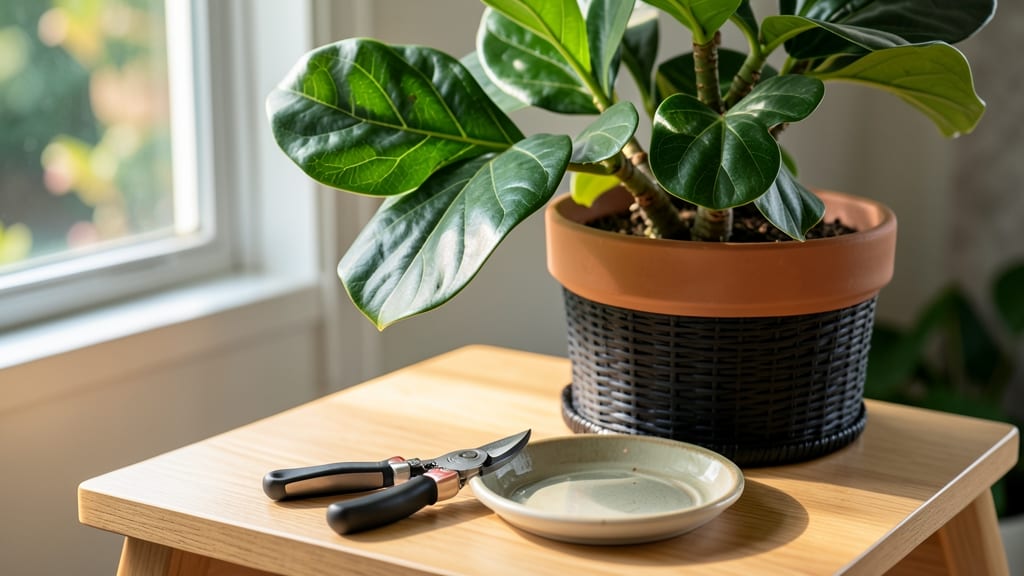
Pruning fiddle leaf figs isn’t as scary as it seems—it’s the secret to bushier growth and healthier plants. 🌿 I’ve turned leggy, sad figs into lush, branching beauties with just a few strategic cuts, and you can too.
The key is timing, the right tools, and knowing exactly where to snip.
You’ll need sharp pruners, rubbing alcohol for sterilizing, and a plan: prune in spring or early summer when the plant is actively growing. Focus on cutting just above a leaf node at a 45-degree angle—this encourages new branches to sprout.
After pruning, give your plant a little extra water and bright, indirect light to help it recover and start growing fuller.
📚 In This Guide
- What you need
- Instructions
- Tips and common mistakes
- Wrapping up and next steps
What you need
- ● Sharp pruning shears or bypass pruners – Choose a pair with sterilized, stainless-steel blades (avoid dull tools to prevent tearing leaves).
- ● Rubbing alcohol (70% or higher) or hydrogen peroxide – For sterilizing tools before and after pruning to prevent bacterial/fungal spread.
- ○ Gloves (optional but recommended) – Protects hands from sap irritation (fiddle leaf figs can be mildly toxic if ingested).
- ● Small container with water – To hold cuttings for propagation (if you plan to grow new plants).
- ○ Rooting hormone (optional) – Speeds up root growth for cuttings (look for gel or powder formulas).
- ● Disposable gloves – If you’re sensitive to sap or prefer disposable options.
- ● Horticultural sealant – Like tree wound pruning paste to coat larger cuts and prevent disease.
- ● Spray bottle with water – To mist cuttings and keep them hydrated while rooting.
- ● Notebook & pen – To track pruning dates and observe growth patterns.
Step-by-Step guide for pruning fiddle leaf figs
Here's how I transform leggy fiddle leaf figs into full, bushy plants—no green thumb required.
✂️ Step 1: Identify the Right Time to Prune
Prune your fiddle leaf fig in early spring when new growth begins. This timing gives the plant time to recover before summer heat stress. Avoid pruning in fall or winter—your plant needs all its energy to survive dormancy, not regrow leaves.
Look for healthy, mature leaves (at least 3-4 inches long) to cut back. These leaves have stored energy to fuel new growth. If your plant is completely bare or only has tiny leaves, wait until next spring—pruning now will shock it further.
✂️ Step 2: Gather the Right Tools and Sanitize
Use sharp, clean pruning shears (sterilized with rubbing alcohol) to avoid crushing stems or spreading disease. Dull tools tear plant tissue, slowing recovery. I like to wipe the blades with alcohol between cuts on multi-stemmed plants.
Have a small container of water ready to dip cuttings in immediately after pruning. This prevents the exposed stem from drying out while you decide whether to propagate or discard. Fiddle leaf figs root surprisingly well from stem cuttings!
✂️ Step 3: Make Clean Cuts at the Right Spots
Cut just above a leaf node (the bump where leaves attach) at a 45-degree angle. This angled cut prevents water from pooling on the stem, which can rot. Aim for the node below a healthy leaf—this is where new growth will sprout.
For leggy stems, cut back to half their length to encourage bushier growth. Never cut into woody stems—these won't regrow. If you accidentally cut too far, don't panic; your plant will still recover, just more slowly.
🌿 Step 4: Encourage New Growth After Pruning
Place your pruned fiddle leaf fig in bright, indirect light for the first week. Too much direct sun will stress the plant while it recovers. You'll see new leaves emerging from the nodes within 2-4 weeks—this is your signal everything worked.
Water lightly for the first week after pruning. The plant needs time to adjust before resuming its normal watering schedule. Overwatering now can drown the fresh cuts before they seal properly.
🌱 Step 5: Propagate Cuttings (Optional)
Place stem cuttings in room-temperature water (change weekly) until roots form, which takes 2-6 weeks. Fiddle leaf figs root best in water, but you can also dip cuttings in rooting hormone and plant them in moist potting mix if you prefer soil propagation.
Keep cuttings in bright, indirect light while rooting. Avoid direct sun—it can overheat the delicate new growth. Once roots reach 1-2 inches long, transplant into pots with well-draining soil and treat as mature plants.
Tips & tricks for pruning fiddle leaf figs
Between us, I've pruned my fair share of fiddle leaf figs—some turned out lush, others looked like they'd been through a tornado. Here's what I've learned to make the process foolproof.
Timing is Everything: That early spring timing in Step 1 isn't just about avoiding winter dormancy—it's also when your plant has the most stored energy to fuel new growth. I've found that pruning in late winter (February) gives the best results, as long as you see those first tiny new leaves pushing through. If you're unsure, wait until you see at least 2-3 new growth points—this is your green light to prune.
Tool Prep Prevents Problems: I can't stress enough how important Step 2's sanitization is—especially if you're working with multiple plants. Beyond rubbing alcohol, I keep a small spray bottle of diluted bleach solution (1 part bleach to 9 parts water) for quick disinfection between plants. This prevents fungal infections that can turn your pruning session into a plant rescue mission. And yes, that container of water is non-negotiable—dipping cuttings immediately creates a moisture barrier that keeps them viable while you decide what to do with them.
Cutting Technique Matters More Than You Think: The 45-degree angle in Step 3 isn't just aesthetic—it's about water runoff. When you make that angled cut just above a node, rainwater will naturally run off rather than pool at the cut end, which dramatically reduces rot risk. Pro tip: Use your pruning shears to make a small notch at the bottom of your angled cut—this creates a tiny channel for water to escape even better. For leggy stems, I find cutting back to about 6 inches from the base gives the best balance between bushiness and recovery speed.
Recovery Care Creates Results: The first week after pruning is critical, and I've learned this the hard way by overwatering eager plants. Think of it like helping a friend recover from surgery—you wouldn't drown them in attention. That bright, indirect light in Step 4 should be about 3-5 feet away from direct sunlight. I use a simple test: if you can hold your hand between the plant and the light source and still feel warmth, it's too close. For watering, I've found the "finger test" works best—stick your finger an inch into the soil. If it's dry, water lightly; if it's moist, wait another day.
Pro Tips for Prune Fiddle Leaf Fig
- Between us, I've pruned my fair share of fiddle leaf figs—some turned out lush, others looked like they'd been throug...
- Timing is Everything: That early spring timing in Step 1 isn't just about avoiding winter dormancy—it's also when you...
- Tool Prep Prevents Problems: I can't stress enough how important Step 2's sanitization is—especially if you're workin...
Frequently asked questions
Got questions about pruning your fiddle leaf fig? You’re not alone! Here are some of the most common concerns—and their answers—to help you prune like a pro.
When is the best time to prune a fiddle leaf fig?
The ideal time is early spring (just as new growth begins) or late winter. Avoid pruning in fall or winter unless you’re dealing with dead/diseased leaves—your plant enters a dormant phase and may struggle to recover. For minor trims (like shaping), summer works too, but avoid heavy pruning during hot months.
How do I know if my fiddle leaf fig needs pruning?
Watch for these signs:
- Leggy growth: Stems stretching too tall with sparse leaves.
- Yellow/brown leaves: Dead or dying foliage at the bottom.
- Overcrowded center: Leaves rubbing together, blocking light.
- Uneven shape: Lopsided or sparse growth.
Can I propagate the cuttings from pruning?
Fiddle leaf fig cuttings root easily in water or soil. Just place 4–6-inch stems in a jar of water (change weekly) or moist potting mix. Keep them in bright, indirect light and mist occasionally. Roots should appear in 4–8 weeks. Pro tip: Use a rooting hormone to speed up the process!
What if I prune too much? Will my plant die?
Don’t panic! While fiddle leaf figs are resilient, never remove more than 1/3 of the plant at once. Heavy pruning can shock your tree, causing leaf drop or stunted growth. If you’ve overdone it, focus on recovery:
- Reduce watering slightly.
- Provide bright, indirect light.
- Fertilize lightly (if needed) after 4–6 weeks.
Do I need to sterilize my pruning tools?
Yes! Sterilizing tools prevents disease and sap-borne infections. Wipe blades with rubbing alcohol or a 10% bleach solution before and after pruning. For extra safety, use a dedicated pair of pruners just for your fiddle leaf fig. Clean tools = happier plants!
Wrapping up and next steps
Pruning your fiddle leaf fig doesn’t have to be intimidating—it’s all about timing, technique, and confidence! 🌿 With the right tools, a steady hand, and a little patience, you’ll soon enjoy a lush, bushier plant that thrives year-round.
Remember, even experienced plant parents started somewhere, so don’t hesitate to give it a try.
Ready to take the next step? Monitor your plant’s growth after pruning and adjust as needed. Soon, you’ll be the proud owner of a stunning, vibrant fiddle leaf fig that’s the star of your space! 🌟