Leaf Blower
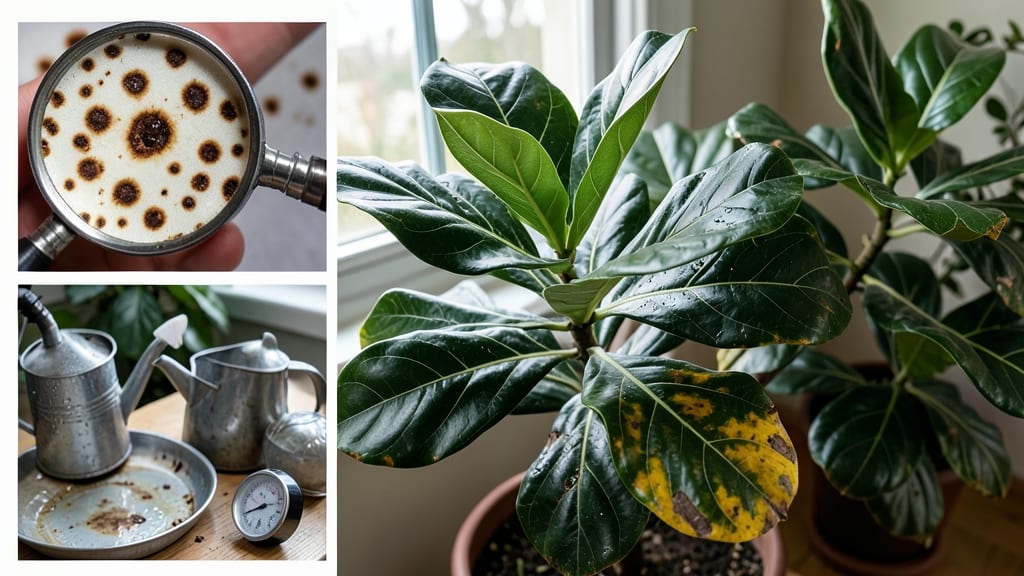
Those stubborn brown spots on your fiddle leaf fig aren’t just unsightly—they’re a cry for help. 🌿 I’ve nursed more than a few back to health, and copper spray is the secret weapon that saved my last struggling plant.
The spots could mean overwatering, fungal infections, or even hidden pests, but the fix starts with understanding what’s really wrong.
First, check the soil—if it’s soggy, you’re overwatering, and that’s inviting root rot. Underlighting causes weak leaves that develop brown patches too, while spider mites leave behind tiny webbing and speckled damage.
Copper spray tackles fungal issues directly, but you’ll also need to adjust watering and lighting to prevent a comeback.
Within days of treating the spots and fixing care mistakes, you’ll see new growth pushing out fresh, vibrant leaves. The key is consistency: trim damaged areas, spray weekly until the spots fade, and keep the soil just damp—not drenched. Your fiddle leaf fig will bounce back stronger than ever.
Works for any fiddle leaf fig, whether it’s a sunbathing showstopper or a low-light survivor. The same approach fixes similar issues on other tropical plants too. Let’s get that foliage glowing again.
Root Causes Behind Leaf Discoloration
When your fiddle leaf fig starts showing brown spots, it’s rarely a random act of nature—it’s a cry for help from your plant. Understanding the why behind these spots is the first step to reviving your fig’s lush, vibrant leaves.
Below, we break down the most common culprits, explained in plain terms with the science behind them.
Fiddle leaf figs are tropical plants, but that doesn’t mean they love soggy roots. Overwatering is one of the fastest ways to trigger brown spots, especially if your plant sits in waterlogged soil for too long.
The science: When roots drown, they can’t absorb oxygen, leading to root rot caused by fungi like Phytophthora. As the roots fail, the plant struggles to transport water and nutrients upward, causing leaves to develop crispy, brown edges or water-soaked spots that later turn brown. Poor drainage (like using pots without holes) or compacted soil worsens the issue by trapping excess moisture.
Actionable sign: Check the soil—if it’s still damp 2-3 days after watering, you’re likely overdoing it. Brown spots paired with yellowing leaves or a foul smell from the soil? That’s your plant’s SOS.
Fiddle leaf figs thrive in bright, indirect light, but too much direct sun—especially harsh afternoon rays—can scorch their leaves faster than a summer picnic left in the car.
The science: Sunlight contains UV rays that can denature proteins and chlorophyll in leaf cells. When leaves get too much direct sun, the excess energy damages cell membranes, leading to bleached or brown patches (often on the side facing the sun). This is classic sunburn, and fiddle leaf figs are particularly sensitive because their large leaves act like solar panels, soaking up more heat than smaller foliage.
Actionable sign: Look for dry, papery brown spots that feel crispy to the touch, usually on the upper surface of leaves. If your fig is near a south- or west-facing window, it’s probably getting too much sun.
While overwatering gets more attention, underwatering and low humidity can also cause brown spots—just in a different way. Think of it like a drought for your plant’s cells.
The science: When soil dries out completely, the plant’s vascular system (its "plumbing") can’t deliver water efficiently. Leaves start to plasmolyze—when plant cells lose water and shrink away from their cell walls, causing the edges to curl and brown. Low humidity (<30%) exacerbates this by increasing transpiration (water loss through leaves), making the problem worse. Brown spots from underwatering often start at the leaf edges and work inward.
Actionable sign: Brown spots paired with dry, crispy leaf edges and soil that’s bone-dry to the touch? That’s your plant thirsty. Fiddle leaf figs prefer soil that’s slightly moist but never soggy—stick your finger in the top 2 inches of soil; if it’s dry, it’s time to water.
Not all brown spots are caused by water or light—sometimes, pathogens are to blame. Fungal and bacterial infections can turn your fiddle leaf fig’s leaves into a sad, spotted mess.
The science:
- Fungal infections (e.g., leaf spot diseases): Fungi like Cercospora or Alternaria thrive in warm, humid conditions and cause dark brown or black spots with yellow halos. These spots often have raised edges and may spread rapidly if left untreated.
- Bacterial infections (e.g., bacterial leaf spot): Bacteria like Pseudomonas syringae create watery, greasy-looking spots that turn brown and may ooze a yellowish liquid when pressed. These spots often have irregular, scalloped edges.
Actionable sign: If brown spots appear suddenly, have raised edges, or ooze when touched, isolate your plant and check the undersides of leaves for fuzzy mold (fungus) or yellow slime (bacteria). These infections spread quickly, so act fast!
Sometimes, brown spots are your fiddle leaf fig’s way of saying, "I’m hungry—or maybe you’re poisoning me!" Soil imbalances can lead to unsightly discoloration.
The science:
- Nitrogen deficiency: Leaves may develop pale brown or yellow spots between veins, especially on older leaves. Nitrogen is crucial for chlorophyll production, so a lack of it stunts growth and causes discoloration.
- Magnesium deficiency (chlorosis): Brown spots paired with yellowing between veins can signal low magnesium. Magnesium is a key player in chlorophyll, and its deficiency often starts in older leaves.
- Fluoride or chemical toxicity: Brown spots with dark, necrotic edges can result from exposure to fluoride (from tap water in some areas) or chemical sprays like household cleaners or pesticides. These toxins disrupt cellular functions, leading to oxidative stress and leaf damage.
Actionable sign: If brown spots appear alongside yellowing leaves or stunted growth, test your soil or water for nutrient levels. Switch to filtered or distilled water if you suspect fluoride toxicity, and avoid spraying leaves with chemicals.
Tiny pests like spider mites, aphids, or scale insects can cause brown spots by feeding on leaf sap and injecting toxins into your plant.
The science: Pests like spider mites pierce leaf cells to suck out nutrients, causing stippled brown or yellow spots (tiny dots that merge into larger patches). Their saliva can also trigger a plant defense response, leading to necrotic (dead) tissue. Aphids and scale insects, while less likely to cause direct browning, can weaken the plant, making it more susceptible to other stressors that do cause brown spots.
Actionable sign: Inspect the undersides of leaves for tiny webs (spider mites), sticky residue (aphids), or white cottony bumps (scale). Brown spots paired with visible pests? It’s time for a targeted treatment!
Revive Your Fiddle Leaf Fig
Brown spots on your fiddle leaf fig’s leaves don’t have to be a death sentence—with the right care, you can nurse them back to health! Below are targeted solutions for the most common causes, along with prevention tips to keep your plant thriving.
Let’s turn those brown spots into a thing of the past.
---
Fix: Let the soil dry out between waterings and improve drainage.
1. 🔥 Check the Soil: Stick your finger 1-2 inches deep into the soil. If it’s soggy, hold off on watering. 2. 🍳 Repot if Needed: If your plant’s pot lacks drainage holes, transfer it to one with holes or add a layer of pebbles at the bottom.
3. 👨🍳 Water Less, But Deeply: Water only when the top 1-2 inches of soil are dry, and ensure excess water drains away completely. 4. ⏰ Adjust Your Routine: Fiddle leaf figs prefer moderate watering—about once every 1-2 weeks, depending on humidity and light.
💡 Pro Tip: If roots are rotting, trim the affected ones with sterilized scissors and repot in fresh, well-draining soil.
---
Fix: Move your plant to bright, indirect light and protect it from harsh rays.
1. 🔥 Relocate Immediately: Place your fiddle leaf fig 3-6 feet away from a south- or west-facing window. 2. 🍳 Use a Sheer Curtain: If sunlight is unavoidable, use a light-filtering curtain to diffuse the light.
3. 🌡️ Monitor Temperature: Avoid placing it near heaters, AC vents, or drafty areas—extreme temps stress the plant. 4. ✨ Rotate for Even Growth: Turn the pot quarter-turns every few weeks to ensure all leaves get equal light exposure.
💡 Pro Tip: If your home has low natural light, supplement with a grow light (12-14 hours/day) to prevent further damage.
---
Fix: Increase moisture levels and establish a consistent watering schedule.
1. 🔥 Water When Dry: Check soil moisture daily—if the top 1 inch feels dry, it’s time to water. 2. 🍳 Mist the Leaves: Use a spray bottle to mist leaves 2-3 times a week, especially in dry climates.
3. 👨🍳 Use a Humidifier: Place a humidifier nearby or set the pot on a pebble tray with water to boost humidity. 4. 🌡️ Group Plants Together: Fiddle leaf figs thrive in humid microclimates, so keep them near other houseplants.
💡 Pro Tip: Brown, crispy edges often mean underwatering—adjust your routine to prevent recurrence.
---
Fix: Isolate the plant, treat with copper spray, and improve airflow.
1. 🔥 Isolate Immediately: Move the plant away from others to prevent spreading spores. 2. 🍳 Prune Affected Leaves: Snip off spotted or yellowing leaves with sterilized scissors and discard them. 3. 👨🍳 Apply Copper Fungicide: Spray leaves every 7-10 days with a copper-based fungicide (like Bonide Copper Fungicide).
4. ✨ Improve Airflow: Avoid overcrowding—ensure 2-3 inches of space between plants for better circulation. 5. 🌡️ Avoid Overwatering: Let soil dry between waterings to prevent fungal growth.
💡 Pro Tip: Prevent future infections by disinfecting pruning tools with rubbing alcohol before use.
---
Fix: Wipe down leaves, use neem oil, and quarantine pests.
1. 🔥 Inspect Leaves: Look for tiny webs, sticky residue, or white cottony spots—signs of pests. 2. 🍳 Wipe with Soapy Water: Dip a soft cloth in mild soapy water and gently clean leaves to remove pests.
3. 👨🍳 Spray Neem Oil: Mix 1 tsp neem oil + 1 tsp dish soap in 1 quart of water, then spray every 5-7 days until pests are gone. 4. ✨ Introduce Beneficial Insects: Release ladybugs or lacewings (available at garden centers) to eat pests naturally.
💡 Pro Tip: Quarantine new plants for 2-4 weeks before introducing them to your collection.
---
Keep your fiddle leaf fig happy and spot-free with these long-term strategies:
- 📊 Water Wisely: Stick to a schedule (e.g., every 7-10 days) but always check soil moisture first. - 💪 Rotate Regularly: Turn the pot every few weeks for even growth and light exposure. - 🥗 Dust Leaves: Wipe leaves monthly with a damp microfiber cloth to help them breathe and absorb light. - 🍎 Avoid Chemical Sprays: Keep your plant away from household cleaners, aerosols, or cigarette smoke. - 🎯 Monitor Changes: If spots worsen or spread, reassess light, water, and humidity immediately.
--- With these simple fixes, your fiddle leaf fig should bounce back in no time! 🌿✨ Consistency is key—stick to the routine, and your plant will reward you with lush, vibrant leaves in weeks.
Frequently asked questions
Why do brown spots appear suddenly on my fiddle leaf fig?
Sudden brown spots often signal a fungal infection like leaf spot or bacterial issues. These pathogens thrive in warm, humid conditions and spread quickly when leaves stay wet. Check for raised edges or oozing spots—these are red flags for infections needing immediate copper spray treatment.
Can I save my fiddle leaf fig if the brown spots are already spreading?
Yes! Act fast by isolating the plant, pruning affected leaves, and applying copper fungicide every 7-10 days. Improve airflow and reduce overhead watering to prevent spores from lingering. With consistent care, new growth will often push out within 4-6 weeks.
How do I tell if brown spots are from pests vs. overwatering?
Pest damage (like spider mites) shows as tiny stippled dots often with webbing underneath leaves. Overwatering causes soggy, yellowing spots that turn brown and may have a foul smell. Check soil moisture—if it's damp after 2-3 days, you're overwatering.
Will copper spray harm my fiddle leaf fig if I use too much?
Copper spray is safe when used as directed, but overapplication can stress the plant. Stick to every 7-10 days and always apply in the evening to avoid leaf burn. If you notice yellowing after treatment, dilute the spray next time or reduce frequency.
Can I use household items instead of copper spray?
For mild cases, a mix of 1 tsp neem oil + 1 tsp dish soap in 1 quart of water works as a natural fungicide. Spray every 5-7 days until spots fade. However, for severe infections, copper spray remains the most effective solution. Test any DIY treatment on a small leaf area first.