
Pruning
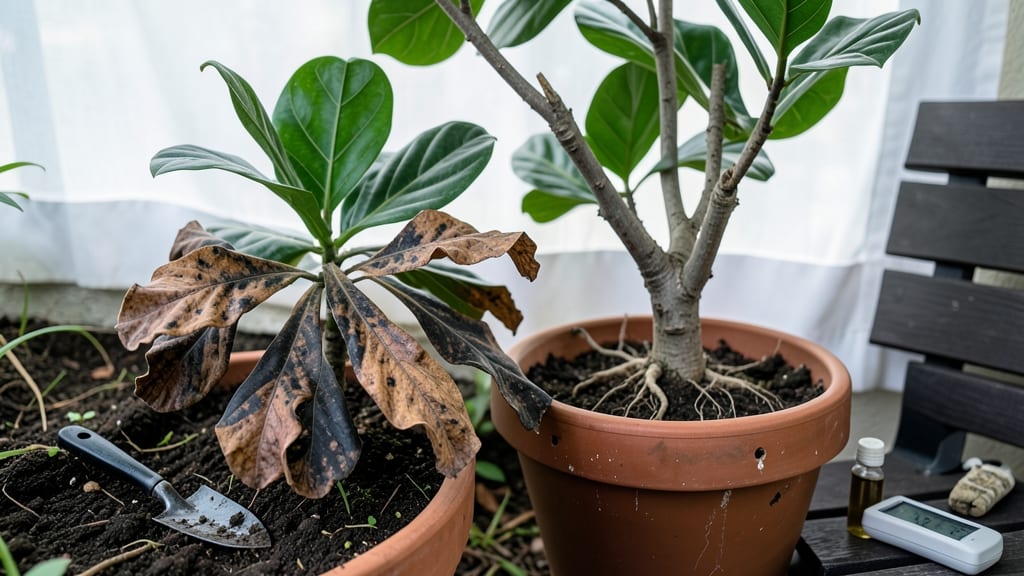
Your dead fiddle leaf fig tree’s crispy edges aren’t a death sentence—they’re a wake-up call. 🌿 I’ve nursed back more "dead" fiddle leaf figs than I’d like to admit, and the copper spray method works like magic when pests or stress are the culprit.
The key is diagnosing the real problem before treating symptoms.
Overwatering, underwatering, and spider mites top the list of culprits, but drafts or sudden temperature swings can finish the job. I once lost a fig to a heater vent—now I keep mine 65–85°F and away from direct AC.
The moment you see those telltale brown tips, check the soil moisture, inspect the undersides of leaves, and test for pests.
Reviving your plant starts with pruning crispy edges (sterilize your shears first!) and treating pests with a copper fungicide spray—it’s the secret weapon against mites and fungal issues. Within weeks, you’ll see new growth if the roots are still healthy. If not, propagation from cuttings can save the day.
Prevention is simple: water only when the top 2 inches of soil are dry, mist leaves regularly, and keep humidity high with a pebble tray. A healthy fiddle leaf fig thrives for years—don’t let crispy edges fool you into thinking it’s too late.
Why it happens
When your fiddle leaf fig (Ficus lyrata) starts looking more like a sad, crispy relic than a lush statement plant, the culprit is often rooted in environmental stress or care missteps. Understanding why those leaves turn brown, curl, or drop is the first step to revival.
Below, we break down the most common reasons—backed by plant science—and how to spot them before it’s too late.
💧 Overwatering Or Poor Drainage
Fiddle leaf figs are tropical plants, but they hate soggy roots. Overwatering triggers root rot (caused by Phytophthora or Pythium fungi), which cuts off oxygen and nutrients. Signs include:
- Yellowing leaves with brown, mushy edges (early root rot).
- Wilted stems that feel soft or hollow when pressed.
- Foul-smelling soil—like rotting vegetables—that clings to roots.
Why it happens: Fiddle leaf figs thrive in well-draining soil with a moist-but-not-wet consistency. Their native habitat in West African rainforests has seasonal dry spells, not constant moisture. When pots lack drainage holes or soil stays compacted, roots suffocate, leading to cellular death.
Actionable fix: Let the top 2–3 inches of soil dry out between waterings. Repot in a mix with perlite or orchid bark (30% inorganic matter) to improve aeration. If root rot is confirmed, trim affected roots with sterilized scissors and treat with a copper fungicide (like Copper Sulfate) to prevent spread.
☀️ Underwatering Or Low Humidity
While overwatering kills from the roots up, chronic underwatering (or dry air) causes desiccation stress, where leaves lose turgor pressure and crisp up like parchment. Fiddle leaf figs are not drought-tolerant—they need consistent moisture in their soil and ambient humidity.
Why it happens: These plants evolved in humid, shaded understories, where relative humidity hovers around 60–80%. Indoor heating, AC, or winter air (often <10% humidity) forces them into survival mode, causing:
- Brown, crispy edges (like burnt paper).
- Dropped leaves with a leathery texture.
- Curling or puckering of new growth.
Why? Cells in the leaf margins lose water faster than the center due to higher surface-area-to-volume ratios. Without humidity, transpiration outpaces root uptake, leading to plasmolysis (cell membrane detachment from the cell wall).
Actionable fix:
- Water when the top 1–2 inches of soil are dry (stick your finger in—if it’s bone-dry past 1 inch, you’ve waited too long).
- Group plants together to raise humidity via transpiration.
- Use a pebble tray with water or a humidifier near the plant.
- Avoid cold drafts (e.g., AC vents) that increase evaporation.
🌡️ Temperature Or Light Stress
Fiddle leaf figs are sensitive to extremes—whether it’s scorching sun or chilly drafts. Both can trigger leaf damage through oxidative stress or cold shock, respectively.
🔥 Too Much Direct Sun (Sunburn)
Why it happens: While fiddle leaf figs enjoy bright, indirect light, direct sunlight (especially south- or west-facing windows) causes UV-induced chlorophyll breakdown. Leaves develop:
- Bleached or white patches (like sunburn on human skin).
- Crispy, brown edges with a papery texture.
- Leaf drop if stress is prolonged.
The science: Excess UV light disrupts photosystem II in chloroplasts, generating reactive oxygen species (ROS) that damage cell membranes. The plant “sacrifices” sun-exposed leaves to protect vital tissues.
❄️ Cold Drafts Or Low Temps
Why it happens: Fiddle leaf figs cannot tolerate temps below 60°F (15°C). Drafts from windows, doors, or AC units cause:
- Blackened or purple-tinged leaves (cold damage).
- Stunted growth or leaf drop.
- Soft, mushy stems if exposed to <40°F (4°C).
The science: Cold temperatures increase membrane permeability, causing cytoplasmic leakage and cell death. Additionally, metabolic slowdown halts nutrient transport, leading to nutrient deficiencies (even if the soil is fertile).
Actionable fixes:
- Light: Place in east-facing windows or 6–10 feet from south/west windows. Use sheer curtains to diffuse light.
- Temperature: Keep away from windows in winter or heating/AC vents. Ideal range: 65–80°F (18–27°C).
- Recovery: If leaves are already damaged, trim them at the base to reduce stress on the plant.
🌱 Nutrient Deficiencies Or Over-Fertilization
Fiddle leaf figs are heavy feeders but suffer when nutrients are imbalanced or overapplied. Both extremes lead to leaf issues:
💀 Under-Fertilization (Nutrient Starvation)
Why it happens: Fiddle leaf figs need balanced NPK (nitrogen, phosphorus, potassium) plus micronutrients like magnesium and iron. Deficiencies show as:
| Symptom | Likely Deficiency | Leaf Appearance |
|---|---|---|
| Yellowing between veins | Magnesium (chlorosis) | Older leaves turn yellow with green veins. |
| Yellowing young leaves | Nitrogen | Pale green or yellow overall. |
| Brown spots on leaf edges | Potassium or calcium | Scorched or crispy margins. |
The science: Nutrients are mobile in the plant—
Revive Your Fiddle Leaf Fig Now
If your fiddle leaf fig looks like it’s met its untimely end—think crispy edges, drooping leaves, or a stubborn refusal to bounce back—don’t toss it just yet! 🌿 With the right care, you can nurse it back to health.
Below, we’ve broken down the most common causes of a struggling fiddle leaf fig and matched them with practical, step-by-step fixes. Plus, we’ll share pro tips to keep your plant thriving long-term.
Symptoms: Yellowing leaves, mushy stems, or roots that smell foul.
How to Fix It: 🔥 Step 1: Stop Watering Immediately
- Let the soil dry out completely before watering again. Stick your finger 1–2 inches into the soil—if it’s damp, wait.
🍳 Step 2: Check the Roots
- Gently remove the plant from its pot and inspect the roots. Healthy roots are firm and white; rotten roots are brown and mushy. Trim away any mushy or black roots with sterilized scissors.
👨🍳 Step 3: Repot in Fresh Soil
- Use a well-draining potting mix (like a blend of peat, perlite, and orchid bark). Choose a pot with drainage holes to prevent future waterlogging.
🥘 Step 4: Adjust Your Watering Routine
- Water only when the top 2–3 inches of soil are dry. In winter, reduce watering further—fiddle leaf figs enter a semi-dormant phase.
💡 Pro Tip: Use a moisture meter to avoid guesswork. Overwatering is the #1 reason fiddle leaf figs decline, so err on the side of underwatering at first!
Symptoms: Crispy, brown edges on leaves, dry soil pulling away from the pot.
How to Fix It: 🔥 Step 1: Deep Watering
- Soak the soil thoroughly until water drains from the bottom of the pot. Let it drain completely to avoid soggy roots.
🍳 Step 2: Increase Humidity
- Fiddle leaf figs love humidity (60%+). Place a tray of water with pebbles near the plant or use a humidifier. Mist the leaves lightly in the morning.
👨🍳 Step 3: Trim Damaged Leaves
- Use clean pruning shears to snip off crispy or brown leaves. This helps the plant focus energy on new growth.
🥘 Step 4: Adjust Light Exposure
- Move your plant to a spot with bright, indirect light. Avoid direct sunlight, which can scorch leaves.
🌡️ Pro Tip: Group plants together to create a microclimate with higher humidity. A simple pebble tray can boost humidity by 30%!
Symptoms: Leaf drop, stunted growth, or leaves curling inward.
How to Fix It: 🔥 Step 1: Find the Perfect Spot
- Keep your fiddle leaf fig in a room with temperatures between 65–80°F (18–27°C). Avoid drafts from AC vents, heaters, or open windows.
🍳 Step 2: Shield from Sudden Changes
- If you have AC or heating, place the plant a few feet away. Use a thermometer to monitor temperature swings.
👨🍳 Step 3: Rotate for Even Growth
- Turn the pot ¼ turn every few weeks so all sides get equal light exposure. This prevents lopsided growth and ensures balanced health.
✨ Pro Tip: If your home is dry (common in winter), a humidifier near the plant can work wonders. Avoid placing the plant near kitchen or bathroom vents, which can dry out the air.
Symptoms: Sticky residue on leaves, white webbing, or tiny bugs crawling on stems.
How to Fix It: 🔥 Step 1: Identify the Pests
- Common culprits include spider mites, mealybugs, and scale. Use a magnifying glass to spot them on the undersides of leaves.
🍳 Step 2: Isolate & Treat
- Move the plant away from others to prevent spreading. Wipe leaves with a damp cloth dipped in soapy water (1 tsp mild dish soap per gallon of water). For severe infestations, use neem oil (follow label instructions).
👨🍳 Step 3: Quarantine & Monitor
- Keep the plant isolated for 2–3 weeks. Check daily for signs of pests. Repeat treatments if needed.
💡 Pro Tip: Introduce beneficial insects like ladybugs to your garden (if outdoors) or use insecticidal soap for indoor plants. Prevention is key—inspect new plants before bringing them home!
Once your fiddle leaf fig is back on track, keep these habits to avoid future crises:
- Water wisely: Stick to the "soak and dry" method.
- Monitor light: Bright, indirect light is non-negotiable.
- Dust leaves: Wipe leaves every few weeks to help them absorb light.
- Fertilize lightly: Use a balanced liquid fertilizer (diluted to half strength) every 4–6 weeks in spring and summer.
- Prune regularly: Trim yellow or damaged leaves to encourage new growth.
With these fixes, your fiddle leaf fig should start showing signs of recovery within 2–4 weeks. Patience and consistency are key—don’t give up if progress is slow. Your plant has a fighting chance! 🌟
Frequently asked questions
Can a completely dead fiddle leaf fig tree ever come back to life?
If the roots are still alive (firm and white when checked), your plant has a chance! Trim all crispy leaves and repot in fresh, well-draining soil. Place it in bright, indirect light and maintain 60-80% humidity. New growth may appear in 4-8 weeks if the root system is healthy. If roots are black/mushy, propagation from cuttings is your best bet.
Why are my fiddle leaf fig leaves turning brown and crispy from the edges?
This classic symptom usually means low humidity or underwatering. Fiddle leaf figs need 60-80% humidity—try a pebble tray or humidifier. Check soil moisture too: water only when the top 1-2 inches are dry. Cold drafts or sudden temperature drops can also cause this browning.
How do I know if my fiddle leaf fig has root rot?
Gently remove the plant and inspect the roots. Healthy roots are firm and white, while rotten roots are brown, mushy, and smell foul. If you see blackened stems or yellowing leaves with brown edges, root rot is likely. Act fast: trim affected roots with sterilized scissors and repot in fresh, well-draining soil.
What's the best way to propagate a dying fiddle leaf fig?
Take 4-6 inch cuttings just below a leaf node, using sterilized shears. Remove lower leaves and dip the cut end in rooting hormone. Plant in moist perlite or a sand/peat mix, then cover with a plastic bag to retain humidity. Keep in bright, indirect light (no direct sun) and mist daily. Roots typically form in 4-6 weeks.
Can I save my fiddle leaf fig if it's been neglected for months?
With patience, yes! Start by pruning all dead leaves and checking roots. If roots are salvageable, repot in fresh soil and adjust care immediately. Move to ideal conditions (65-85°F, bright indirect light, 60%+ humidity) and water only when soil is dry. Even severely neglected plants can recover if the root system is intact.