
Propagation
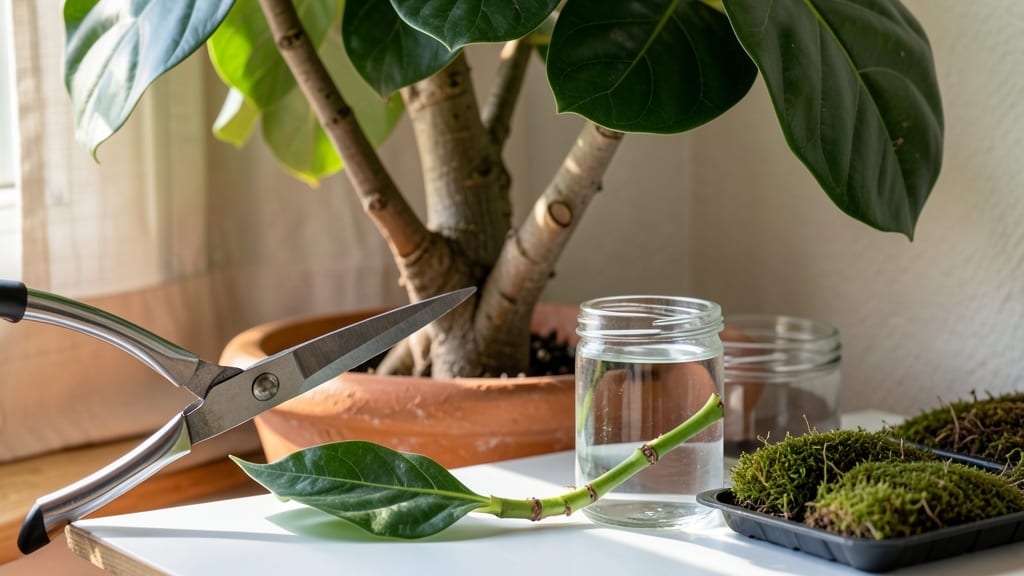
Finding the perfect spot to cut your fiddle leaf fig for propagation makes all the difference between a thriving new plant and a sad, limp stem. 🌱 The secret lies in those tiny nodes—those little bumps along the stem where roots will magically appear.
I’ve propagated dozens of fiddle leaf figs, and I’ve learned that cutting just below a node (about 1/4 inch down) is the golden rule for perfect stems every time.
You’ll need sharp pruners, a clean cutting surface, and a little patience—no fancy tools required. Most people mess up by cutting too high (missing the node) or too low (losing too much stem). The ideal cutting is about 4-6 inches long, with at least one node and a few leaves.
Once you’ve made your cut, let it callous over for a day or two before placing it in water or soil to encourage root growth.
What you’ll end up with is a bushier, healthier mother plant and a brand-new fiddle leaf fig ready to thrive. The rooted cuttings grow faster and stronger when kept in bright, indirect light and a humidity tray.
Within 4-6 weeks, you’ll have roots ready to pot up—no more guessing games about where to cut.
This trick works for any time of year, whether you’re propagating in spring or winter. Just avoid cutting during active growth spurts (like late spring) if you want the best survival rates. The key is consistency—once you master the node trick, you’ll never buy another fiddle leaf fig again.
Understanding Stem Growth Triggers
When it comes to propagating your fiddle leaf fig (Ficus lyrata), knowing why you should cut at specific points is just as important as how you do it. The science behind stem growth—especially in woody plants like the fiddle leaf fig—revolves around nodes, hormones, and energy redistribution.
Let’s break down the key reasons why your plant signals (or doesn’t signal) readiness for propagation cuts.
Fiddle leaf figs, like most plants, grow from nodes—tiny regions along the stem where leaves, branches, or roots can emerge. These nodes contain meristematic tissue, a cluster of undifferentiated cells that can develop into new growth. When you cut just below a node:
- ✅ Root initiation: The node’s axillary buds (dormant growth points) receive a hormonal cue to wake up and produce roots. This is driven by auxin (a plant growth hormone) shifting from the top of the stem to the base.
- ✅ Energy redirection: Removing the top portion of the stem (the "leader") forces the plant to redirect its stored energy (like carbohydrates from photosynthesis) toward root development in the cutting.
- ❌ Wrong cut = no roots: If you cut above a node or in the middle of a stem segment, the axillary buds lack the hormonal signal to activate, and the cutting may rot or fail to produce roots.
Pro Tip: 🔍 Look for the tiny bump or leaf scar at each node—this is your target zone. A healthy node is plump and greenish, not shriveled or brown.
The fiddle leaf fig’s growth hormones—auxin, cytokinins, and abscisic acid—play a starring role in propagation success. Here’s how they influence where (and when) you should cut:
| Hormone | Role in Propagation | What Happens If Disrupted? |
|---|---|---|
| Auxin | Produced in the apical bud (top of the stem), it suppresses root growth in the lower stem. When you remove the top, auxin levels drop, triggering root formation at the nodes. | If auxin isn’t reduced (e.g., cutting too high), the cutting may sprout leaves instead of roots. |
| Cytokinins | Found in young leaves and nodes, these promote cell division. A cutting with 1–2 leaves has enough cytokinins to support new growth. | Too few leaves = weak root development. Too many = energy drain from the cutting. |
| Abscisic Acid | Acts as a "stress hormone" that can inhibit rooting if the plant is unhealthy or cut at the wrong time (e.g., during dormancy or extreme heat). | High levels (from stressed or overwatered plants) can cause rotting instead of rooting. |
Key Takeaway: 🌡️ Spring and early summer are ideal cutting times because the plant’s auxin levels are naturally lower, and cytokinins are abundant from new growth.
Not all cuts work—sometimes, your fiddle leaf fig resists propagation due to external or internal stress. Here’s what might be sabotaging your efforts:
- 🌡️ Temperature extremes: Fiddle leaf figs thrive at 65–75°F (18–24°C). Cutting during heatwaves or cold snaps spikes abscisic acid, delaying rooting. Solution: Wait for stable conditions.
- 💧 Overwatering or drought:
- Overwatered: Soggy soil = anaerobic stress, triggering rot instead of roots.
- Underwatered: Wilting stems have low turgor pressure, making nodes less responsive to cutting.
- ⚡ Nutrient imbalance: Too much nitrogen (from fertilizer) promotes leafy growth but weakens root development. Solution: Flush soil with water 2 weeks before cutting.
- 🐛 Pest/disease damage: Infested or diseased stems may seal off nodes to protect the plant, preventing successful propagation. Solution: Treat pests first with neem oil or insecticidal soap.
Warning: ⚠️ If your plant is flowering, avoid cutting—energy is diverted to the bloom, not roots.
By understanding these biological and environmental triggers, you’ll not only know where to cut but also when to cut for the highest chance of success. Next up: How to Identify the Perfect Node—with a foolproof trick!
Mastering the Perfect Cuts for Propagation
Now that you understand why proper cuts matter, let’s roll up your sleeves and get practical! Whether you’re dealing with a leggy stem, a mature plant, or a simple maintenance trim, these step-by-step solutions will help you propagate your fiddle leaf fig like a pro.
We’ll cover everything from identifying the right nodes to post-cut care—plus tips to keep your cuttings thriving.
Cause: Cutting at the wrong time or with the wrong tools can stress the plant or lead to failed propagation. Fix:
- Best time to cut: Late spring or early summer, when the plant is actively growing. Avoid cutting during dormancy (winter) or extreme heat.
- Tools to use: A clean, sharp pair of pruning shears or sterilized scissors. Dull tools crush stems, making cuts heal poorly.
- Prevention tip: 💡 Sharpen your tools with a file or honing stone before use—this ensures clean cuts and reduces plant trauma.
Cause: Cutting in the wrong spot (above or below a node) can kill the cutting or prevent root growth. Fix:
- Locate the nodes: Nodes are the small bumps or joints on the stem where leaves grow. They’re your golden ticket for propagation!
- Make the cut: Use your sterilized tool to cut just below a node at a 45-degree angle. This increases surface area for faster rooting.
- For leggy stems: Cut 1–2 inches below the lowest healthy leaf pair to encourage bushier growth.
- For mature stems: You can take multiple 4–6 inch cuttings, each with at least 2–3 nodes.
- Prevention tip: ✨ Label your cuttings! Use a toothpick with the date or node count to track which cuttings are most likely to root.
Cause: Neglecting cuttings after the cut leads to rot, wilting, or failure to root. Fix:
- Let it callous (dry out): Place cuttings in a shady, dry spot for 1–2 hours to let the cut end form a callous. This prevents rot when planted.
- Rooting medium options:
- Water propagation: Place the cutting in a jar of room-temperature water, changing it every 3–4 days. Roots should appear in 2–4 weeks.
- Soil propagation: Dip the cut end in rooting hormone (optional but helpful) and plant in well-draining soil (like a mix of perlite and potting soil).
- Humidity and warmth: Cover the cutting with a plastic bag or use a humidity dome to retain moisture. Keep it in indirect light (no direct sun yet!).
- Prevention tip: 🌡️ Monitor temperature! Ideal rooting conditions are 70–75°F (21–24°C). Avoid drafts or cold spots.
Cause: Overwatering, poor lighting, or impatience can derail your propagation efforts. Fix:
| Mistake | Why It Happens | How to Fix It |
|---|---|---|
| Yellowing leaves | Too much direct light or overwatering | Move to bright, indirect light and reduce watering. |
| Black, mushy stems | Rot from overwatering or poor drainage | Let the soil dry slightly between waterings and use well-draining soil. |
| No root growth | Cutting taken from a weak or old stem | Choose healthier, younger stems with fresh nodes for better success. |
| Wilting cuttings | Stress from improper callousing | Let cuts dry for 1–2 hours before planting and avoid touching the cut end. |
Prevention tip: 🎯 Patience is key! Fiddle leaf fig cuttings can take 4–8 weeks to root—don’t give up too soon.
- 💡 Use a heat mat: Place your cuttings on a seedling heat mat (set to 75°F) to speed up rooting.
- 🌡️ Bottom heat helps: Roots grow faster in warmth—place your propagation jar or pot on a warm surface (like a sunny windowsill).
- 🍃 Repurpose your cuttings: If a cutting doesn’t root, try grafting it onto a stronger stem or using it as a layering stem (bury part of it in soil while still attached to the mother plant).
- 🔄 Rotate your cuttings: If using water propagation, rotate the jar weekly to prevent algae growth and ensure even light exposure.
By following these steps, you’ll not only propagate your fiddle leaf fig successfully but also keep your mother plant healthy and bushy. Happy cutting—and here’s to your future jungle of fiddle leaf figs! 🌿💚
Frequently asked questions
Why do I need to cut below a node for propagation?
Nodes contain the plant's growth hormones and dormant root buds. Cutting just below a node (about 1/4 inch) triggers these buds to wake up and grow roots. Without a node, your cutting will struggle to develop roots and may rot instead. Think of it as giving your new plant a built-in root starter kit!
Can I use scissors instead of pruning shears?
Yes, but only if they're clean and sharp. Dull scissors can crush the stem, causing damage that may prevent root growth. For best results, sterilize your scissors with rubbing alcohol first. A clean cut heals faster and gives your cutting the best chance to thrive.
How many nodes should my cutting have?
For best results, aim for 2-3 nodes per cutting. Each node has the potential to grow roots, so more nodes mean better stability. A cutting with just one node may be too weak to support new growth. Look for healthy, plump nodes that are greenish in color for the best success rate.
Why is my cutting not rooting in water?
There are a few common reasons: the cutting may be too old (use younger stems), the water might be too cold, or there could be too much light causing algae growth. Try using filtered or distilled water, changing it every 3-4 days, and placing your jar in indirect light. Patience is key—some cuttings take 4-6 weeks to show roots.
Can I propagate my fiddle leaf fig in winter?
While possible, winter propagation is less successful because the plant's growth slows down. If you must propagate in winter, choose a healthy stem and provide extra warmth (like a heat mat) and humidity. Spring and early summer are ideal times because the plant's natural growth hormones are more active.