
Pests
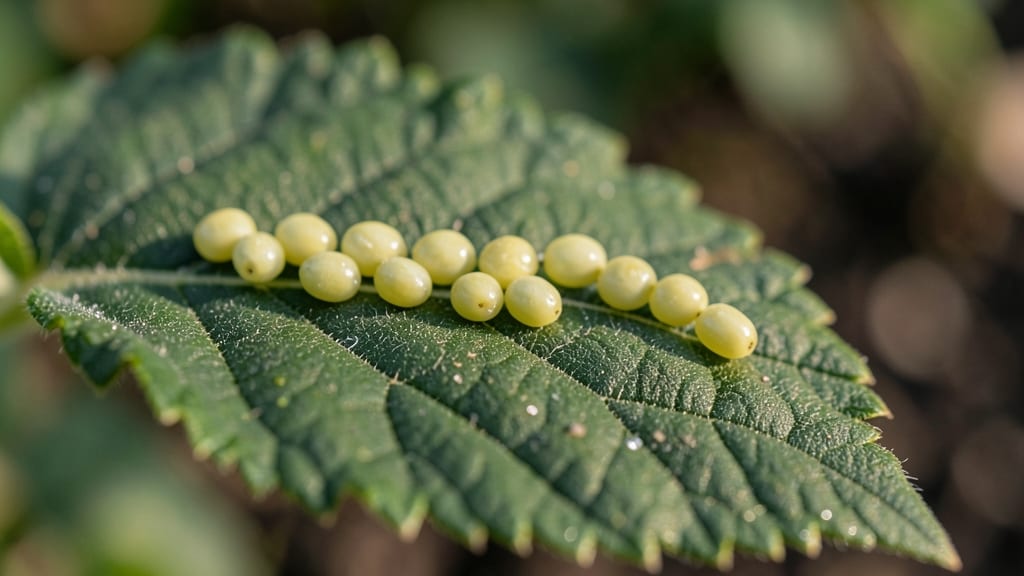
Spotting tiny viburnum leaf beetle eggs clustered on leaves means your plants are under siege before you even see the beetles. 🌿 I learned the hard way that waiting until the adults appear means losing half your foliage—so I now check leaves in early spring for these telltale egg clusters, then crush them before they hatch.
The eggs are barely visible to the naked eye, but a magnifying glass reveals their bright yellow color and oval shape, often laid in rows along leaf veins.
This is your only chance to stop the beetles before they skeletonize your shrubs—no chemical sprays needed at this stage, just a firm scrape with your fingernail or a soft brush into soapy water.
By eliminating these eggs, you'll preserve your viburnum's lush green leaves and prevent the defoliation that weakens plants for years. The key is acting fast: once the beetles emerge, you're fighting a losing battle without stronger interventions.
This method works for all viburnum varieties and fits into any spring garden maintenance routine. Early action saves time, money, and the heartbreak of seeing your shrubs stripped bare by mid-summer.
Root Causes Of Beetle Eggs
Viburnum leaf beetles (Pyrrhalta viburni) don’t just appear out of nowhere—they’re the result of a perfect storm of environmental and biological factors. Understanding these causes helps you predict outbreaks and take action before the eggs even hatch.
Here’s why these pests target your viburnum bushes in the first place.
The primary reason viburnum leaf beetles lay eggs on your plants is simple: your viburnum bushes are their favorite buffet. These beetles are highly specialized and almost exclusively feed on viburnum species (Viburnum spp.), including common landscaping varieties like Viburnum dentatum (arrowwood) and Viburnum opulus (cranberry bush).
- Why it matters: Female beetles seek out healthy, lush viburnum foliage because it provides the ideal environment for their larvae to thrive once they hatch.
- Actionable insight: If you’ve recently planted viburnums or have mature bushes, they’re now prime real estate for egg-laying. Pro tip: 💡 Remove nearby wild viburnums or overgrown hedges—these can act as "beetle magnets" and spread infestations faster.
- Science behind it: Beetles use chemical cues (volatile organic compounds) emitted by viburnum leaves to locate host plants. Think of it like a scent trail leading straight to your garden.
Viburnum leaf beetles are cold-hardy but temperature-sensitive when it comes to reproduction. Their egg-laying cycle is tightly linked to seasonal changes, and a few key climate factors set the stage for an infestation:
| Factor | Why It Triggers Egg-Laying | Actionable Window |
|---|---|---|
| 🌤️ Warm Springs (50–65°F) | Beetles emerge from overwintering sites (like leaf litter or bark crevices) when soil and air temperatures rise. Females need 3–4 weeks of consistent warmth to mature and seek mates. | Monitor bushes in late April–early May—this is when scouting for eggs should begin. |
| ☀️ Direct Sunlight on Foliage | Beetles prefer to lay eggs on sun-exposed leaves because warmth accelerates larval development post-hatch. Shady viburnums may still get eggs, but infestations are often worse in full sun. | Prune to open the canopy if your bush is overly dense—this can reduce egg-laying hotspots. |
| 💧 Moisture (But Not Soggy Soil) | Eggs need moderate humidity to survive. Too little moisture = desiccation; too much (like waterlogged soil) can drown them. Ideal conditions mimic a dewy morning after light rain. | Water deeply but avoid overhead sprinkling during egg-laying season (April–June). |
Pro tip: 🌡️ Use a soil thermometer to track when your area hits 50°F—this is your first warning that beetles may be active.
Beetles don’t just show up in spring—they’ve been biding their time since last year. Their life cycle includes a diapause (a dormant state) that helps them survive winter, and their ability to do so depends on:
- Microclimates: Beetles hide in leaf litter, mulch, or bark cracks where temperatures stay just above freezing. If your garden has thick mulch or unraked leaves, you’re providing a cozy winter home for them.
- Adult beetle longevity: Females can live up to 2 months after emerging, meaning one generation can produce multiple batches of eggs if conditions are right.
- Lack of natural predators: Young viburnum plantings often have fewer birds or parasitic wasps (their natural enemies) compared to mature gardens. This gives beetles a head start on colonization.
Pro tip: ✨ Rake and remove leaf debris in late fall—this starves out overwintering beetles by eliminating their shelter.
Stressed viburnum bushes are like a neon "Welcome" sign for leaf beetles. When plants are weak, nutrient-deficient, or diseased, they produce chemical signals that attract pests—including egg-laying females. Common stressors include:
- Compacted or poor soil: Root-bound viburnums can’t access water/nutrients, making leaves softer and more palatable to beetles.
- Over-fertilization (especially nitrogen): Lush, tender new growth is a beetle’s dream—it’s packed with nutrients and easy to chew.
- Drought or flooding: Both extremes weaken plant defenses and make viburnums more susceptible to beetle damage.
- Fungal/bacterial infections: Spots or blights on leaves can alter plant chemistry, making them more attractive to egg-layers.
Actionable fix: 💪 Test your soil and amend with compost + balanced fertilizer (10-10-10) in early spring to boost plant resilience before beetles arrive.
Beat Back Beetles Before They Hatch
Discovering viburnum leaf beetle eggs on your prized shrubs can feel like a ticking time bomb—but you’re not powerless. The key is early, targeted action before larvae emerge and wreak havoc.
Below, we break down cause-specific fixes to stop the beetles in their tracks, plus prevention tips to keep your viburnums thriving.
The most effective way to eliminate viburnum leaf beetle eggs is to physically remove them before they hatch. Here’s how:
- 🔍 Inspect leaves daily (especially undersides) for clusters of tiny, yellow-orange eggs. Eggs are laid in rows along leaf veins—look for 10–30 eggs per cluster.
- 🧤 Wear gloves (some gardeners report skin irritation from beetle secretions). Use a soft brush or cotton swab to gently scrape eggs into a soapy water solution (1 tbsp dish soap per gallon of water).
- 💥 Smash or submerge the collected eggs immediately. A plastic bag with soapy water works well—seal and discard in the trash (not compost).
- 🌿 Check all viburnum leaves, including new growth. Beetles favor Viburnum dentatum (arrowwood) and Viburnum lantana (wayfaring tree).
Pro Tip: 🌡️ Timing is critical—eggs hatch in 7–10 days at 60°F (15°C). Start monitoring in late April to early May (varies by climate). Use a handheld magnifying glass for better visibility.
If manual removal feels tedious or your shrubs are large, organic sprays can disrupt egg viability without harming beneficial insects. Try these:
| Solution | How to Use | Best For |
|---|---|---|
| Neem oil (1%) | Mix 2 tbsp neem oil + 1 tsp mild soap per quart of water. Spray evenly on leaf undersides at dusk (avoids harming bees). Reapply every 5–7 days until eggs hatch. | Small infestations; prevents hatching |
| Kaolin clay (Surround WP) | Apply as a dust or spray to create a physical barrier that suffocates eggs. Reapply after rain. Non-toxic to pets and wildlife. | Large shrubs; long-term prevention |
| Insecticidal soap | Use a 1–2% solution (e.g., Safer® Insect Killing Soap). Spray directly on eggs—soap disrupts their waxy coating. Reapply after rain. | Quick knockdown; small outbreaks |
Pro Tip: ⏰ Spray in the evening to protect pollinators. Avoid horticultural oils if temperatures exceed 85°F (29°C)—they can burn leaves.
Prevent beetles from reaching your viburnums in the first place with mechanical defenses:
- 🛡️ Floating row covers (lightweight fabric): Drape over shrubs in early spring (before adult beetles emerge) and secure with clips. Remove in late May to allow pollination.
- 🪲 Sticky traps: Place yellow sticky cards near viburnums to catch adult beetles before they lay eggs. Replace weekly.
- 🌿 Prune strategically: Remove and destroy heavily infested leaves before egg-laying season (late winter/early spring). Bag and trash them—do not compost.
Pro Tip: 🎯 Combine barriers with monitoring. Check traps daily and inspect leaves twice weekly for fresh egg clusters.
Encourage beneficial insects that prey on viburnum leaf beetles and their eggs:
- 🐞 Lady beetles (ladybugs): Release commercially available larvae (e.g., Hippodamia convergens) in early spring. They devour eggs voraciously.
- 🕷️ Spiders: Plant native wildflowers (e.g., dill, yarrow) to attract spider populations, which eat beetle eggs.
- 🐦 Birds: Install a bird feeder or nest box near viburnums. Chickadees and wrens prey on beetle larvae.
Pro Tip: ✨ Avoid broad-spectrum pesticides—they kill natural predators faster than beetles. Opt for targeted sprays (e.g., Bt kurstaki) if larvae appear.
Break the beetle life cycle with these year-round strategies:
- 🌱 Plant resistant viburnums: Choose Viburnum opulus (craneberry) or Viburnum plicatum (Japanese snowball)—they’re less favored by leaf beetles.
- 🍂 Clean up fallen leaves: Rake and double-bag leaf litter in fall/winter to remove overwintering eggs.
- 🌡️ Monitor soil moisture: Drought-stressed shrubs attract more beetles. Water deeply once weekly during dry spells.
- 📅 Set reminders: Mark your calendar for egg-laying season (varies by region—check local pest reports).
Pro Tip: 💡 Rotate control methods annually to prevent beetle resistance. For example, alternate neem oil one year with ladybug releases the next.
With these practical, science-backed solutions, you can crush viburnum leaf beetle eggs before they become a full-blown infestation. Start today—your shrubs (and future garden parties) will thank you!
Frequently asked questions
How do I know if I'm seeing viburnum leaf beetle eggs or just aphids?
Aphids are tiny green or black insects that cluster on stems, while viburnum leaf beetle eggs appear as small, oval, bright yellow-orange clusters laid in neat rows along leaf veins. Use a magnifying glass to spot the eggs' distinct shape and color—aphids won't have this organized pattern.
Can I use vinegar to kill viburnum leaf beetle eggs?
Vinegar isn't effective for killing eggs—it lacks the necessary chemical properties to penetrate their protective coating. Instead, use soapy water (1 tbsp dish soap per gallon) to physically remove eggs by hand or with a soft brush. This method is safer for your plants and the environment.
What's the best time of day to check for eggs?
Check your viburnum leaves in the early morning when dew is present—this makes eggs more visible and easier to spot. Avoid midday heat, as it can dry out the leaves and make eggs harder to see. Inspect both the top and undersides of leaves thoroughly.
Will my viburnum recover if I miss the egg stage and beetles hatch?
While your plant may survive, you'll likely see defoliation as larvae feed on leaves, weakening the shrub. Act quickly by using neem oil or Bt kurstaki (a bacterial spray) to target larvae. Prune heavily damaged leaves and monitor for future egg clusters next season.
How often should I apply neem oil if I find eggs?
Apply neem oil every 5–7 days until the eggs hatch (typically 7–10 days at 60°F). For best results, spray in the evening to protect pollinators. If temperatures exceed 85°F, avoid application to prevent leaf burn.