
Pests and Diseases
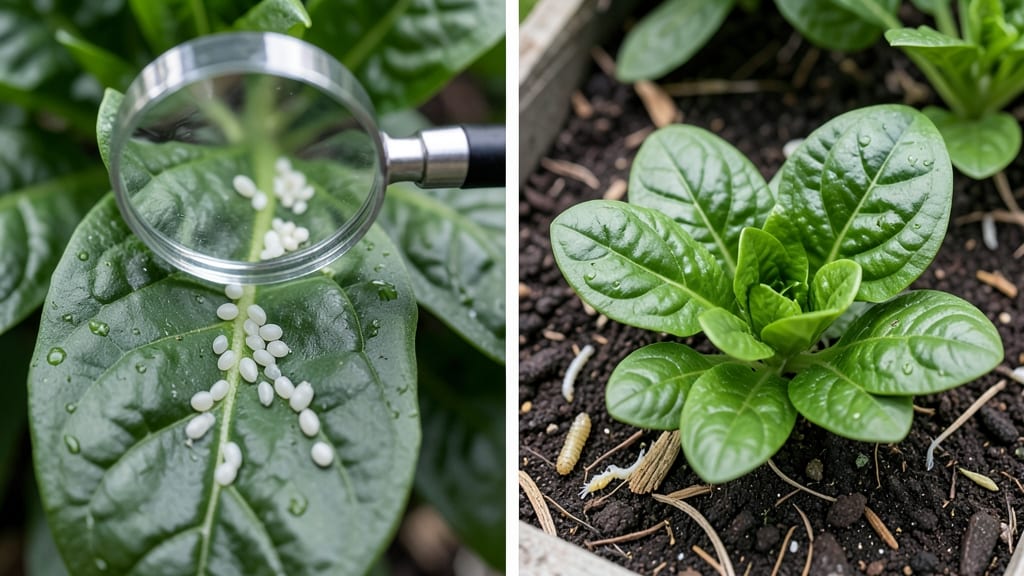
Your spinach leaves might be hiding tiny white eggs that’ll turn into leaf miners—the silent destroyer of crisp greens. 🌿 These microscopic pests lay eggs on the undersides of leaves, and by the time you spot their damage, it’s often too late.
I’ve battled them in my garden, and I’ll show you how to catch them early before they ruin your harvest.
The eggs are barely visible—think tiny white specks, about the size of a pinprick, clustered along leaf veins. Without intervention, they hatch into larvae that chew through leaf tissue, leaving behind telltale serpentine trails.
The good news? You can spot and remove them manually with a magnifying glass and a damp cloth, saving your spinach before the damage spreads.
Once you’ve removed the eggs, prevent future infestations with floating row covers or neem oil sprays. Crop rotation and keeping your garden clean also cut down on their numbers. With these steps, you’ll protect your spinach—and your patience—from this sneaky pest.
This method works for any leafy greens, not just spinach, and it’s completely organic. No harsh chemicals, just sharp eyes and a little elbow grease. Let’s get those leaves miner-free!
The Hidden Triggers Behind Eggs
Spinach leaf miner eggs don’t just appear out of nowhere—they’re the result of a deliberate, stealthy invasion by tiny, winged pests. Understanding the why behind their presence is the first step to stopping them before they hatch and wreak havoc on your greens.
Here’s a breakdown of the key factors that turn your spinach into a buffet for these microscopic troublemakers.
The cycle begins when adult spinach leaf miner moths (typically Phytomyza gymnostoma or related species) identify your spinach as the perfect place to lay their eggs. These moths are highly selective—they’re drawn to:
- Young, tender leaves: New growth is softer and easier for larvae to penetrate once they hatch.
- Healthy, nutrient-rich plants: Moths use plant scent and chemical signals to locate thriving spinach, which offers ideal conditions for their offspring.
- Warm, humid conditions: Spinach leaf miners thrive in moderate to warm temperatures (60–80°F) and higher humidity, which speeds up egg development and larval growth.
Pro tip: 🌡️ If your spinach is planted in spring or early summer—or in a region with mild winters—you’re at higher risk. Moths are most active during these periods.
Leaf miners don’t just show up once—they return if you don’t disrupt their life cycle. Here’s how sloppy garden practices create a welcome mat:
- Leftover plant debris: Old spinach leaves, stems, or even nearby weeds can harbor pupating larvae or moths waiting to emerge. These pests overwinter in garden soil or plant matter, ready to strike again.
- No crop rotation: Planting spinach (or other susceptible crops like chard or beets) in the same spot year after year gives moths a familiar, easy target. They “learn” where food is abundant.
- Ignored neighboring plants: Leaf miners can jump between host plants. If you have unmonitored brassicas (like kale) or nightshades (like tomatoes) nearby, they become stepping stones for infestations.
Action step: ✨ Clear out old plant material after harvest and rotate crops annually to break the moths’ “memory” of your garden.
Spinach leaf miner eggs are temperature-sensitive. They won’t hatch unless conditions are just right:
| Factor | Ideal Range for Egg Hatching | Risk Level |
|---|---|---|
| Soil/Leaf Temperature | 60–75°F (15–24°C) | ⚠️ High (eggs hatch in 3–7 days) |
| Humidity | 60%+ moisture | ⚠️ High (larvae thrive in damp environments) |
| Day Length | 12+ hours of daylight | 🔥 Critical (triggers adult moth emergence) |
In cooler climates, eggs may linger dormant until conditions warm up. Meanwhile, in hotter regions, multiple generations can hatch in a single season if moisture is consistent.
Watch for: 📊 If your spinach is planted in early spring or late summer, you’re in the “sweet spot” for moth activity.
In a healthy ecosystem, spinach leaf miners face natural enemies that keep their populations in check. But if these predators are missing, eggs and larvae flourish. Common natural controls include:
- Parasitic wasps: Tiny Hymenoptera like Diglyphus isaea lay eggs inside leaf miner larvae, killing them from within.
- Ground beetles and lacewings: These insects eat adult moths and young larvae before they cause damage.
- Birds and bats: They snack on adult moths during dusk/dawn flights.
Why it matters: 🌿 If you’ve used broad-spectrum pesticides (even “organic” ones like neem oil overused), you may have wiped out these helpers. A lack of biodiversity in your garden = more eggs surviving.
Now that you know why these eggs appear, the next step is stopping them before they hatch—or removing them manually if they’re already there. Stay tuned!
Quick Fixes for Leaf Miner Infestations
If you’ve spotted tiny white eggs or serpentine trails on your spinach leaves, don’t panic—there are effective, garden-friendly ways to tackle spinach leaf miners before they wreak havoc. Below, we break down solutions by cause and action, so you can choose the best approach for your garden’s needs.
---
Before jumping into treatments, confirm what you’re dealing with: - Eggs (tiny white specks on leaf undersides) - Larvae (white, worm-like trails inside leaves) - Adult flies (small, black or gray moths hovering near plants)
If you’re seeing eggs, act fast—they’ll hatch into larvae in 5–10 days, causing irreversible damage.
---
#### 🛡️ Physical Barriers (Stop Eggs Before They Hatch) Leaf miners lay eggs on leaf undersides, so trapping them early is key.
- 🍳 Row Covers (Floating Fabric) - Use fine mesh row covers (1–2 mm holes) to block adult flies. - Install before flies emerge (spring/early summer). - Secure edges tightly to prevent entry.
- 👨🍳 Handpick Eggs & Larvae - Inspect leaves daily (especially undersides). - Gently scrape off eggs with a soft brush or damp cloth. - Drop them into soapy water to kill them.
- 🥘 Yellow Sticky Traps - Place yellow sticky cards near spinach to catch adult flies. - Replace every 3–5 days for best results.
---
#### 🐞 Introduce Natural Predators Encourage beneficial insects that eat leaf miner eggs/larvae:
- 🐞 Parasitic Wasps (Diglyphus isaea or Opius spp.) - Release 10–20 wasps per 100 sq ft in early morning/late evening. - They lay eggs inside leaf miner larvae, killing them.
- 🦋 Ladybugs & Lacewings - Buy eggs or adults from garden centers. - Release near infested plants for larvae consumption.
- 🌱 Companion Planting - Plant marigolds, dill, or basil nearby—their scents repel leaf miners.
---
#### 🌡️ Heat & Soil Treatments (Disrupt Life Cycle) - 🔥 Solarization (For Severe Cases) - Cover soil with clear plastic for 4–6 weeks in hot sun. - Kills pupae and eggs in the soil.
- 💡 Neem Oil Spray (Egg & Larvae Deterrent) - Mix 1 tbsp neem oil + 1 tsp mild soap + 1 quart water. - Spray leaf undersides every 5–7 days (avoid direct sun). - ⚠️ Reapply after rain.
---
If organic methods fail, try these targeted sprays:
| Solution | How to Use | Safety Notes | |----------------------------|----------------------------------------|-------------------------------------------| | 🟢 Spinosad (Organic) | Spray at dusk (1 tsp/gallon water) | Safe for bees after drying; reapply weekly. | | 🟡 Kaolin Clay | Mix 1 tbsp clay + 1 gallon water, spray leaves | Creates a barrier; non-toxic. | | 🔴 Pyrethrin (Fast-Kill)| Use only at night (kills adults) | Avoid if bees are present; not for organic cert. |
💡 Pro Tip: Rotate methods to prevent resistance—don’t rely on one solution long-term.
---
Once you’ve treated an infestation, stop future attacks with these habits:
✅ 🌱 Rotate Crops – Don’t plant spinach in the same spot for 2+ years. ✅ 🧹 Clean Up Debris – Remove old leaves and plant waste where eggs hide. ✅ 🌿 Mulch Heavily – Straw or grass clippings discourage egg-laying. ✅ 🕒 Plant at the Right Time – Avoid late summer/fall plantings (peak fly season). ✅ 💦 Water Deeply – Stressed plants attract pests; keep soil moist but not soggy.
--- 🎯 Final Reminder: Early action is everything—leaf miners cause permanent damage once larvae tunnel into leaves. Check your spinach weekly, especially in warm, humid weather, and combine prevention + treatment for the best results!
Frequently asked questions
How do I tell if those tiny white specks on my spinach are leaf miner eggs?
Use a magnifying glass to check for tiny white ovals (about 0.5mm long) along leaf veins, especially on undersides. They’re usually clustered and may appear slightly raised. Compare them to a grain of salt—if they’re that small or smaller, they’re likely eggs.
Can I use soap spray to remove leaf miner eggs from spinach?
Yes, but gently! Mix 1 tablespoon mild liquid soap with 1 quart water and lightly spray leaf undersides. The soap suffocates eggs without harming plants. Reapply every 3-4 days during active egg-laying periods (spring/early summer). Avoid harsh detergents that can damage foliage.
What’s the best time of day to check for eggs?
Morning is ideal—leaf miner moths are most active at dawn and dusk, so eggs laid overnight will be freshest then. Check for 30-45 minutes after sunrise when dew is still present, making eggs easier to spot with a magnifying glass.
Will neem oil kill spinach leaf miner eggs?
Neem oil disrupts egg development but won’t kill them instantly. For best results, apply neem oil spray (1 tbsp/quart water) every 5-7 days starting when you first see eggs. The active compounds prevent hatching, but you’ll need consistent applications—especially after rain.
Can I save heavily infested spinach plants?
Only if you act immediately! Remove all visible eggs and larvae by hand, then apply yellow sticky traps and row covers. For severe cases, consider replacing the plant—once larvae tunnel into leaves, the damage is permanent. Focus your efforts on protecting new growth.