Container Gardens
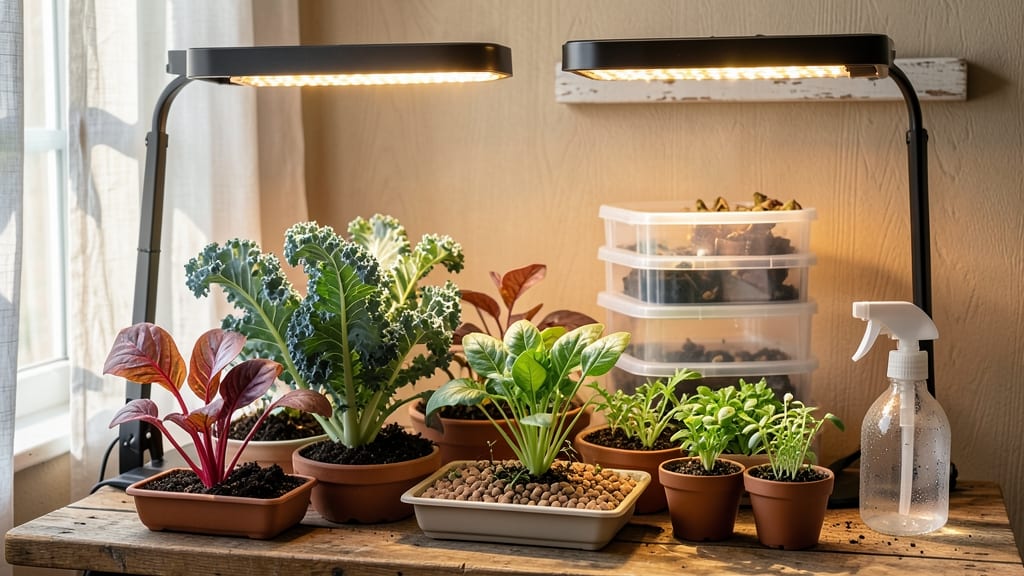
Growing leafy greens indoors means crisp salads straight from your windowsill, even when it's snowing outside. 🌱 I've turned my kitchen into a mini farm—lettuce, spinach, and kale growing stronger than my local grocery store's wilted selection.
The secret isn't fancy equipment; it's matching light, soil, and water to what these plants actually need.
Most people overdo the light or underwater their greens, leading to sad, leggy plants. You only need 6-8 hours of bright light daily—either a sunny window or a $20 grow light on a timer.
Use a well-draining potting mix in a container with drainage holes, and water when the top inch feels dry. Humidity is key too; a simple tray of water with pebbles keeps the air moist without drowning roots.
By week 3, you'll be harvesting baby leaves for sandwiches, and full-sized greens in 4-6 weeks. The flavor? Shockingly fresh—nothing like store-bought. Even my black thumb can't kill these with the right setup.
Works for apartments, offices, or even a sunny bathroom. Let's get those greens growing—no yard required!
Common Culprits Behind Weak Growth
When your indoor leafy greens aren’t thriving, it’s usually because one (or more) of their core needs isn’t being met. Understanding the why behind stunted growth, yellowing leaves, or leggy stems is the first step to fixing the problem.
Below, we break down the most common causes—backed by science—and how to spot them before they derail your harvest.
Leafy greens like kale, spinach, and Swiss chard are phototropic, meaning they grow toward light sources. If your indoor setup lacks adequate or balanced light, you’ll see:
- Leggy, stretched stems – Plants lean toward the nearest light (usually a window) to maximize photosynthesis, but this weakens their structure.
- Pale or yellowing leaves – Without enough blue and red spectrum light (critical for chlorophyll production), leaves lose their vibrant green hue.
- Slow or no growth – Photosynthesis stalls when light intensity drops below 10,000–15,000 lux (natural sunlight is ~50,000–100,000 lux).
Why it happens: Most indoor spaces—even near windows—get filtered or indirect light, which lacks the full solar spectrum. Overcast days or deep-shaded rooms make it worse. Solution tip: Supplement with full-spectrum LED grow lights (12–16 hours/day) or rotate trays every few days for even exposure.
Leafy greens despise soggy roots. When water isn’t draining properly, you’ll notice:
- Yellowing lower leaves – A classic sign of root rot, caused by Pythium or Phytophthora fungi thriving in waterlogged soil.
- Wilted or mushy stems – Roots suffocate and can’t absorb oxygen, leading to cellular collapse.
- Foul smells – Stagnant water = bacterial growth (hello, Erwinia bacteria).
Why it happens: Many indoor growers assume "more water = happier plants," but leafy greens (especially mesophytes like lettuce) prefer consistently moist but well-drained soil. Containers without drainage holes or compacted soil trap excess moisture. Pro move: Use pots with drainage, mix in perlite or coco coir (20–30% of the soil mix), and water only when the top inch feels dry.
Leafy greens have a sweet spot for temperature (60–75°F) and humidity (40–60%). Stray too far, and you’ll see:
- Brown, crispy leaf edges – Low humidity (<30%) causes transpiration stress, where water evaporates faster than roots can replace it.
- Slow or stunted growth – Temperatures above 80°F or below 50°F disrupt enzyme activity in chloroplasts, halting photosynthesis.
- Powdery mildew – High humidity (>70%) + poor airflow = fungal spores (Erysiphe) taking over.
Why it happens: Indoor environments often swing extremes—dry air from HVAC systems or overheated rooms from appliances. Leafy greens also transpire rapidly (lose water through leaves), making them vulnerable to humidity fluctuations. Fix it: Use a small humidifier near plants or place trays on a bed of pebbles with water (for passive humidity). Avoid drafts and keep grow lights 12–18 inches away to prevent heat stress.
Leafy greens are heavy feeders and show distress quickly when nutrients are off. Watch for these red flags:
| Symptom | Likely Cause | Quick Fix |
|---|---|---|
| Yellowing older leaves | Nitrogen deficiency (plants can’t make chlorophyll) | Add a balanced liquid fertilizer (e.g., 5-5-5) or compost tea |
| Purple or red stems/veins | Phosphorus deficiency (stress response) | Use a phosphate-rich fertilizer (e.g., bone meal) or switch to a 10-10-10 blend |
| Yellowing young leaves + weak stems | Magnesium or iron deficiency (chlorosis) | Spray with Epsom salt solution (1 tbsp/gallon) or chelated iron |
| Slow growth + small leaves | General nutrient starvation (overwatered or old soil) | Flush soil with water, then repot with fresh nutrient-rich mix (e.g., worm castings + compost) |
Why it happens: Soil nutrients deplete fast in containers, especially if you’re growing cut-and-come-again greens. Overwatering also leaches nutrients, while tap water (high in chlorine/fluoride) can block uptake. Prevent it: Test soil pH (aim for 6.0–7.0) and fertilize every 2–3 weeks with a low-salt organic option.
Next up: We’ll cover how to diagnose these issues in your setup and actionable fixes to revive your greens—no guesswork required!
Fixing Common Indoor Green Growing Woes
Got leafy greens struggling indoors? Don’t worry—most issues have simple, actionable fixes. Below, we’ve mapped the most common problems to practical solutions, so you can keep your indoor harvest thriving year-round.
---
Cause: Insufficient light, poor soil nutrition, or overcrowding.
How to Fix It: - 🔥 Boost Light Exposure: Move plants closer to your grow light (6–12 inches away) or switch to a full-spectrum LED if using artificial light. For sunlit spots, rotate trays weekly for even growth. - 🍽️ Feed Your Greens: Use a balanced liquid fertilizer (like fish emulsion or seaweed extract) every 2–4 weeks. For organic options, compost tea works wonders. - 🌿 Thin Out Crowds: If seedlings are packed too tightly, snip the weakest ones at the base with clean scissors. Aim for 2–3 inches between plants.
💡 Prevention Tip: Start with high-quality seedling mix (not garden soil) and pre-soak seeds for 6–8 hours to speed germination.
---
Cause: Overwatering, nutrient deficiency, or root stress.
How to Fix It: - 💧 Check Watering Habits: Let the top inch of soil dry before watering again. Use a moisture meter or stick your finger in—if it’s damp, wait. Drainage holes are a must! - 🌡️ Adjust Humidity: Place trays on a humidity tray (pebbles + water) or mist leaves lightly in the morning. Avoid soggy soil, though—fungus loves that. - 🔄 Flush the Soil: If leaves turn yellow from buildup, flush the soil with water to wash out excess salts or fertilizers.
✨ Prevention Tip: Use containers with drainage holes and avoid tap water high in chlorine (let it sit out overnight or use filtered water).
---
Cause: Poor air circulation, overwatering, or bringing pests indoors on plants.
How to Fix It: - 🔪 Manual Removal: For aphids, spray a strong stream of water to knock them off. Wipe leaves with soapy water (1 tsp mild soap per quart of water). - 🌿 Natural Repellents: Introduce beneficial insects like ladybugs or use neem oil spray (mix 1 tsp neem oil + 1 tsp dish soap in 1 quart water; spray weekly). - 🌬️ Improve Airflow: Use a small fan on low to keep pests away and prevent fungal diseases.
🎯 Prevention Tip: Quarantine new plants for 1–2 weeks before adding them to your indoor garden. Yellow sticky traps catch gnats early!
---
Cause: Stretching toward light (etiolation) or lack of support.
How to Fix It: - 💡 Optimize Light Angle: If using grow lights, adjust them to hover just above the plants (2–4 inches) to encourage bushier growth. - 👨🍳 Support Young Plants: For varieties like kale or Swiss chard, gently tie stems to small stakes or use a tomato cage for support. - 🌿 Harvest Strategically: Pinch back the top leaves to encourage lateral growth. Harvest outer leaves first to avoid overcrowding.
🔥 Pro Tip: Start with compact varieties like ‘Baby Leaf Lettuce’ or ‘Microgreens’—they thrive in low light and stay manageable.
---
Cause: Excess moisture, poor ventilation, or organic matter breaking down.
How to Fix It: - ⏰ Reduce Watering: Let soil dry between waterings and avoid wetting leaves. - 🌿 Refresh the Soil: Scoop out the top layer of moldy soil and replace it with fresh, sterile potting mix. - 🌬️ Increase Airflow: Place a small fan nearby to dry the surface faster.
💡 Prevention Tip: Use sterile potting mix (not compost-heavy blends) and avoid over-potting—smaller containers dry faster.
--- Final Thought: Most indoor growing hiccups boil down to light, water, or airflow. Adjust one variable at a time, and your leafy greens will bounce back in no time! 🚀
Frequently asked questions
What are the easiest leafy greens to grow indoors for beginners?
Start with fast-growing varieties like baby leaf lettuce, spinach, or microgreens. These thrive in 4-6 weeks with minimal light (just 4-6 hours of sunlight or a simple grow bulb). Avoid slow starters like full-sized kale—they need more attention.
Can I use regular potting soil from the garden center?
Not ideal! Leafy greens need a lightweight, nutrient-rich mix with good drainage. Look for seedling mix or blend 50% potting soil, 30% perlite, and 20% compost. Regular garden soil compacts and holds too much moisture, causing root rot.
How do I know when my indoor greens need water?
Check the soil daily—stick your finger 1 inch deep. If it feels dry, water thoroughly until it drains from the bottom. Morning watering prevents fungal issues. Avoid soggy soil: leafy greens hate wet feet!
Will my greens taste as good as store-bought?
Homegrown greens are far fresher and packed with more nutrients since they're harvested at peak ripeness. The flavor depends on light—6+ hours of bright light (natural or grow bulb) ensures sweet, vibrant greens. No artificial aftertaste here!
How can I prevent my greens from getting leggy?
Leggy stems mean your plants are stretching toward light. Fix it by moving them closer to your light source (within 6 inches) or using a full-spectrum LED. For windowsill setups, rotate trays quarter-turn daily to encourage even growth. Harvest outer leaves first to avoid overcrowding.