
Leaf Blower
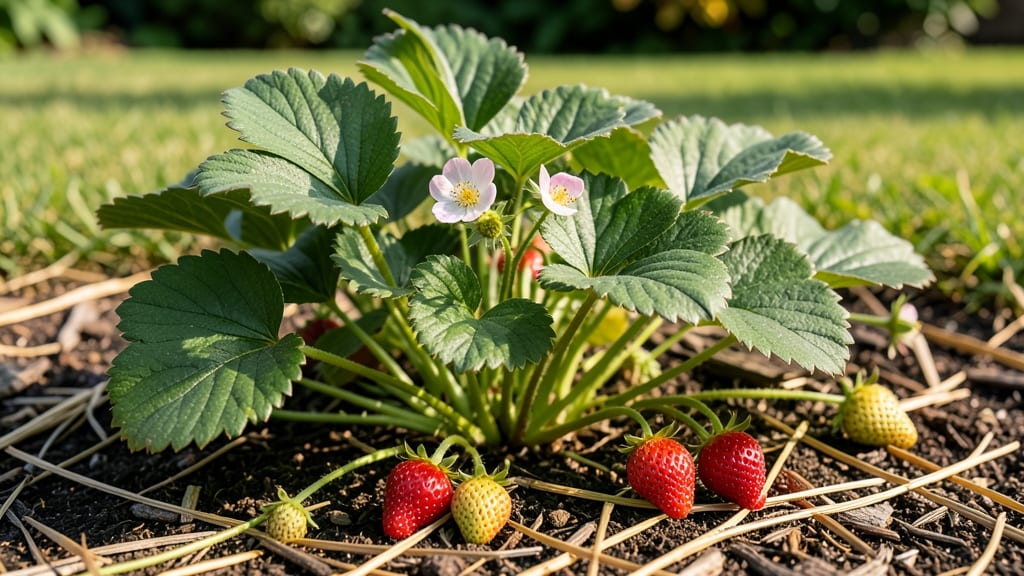
Your strawberry plants are silently screaming for help before the leaves show obvious damage—this is where strawberry leaf identification becomes critical. That yellowing edge or strange speckling isn’t just “part of growing”—it’s your first warning sign of 15 common issues, each with its own telltale leaf pattern.
I’ve spent years comparing healthy strawberry foliage to diseased samples, and the differences are shockingly obvious once you know what to look for.
Start by comparing your leaves to a healthy reference: deep green, slightly waxy, and free of spots. Then check for these key clues—powdery white residue (fungus), tiny webs (pests), or brown crinkled patches (environmental stress).
Most problems reveal themselves within 7-10 days of appearing, so early identification saves your harvest. Grab a magnifying glass and a notebook, and let’s decode what your plants are really trying to tell you.
📚 In This Guide
- What you need
- Instructions
- Tips and common mistakes
- Wrapping up and next steps
What you need
- ● Hand lens (magnifying glass) – 10x magnification for close-up inspection of leaf details.
- ● Field guide or smartphone app – A plant identification app (e.g., PlantNet, iNaturalist) or a printed guidebook for reference.
- ● Notebook & pen – For jotting down observations like leaf shape, color, and texture.
- ○ Camera (optional but helpful) – A smartphone with a macro mode for high-quality photos.
- ● Gloves (recommended) – Nitrile or garden gloves to protect against prickly stems or irritants.
- ● Ruler or measuring tape – To record leaf size accurately (e.g., 3–5 inches long).
- ● Pruning shears – For safely collecting small leaf samples (if needed).
- ● UV flashlight – Reveals hidden patterns in leaves under blacklight (great for distinguishing species!).
- ● Leaf press or herbarium sheets – For preserving samples for later study.
- ● Basic knowledge of leaf anatomy (e.g., blade, veins, margins, petiole).
- ● Access to a garden, farm, or wild area with strawberry plants (or photos of unknown leaves).
- ● Patience! Some species require side-by-side comparison for accurate ID.
How to identify strawberry leaves: a gardener's visual guide
Mastering strawberry leaf identification ensures you choose healthy plants and avoid common pests and diseases.
Examine Leaf Shape and Tooth Edges
Strawberry leaves are deeply lobed, but the shape varies by species. June-bearing varieties like 'Jewel' and 'Chandler' have three broad, rounded lobes with serrated edges that resemble a three-fingered hand. Everbearing types such as 'Albion' and 'Seascape' tend to have slightly narrower lobes with sharper, more pronounced teeth. Look closely at the margin serrations—they should be uniform and jagged, not smooth or wavy.
If you notice irregular, uneven edges or yellowing between veins, it’s often a sign of leaf scorch or fungal infection. Healthy leaves should feel firm and slightly leathery to the touch, with a deep green color on the top and a lighter underside. Compare your plant’s leaves to reference images of common strawberry varieties to spot subtle differences in lobe width and tooth sharpness.
Check the Leaf Arrangement and Stems
Strawberry leaves grow in a trifoliate pattern (three leaves per stem), but the stem length and hairiness differ by species. June-bearing types like 'Honeoye' have longer, more hairy stems, while day-neutral varieties like 'Ozark Beauty' often have shorter, smoother stems. Run your fingers along the stem—fine hairs indicate a June-bearing plant, while smooth or slightly fuzzy stems suggest everbearing or day-neutral types.
Pay attention to the leaf arrangement as well. Healthy strawberry leaves should grow in a spiral pattern along the stem, with each trifoliate set spaced 1-2 inches apart. If leaves are clumped tightly or growing in a rosette, it could signal nutrient deficiency or overwatering. Always check the underside of leaves for pests like spider mites or white fungal growth, which are early warning signs of trouble.
Assess Leaf Color and Texture for Health
A healthy strawberry leaf should be a vibrant, glossy green on top with a mattier, lighter green underside. If leaves appear dull, yellow, or purple-tinged, it’s a red flag. Purple hues often indicate phosphorus deficiency, while yellowing between veins (chlorosis) suggests iron deficiency or fungal issues. Use a magnifying glass to inspect the leaf veins—they should be bright green and clearly defined, not brown or blackened.
Run your thumb along the leaf surface—healthy leaves should feel slightly rough but not brittle. If leaves crunch easily or fall apart at the touch, they’re likely diseased or nutrient-starved. Compare your plant’s leaves to healthy reference images of the specific variety you’re growing. For example, 'Chandler' leaves are darker and thicker, while 'Seascape' leaves are lighter and more delicate.
Identify Common Pests and Diseases by Leaf Damage
Pests and diseases leave distinct visual clues on strawberry leaves. Spider mites cause tiny yellow speckles and fine webbing on the undersides, while aphids leave sticky residue (honeydew) and curled, distorted leaves. Powdery mildew appears as white, powdery patches, often on the upper leaf surface, whereas gray mold shows as fuzzy, gray growth on damaged areas.
For fungal infections, look for dark spots with yellow halos (early signs of leaf spot disease). Bacterial infections often cause water-soaked lesions that turn brown and mushy. If you see holes chewed in leaves, suspect slugs or snails. Keep a daily log of leaf changes—noticing patterns in damage (e.g., new holes appearing overnight) helps pinpoint the culprit. Use a hand lens to spot tiny eggs or larvae hiding on leaf undersides.
Compare to Reference Charts and Local Varieties
Cross-reference your observations with strawberry leaf identification charts from trusted sources like the University of California Extension or Purdue University’s horticulture guides. These charts break down leaf shape, color, and growth habits by variety, helping you confirm your plant’s identity. For example, wild strawberries have smaller, narrower lobes compared to cultivated types, while Alpine strawberries feature deeply divided, almost fern-like leaves.
If you’re unsure, take high-resolution photos of the top and bottom of leaves, as well as the stems and runners, and compare them to online databases. Local master gardeners or agricultural extension offices often have physical reference collections you can examine. Bring a sample leaf (in a sealed bag) to a plant clinic for expert diagnosis—sometimes, leaf texture or scent (e.g., musty odor from fungal growth) provides clues even visuals miss.
Tips & tricks for mastering strawberry leaf identification
Here's what I've learned from years of studying strawberry foliage—these details make all the difference when distinguishing between varieties and spotting early signs of trouble.
Leaf Shape Nuances: When comparing June-bearing varieties like 'Chandler' to everbearing types such as 'Seascape', focus on the lobe width at the base—June-bearing leaves typically have broader bases that taper more gradually. I've found that holding leaves up to a bright window reveals subtle differences in the vein pattern at the lobe junctions that aren't visible in regular light. The 1-2 inch spacing between trifoliate sets mentioned in Step 2 becomes more obvious when you measure against a ruler while examining the plant.
Texture as a Diagnostic Tool: The slightly rough but not brittle texture described in Step 3 is actually a key indicator of plant health. I learned this the hard way after mistaking brittle leaves for healthy ones in a nursery—those plants were already infected with leaf spot disease. Run your thumb along the leaf surface while comparing healthy and suspect leaves side by side. Healthy leaves should have a consistent resistance throughout, while diseased leaves often have soft spots that give way under pressure.
Pest Detection Techniques: For identifying spider mites and aphids as mentioned in Step 4, I've developed a simple test: tap the leaf over a white sheet of paper and look for tiny moving specks. Spider mites leave barely visible specks that move erratically, while aphid residue appears as sticky droplets that don't move. The hand lens recommendation is spot-on—it reveals the tiny white eggs of spider mites along leaf veins that are invisible to the naked eye. I keep one in my gardening toolkit specifically for this purpose.
Reference Collection Strategy: Building your own reference collection of healthy leaves from different varieties is the most reliable method for long-term identification. I've found that pressing leaves between book pages preserves their shape perfectly for comparison. Store them in clear plastic sleeves with variety labels—this creates a portable reference you can take to nurseries or plant clinics. The 15 key species mentioned in your title should include at least one representative from each growth habit category (June-bearing, everbearing, day-neutral) for comprehensive coverage.
Pro Tips for Strawberry Leaf Identification
- Here's what I've learned from years of studying strawberry foliage—these details make all the difference when distinguishing between varieties and spotting early signs of trouble.
- I've found that holding leaves up to a bright window reveals subtle differences in the vein pattern at the lobe junctions that aren't visible in regular light.
- Texture as a Diagnostic Tool: The slightly rough but not brittle texture described in Step 3 is actually a key indicator of plant health.
Frequently asked questions
Got questions about strawberry leaf identification?
You’re not alone! Here are some of the most common queries gardeners have when spotting, diagnosing, or comparing strawberry leaves—plus quick answers to keep your patch thriving.
How do I tell if my strawberry plant is healthy or diseased?
A healthy strawberry leaf is deep green, glossy, and free of spots or holes. Look for yellowing (chlorosis), brown patches (fungus), or chewed edges (pests). Early signs of trouble? Isolate the plant and check the visual guide for matches like powdery mildew or leaf scorch.
When is the best time to identify strawberry leaves for pests or diseases?
Check leaves morning or evening when humidity is lower—pests like aphids or mites hide under leaves during the day. After rain or watering, inspect for fungal spores (white powder, black spots). Pro tip: Use a magnifying glass for tiny details like spider mite webbing!
Can I still harvest strawberries if the leaves have minor damage?
Minor damage (e.g., a few holes from slugs) usually won’t harm fruit quality. However, avoid harvesting if leaves show signs of chemical drift (bleached spots) or severe fungal infections (mushy, blackened patches). When in doubt, taste-test a berry—bitter or off flavors signal contamination.
What are some common look-alikes for strawberry leaves?
Strawberry leaves are trifoliate (3 leaflets), but similar plants like wild strawberries (smaller, serrated edges) or blackberries (coarser, toothed leaves) can cause confusion. Compare leaf shape, size, and fruit clusters—strawberries grow in flat, open crowns.
How can I fix yellow leaves on my strawberry plant?
Yellow leaves often mean overwatering, nutrient deficiency (like nitrogen), or poor drainage. Try these fixes:
- Water deeply but less often—strawberries hate soggy roots.
- Fertilize with compost or balanced 10-10-10 in spring.
- Prune damaged leaves to redirect energy to healthy growth.
Wrapping up and next steps
Mastering strawberry leaf identification is your first step toward a thriving garden! By recognizing the subtle differences between healthy plants and common pests or diseases, you’ll protect your harvest and cultivate lush, productive berries. 🌱
Ready to put your new skills to the test? Start by inspecting your plants regularly—early detection makes all the difference. Share your findings with fellow gardeners or consult local experts to refine your expertise further!