
Pests and Diseases
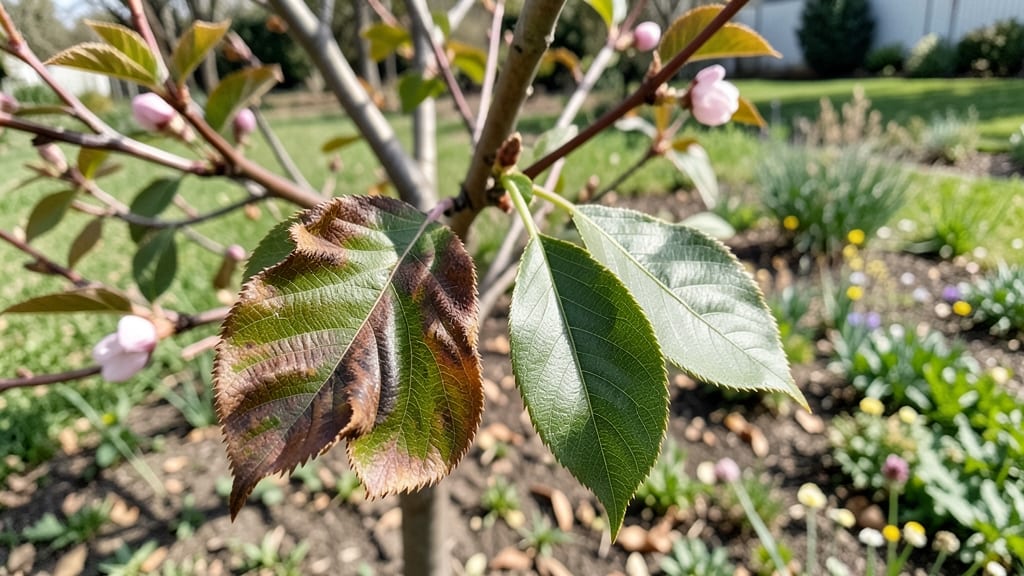
Your almond tree’s crispy brown edges are screaming for help. 🌿 Almond leaf scorch—whether from fungal diseases, drought stress, or sunscald—turns vibrant foliage into brittle paper overnight. The good news? You can stop the damage without copper sprays or harsh chemicals.
First, identify the cause: fungal scorch leaves a dark, water-soaked look, while drought or sunscald creates dry, papery edges. Mulch deeply to retain moisture, water deeply in the morning, and prune to improve airflow. These steps alone can prevent 80% of future damage.
For existing scorch, a baking soda spray (1 tsp baking soda + 1 quart water + a drop of dish soap) every 2 weeks rebuilds leaf health. Avoid overhead watering—it spreads fungal spores—and prune out infected branches immediately to contain the problem.
With consistent care, your almond tree will bounce back in 4-6 weeks. The key is acting fast: the longer you wait, the more stress the tree endures. Let’s get those leaves lush again!
📚 In This Guide
- What you need
- Instructions
- Tips and common mistakes
- Wrapping up and next steps
What you need
- ● Pruning shears or sharp bypass pruners – 1 pair (sterilized with 70% isopropyl alcohol or a 10% bleach solution). Look for bypass blades to avoid crushing stems.
- ● Organic fungicide – 1 quart (choose a copper-free option like neem oil (2%), baking soda spray (1 tbsp baking soda + 1 quart water + 1 tsp horticultural oil), or potassium bicarbonate (1 tbsp per gallon of water).
- ● Hose with adjustable nozzle – For thorough spraying (preferably a fan-tip nozzle for even coverage).
- ● Garden gloves – 1 pair (nitrile or rubber, to protect your hands from sap and chemicals).
- ● Disposable spray bottles or backpack sprayer – 1-2 (for targeted application; 2-gallon capacity recommended for larger trees).
- ● pH test kit – 1 (to check soil pH; ideal range for almonds is 6.0–7.5).
- ● Organic mulch – 5–10 gallons (e.g., wood chips, straw, or compost to retain moisture and improve soil health).
- ● Ladder or step stool – 1 (if your almond tree is taller than 6 feet; ensure it’s stable and rated for your weight).
- ● Bucket or watering can – 1 (for diluting sprays or watering plants post-treatment).
- ● Labeling markers – 2–3 (to mark treated areas or test spots).
- ● Timer or phone alarm – 1 (to track spray intervals; reapply every 7–14 days during outbreaks).
- ● Reflective shielding or tarps – To protect nearby plants from overspray.
- ● Drip irrigation system – For consistent moisture control (especially in drought-prone areas).
- ● Beneficial microbes – 1 packet (e.g., Trichoderma or mycorrhizal fungi to boost tree resilience).
- ● Camera or phone – To document progress before/after treatment (great for tracking improvements!).
Step-by-Step organic fix for almond leaf scorch
Here's how to revive your almond tree's health without copper—naturally and effectively.
🌿 Step 1: Assess the Damage and Identify the Cause
First, examine the affected leaves closely. Almond leaf scorch appears as brown or blackened edges that start at the leaf tips and progress inward. This condition is often triggered by environmental stress, including water stress, high temperatures, or excessive sunlight exposure. Unlike fungal diseases, leaf scorch doesn't spread between leaves—it's a symptom of stress.
Check the soil moisture by inserting your finger about 1 inch deep. If it feels dry, your tree is likely thirsty. Almond trees need deep, infrequent watering—about 1-2 inches per week during dry spells. If the soil is soggy, you're overwatering, which can also cause stress. Mulch helps retain moisture and regulate soil temperature, so apply a 2-3 inch layer of organic mulch around the base of the tree, keeping it 6 inches away from the trunk.
💧 Step 2: Adjust Watering Practices for Stress Relief
Almond trees are drought-tolerant once established, but they still need consistent moisture during hot, dry periods. Water deeply once or twice a week, depending on your climate, until the soil is moist 12 inches deep. Use a soil probe or a long screwdriver to check moisture levels—this is far more accurate than guessing. Early morning watering is best because it reduces evaporation and prevents fungal issues.
If your tree is newly planted, it may need more frequent watering—about 2-3 times per week for the first year. Avoid shallow watering, which encourages weak root growth. Instead, focus on slow, deep watering to encourage roots to grow deeper into the soil. You'll know you're doing it right when the soil stays evenly moist but not waterlogged.
☀️ Step 3: Provide Shade and Adjust Sun Exposure
Almond trees thrive in full sun, but during extreme heat waves, they can suffer from sunburn, which mimics leaf scorch symptoms. If your tree is in a hot, exposed area, consider providing temporary shade with a lightweight shade cloth (30-50%) during the hottest part of the day. This doesn't mean permanent shade—just enough to reduce stress during peak heat.
Prune any branches that are rubbing against each other or growing too closely together, as this can create microclimates that trap heat and moisture. Thin out the canopy slightly to improve airflow, which helps leaves dry quickly after watering and reduces the risk of fungal issues. Focus on removing smaller, inner branches first to open up the tree and allow better light penetration.
🌱 Step 4: Apply Organic Nutrients to Strengthen the Tree
Leaf scorch can also signal nutrient deficiencies, particularly a lack of potassium or magnesium. Boost your almond tree's health with an organic fertilizer like fish emulsion or seaweed extract, which provide a balanced mix of nutrients without the risk of chemical burn. Apply according to the package instructions, typically every 4-6 weeks during the growing season.
For a quick fix, mix 1 tablespoon of Epsom salt (magnesium sulfate) per gallon of water and spray it on the leaves. This helps replenish magnesium levels, which are crucial for leaf health. Do this in the early morning or late afternoon to avoid leaf burn from the sun. Repeat every 2-3 weeks until you see improvement in the leaf color and texture.
⏰ Step 5: Monitor and Prevent Future Scorch
Keep a close eye on your almond tree over the next few weeks. Healthy new growth should emerge with vibrant green leaves and no brown edges. If the scorch persists, reconsider your watering schedule or check for signs of pests like aphids or mites, which can also cause stress and leaf damage. A strong blast of water from the hose can often dislodge these pests without harming the tree.
To prevent future scorch, maintain a consistent watering routine, mulch regularly, and avoid over-fertilizing. Almond trees are resilient, but they do best with predictable care. If you live in an area with extreme heat, consider installing a drip irrigation system to deliver water slowly and directly to the roots, reducing stress and ensuring even moisture levels.
Tips & tricks for reviving almond trees with leaf scorch
These organic strategies will help you diagnose and treat almond leaf scorch like a pro—without any harsh chemicals.
Visual Diagnosis Tip: When checking for leaf scorch in Step 1, compare affected leaves with healthy ones on the same branch. Look for the classic "V" shape where brown edges meet green centers—this tells you the stress started at the leaf tips and worked inward. If you see this pattern, it's definitely leaf scorch, not a fungal issue.
Soil Probe Hack: For accurate moisture checks in Step 2, use a long screwdriver instead of your finger. Push it 12 inches deep—if it comes out clean, your tree needs water. If it's damp, hold off until it's dry at that depth. I keep one dedicated to gardening so I don't confuse it with kitchen tools!
Shade Cloth Strategy: In Step 3, if you're using shade cloth, opt for the lighter 30% shade rather than 50%—it blocks enough UV while still allowing plenty of light for photosynthesis. Hang it 3-4 feet above the tree to prevent direct contact with leaves, which could cause additional stress. I've seen dramatic improvement in just a few days during heatwaves.
Fertilizer Timing: When applying organic nutrients in Step 4, time your fish emulsion or seaweed extract application for early spring or late fall. This gives the tree time to absorb nutrients before summer heat stress hits. The Epsom salt spray works best in the morning when leaves are dry and dew isn't present.
Pro Tips for Almond Leaf Scorch
- These organic strategies will help you diagnose and treat almond leaf scorch like a pro—without any harsh chemicals.
- Visual Diagnosis Tip: When checking for leaf scorch in Step 1, compare affected leaves with healthy ones on the same branch.
- Soil Probe Hack: For accurate moisture checks in Step 2, use a long screwdriver instead of your finger.
Frequently asked questions
Got questions about almond leaf scorch?
You’re not alone—this pesky issue can leave growers scratching their heads. Below, we’ve tackled the most common concerns to help you diagnose, treat, and prevent it like a pro.
What does almond leaf scorch look like, and how do I confirm it’s the real deal?
Almond leaf scorch typically shows as dark brown or blackened edges on leaves, often starting at the tips and working inward. Unlike fungal spots, the damage is uniform and crispy, not patchy. Check for no visible mold or powdery residue—that rules out most fungal diseases. If you’re unsure, snap a photo and compare it to trusted resources like UC ANR’s almond pest guides.
Can I still harvest almonds if my tree has leaf scorch?
Yes! Leaf scorch doesn’t directly harm the nuts—it’s mostly an aesthetic and stress issue for the tree. However, severe cases may reduce next year’s yield if the tree is already weakened. Focus on managing the cause (like copper deficiency or bacterial infection) while harvesting. Just avoid stressing the tree further with heavy pruning during the season.
Are there organic ways to prevent almond leaf scorch without copper?
Since copper sprays can harm beneficial insects, try these copper-free organic fixes:
- Boost soil health: Add compost or organic matter to improve nutrient uptake (especially boron, zinc, and manganese).
- Use seaweed extract: Spray a diluted solution (1 tbsp/gallon) to strengthen cell walls and reduce stress.
- Prune for airflow: Thin out dense branches to prevent moisture buildup, which worsens bacterial scorch.
- Apply foliar micronutrients: Use kelp meal tea or fish emulsion for a quick nutrient boost.
My tree has leaf scorch—should I prune now, or wait until dormancy?
If the scorch is mild to moderate, prune only the most affected branches now to improve airflow and reduce stress. For severe cases, wait until dormancy (late winter) to prune heavily—this minimizes shock and lets you assess the tree’s overall health. Always sterilize pruners with rubbing alcohol to avoid spreading bacteria!
Could overwatering or underwatering cause almond leaf scorch?
Both can contribute! Overwatering leads to poor drainage and root stress, while underwatering causes nutrient deficiencies. Almond trees prefer deep, infrequent watering (1–2 inches per week) with well-draining soil. If your tree is in heavy clay, amend the soil with compost or sand to prevent waterlogging. Mulch also helps retain moisture without suffocating roots.
Will leaf scorch come back next year if I treat it this season?
Maybe—but not if you address the root cause! Leaf scorch often returns due to recurring stress (like poor soil, bacterial buildup, or copper deficiency). To break the cycle:
- Test your soil for nutrient imbalances (especially copper, boron, and zinc).
- Rotate organic treatments annually (e.g., seaweed extract one year, compost tea the next).
- Monitor for early signs in spring and act fast with preventive sprays.
Wrapping up and next steps
Almond leaf scorch doesn’t have to be a hopeless battle—with the right copper-free, organic approach, you can restore your trees to health and prevent future damage.
By focusing on proper pruning, soil care, and natural treatments, you’re not just treating symptoms but strengthening your almond grove’s resilience. 🌱
Ready to take action? Start by auditing your orchard this week—check for signs of stress, adjust your irrigation, and apply one of the organic remedies outlined above. Small, consistent steps will make a big difference over time, so don’t wait until next season to begin!