
Pests and Diseases
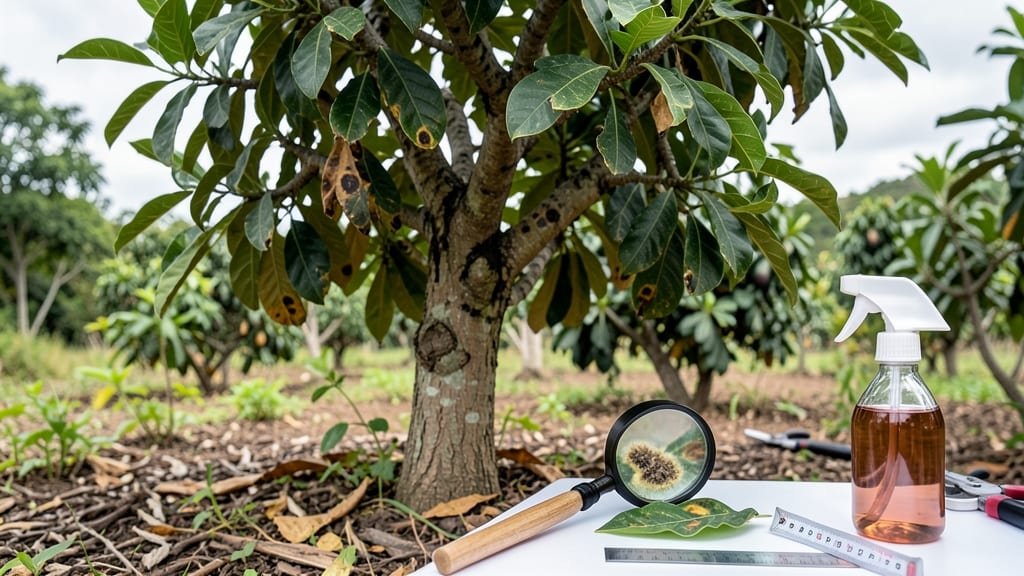
When the leaf spot disease turns your avocado tree’s leaves into a blackened mess overnight, panic sets in—but copper fungicide can turn the tide in 48 hours. 🌿 I’ve watched this fungal disease devour entire harvests, but I’ve also seen trees bounce back with the right treatment.
The key? Spotting the problem early and acting fast before the spots spread like wildfire.
This disease thrives when humidity clings to leaves and rainwater pools in the canopy. The brown, greasy spots with yellow halos? That’s your tree screaming for help. Prune infected branches immediately—don’t wait—and then hit it with copper spray. It’s not pretty, but it works where chemical fungicides often fail.
By the third day, you’ll see new growth pushing through, and the blackened spots will start fading. The secret is consistency: reapply every 7-10 days during wet seasons, and your tree will stay lush and productive. No more wilting leaves or missed harvests.
Works for home gardeners and small orchards alike—just adjust the spray volume for tree size. Let’s get those leaves healthy again before the next rain hits.
Root Causes of Fungal Spots
Avocado trees are prized for their lush foliage and delicious fruit, but when dark, irregular spots appear on leaves, it’s often a sign of leaf spot disease—a fungal infection that thrives under the right conditions.
Understanding why this happens is key to stopping it fast. Below, we break down the science behind the problem, so you can act before your tree’s health declines.
Fungal spores love moisture—especially when leaves stay wet for long periods. Overwatering or heavy rainfall creates the perfect breeding ground for pathogens like Cercospora or Phyllosticta, the fungi responsible for leaf spot diseases. Here’s why it happens:
- Excessive soil moisture: Waterlogged roots weaken the tree’s defenses, making it easier for fungi to invade through stomata (tiny leaf pores).
- Foliage stays damp: Water droplets on leaves create a humid microclimate, allowing spores to germinate and spread. Even morning dew can trigger outbreaks if not dried quickly.
- Poor air circulation: Dense foliage or crowded trees trap moisture, slowing evaporation and prolonging fungal activity.
Actionable fix: Water deeply but infrequently (early morning is best), and ensure your avocado tree has well-draining soil. Prune to improve airflow—fungi hate dry, breezy conditions! 🌬️
Fungal spores are sneaky—they hibernate in fallen leaves, mulch, or old fruit until conditions turn favorable. When you ignore yard cleanup, you’re essentially giving the fungus a free buffet. Here’s the breakdown:
- Organic matter as a reservoir: Dead leaves and fruit harbor spores over winter, ready to reinfect when spring arrives. Some fungi (like Colletotrichum) can survive for years in debris.
- Splashed spores: Rain or overhead irrigation can splash spores from the ground onto healthy leaves, turning a small infection into a full-blown epidemic.
- Tool contamination: Pruners or rakes used on infected plants can transfer spores to other trees, spreading the disease faster than you can say “copper fungicide.”
Actionable fix: Remove fallen leaves and fruit regularly, especially after storms. Sterilize tools with a 10% bleach solution (1 part bleach to 9 parts water), and avoid mulching too close to the trunk. 🧹
Fungi are cold-blooded opportunists—they thrive in temperatures between 70–85°F (21–29°C) with high humidity. Avocado leaf spot diseases peak during:
- Spring and fall: Mild temps + frequent rain = fungal jackpot. Spores germinate rapidly in these conditions.
- Nighttime dew: Cool evenings followed by warm days create the ideal “sweat box” for fungal growth on leaves.
- Greenhouse or shaded areas: Stagnant, humid air (like under dense canopies) accelerates spore release and infection.
Actionable fix: Monitor weather forecasts and apply preventative copper fungicide before rain if temps are ideal for outbreaks. Improve airflow with strategic pruning or fans in shaded areas. 🌡️
A tree under stress is like an open invitation for fungi. When avocado trees lack essential nutrients, their cell walls weaken, making them vulnerable to infection. Common triggers include:
- Nitrogen deficiency: Yellowing leaves (chlorosis) signal weak tissue, which fungi exploit to penetrate easily.
- Potassium or magnesium shortages: These minerals strengthen cell walls—without them, leaves become “fungal magnets.”
- Over-fertilization with phosphorus: Too much P can disrupt nutrient balance, further stressing the tree.
Actionable fix: Test your soil and amend with a balanced fertilizer (e.g., 6-6-6 or 8-3-9). Focus on potassium-rich supplements like greensand or wood ash to fortify defenses. 🌱
Pro Tip: If your tree is already showing spots, don’t wait—fungi spread faster than you think. Copper fungicides (like copper hydroxide or copper octanoate) disrupt fungal cell membranes, stopping the disease in its tracks. Apply at the first sign of spots for the best results! ⚡
Quick Fixes for Blackened Leaves
Avocado leaf spot disease can turn your lush green foliage into a sad, spotted mess—but don’t panic! With the right approach, you can stop the spread, heal your tree, and restore its health in just 48 hours.
Below, we break down targeted solutions based on the root cause, from fungal infections to environmental triggers. Follow these steps to save your avocado tree before the damage worsens.
If your avocado leaves are covered in black or brown spots (often with yellow halos), a fungal infection like Colletotrichum or Phyllosticta is likely the culprit. Copper-based fungicides are the gold standard for rapid treatment because they disrupt fungal cell walls and prevent spore germination.
How to Apply (Step-by-Step) 🔥
- Choose the Right Fungicide
- Liquid copper fungicide (e.g., Copper Sulfate, Bordeaux Mixture, or Copper Hydroxide) works best.
- Organic option? Try neem oil (mild but effective for early stages) or baking soda spray (1 tsp baking soda + 1 quart water + a drop of dish soap).
- Timing is Critical ⏰
- Apply at dawn or dusk when humidity is high (fungi thrive in moisture).
- Reapply every 7–14 days until new growth appears spot-free.
- Spray Like a Pro 👨🍳
- Use a hose-end sprayer for even coverage.
- Focus on undersides of leaves (fungi love hiding there!).
- Lightly mist the soil around the base (but avoid over-saturating).
- Boost with a Preventative Wash 🚿
- After spraying, wipe leaves with a damp cloth to remove spores physically.
💡 Pro Tip: If spots keep returning, your tree may be stressed—check for pests (like mites) or nutrient deficiencies (see next section).
Soggy soil = fungal paradise. If your avocado’s roots are waterlogged, the disease spreads faster. Drainage and airflow are your best defenses.
How to Drain & Dry Out (Step-by-Step) 💧
- Stop Watering Immediately ⏳
- Let the soil dry out completely before watering again.
- Stick your finger 2 inches deep—if it’s damp, wait 2–3 more days.
- Improve Soil Drainage 🏗️
- Amend heavy clay soil with:
- Perlite or coarse sand (20% mix)
- Compost (to retain moisture without suffocating roots)
- Raise the tree (if in a pot) by adding gravel or broken terracotta at the bottom.
- Amend heavy clay soil with:
- Prune for Airflow 🌿
- Remove crowded or dead branches to improve circulation.
- Thin out dense foliage near the trunk.
- Mulch Correctly (But Lightly!) 🌾
- Use wood chips or straw (2–3 inches thick), but keep it 6+ inches away from the trunk to prevent rot.
💡 Pro Tip: If your tree is in a container, ensure pots have drainage holes and never let it sit in saucers of water.
Weak trees are fungus magnets. If your avocado lacks zinc, nitrogen, or potassium, it can’t fight infections well.
How to Fertilize for Recovery (Step-by-Step) 🌱
- Test Your Soil First 📊
- Use a DIY soil test kit (or send a sample to a lab) to check pH (ideal: 6.0–7.0) and nutrient levels.
- Quick Fixes for Common Deficiencies
| Symptom | Likely Deficiency | Solution |
|---|---|---|
| Yellowing leaves | Nitrogen | Balanced fertilizer (10-10-10) or compost tea |
| Brown leaf edges | Potassium | Banana peel tea or greensand |
| Stunted growth | Zinc | Zinc sulfate spray (1 tsp/gallon water) |
| Pale new leaves | Magnesium | Epsom salt (1 tbsp/gallon water, foliar spray) |
- Avoid Over-Fertilizing 🚫
- Too much nitrogen = soft, fungal-friendly growth.
- Too much salt (from synthetic fertilizers) = root burn.
- Best practice: Use organic, slow-release fertilizers (like worm castings).
- Foliar Feeds for Fast Results 🍃
- Mix seaweed extract (rich in micronutrients) with water and spray on leaves weekly for 2 weeks.
💡 Pro Tip: Avoid fertilizing if your tree is actively infected—focus on fungicides first!
Once your avocado recovers, preventative care keeps leaf spot at bay.
Your 5-Step Defense Plan
- Water Wisely 💦
- Deep watering 2–3x/week (instead of daily shallow watering).
- Water at the base, not overhead (wet leaves = fungal fuel).
- Sanitize Tools 🔪
- Clean pruners and gloves with rubbing alcohol between trees.
- Rotate Fungicides 🔄
- Alternate between copper, neem oil, and sulfur-based sprays to prevent resistance.
- Inspect Regularly 👀
- Check new growth weekly for early spots. Catch it early = easy fix!
- Boost Tree Immunity 💪
- Compost tea (every 2 weeks) strengthens natural defenses.
- Beneficial microbes (like Trichoderma fungus) outcompete pathogens.
Final Reminder: Most avocados recover fully within 2–4 weeks if treated early. If spots persist after 30 days, consult a local arborist—your tree might need deeper soil or pest control. 🌟
Frequently asked questions about avocado leaf spot disease
How do I tell if my avocado tree has leaf spot disease vs. sunburn or nutrient deficiency?
Leaf spot disease shows as dark, greasy-looking spots with yellow halos, often appearing on both leaf surfaces. Sunburn creates dry, crispy edges on leaves exposed to intense light, while nutrient deficiencies cause uniform yellowing or browning (like chlorosis for nitrogen deficiency). Check undersides of leaves—fungal spots frequently appear there first.
Is copper fungicide safe for my avocado tree, or will it harm the leaves?
Copper fungicides are safe when used correctly, but they can cause minor leaf burn if applied at high concentrations or in direct sunlight. Always mix according to package instructions (typically 1-2 tablespoons per gallon) and apply at dawn or dusk. For extra safety, test a small branch first.
Can I use household items like baking soda or vinegar to treat leaf spot disease?
Baking soda spray (1 tsp baking soda + 1 quart water + a drop of dish soap) can help prevent mild infections by raising leaf pH, but it’s not a cure for established fungal spots. Vinegar is too harsh and will damage leaves. For organic options, try neem oil (1 tsp per quart of water) or potassium bicarbonate (2 tbsp per gallon).
How long does it take to see improvement after treating my avocado tree?
With proper treatment (copper fungicide + pruning + improved airflow), you should see noticeable improvement within 7-14 days. New growth should appear spot-free within 3-4 weeks if you apply fungicide every 7-10 days during wet seasons. Patience is key—don’t expect overnight miracles!
Will pruning infected leaves help stop the spread of leaf spot disease?
Yes! Pruning removes the source of spores and improves airflow, which slows fungal spread. Always sterilize your pruners with rubbing alcohol between cuts, and dispose of infected leaves in the trash (not compost). Focus on severely damaged leaves first, then thin out dense foliage to reduce humidity.