
Diseases
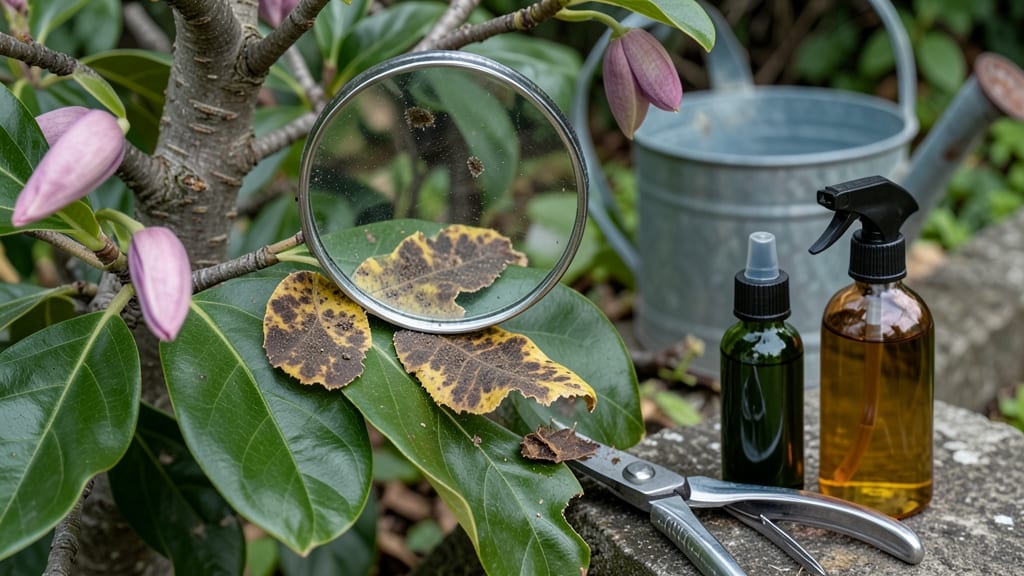
Magnolia leaf spot diseases turn those glossy, dark-green leaves into a sad, spotted mess—until you act fast. 🌿 The brown or yellow spots with yellow halos? That's your magnolia's cry for help, and copper spray is the quickest way to stop the spread before it ruins your tree's beauty.
This isn't just about spraying something random—it's about timing, concentration, and following up. I've seen leaf spot go from ugly to spotless in 72 hours when treated right, and the key is catching it early.
Most cases are fungal, thriving in wet, humid conditions, so proper spacing and airflow matter just as much as the spray. You'll end up with leaves that look almost as good as new, with fewer spots and less discoloration.
The tree regains its strength, and you avoid the heartbreak of watching it decline. Pruning out infected leaves first makes the spray work even better. Works for all magnolia varieties, from saucer magnolias to star magnolias. Here's how to do it right the first time.
Root Causes of Leaf Spots
Magnolia leaf spots aren’t just random blemishes—they’re often a clear sign that your tree is under stress or battling unseen pathogens. Understanding the why behind these spots is the first step to stopping them in their tracks.
Below, we break down the primary culprits behind leaf spot diseases in magnolias, from fungal invaders to environmental triggers.
Most magnolia leaf spots are caused by fungal infections, which thrive in warm, humid conditions. These microscopic invaders—like Gloeosporium, Cercospora, or Phyllosticta—enter through tiny wounds or stomata (pores) on the leaf surface. Once inside, they:
- Release enzymes that break down plant cells, creating brown, black, or yellowish spots.
- Spread via spores carried by wind, rain, or even garden tools.
- Weaken the leaf’s defenses, leading to premature leaf drop and stunted growth.
💡 Pro Tip: Fungal spores often overwinter in fallen leaves or infected debris—so cleanup is critical to prevent reinfection next season.
Leaf spots don’t appear out of nowhere—they’re often triggered by weather patterns that favor fungal growth. Key offenders include:
| Factor | How It Helps Fungi |
|---|---|
| High Humidity (80%+) | Fungal spores germinate faster in damp air, leading to rapid infection. |
| Frequent Rainfall | Washes spores onto leaves and keeps them wet, ideal for fungal growth. |
| Slow-Drying Leaves | Shady or dense foliage traps moisture, giving fungi 24-48 hours to colonize. |
| Temperature Fluctuations | Cool nights with warm days stress the plant, making it easier for pathogens to attack. |
✨ Actionable Fix: Improve air circulation around your magnolia by pruning dense branches and avoiding overhead watering.
A magnolia under stress is like an open invitation for leaf spot diseases. Common stressors that weaken defenses include:
- Nutrient deficiencies (e.g., low nitrogen or iron) → Yellowing leaves become prime targets.
- Overwatering or compacted soil → Root rot reduces the plant’s ability to fight off infections.
- Physical damage (e.g., hail, pests, or rough pruning) → Open wounds let fungi sneak in.
- Improper planting (e.g., shallow roots, wrong soil pH) → Slower recovery from stress.
🔥 Quick Check: If your magnolia’s leaves are thin, pale, or dropping early, it’s signaling underlying health issues that need fixing before treating spots.
While pests like magnolia scale or spider mites don’t cause leaf spots directly, they damage leaves and create entry points for fungi. For example:
- Scale insects excrete honeydew, a sticky substance that promotes sooty mold (a secondary fungal growth).
- Mites puncture leaf cells, leaving tiny wounds where fungal spores land.
🎯 Prevention Tip: Regularly inspect undersides of leaves for pests. A neem oil spray can deter them before they cause collateral damage.
How to Fix Leaf Spot Fungus Fast
Leaf spot diseases on magnolias can feel like a losing battle, but with the right approach, you can restore your tree’s health in 72 hours or less—especially when using the copper spray technique.
Below, we break down targeted solutions for each common cause, along with preventive measures to keep your magnolia thriving.
Fungal leaf spots thrive in moist, humid conditions and spread rapidly. Here’s how to stop them:
🍳 Step 1: Prune Infected Leaves Immediately
- Remove all spotted leaves (even small ones) and sterilize pruners with 70% isopropyl alcohol or a 1:10 bleach-water mix.
- Do not compost infected foliage—dispose of it in the trash to prevent reinfection.
👨🍳 Step 2: Apply Copper Fungicide (The Game-Changer)
Copper-based sprays (copper sulfate, copper hydroxide, or copper octanoate) are highly effective against fungal leaf spots.
Here’s how: - Mix a solution (follow label instructions—typically 1-2 tbsp per gallon of water). - Spray thoroughly on both sides of leaves, focusing on new growth and undersides (where spores hide). - Reapply every 7-10 days until no new spots appear (usually 3-4 treatments). - Best time to spray: Early morning or late evening (avoid direct sunlight, which can burn leaves).
🥘 Step 3: Improve Air Circulation & Reduce Moisture
- Thin out dense branches to allow better airflow around the tree.
- Water at the base (not overhead) to keep leaves dry.
- Avoid overhead irrigation—use drip irrigation or soaker hoses instead.
⏰ Step 4: Follow Up with Preventive Care
- Apply a second copper spray 2 weeks after the first to prevent recurrence.
- Mulch properly (2-3 inches of organic mulch, keeping it 6 inches away from the trunk).
Bacterial leaf spots are more aggressive and require immediate action to prevent spread.
🔪 Step 1: Sterilize & Prune Aggressively
- Cut out infected leaves and branches—do not leave any brown or blackened spots.
- Burn or bag pruned material (do not compost).
🎯 Step 2: Use a Copper-Bactericide Combo
- Copper fungicides alone won’t work—switch to a bactericide like copper + streptomycin or oxytetracycline.
- Spray every 5-7 days until symptoms disappear.
✨ Step 3: Boost Tree Resistance
- Fertilize with a balanced 10-10-10 to strengthen the tree’s defenses.
- Avoid wounding the tree (prune carefully to prevent bacterial entry).
Once your magnolia is healthy, prevent future outbreaks with these pro tips:
✅ 🌿 Space Trees Properly – Plant magnolias at least 15-20 feet apart to reduce humidity buildup. ✅ 🌧️ Water Deeply, Not Often – 1-2 inches per week (deep watering encourages strong roots). ✅ 🍂 Clean Up Fallen Leaves – Rake and remove debris after each season to eliminate spores. ✅ 🔄 Rotate Fungicides – If using copper, alternate with other fungicides (like neem oil or potassium bicarbonate) to prevent resistance. ✅ 🌡️ Monitor Humidity – Avoid planting in low-lying areas where moisture lingers.
| Problem | Immediate Fix | Prevention |
|---|---|---|
| Fungal Leaf Spot | Prune + Copper Spray (every 7-10 days) | Improve airflow, avoid overhead watering |
| Bacterial Leaf Spot | Prune + Copper-Bactericide Combo | Sterilize tools, fertilize regularly |
| Recurring Spots | Rotate fungicides, deep watering | Mulch properly, clean up debris |
By acting fast and methodically, your magnolia can bounce back in 72 hours—and stay spot-free for seasons to come! 🌿✨
Frequently asked questions about magnolia leaf spot diseases
What do magnolia leaf spot symptoms look like?
Magnolia leaf spots typically appear as brown, black, or yellow circular spots with yellow halos around them. You might also see white or gray fungal growth on the undersides of leaves, especially in humid conditions. Severe cases can lead to premature leaf drop and stunted growth.
Can I use household items like vinegar to treat leaf spots?
Vinegar is too harsh and can actually burn magnolia leaves—it’s not effective against fungal or bacterial leaf spots. Instead, use a copper fungicide (like copper sulfate) or a baking soda solution (1 tsp baking soda + 1 quart water + a drop of dish soap) for mild cases.
How often should I spray copper fungicide on my magnolia?
For active infections, spray every 7-10 days until new spots stop appearing (usually 3-4 treatments). After that, apply a preventive spray every 4-6 weeks during humid seasons. Always spray in the early morning or evening to avoid leaf burn from sunlight.
Will pruning alone fix leaf spot diseases?
Pruning removes infected leaves, but it’s only part of the solution. Without treating the underlying fungal or bacterial cause, new spots will appear. Always combine pruning with a copper fungicide spray and improve airflow around the tree to prevent recurrence.
When should I call a professional arborist?
Contact an arborist if your magnolia shows severe defoliation, oozing lesions (signs of bacterial infection), or if home treatments fail after 4-6 weeks. A professional can diagnose the exact pathogen and recommend stronger treatments if needed.