
Propagation
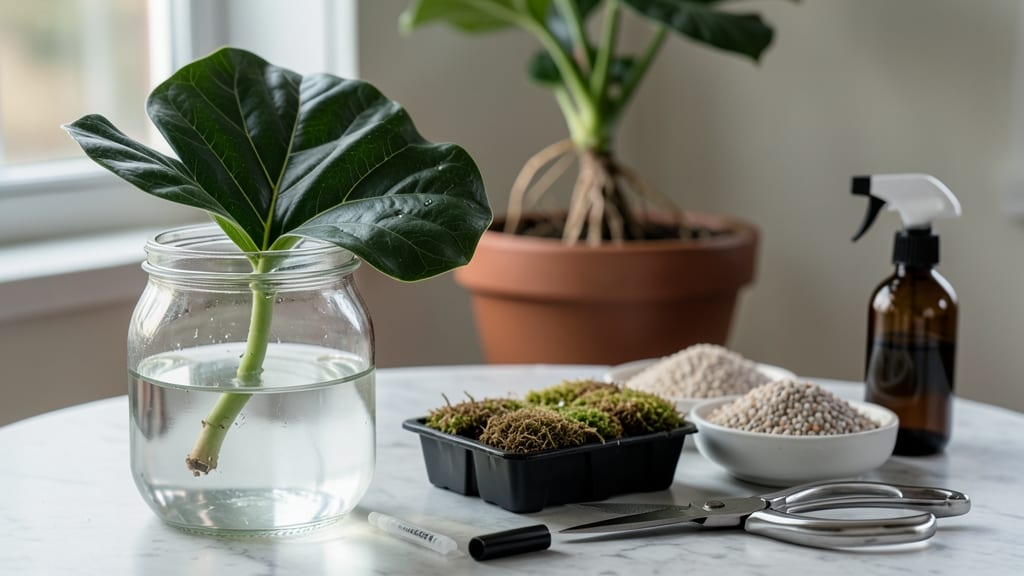
A single leaf can propagate a fiddle leaf fig into a thriving plant—if you do this right. 🌱 I’ve turned wilted leaves into lush new growth using the same simple method every time, and you can too.
The key is patience and the right conditions, whether you root in water or soil.
Start with a healthy leaf—look for mature, disease-free ones with at least a 2-inch stem. You’ll need a clean cutting tool, a jar of water or well-draining soil mix, and a bright spot with indirect light.
Most people skip the stem prep, but cutting at a 45-degree angle makes all the difference for rooting speed.
Within 4-6 weeks, you’ll see tiny roots forming in water or new growth pushing from the soil. Keep humidity high (a plastic bag helps) and avoid direct sun—this is where most cuttings fail.
Once roots are 2-3 inches long, transplant to soil and watch your new fiddle leaf fig grow.
This method works year-round, but spring and summer speed up rooting. Even if your first try fails, fiddle leaf figs are forgiving—just adjust your approach. Here’s how to avoid the most common mistakes and get reliable results.
📚 In This Guide
- What you need
- Instructions
- Tips and common mistakes
- Wrapping up and next steps
What you need
- ● Healthy fiddle leaf fig leaf: A mature, disease-free leaf (preferably with a small stem attached).
- ● Sharp, clean pruning shears or scissors: Sterilize with rubbing alcohol to prevent infection.
- ○ Rooting hormone (optional but recommended): A powder or gel (e.g., Rootone or Clonex).
- ● Water propagation: Clean glass or jar (wide-mouth preferred).
- ● Filtered or distilled water (chlorine-free).
- ● Small pebbles or marbles (to weigh down the leaf).
- ● Soil propagation: Well-draining potting mix (e.g., cactus/succulent mix or perlite + peat).
- ● Small pots or trays (3–4 inches wide) with drainage holes.
- ● Humidity dome or plastic bag: To retain moisture (for soil method).
- ● Spray bottle: For misting leaves.
- ● Grow lights or bright, indirect sunlight (if natural light is limited).
- ● Fertilizer (diluted seaweed extract or fish emulsion after roots form).
- ● Labeling tags (to track propagation dates!).
- ● Rooting cubes (e.g., Oasis) for a hybrid water-soil method.
Step-by-Step instructions for propagating fiddle leaf fig from a single leaf
Here’s how I’ve successfully rooted fiddle leaf fig cuttings—whether you choose water or soil.
🌱 Step 1: Select and Prepare the Perfect Leaf Cutting
Choose a healthy, mature leaf with at least a 3-inch stem attached—longer stems root better. Use clean, sharp scissors or pruning shears to make a clean cut just below a node (the small bump where the leaf meets the stem). This ensures the cutting has the best chance of producing roots.
If your leaf has multiple stems (common with fiddle leaf figs), cut each stem individually. I like to dip the cut end in rooting hormone (optional but helpful) to encourage faster root growth. Let the cutting sit for 10-15 minutes to callus over—this prevents rot when you place it in water or soil.
💧 Step 2: Root in Water or Soil (Your Choice)
Water Propagation: Place the cut end of the stem in a small glass or jar filled with room-temperature water, ensuring only the stem (not the leaf) is submerged. Change the water every 3-5 days to prevent bacterial growth. You’ll see tiny white roots emerging in 2-4 weeks—keep the jar in bright, indirect light.
Soil Propagation: Fill a small pot with well-draining potting mix and make a small hole with your finger. Insert the cut end of the stem about 1-2 inches deep, then gently firm the soil around it. Water lightly until the soil is moist but not soggy. Place the pot in a warm, humid spot (like a plastic bag with holes) to encourage rooting—roots typically form in 4-6 weeks.
☀️ Step 3: Monitor and Encourage Root Growth
Whether in water or soil, keep your cutting in bright, indirect light—direct sun can scorch the leaf. If using water, watch for signs of rot (black or mushy stem) and adjust the water level as roots grow. Once roots reach 2-3 inches long, your cutting is ready for transplanting into soil.
If propagating in soil, avoid overwatering—fiddle leaf figs hate soggy roots. Mist the leaf occasionally to maintain humidity, and you’ll notice new growth at the base of the stem within 6-8 weeks. This is your signal that rooting was successful!
✂️ Step 4: Transplant and Care for New Growth
Once roots are established, transplant your cutting into a small pot with fresh potting mix. Water lightly and place it in medium to bright indirect light. Fiddle leaf figs are sensitive to sudden changes, so avoid moving it around too much—consistency is key.
After 4-6 weeks, you’ll see new leaves emerging from the base. This means your cutting has successfully rooted and is ready to grow into a full-sized plant. Keep the soil lightly moist but never waterlogged, and fertilize lightly every 2-3 months during the growing season.
Tips & tricks for propagating fiddle leaf figs
A few subtle tweaks can dramatically improve your success rate with fiddle leaf fig propagation—here's what I wish I knew before starting.
Cutting Selection: Look for stems with at least two nodes (those little bumps where leaves attach)—this gives you double the rooting potential. I've had the most success with stems that are about pencil-thick, as they contain more stored energy for root development. Avoid stems that look yellowed or mushy, as these often rot before they root. The 3-inch minimum length in Step 1 is crucial because shorter stems simply don't contain enough resources to support new root growth.
Callusing Secret: That 10-15 minute callusing period in Step 1 isn't just about preventing rot—it actually helps the stem harden and prepare for rooting. I like to place my cuttings on a paper towel on a clean surface during this time. If you're impatient, you can speed up the process slightly by using a fan on low setting for 5 minutes to help dry the cut end faster, but don't skip this step entirely.
Water Quality Matters: For water propagation, use filtered or distilled water if possible—tap water often contains chlorine and other chemicals that can inhibit root growth. I've noticed a significant difference in root development when using bottled water versus tap water. Change the water every 3-5 days as instructed, but also watch for algae growth on the water's surface. If you see green film forming, that's your signal to change the water immediately, as it can smother developing roots.
Humidity Boost: When propagating in soil, I've found that creating a mini greenhouse effect works wonders. After planting, place a clear plastic bag over the pot (with holes for airflow) and secure it loosely. This maintains high humidity around the cutting, which fiddle leaf figs love. Remove the bag once you see new growth emerging from the base—usually around that 6-8 week mark mentioned in Step 3.
Pro Tips for Propagate Fiddle Leaf Fig From Single Leaf
- A few subtle tweaks can dramatically improve your success rate with fiddle leaf fig propagation—here's what I wish I ...
- Cutting Selection: Look for stems with at least two nodes (those little bumps where leaves attach)—this gives you dou...
- Callusing Secret: That 10-15 minute callusing period in Step 1 isn't just about preventing rot—it actually helps the ...
Frequently asked questions
Can I propagate a fiddle leaf fig from just one leaf?
Yes! A single healthy leaf with a node (the bump where leaves grow) can root and eventually grow into a new plant. The key is ensuring the leaf has a node—this is where roots and shoots will emerge. Smaller leaves (like those from younger plants) have a higher success rate.
How long does it take to root a fiddle leaf fig leaf?
Rooting time varies, but you’ll typically see roots in 4–8 weeks in water and slightly faster (3–6 weeks) in soil. Patience is key—fiddle leaf figs are slow growers, so don’t rush the process! Monitor moisture levels and avoid overwatering to speed things up.
Water or soil: which is better for propagating fiddle leaf fig leaves?
Both work, but soil propagation often yields stronger, more resilient plants. Water propagation is easier to monitor but can lead to root rot if neglected. If using water, change it every 5–7 days and move the cutting to soil once roots are 1–2 inches long.
What do I do if my leaf turns yellow or mushy?
Yellowing or mushy leaves usually signal rot from overwatering or bacterial/fungal issues. If propagating in water, ensure only the node is submerged. In soil, use well-draining mix and avoid soggy conditions. Trim affected areas and replant in fresh, dry medium to revive the cutting.
Will a propagated fiddle leaf fig look like the parent plant?
Not always! While the new plant will be genetically identical, its growth pattern (leaf shape, size, or variegation) may vary slightly. Fiddle leaf figs are prone to sporting (random mutations), so embrace any unique traits—it’s part of the fun!
Wrapping up and next steps
Propagating a fiddle leaf fig from a single leaf is a rewarding journey that lets you grow a stunning plant with just a little patience and care! 🌱 Whether you choose water or soil, the key is consistency—keeping your leaf hydrated, protected, and in the right conditions.
Once your roots take hold, you’ll be amazed at how a tiny cutting can become a lush new plant.
Now that you’re armed with the know-how, why not try it today? Grab a healthy leaf, follow the steps, and watch your green thumb grow! Share your progress with fellow plant lovers—you might just inspire someone else to start their propagation adventure.