
Pruning
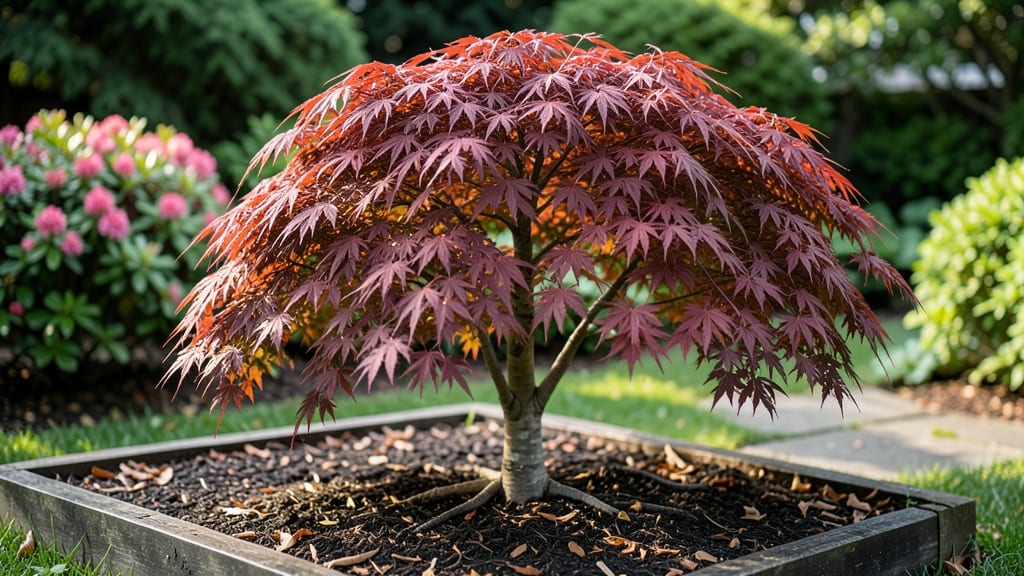
Your laceleaf weeping Japanese red maple (Acer palmatum 'Bloodlace') isn't just a tree—it's a living waterfall of burgundy lace. ✨ Pruning this beauty isn't about cutting branches; it's about sculpting its graceful weeping form so it stays stunning year-round, from winter's skeletal elegance to summer's vibrant cascade.
Start with the right tools: sharp bypass pruners for clean cuts and a sturdy ladder for those top branches. The key is working with the tree's natural growth habit—never hack away at the weeping branches.
Instead, focus on removing only dead wood, crossing branches, and shaping the outer silhouette to maintain that elegant, cascading silhouette. Most pruning happens in late winter or early spring, but light shaping can be done anytime the tree isn't in bloom.
You'll end up with a tree that looks like it belongs in a Japanese garden painting—delicate, refined, and full of movement. The branches will grow more evenly, the burgundy foliage will deepen in color, and you'll avoid that "wild" look that happens when weeping maples get neglected.
Think of it as giving your tree a seasonal haircut, but one that makes it look even more dramatic.
This method works for both young trees you're shaping from scratch and mature specimens that need rejuvenation. The same principles apply whether you're working with a 5-foot sapling or a 20-foot established tree. Here's how to do it right—without turning your living waterfall into a tangled mess.
📚 In This Guide
- What you need
- Instructions
- Tips and common mistakes
- Wrapping up and next steps
What you need
- ● Pruning shears – Bypass pruners (sharp, 7–9" blades) for clean cuts on small branches.
- ● Loppers – 18–24" loppers for thicker branches (½"–1½" diameter).
- ● Pruning saw – Curved-tooth saw for branches over 2" in diameter (avoid crushing bark!).
- ● Gloves – Heavy-duty, cut-resistant (thorns on some laceleaf varieties!).
- ● Disinfectant – 70% isopropyl alcohol or pruning sealant (to prevent disease spread).
- ● Extension pole – 10–12 ft telescoping pole (for high branches—safety first!).
- ● 5-gallon bucket – For collecting debris (or a tarp to lay underneath).
- ● Hand pruners – For precision trimming of tiny branches.
- ● Rubbing alcohol wipes – Quick cleanup between cuts.
- ● Tree wound dressing – Controversial but useful for large cuts (follow up with proper aftercare).
- ● Ladder – Sturdy, 3-section (if your tree is over 15 ft tall).
- ● Notebook & pen – To sketch your pruning plan before diving in!
Step-by-Step pruning guide for your laceleaf weeping Japanese red maple
This elegant tree thrives with the right cuts—here’s how to keep its graceful weeping form year after year.
✂️ Step 1: Prune in Late Winter or Early Spring
Timing matters most for this delicate tree. I always prune between late February and early March when the tree is still dormant but just before new growth begins. This ensures you’re not cutting off next year’s buds or encouraging late-season growth that won’t harden off before winter.
Check for swollen buds along the branches—these signal the tree is waking up. If you see them, wait a few more days. Pruning too early can stress the tree, while pruning too late risks removing flower buds or new growth. A clear, dry day with temperatures above 40°F is ideal for clean cuts.
✂️ Step 2: Remove Dead, Diseased, or Crossing Branches First
Start by scanning the tree for dead wood—branches that snap easily, have no leaves, or look grayish-brown. These should be removed immediately. Next, look for crossing branches rubbing against each other, which can create wounds and invite disease. I use sharp bypass pruners for branches up to ½ inch thick and a pruning saw for anything thicker.
Make your cuts just outside the branch collar (the swollen area where the branch meets the trunk). Avoid leaving stubs—these can rot and weaken the tree. If a branch is diseased, sterilize your tools with rubbing alcohol between cuts to prevent spreading pathogens. Healthy branches should have a smooth, green bark and flexible growth.
✂️ Step 3: Thin Out to Maintain the Weeping Shape
The laceleaf weeping maple’s signature form comes from its naturally drooping branches, but over time, some branches may grow too upright or thicken at the base. To preserve its graceful silhouette, I focus on thinning from the inside out. Start at the outer edges of the canopy and work inward, removing no more than 25% of the foliage in one season.
Look for branches that grow straight up or block light from reaching the center. These should be pruned back to a side branch or bud facing outward. Avoid cutting into old wood—this tree responds best to cuts made just above a healthy bud or lateral branch. You’ll know you’re on track when the tree’s lower branches still receive dappled sunlight year-round.
✂️ Step 4: Lightly Shape the Canopy for Balance
Once you’ve removed the problematic branches, it’s time for light shaping. The laceleaf’s delicate leaves mean aggressive pruning can stress the tree, so I only make small adjustments to even out the canopy. Focus on softening the edges by trimming back the tips of branches that have grown too long or leggy.
Use your pruners to shorten by no more than ⅓ of the branch length at a time. This encourages bushier growth while maintaining the tree’s natural weeping habit. Step back frequently to check your progress—you want the tree to look full and balanced, not sparse or top-heavy. Avoid over-pruning the top, as this can shift the tree’s center of gravity and cause instability.
⏰ Step 5: Clean Up and Monitor for New Growth
After pruning, rake up all clippings and debris to keep the base of the tree clean and reduce disease risk. I also apply a layer of mulch (about 2-3 inches deep) around the base, keeping it 6 inches away from the trunk to prevent rot. Water the tree deeply to help it recover, especially if you’ve made significant cuts.
Watch for new growth in 4-6 weeks. Healthy branches will sprout fresh leaves within this timeframe. If you see yellowing leaves or stunted growth, you may have pruned too aggressively. In that case, next year’s pruning should be even lighter. The laceleaf weeping maple rewards patience—with the right cuts, it’ll reward you with year-round color and elegant form for decades.
Tips & tricks for pruning your laceleaf weeping Japanese red maple
These simple tricks will help you maintain your tree's stunning weeping form without stressing its delicate branches.
Timing is Everything: That late February to early March window is critical because it's when the tree is still dormant but just starting to wake up. I've learned the hard way—pruning too early stresses the tree, while pruning too late can remove next year's flower buds. Check for swollen buds as your signal to wait a few more days if you see them forming. A clear, dry day above 40°F gives you the best conditions for clean cuts and minimal stress on the tree.
Branch Collar Know-How: When removing branches in Step 2, focus on cutting just outside the branch collar—the swollen area where the branch meets the trunk. This is where the tree's natural healing begins. I always use a sharp bypass pruner to avoid tearing the bark, which can invite disease. For branches thicker than ½ inch, a pruning saw is your best friend. Remember, leaving stubs creates entry points for rot and weakens the tree's structure over time.
The 25% Rule for Thinning: In Step 3, when thinning to maintain that graceful weeping shape, never remove more than 25% of the foliage in one season. This delicate tree responds best to gradual adjustments. I start at the outer edges and work inward, removing branches that grow straight up or block light from reaching the center. Always cut back to a side branch or outward-facing bud—this encourages new growth in the right direction and maintains the tree's natural silhouette.
Mulch and Monitor: After pruning, that 2-3 inch layer of mulch (kept 6 inches away from the trunk) is your best defense against disease and moisture loss. I also water deeply to help the tree recover, especially after significant cuts. Watch for new growth in 4-6 weeks—healthy branches will sprout fresh leaves within this timeframe. If you see yellowing leaves or stunted growth, you may have pruned too aggressively and should go lighter next time.
Pro Tips for Laceleaf Weeping Japanese Red Maple Tree
- These simple tricks will help you maintain your tree's stunning weeping form without stressing its delicate branches.
- Timing is Everything: That late February to early March window is critical because it's when the tree is still dorman...
- Branch Collar Know-How: When removing branches in Step 2, focus on cutting just outside the branch collar—the swollen...
Frequently asked questions
How often should I prune my laceleaf weeping Japanese red maple?
Prune your weeping maple once a year, ideally in late winter or early spring (before new growth starts). Light shaping pruning can also be done in summer to maintain its graceful form. Avoid heavy pruning in fall—it can stimulate tender new growth vulnerable to frost damage.
Can I prune my laceleaf maple in winter?
Yes, but with caution! Dormant-season pruning (late winter) is best for removing dead or crossing branches. However, avoid heavy cuts—this tree’s delicate structure thrives on gradual shaping. If you must prune in winter, do so on warmer days to reduce stress.
What should I avoid when pruning?
Steer clear of these pruning no-nos:
- Over-pruning: Never remove more than 25% of the canopy in one year—this weakens the tree.
- Topping: Avoid cutting back to a stub; it leads to ugly, weak regrowth.
- Pruning in fall: New growth won’t harden off before frost, risking damage.
- Using dull tools: Ragged cuts invite disease. Always use sharp, sterilized shears.
Can I grow a laceleaf weeping maple in a container?
Yes! This tree adapts well to large containers (15+ gallons), making it perfect for patios or small yards. Use well-draining soil and repot every 2–3 years to refresh nutrients. In colder climates, move it indoors or protect it with burlap wraps during frost.
Why are the leaves turning brown or yellow?
Brown/yellow leaves often signal stress or pests. Check for:
- Underwatering: Weeping maples need consistent moisture, especially in containers.
- Over-fertilizing: Too many nutrients burn roots—use a balanced, slow-release fertilizer.
- Pests: Spider mites or aphids suck sap, causing discoloration. Treat with neem oil or insecticidal soap.
- Fungal issues: Wet foliage + poor airflow = leaf spot. Prune for airflow and avoid overhead watering.
What’s a good alternative if I can’t find a laceleaf weeping maple?
If this variety is hard to source, consider these stunning weeping maple alternatives:
- Acer palmatum ‘Bloodgood’ (upright but vibrant red foliage).
- Acer palmatum ‘Crimson Queen’ (compact, deep red leaves).
- Acer palmatum ‘Shishigashira’ (dwarf, upright with lace-like leaves).
- Acer japonicum ‘Aconitifolium’ (lobed leaves, cold-hardy).
All thrive in similar conditions but offer varied shapes and colors!
Wrapping up and next steps
The laceleaf weeping Japanese red maple is a stunning addition to any landscape, offering year-round beauty with its delicate foliage and vibrant colors. With the right pruning techniques—like thinning, shaping, and seasonal maintenance—you can keep its graceful form thriving for decades. 🌿
Now that you’re equipped with the knowledge, grab your tools and step outside! Start small—maybe just a few branches this season—and watch your tree flourish. Happy pruning, and enjoy the artistry of nurturing this breathtaking botanical masterpiece! ✂️🍁