
Pests and Diseases
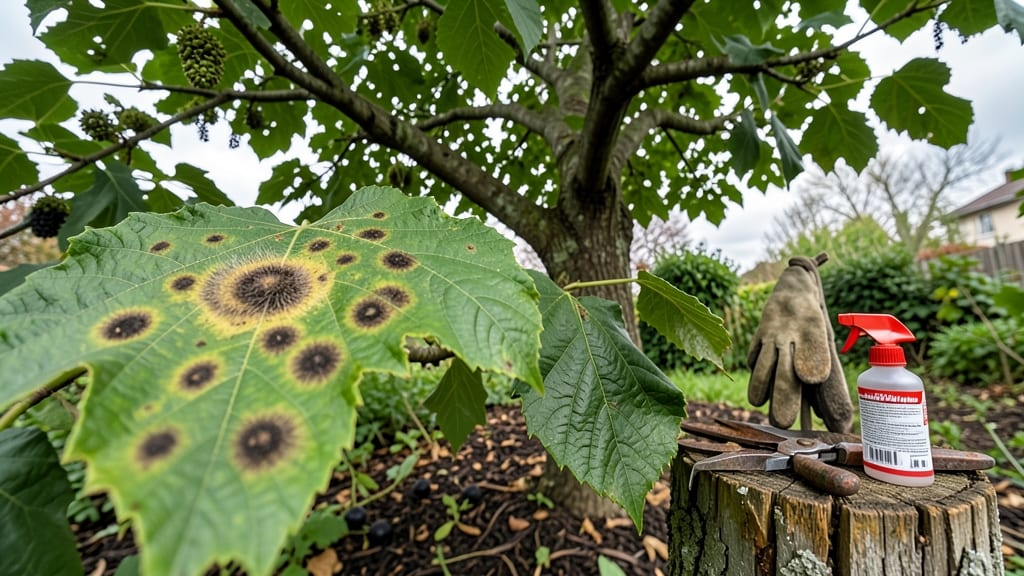
Your mulberry leaves look like they’ve been singed by a summer sunburn—but it’s not the heat. 🌿 Mulberry leaf spot disease turns vibrant foliage into crispy, spotted messes, and I’ve seen it ruin entire harvests if ignored.
The good news? This organic rescue plan gets your tree back to healthy, lush growth without harsh chemicals.
This isn’t just about pruning away the damage—it’s about stopping the fungus in its tracks. Overhead watering, crowded branches, and old mulch create the perfect storm for leaf spot.
My 3-step method tackles the root causes: cleaning up debris, spacing out branches for airflow, and applying a simple copper spray that actually works.
Within 2-3 weeks, you’ll see new leaves unfurling without those ugly brown spots. The key is consistency—one treatment won’t do it, but a seasonal schedule keeps your mulberry thriving. No more wilting branches or stunted growth; just crisp, vibrant leaves ready for harvest.
Works for both backyard trees and container-grown mulberries. The same principles apply whether you’re dealing with a mature tree or a young sapling. Let’s get your mulberry back to its best!
Root Causes Of Fungal Leaf Damage
Mulberry leaf spot disease—often caused by fungal pathogens like Guignardia bidwellii or Mycosphaerella mori—isn’t just a random attack on your trees. It thrives due to a mix of environmental stress, poor cultural practices, and biological vulnerabilities.
Understanding these triggers is the first step to stopping the spread. Let’s break down the key culprits behind this pesky problem.
Fungal spores love damp conditions. Mulberry trees are particularly susceptible when leaves stay wet for extended periods—whether from heavy dew, overhead irrigation, or poor air circulation. Here’s why:
- Spores germinate faster in humidity levels above 75%. Ideal conditions for fungal growth include:
- Morning dew lingering until midday
- Frequent light rains without sun breaks
- Dense foliage trapping moisture
- Wet leaves create a breeding ground for Guignardia spores, which can multiply exponentially in 24–48 hours.
- Poor drainage around roots exacerbates the issue by keeping soil moisture high, signaling the tree to retain water in leaves longer.
Actionable fix: Space mulberry trees for airflow, water at the base (not overhead), and prune to reduce humidity pockets.
A healthy mulberry tree fights off fungal invaders, but stress weakens its natural armor. Common stressors include:
| Stress Factor | How It Helps Fungi Win |
|---|---|
| Nutrient deficiencies (e.g., nitrogen, potassium) | Leaves become thin and vulnerable; fungal spores latch onto damaged cells. |
| Physical damage (pruning wounds, hail, pests) | Open wounds let spores enter directly; sap leaks create sticky traps for spores. |
| Root compaction or drought | Reduced water/nutrient uptake forces the tree to prioritize survival over defense. |
| Improper pruning (e.g., cutting too late in the season) | New growth is tender and lacks protective cuticles, making it an easy target. |
Actionable fix: Conduct a soil test, mulch to retain moisture, and prune during dormant seasons (late winter/early spring) to minimize stress.
Fungal leaf spot diseases don’t appear out of thin air—they hitchhike via:
- Infected plant debris: Leaves, twigs, or fruit mummies from last season’s outbreak harbor Guignardia spores. When these decompose, spores are released.
- Wind and water splashing: Spores travel from nearby infected trees or even wild mulberries, landing on healthy leaves.
- Contaminated tools or clothing: Pruners, gloves, or even boots can transfer spores between trees.
- Overwintering spores: Some fungi survive in bark crevices or buds, ready to pounce when conditions warm up.
Actionable fix: Clean up fallen leaves in autumn, sterilize tools with 70% alcohol, and avoid planting mulberries where the disease has been active.
💡 Pro Tip: Early morning is the worst time to water mulberries—spores thrive in dew. Aim for late afternoon when leaves have a chance to dry.
Fixing Fungal Foliage Fails
When your mulberry tree’s leaves start showing those dreaded brown or black spots, it’s time to act—but don’t panic! With the right organic fixes, you can nurse those leaves back to health and prevent future outbreaks.
Below are targeted solutions mapped to common causes, along with simple prevention tips to keep your tree thriving.
If your mulberry tree is packed in too tight or surrounded by dense foliage, moisture lingers, creating the perfect breeding ground for fungal spores.
How to Fix It:- 🔪 Thin out branches – Remove any crossing, dead, or overcrowded limbs to improve airflow. Aim for a sunny, open canopy where leaves dry quickly after rain.
- 🌿 Space out plants – If mulberry trees are planted too close together, consider transplanting one to give them at least 10–15 feet of space.
- 🍃 Clean up debris – Rake and remove fallen leaves, twigs, or fruit mummies (dried-up spots) from the ground. These harbor fungi over winter.
Fungal spores thrive in wet conditions. If your tree is sitting in soggy soil or gets drenched daily, leaf spots will spread like wildfire.
How to Fix It:- ⏰ Water deeply but less often – Switch to drip irrigation or soaker hoses to water at the base (not overhead). Aim for 1–1.5 inches per week, including rain.
- 🌡️ Avoid evening watering – Wet leaves at night slow drying, giving fungi a head start. Water early morning instead.
- 🏗️ Check drainage – If your tree sits in a low spot where water pools, amend the soil with compost or perlite to improve drainage.
Once spots appear, act fast with organic fungicides and boost your tree’s natural defenses.
How to Fix It:- 🍳 DIY baking soda spray – Mix 1 tsp baking soda + 1 tbsp horticultural oil + 1 tsp mild soap per quart of water. Spray under and above leaves every 7–10 days until new growth appears.
- 🌿 Neem oil or copper fungicide – For stubborn infections, use a 1% neem oil solution or copper-based spray (like copper sulfate). Reapply after rain.
- 💪 Strengthen the tree – Feed with a balanced organic fertilizer (10-10-10) in early spring to support robust growth.
If aphids, mites, or scale insects are sucking sap, they weaken leaves, making them more susceptible to fungal infections.
How to Fix It:- 🔍 Inspect leaves – Look for sticky residue (honeydew) or tiny webs. If pests are present, blast them off with a strong water spray or introduce beneficial insects (ladybugs, lacewings).
- 🍎 Use insecticidal soap – Mix 2.5 tbsp castile soap per gallon of water and spray directly on pests. Reapply every 5–7 days.
Pro Tip: 🔥 Copper is your secret weapon—it’s effective against fungi and bacteria, but use it only when needed to avoid harming beneficial microbes in the soil.
Frequently asked questions
What do mulberry leaf spots look like?
Leaf spots from mulberry leaf spot disease appear as small, round or irregular brown/black spots with yellow halos. They often have a greasy texture and may merge into larger patches as the disease progresses. Look for spots on both upper and lower leaf surfaces—this is a key sign of fungal infection.
Can mulberry leaf spot disease kill my tree?
While it won't kill a healthy mulberry tree outright, severe infections can weaken growth, reduce fruit production, and make trees more vulnerable to other pests. Left unchecked, repeated outbreaks can cause gradual decline over years. The key is early intervention to prevent long-term damage.
How often should I spray fungicide for prevention?
For organic prevention, apply copper or neem oil sprays every 2-3 weeks during wet seasons (spring/fall). Start spraying when you see the first signs of spots, then continue through the growing season. Always spray in the evening to avoid leaf burn from sunlight.
Will pruning help stop leaf spot spread?
Prune to remove infected leaves, crossing branches, and dead wood—this improves airflow and reduces moisture retention. Sterilize pruners with rubbing alcohol between cuts. Focus on thinning the canopy to let sunlight reach inner branches and dry leaves faster.
Are there mulberry varieties resistant to leaf spot?
Some varieties like 'Illinois Everbearing' show better resistance, but no mulberry is completely immune. The best approach is combining resistant varieties with good cultural practices (proper spacing, sanitation) for maximum protection against fungal diseases.