
Pests and Diseases
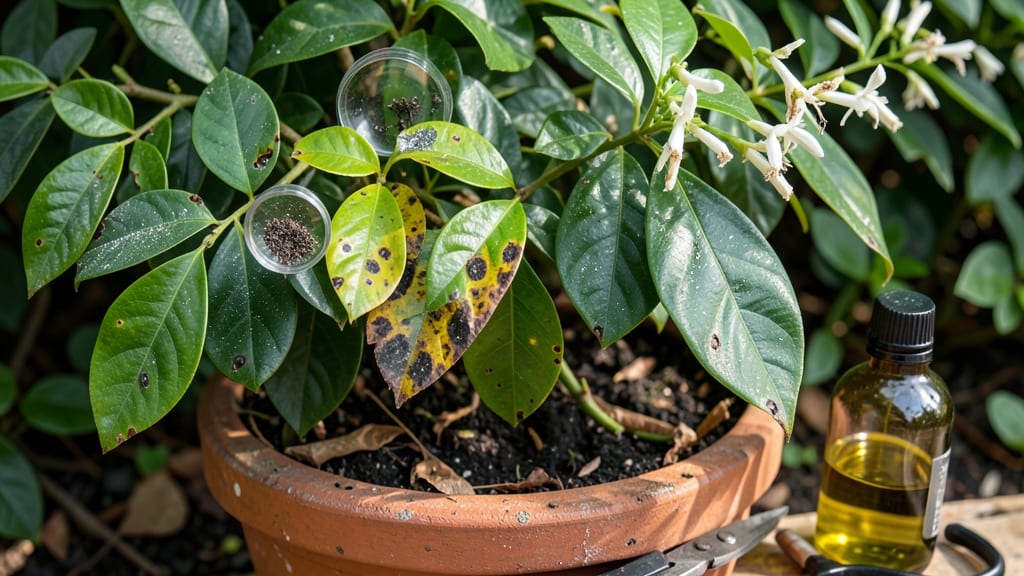
Jasmine leaf disease turns your fragrant climber into a sad, yellowing mess—unless you act fast. 🌿 I’ve seen powdery mildew, bacterial blight, and even nutrient deficiencies ruin perfectly healthy jasmine plants, but there’s a way to bring them back.
The key is spotting the problem early and treating it right, whether it’s a fungal infection or something else.
Most leaf diseases start with tiny white spots, dark streaks, or leaves that curl and drop too soon. Powdery mildew looks like dust on the leaves, while bacterial blight causes yellow patches with brown edges.
Nutrient issues? Yellowing between veins means nitrogen deficiency, and purple stems mean phosphorus is missing. The good news? All of these have simple fixes—organic sprays, pruning, or soil adjustments can turn things around.
By the time you finish these 3 steps, your jasmine will be on the road to recovery: clean up infected leaves, apply the right treatment (neem oil for fungus, copper spray for bacteria), and adjust your care routine.
Most gardeners see improvement within 2-3 weeks if they catch it early. The worst that happens is you lose a few leaves—your plant’s life isn’t over.
If the disease spreads fast or your plant looks really bad, call in a pro. But for most cases, this guide gives you everything you need to save your jasmine—no green thumb required. Let’s get those leaves healthy again.
Root Causes of Leaf Decline
Jasmine leaf disease—whether fungal, bacterial, or caused by environmental stressors—rarely appears out of nowhere. Understanding the why behind the damage is the first step toward prevention and treatment.
Below, we break down the most common culprits, backed by science, so you can spot the warning signs early and act before your plants suffer.
🌡️ Overwatering and Poor Drainage
Jasmine thrives in well-draining soil, but when roots sit in soggy conditions, they suffocate. Excess moisture creates the perfect breeding ground for root rot (often caused by Phytophthora or Pythium fungi) and leaf spot diseases like Alternaria or Septoria. Here’s how it happens:
- Waterlogged soil: Containers without drainage holes or heavy clay soil trap water, cutting off oxygen to roots.
- Fungal spores thrive: Fungi like Botrytis (gray mold) spread rapidly in humid, wet environments, turning leaves brown and mushy.
- Nutrient leaching: Overwatering washes away essential nutrients (like nitrogen and potassium), weakening the plant’s immune response.
Actionable fix: Use pots with drainage holes, amend soil with perlite or sand, and water only when the top 1–2 inches of soil are dry. 💡 Pro tip: If your jasmine’s leaves yellow and feel spongy, root rot is likely the culprit.
🍄 Fungal Infections: The Silent Invaders
Fungi are the #1 cause of jasmine leaf disease, often entering through wounds (like pruning cuts) or weak spots. Here’s how they take hold:
| Disease | How It Starts | Symptoms |
|---|---|---|
| Powdery Mildew (Erysiphe spp.) | Spores spread in humid, shady conditions (60–80% humidity). Common in crowded plants. | White, powdery patches on upper leaves; yellowing underneath. |
| Anthracnose (Colletotrichum) | Thrives in wet foliage (e.g., overhead watering). Invades through stomata (leaf pores). | Dark, sunken lesions with yellow halos; leaves may drop prematurely. |
| Rust Fungus (Puccinia) | Spores hitchhike on wind or tools; need high humidity to germinate. | Orange-brown pustules on lower leaf surfaces; distorted growth. |
Why it spreads: Fungi produce millions of spores in ideal conditions (warmth + moisture), making them highly contagious. Action: Prune infected leaves immediately, avoid wetting foliage, and apply neem oil or copper fungicide preventatively. 🌡️ Fun fact: Rust fungus can jump to other plants—isolate infected jasmines!
🐛 Pests Weakening the Plant
While pests like aphids, spider mites, or scale insects don’t directly cause leaf disease, they damage plant tissue, creating entry points for pathogens. Here’s the chain reaction:
- Pests feed: They suck sap or chew leaves, leaving open wounds.
- Bacteria/fungi invade: Pathogens like Xanthomonas (bacterial leaf spot) or Botrytis slip through these gaps.
- Plant stress: Pests drain nutrients, making the jasmine more susceptible to disease.
Example: Spider mites cause stippling (tiny yellow dots) on leaves. If left untreated, Alternaria fungus can infect these spots, leading to large brown lesions. Action: Treat pests with insecticidal soap or horticultural oil before they cause secondary infections. ✨ Pro tip: Use a magnifying glass to check for pests on new growth—that’s where they hide!
🌞 Environmental Stressors
Jasmine is tough, but extreme conditions can trigger disease-like symptoms. The top offenders:
- Low light: Etiolation (stretched, weak growth) makes plants more vulnerable to fungal attacks.
- Temperature swings: Cold nights (<50°F) followed by hot days (shock the plant), weakening its defenses.
- Poor air circulation: Stagnant air traps moisture and spores, promoting powdery mildew.
- Nutrient deficiencies: Lack of magnesium (yellowing between veins) or iron (pale new leaves) stresses the plant.
Real-world example: A jasmine in a shady, humid bathroom with no airflow is a magnet for gray mold (Botrytis). Action: Move plants to bright, indirect light, space them 12+ inches apart, and use a small fan (on low) to improve airflow. 💪 Pro tip: Yellow leaves? Test soil pH—jasmine prefers 6.0–7.0.
Most jasmine leaf diseases are preventable with proper care. The key is breaking the cycle—whether it’s fixing drainage, improving airflow, or catching pests early. Next, we’ll cover how to diagnose the exact problem and treat it before it spreads.
Revive Your Jasmine’s Health
If your jasmine plant is showing signs of leaf disease—whether it’s yellowing, spots, or wilting—don’t panic! With the right approach, you can nurse it back to vitality. Below, we’ve mapped out targeted solutions based on the most common causes, along with proactive prevention tips to keep your plant thriving.
Let’s get your jasmine back in top shape! 🌿💚
If your jasmine leaves are covered in dark spots, powdery residue, or appear mushy, a fungal infection is likely the culprit. Fungi thrive in damp, humid conditions, so acting fast is key.
🔥 Step 1: Remove the Affected Leaves
Use clean, sharp pruning shears to snip off any leaves or stems showing signs of disease. Dispose of them in the trash not the compost bin—fungi can spread through organic matter.
🍳 Step 2: Apply a Fungicide
Choose a copper-based fungicide or a neem oil solution (1 tsp neem oil + 1 quart water + a drop of dish soap as an emulsifier). Spray the plant thoroughly, focusing on the undersides of leaves where fungi often hide. Reapply every 7–10 days until the problem clears.
👨🍳 Step 3: Improve Airflow and Light
Fungi love stagnant air. Prune nearby branches to create space, and if your jasmine is indoors, move it to a brighter spot (but avoid direct scorching sunlight). If outdoors, ensure it’s not planted in a low-lying area where water pools.
💡 Prevention Tips:
- Water wisely: Water at the base (not overhead) in the early morning so leaves dry quickly.
- Space plants apart: Overcrowding traps moisture—aim for 2–3 feet between jasmine plants.
- Clean tools: Sterilize pruners with rubbing alcohol before and after use.
If you spot tiny holes, webbing, or sticky residue on leaves, pests like spider mites, aphids, or scale insects are likely feeding on your jasmine. These critters weaken the plant and create entry points for disease.
🔪 Step 1: Blast Off Pests with Water
Start with a strong spray of water to dislodge soft-bodied pests like aphids. Use a hose nozzle or a spray bottle for delicate leaves.
🌡️ Step 2: Introduce Natural Predators or Soap Spray
For stubborn pests:
- Neem oil spray: Mix 2 tbsp neem oil + 1 tsp mild soap + 1 quart water. Spray every 5–7 days.
- Insecticidal soap: Follow label instructions for direct application.
- Ladybugs or lacewings: Release these beneficial insects near your plant—they’ll feast on pests!
🎯 Step 3: Isolate the Plant
If the infestation is severe, move your jasmine away from other plants to prevent spreading. Check nearby foliage regularly for signs of hitchhikers.
✨ Prevention Tips:
- Inspect new plants: Quarantine any new additions for 2 weeks before introducing them to your garden.
- Use reflective mulch: Aluminum foil or white plastic around the base can deter crawling pests.
- Encourage biodiversity: Planting marigolds or basil nearby can repel pests naturally.
If leaves are yellowing, curling, or dropping without obvious spots or pests, your jasmine might be struggling with overwatering, underwatering, or poor drainage. Jasmine prefers consistent moisture but hates soggy roots.
💧 Step 1: Check the Soil
Stick your finger 1–2 inches into the soil:
- Too dry: Water deeply until it drains from the bottom. Use a moisture meter if unsure.
- Too wet: Let the top 2–3 inches dry out before watering again. If the pot has no drainage holes, repot immediately.
🌱 Step 2: Repot if Needed
If your jasmine is root-bound (roots circling the pot) or the soil is compacted, repot it into a container with well-draining potting mix (add perlite or sand for aeration). Choose a pot just 1–2 inches larger in diameter.
🌡️ Step 3: Optimize Light and Temperature
Jasmine thrives in partial sun (4–6 hours of morning light). If indoors, place it near a south- or east-facing window. Avoid cold drafts or sudden temperature swings—keep it in a stable 60–75°F range.
💡 Prevention Tips:
- Use the right pot: Terracotta pots dry out faster than plastic—great for preventing overwatering.
- Mulch properly: Apply 1–2 inches of organic mulch (like bark chips) to retain moisture without suffocating roots.
- Monitor humidity: If your home is dry, mist the leaves lightly or use a pebble tray with water.
With these targeted fixes, your jasmine should bounce back in 2–4 weeks, depending on the severity of the issue**. Stay vigilant with prevention, and your plant will reward you with lush, disease-free foliage—and maybe even those fragrant blooms you love! 🌸🌟
Frequently asked questions
What are the first signs my jasmine plant has a fungal infection?
Look for white powdery residue (powdery mildew), dark sunken spots with yellow halos (anthracnose), or orange-brown pustules (rust fungus) on leaves. These often appear first on older leaves or undersides. Early detection is key—act within 3-5 days to prevent spread.
Can I use household items to treat jasmine leaf disease?
Yes! For fungal issues, mix 1 tablespoon baking soda + 1 quart water + a drop of dish soap as a light spray (test on one leaf first). For bacterial problems, hydrogen peroxide (3%) diluted 1:1 with water works as a disinfectant. Always apply in early morning for best results.
How do I know if my jasmine's problems are from disease or just poor care?
Disease symptoms include spots, powdery coatings, or unusual discoloration (like purple stems for nutrient issues). Poor care often shows as uniform yellowing (underwatering) or drooping (overwatering). Check soil moisture and light exposure first—if those are fine, it's likely a pathogen.
Should I remove all diseased leaves, or just the worst ones?
Remove all infected leaves—even small spots can harbor spores. Use clean pruners and dispose of leaves in trash (not compost). For severe cases, prune 1/3 of the plant to improve airflow. Sterilize tools with rubbing alcohol between cuts to prevent cross-contamination.
When should I call a professional for my jasmine's leaf disease?
If the disease spreads rapidly despite treatment, causes wilting of new growth, or appears as oozing lesions (bacterial infections), consult a plant pathologist. Severe cases may require systemic fungicides or soil drenches that require professional application. Don't wait—act when 50%+ of leaves show symptoms.