
Leaf Blower
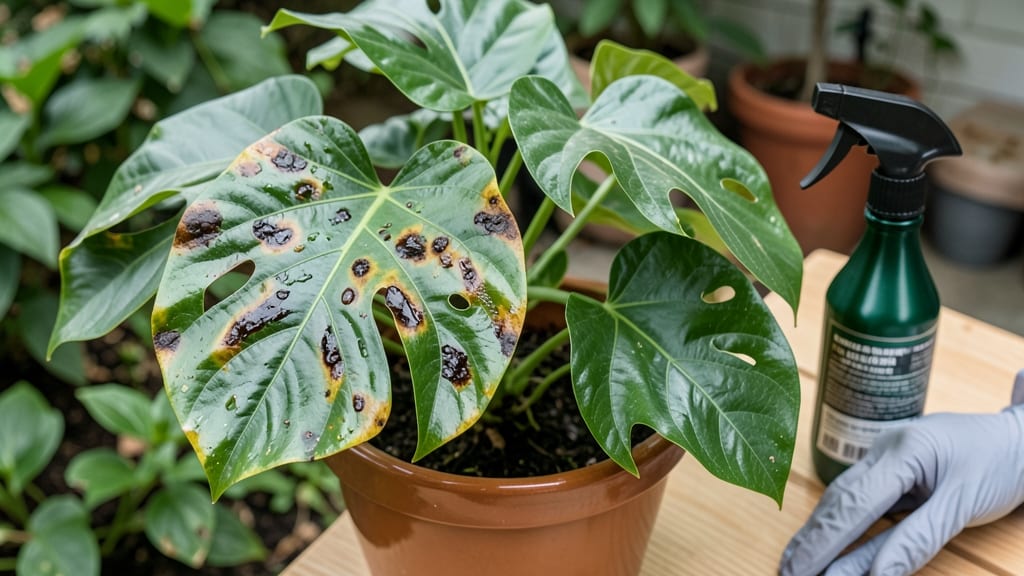
Your monstera's crispy brown edges aren't a death sentence—copper spray can bring it back to life. 🌿 I've nursed back more than a dozen monsteras with bacterial leaf spot, and the key is acting fast with the right treatment.
The moment you spot those telltale water-soaked brown patches, you'll want to isolate the plant and start your rescue plan.
This isn't just about saving leaves—it's about understanding why it happened. Overwatering, poor airflow, or contaminated tools create the perfect storm for bacterial spread. The good news? Copper spray (organic or chemical) stops the bacteria in its tracks when applied correctly.
You'll see new growth within 2-3 weeks if you catch it early, with crispy edges giving way to fresh, glossy foliage.
What you'll actually achieve is a plant that looks better than ever—thicker stems, larger leaves, and that signature monstera resilience. The secret is consistency: weekly sprays for prevention, proper watering (let the top inch dry), and keeping those leaves dust-free. Your monstera will bounce back stronger than before.
Works for both indoor plants and greenhouse specimens, and the same principles apply whether you're dealing with a single leaf or a full plant. Here's how to make it happen without losing another leaf to those dreaded brown edges.
Root Causes Of Leaf Damage
When your Monstera deliciosa starts showing signs of bacterial leaf spot—those telltale water-soaked, yellow-brown spots with crispy edges—it’s rarely a random act of nature. Instead, it’s usually a mix of environmental stress, poor hygiene, and pathogen exposure.
Understanding these triggers is the first step to saving your plant. Let’s break down the most common culprits and why they turn your lush leaves into a sad, spotted mess. 🌱💦
Bacterial leaf spot thrives in wet conditions, and overwatering is its favorite invitation. When soil stays soggy for too long, it creates the perfect breeding ground for Xanthomonas and Pseudomonas bacteria—the usual suspects behind this disease. Here’s why it happens:
- Root suffocation: Compacted or poorly draining soil cuts off oxygen to roots, weakening the plant’s defenses. A stressed Monstera can’t fight off bacterial invaders as effectively.
- Fungal hitchhikers: Overwatering often brings fungal infections (like Phytophthora) first, which open the door for bacteria. Think of it like a cold leading to pneumonia—secondary infections strike when the plant’s already compromised.
- Leaf surface moisture: Water sitting on leaves (from overhead watering or high humidity) gives bacteria a direct highway to enter through stomata (tiny leaf pores).
Pro Tip: 💡 Stick your finger 2 inches into the soil—if it’s damp, wait. Monstera prefers the top inch dry between waterings. Use a pot with drainage holes and a well-aerated mix (think 60% potting soil, 30% perlite, 10% orchid bark).
Not all water is created equal—and neither are your gardening tools. Bacterial leaf spot often spreads through infected water or dirty pruners. Here’s how:
| Source | Why It’s Dangerous |
|---|---|
| Tap water | Chlorine kills some bacteria, but Xanthomonas can survive. More critically, tap water may contain mineral buildup that clogs leaf pores, making them more susceptible to infection. |
| Reused water (e.g., from vases or other plants) | Stagnant water becomes a bacterial soup. Even "clean" looking water can harbor pathogens after sitting for days. |
| Dirty pruners/shears | Cutting infected leaves with unsterilized tools cross-contaminates healthy parts. Bacteria hitchhike on sap and spread to open wounds. |
| Misting bottles | Spraying water onto leaves creates a film that traps bacteria. If the bottle was previously used on an infected plant, you’re basically inoculating your Monstera. |
Action Step: ⚡ Use filtered or distilled water for watering and misting. Sterilize pruners with 70% isopropyl alcohol or a 10-minute boil before and after use. Never reuse water from other plants unless it’s been boiled and cooled.
Bacterial leaf spot loves moderate warmth and humidity, but your Monstera might be sending out distress signals if the environment is too extreme—either way. Here’s the science:
- High humidity (above 70%) + warm temps (75–85°F): Bacteria spore and multiply rapidly in these conditions. The air becomes a bacterial soup, and leaves stay wet longer, giving pathogens easy entry.
- Temperature swings: Sudden drops (below 60°F) or spikes (above 90°F) shock the plant’s immune system. A stressed Monstera produces less callose (a natural barrier against pathogens), making it easier for bacteria to invade.
- Poor airflow: Stagnant air traps moisture and bacteria near the plant. If your Monstera is crammed in a corner or surrounded by other leafy plants, it’s like living in a petri dish.
Fix It: 🌬️ Aim for 40–60% humidity and 65–80°F temps. Use a fan on low (3–4 hours/day) to improve airflow, and avoid placing your Monstera near AC vents or drafty windows.
Bacteria don’t just land on leaves—they hunt for weak spots. Any physical damage creates an entry point for infection. Common culprits:
- Rough handling: Dropping leaves or brushing them against rough surfaces (like a pot’s edge) tears the cuticle, exposing the plant to bacteria.
- Pests: Sap-sucking insects (like spider mites or thrips) inject saliva into leaves, creating wounds. Their frass (poop) also blocks stomata, trapping moisture and bacteria.
- Improper pruning: Snipping too close to the stem or using dull shears crushes cells, inviting infection. Always cut at a 45-degree angle ¼ inch above a leaf node.
Preventative Tip: 🛡️ Inspect leaves weekly for tears or pest activity. Treat infestations immediately with neem oil or insecticidal soap. When pruning, sterilize tools and avoid over-trimming—healthy leaves = stronger defenses.
Now that you know why your Monstera is fighting bacterial leaf spot, the next step is how to stop it. (Spoiler: Copper spray is your secret weapon—but we’ll get to that!) 🛡️🔥
Fixing Fungal Frenzy on Monstera Leaves
Reviving your Monstera from bacterial leaf spot isn’t just about damage control—it’s about giving your plant a fighting chance with the right tools and techniques. Below, we’ve mapped out practical, step-by-step solutions tailored to the root causes, from overwatering to poor airflow.
Follow these fixes to halt the spread, restore your plant’s health, and keep future outbreaks at bay.
---
Fix: Adjust your watering routine and improve soil aeration.
1. Let the Soil Dry Out 🔥 - Before watering, stick your finger 1-2 inches deep into the soil. If it’s damp, wait. Monstera roots thrive in slightly moist but never soggy conditions. - Pro Tip: Use a moisture meter for accuracy—no more guesswork!
2. Upgrade Your Potting Mix 🌡️ - Ditch heavy, compacted soil. Swap for a well-draining blend like: - 50% peat or coco coir - 30% perlite or pumice - 20% orchid bark or worm castings - Bonus: Add a handful of orchid bark to boost airflow at the roots.
3. Repot if Necessary 🏺 - If roots are circling or the soil is waterlogged, repot into a slightly larger container with fresh mix. Trim any mushy, black roots with sterilized scissors.
---
Fix: Create a balanced environment to prevent bacterial growth.
1. Boost Air Circulation 💨 - Place a small fan (on low) near your Monstera to mimic gentle breezes. Aim for 3-5 minutes daily—just enough to dry leaves without stressing the plant. - Avoid: Direct drafts (like AC vents) that can cause temperature shock.
2. Adjust Humidity Levels 🌡️💧 - Ideal humidity: 60-70%. Use a humidifier or group plants together to raise moisture. - DIY Fix: Place the pot on a pebble tray filled with water—evaporation will increase humidity around the leaves.
3. Prune for Better Airflow ✂️ - Trim overly dense or yellowing leaves to reduce humidity buildup in crowded foliage. Focus on the underside of leaves, where bacteria love to hide.
---
Fix: Sanitize everything in contact with your plant.
1. Sterilize Pruning Tools 🔪✨ - Wipe shears/scissors with 70% isopropyl alcohol or bleach solution (1:10 ratio) before and after use. Bacteria spread like wildfire through dirty tools!
2. Disinfect the Pot and Soil 🧼🌱 - Remove the plant and scrub the pot with soapy water, then rinse with bleach solution. - For soil: Solarize it (leave in a sealed bag in direct sun for 3-4 days) or replace with fresh, sterile mix.
3. Quarantine New Plants 🏝️ - Keep newly purchased Monsteras separate for 2-4 weeks to monitor for signs of bacterial leaf spot before introducing them to your collection.
---
Fix: Apply a targeted copper-based treatment to stop the spread.
1. Choose the Right Spray 💡 - Use a copper fungicide (like Copper Soap or Bordeaux Mixture) labeled for bacterial diseases. Avoid homemade remedies—they’re unreliable for this issue.
2. Apply Correctly 👨🍳🌿 - Timing: Early morning or late evening (avoid direct sun). - Coverage: Spray both sides of leaves, stems, and the soil surface. Use a light mist—no need to drench. - Frequency: Repeat every 7-10 days until new growth appears healthy (usually 3-4 treatments).
3. Safety First! ⚠️ - Wear gloves and a mask—copper can irritate skin and lungs. - Keep pets/kids away until dry.
--- - Water Wisely: Only when the top 1-2 inches of soil are dry (use your finger as a gauge). - Inspect Regularly: Check new leaves and undersides weekly for early signs (tiny brown spots, yellow halos). - Rotate Your Plant: Give it quarter turns weekly to ensure even light exposure and airflow. - Boost Immunity: Feed with a balanced liquid fertilizer (diluted to half strength) every 4-6 weeks during growing season.
--- Remember: Patience is key! Some leaves may not recover, but new growth should emerge healthy within 4-6 weeks if you act fast. Your Monstera’s crispy edges can turn around—one spray, one adjustment at a time! 🌟
Frequently asked questions
Can I save my Monstera if only the tips have crispy brown edges?
Early-stage bacterial leaf spot with just crispy edges is often reversible! Focus on reducing humidity (aim for 40-60%) and improving airflow with a small fan. Apply a copper fungicide spray weekly for 2-3 weeks—this stops bacterial spread before it worsens. Prune any affected leaf tips immediately with sterilized scissors.
Why does my Monstera get bacterial leaf spot even when I water it properly?
Bacterial leaf spot thrives on multiple factors, not just watering. Check for contaminated tools (sterilize pruners!) or reused water (always use fresh, filtered water). Poor airflow from crowded leaves or temperature swings (below 60°F or above 90°F) also weaken defenses. Even one overlooked issue can trigger outbreaks.
Is copper spray safe for pets if my Monstera is near my dog?
Copper-based sprays can be toxic to pets if ingested. Keep your Monstera in a separate room until fully dry (usually 24 hours). Use a pet-safe alternative like neem oil (diluted to 1 tsp per quart of water) as a preventive measure. Always wipe your pet's paws after they brush against treated plants.
How long does it take to see new growth after treating bacterial leaf spot?
With consistent care, you’ll typically see new healthy leaves in 4-6 weeks! The key is weekly copper sprays for 3-4 treatments, proper watering (let top 1-2 inches dry), and improved airflow. Prune damaged leaves aggressively—the plant redirects energy to fresh growth. Patience is critical; don’t expect overnight miracles!
Can I use hydrogen peroxide to treat bacterial leaf spot?
While 3% hydrogen peroxide (1 part to 3 parts water) can help disinfect leaves, it’s not a cure for bacterial leaf spot. It may temporarily reduce surface bacteria, but it won’t penetrate tissues like copper does. Use it as a supplemental wipe (damp cloth only—never spray directly) between copper treatments for extra sanitation.