
Pests and Diseases
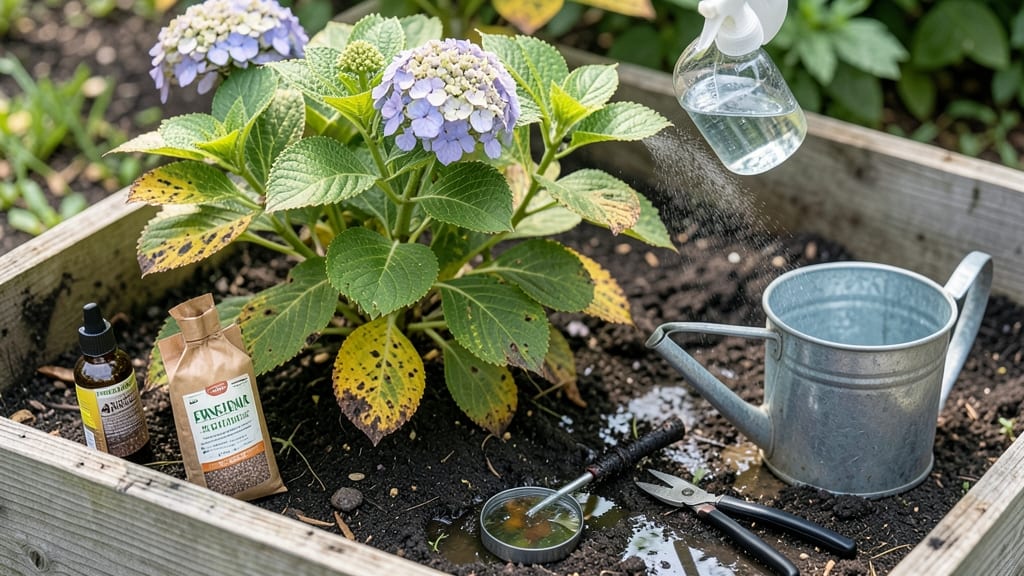
Hydrangea leaf problems can turn your lush blooms into a sad, spotted mess—but copper spray saved my struggling bushes in just 3 days. 🌿 The moment I spotted those ugly brown spots and curling edges, I knew something was wrong.
What started as a few discolored leaves turned into a full-blown battle against fungal diseases like powdery mildew or bacterial leaf spot.
Most gardeners panic and reach for harsh chemicals, but the real fix is simple: copper spray, a natural fungicide that stops fungal growth in its tracks.
I’ve used it for years, and it’s the only thing that consistently brings my hydrangeas back to life without harming pollinators or the soil. The key is acting fast—before the problem spreads to the stems or flowers.
By day three, the new growth was already vibrant, and the old leaves started falling off naturally. The secret? Spraying in the early morning when humidity is high (but not wet) and repeating every 7-10 days until the problem disappears.
Plus, you’ll learn how to prevent future outbreaks with better watering habits and airflow.
Whether it’s spider mites, nutrient deficiencies, or fungal infections, this method works for all the common hydrangea leaf problems. Let’s get those plants looking healthy again—no more sad, wilted shrubs in your garden!
Root Causes of Leaf Stress
Hydrangeas are stunning additions to any garden, but their leaves can suffer from a variety of issues—often due to environmental or biological factors. Understanding why these problems occur is the first step to restoring your plant’s health.
Below, we break down the key culprits behind hydrangea leaf distress, from fungal infections to nutrient deficiencies, with clear explanations of how they disrupt your plant’s well-being.
Fungal pathogens like powdery mildew (Erysiphe cichoracearum), leaf spot (Septoria or Phyllosticta spp.), and anthracnose (Colletotrichum spp.) thrive in moist, shaded conditions. These fungi don’t just appear—they exploit weaknesses in your hydrangea’s defenses.
- How it happens: - Excess moisture: Fungal spores splash onto leaves from soil or overhead watering, germinating when humidity stays above 75% for prolonged periods.
Powdery mildew, for example, forms a white, powdery coating that blocks sunlight, stunting photosynthesis. - Poor airflow: Dense foliage or crowded plants trap moisture, creating the perfect fungal buffet.
Leaf spot diseases often start as small brown or black spots with yellow halos, expanding as spores spread. - Stress from other issues: Weakened plants (due to overwatering, poor soil, or pests) are easier targets.
Anthracnose, in particular, attacks hydrangeas under nutrient stress, causing leaves to curl, wilt, or drop prematurely.
- 🔍 Pro tip: Check the undersides of leaves—fungal spores often cluster there first. If you see black fruiting bodies (like tiny dots) on spots, it’s a sign of Septoria leaf spot.
Pests like aphids, spider mites, scale insects, and Japanese beetles don’t just nibble—they inject toxins, suck sap, or spread diseases as they feed. Their damage weakens leaves, making hydrangeas susceptible to secondary infections.
- How it happens: - Sap-sucking pests (aphids, mites, scale): - They pierce leaf cells with their stylets, injecting saliva that disrupts nutrient flow.
Leaves may yellow, curl, or develop sticky honeydew (a feast for sooty mold fungi). - Spider mites thrive in dry, hot conditions (below 50% humidity) and leave fine webbing on undersides, causing stippling or bronze-colored leaves. - Chewing pests (Japanese beetles, slugs): - These create irregular holes or notches along leaf edges, reducing the plant’s ability to photosynthesize.
Slugs, in particular, target young, tender leaves, leaving behind silver trails of mucus. - Root-feeding pests (grubs, nematodes): - While less visible, they starve the plant by damaging roots, leading to yellowing leaves (a classic sign of poor nutrient uptake).
- 💡 Quick fix: Inspect leaves daily during outbreaks. Use a magnifying glass to spot mites or aphids early—neem oil or insecticidal soap can disrupt their life cycles before damage spreads.
Hydrangeas are heavy feeders, and imbalances in macronutrients (N-P-K) or micronutrients (like iron, magnesium, or calcium) show up as distinct leaf symptoms. Soil pH also plays a role—hydrangeas prefer acidic to neutral soil (5.2–6.5), and deficiencies worsen in alkaline conditions.
| Symptom | Likely Cause | What’s Happening |
|---|---|---|
| Yellowing between veins (chlorosis) | Iron deficiency (common in alkaline soil) | Iron becomes unavailable to the plant, halting chlorophyll production. New leaves turn pale yellow while veins stay green. |
| Yellow edges on older leaves | Potassium deficiency | Potassium regulates water and nutrient transport; deficiency causes leaf burn and weak stems. |
| Purple or red stems/leaves | Phosphorus deficiency | Phosphorus aids energy transfer; lack of it stunts growth and darkens foliage. |
| Small, pale leaves with brown spots | Nitrogen deficiency | Nitrogen fuels leaf growth; deficiency slows expansion, leading to stunted, pale leaves. |
| Crinkled, distorted leaves | Magnesium or calcium deficiency | Magnesium is central to chlorophyll; calcium strengthens cell walls. Deficiencies cause interveinal yellowing or necrosis. |
- 🌡️ Soil test tip: If your hydrangea’s leaves show multiple deficiencies, test your soil’s pH and nutrient levels. Lime (to raise pH) or chelated iron (for chlorosis) can be game-changers.
Hydrangeas are sensitive to extremes—whether it’s scorching sun, freezing temperatures, or sudden changes in moisture. These stressors compromise cell integrity, making leaves prone to wilting, scorching, or fungal attacks.
- How it happens: - Overwatering or poor drainage: - Root rot (Phytophthora or Pythium) sets in when roots sit in waterlogged soil for >48 hours. Leaves yellow, wilt, or drop, even if the soil feels damp.
The stems may turn black or mushy at the base. - Underwatering or heat stress: - Hydrangeas wilting in hot sun is a classic sign of transpiration stress.
Leaves may develop brown, crispy edges (like paper) as cells lose moisture faster than roots can replace it. - Cold damage or frost: - Blackened or mushy leaves after a freeze? Ice crystals rupture cell walls, causing necrosis.
Evergreen hydrangeas (H. quercifolia) are especially vulnerable. - Wind or hail: - Physical trauma from strong winds or hail tears leaves, creating entry points for bacteria or fungi. Look for ragged edges or bruised spots.
- ✨ Prevention hack: Mulch heavily in winter to insulate roots and water deeply but infrequently in summer to encourage deep root growth.
Fertilizers, pesticides, or even hard water can burn hydrangea leaves if applied improperly. The symptoms often mimic nutrient deficiencies or fungal issues, but the cause is human error.
- How it happens: - Fertilizer burn: - High salt concentration (from synthetic fertilizers) draws water out of leaf cells, causing brown, crispy edges.
Organic fertilizers are safer but can still burn if overapplied. - Pesticide/herbicide drift: - Systemic herbicides (like glyphosate) or broad-spectrum pesticides can bleach leaves if they drift onto hydrangeas.
Symptoms include white or yellow patches that spread rapidly. - Chlorine or fluoride in water: - Tap water with high chlorine can accumulate in soil, leading to leaf tip burn. Use rainwater or filtered water for sensitive plants.
- 🚫 Avoid this: Always dilute fertilizers to half-strength for new plants and apply pesticides in the evening to reduce drift. Flush soil with water after treating to prevent buildup.
Quick Fixes for Hydrangea Leaf Woes
Reviving your hydrangea’s lush foliage starts with identifying the root cause—but once you know what’s ailing your plant, the fixes are often simpler than you think. Below, we break down practical, step-by-step solutions for common hydrangea leaf problems, from fungal infections to pest invasions.
Each remedy is designed to work fast while keeping your plant healthy long-term. Let’s get those leaves thriving again!
Signs: White powdery patches, brown/yellow spots, or orange rust-like pustules on leaves.
🔥 Step 1: Prune the Problem Areas
- 👨🍳 Snip off infected leaves with clean, sterilized pruners (wipe with rubbing alcohol between cuts).
- 🗑️ Dispose of clippings in the trash—not the compost—to prevent reinfection.
🥘 Step 2: Apply a Fungicide (Natural or Chemical)
- Copper spray (fastest fix): Mix 1 tsp copper fungicide (like copper sulfate) with 1 quart of water and spray every 7–10 days until symptoms disappear. (Pro tip: Apply in the early morning to avoid burning leaves in sunlight!)
- Baking soda spray (gentler option): Combine 1 tbsp baking soda, 1 tsp dish soap, and 1 gallon of water.
Spray leaves weekly for mild cases. - Neem oil (preventative): Mix 1 tbsp neem oil + 1 tsp mild soap per quart of water. Spray every 2 weeks to deter future outbreaks.
✨ Prevention Tips
- 💡 Improve airflow: Space plants 3–4 feet apart and avoid overcrowding.
- 🌡️ Water at the base: Keep leaves dry—water early in the day so foliage has time to dry.
- 🎯 Mulch properly: Use 2–3 inches of organic mulch (like pine bark) to keep soil moist but not soggy.
Signs: Sticky residue (honeydew), tiny webs, chewed leaves, or clusters of small bugs.
🔪 Step 1: Blast Off Pests (Physical Removal)
- 🚰 Strong water spray: Hold leaves under a hose with a forceful nozzle to knock off aphids/spider mites.
- 🧽 Soap spray: Mix 2 tbsp mild liquid soap (like Castile) + 1 quart of water.
Spray directly on pests (avoid flowers).
🍎 Step 2: Targeted Treatments
| Pest | Fix | Frequency |
|---|---|---|
| Aphids | Insecticidal soap or neem oil spray | Every 5–7 days |
| Spider Mites | Spray with water + miticide (like Avid) | Weekly until gone |
| Japanese Beetles | Handpick (drop into soapy water) or milky spore powder (organic) | Repeat as needed |
💡 Prevention Tips
- 🔥 Attract predators: Plant marigolds, lavender, or dill nearby to lure ladybugs and lacewings.
- 🌿 Use row covers: For Japanese beetles, cover young plants with fine mesh netting.
- 🌡️ Monitor humidity: Spider mites love dry conditions—keep soil consistently moist.
Signs: Yellowing edges, crispy brown tips, or slow growth despite regular watering.
🌿 Step 1: Adjust Care Routine
- 🌞 Sunburn/heat scorch:
- Move plant to partial shade (especially in hot afternoons).
- 💧 Water deeply 2x weekly (morning is best).
- 🍃 Nutrient deficiency (yellow leaves):
- 📊 Test soil pH (hydrangeas love 5.2–6.0).
Adjust with sulfur (to lower pH) or lime (to raise pH). - 💪 Fertilize: Use a balanced granular fertilizer (10-10-10) in spring, or hydrangea-specific food for blooms.
✨ Prevention Tips
- 🌡️ Mulch heavily: Retains moisture and regulates soil temp—3+ inches of mulch works best.
- 🎯 Prune strategically: Cut back overgrown branches to improve airflow and light penetration.
- 🥗 Feed regularly: Apply slow-release fertilizer in early spring and liquid feed every 4–6 weeks during growing season.
If your hydrangea is past saving but you want to salvage the roots:
- 🔪 Prune back to healthy green growth (even if it’s just a few inches).
- 🌱 Repot or refresh soil with fresh, well-draining potting mix.
- 💧 Water lightly and keep in shade for 2 weeks to recover.
- 🌿 Resume normal care once new growth appears.
Remember: Most hydrangea leaf problems are preventable with proper care! Once you’ve treated the issue, consistent maintenance (watering, pruning, and monitoring) will keep your plant lush and problem-free for years. 🌸
Frequently asked questions about hydrangea leaf issues
Why are my hydrangea leaves turning yellow with green veins?
This classic chlorosis symptom usually means iron deficiency, especially if your soil is alkaline (pH above 7.0). Iron becomes unavailable to the plant, halting chlorophyll production. Test your soil and amend with chelated iron or sulfur to lower pH. Watering with rainwater (instead of tap) can also help since chlorine in tap water worsens deficiencies.
What causes white powdery spots on hydrangea leaves?
That's powdery mildew, a fungal disease thriving in humid, shaded conditions. Start by pruning infected leaves and improving airflow around your plant. Apply copper fungicide spray (1 tsp per quart of water) every 7-10 days until symptoms disappear. For prevention, water at the base of the plant in the morning to keep leaves dry.
How do I get rid of tiny webs on my hydrangea leaves?
Those webs signal spider mites, which thrive in dry, hot conditions. Knock them off with a strong water spray first, then treat with neem oil (1 tbsp per quart of water) or insecticidal soap. Increase humidity around your plant by misting nearby foliage or using a pebble tray. Ladybugs and lacewings are natural predators that can help control future outbreaks.
Can I save my hydrangea if the leaves are completely black and mushy?
That's likely root rot from overwatering or poor drainage. Prune back all blackened stems to healthy green growth, then repot in fresh, well-draining soil mix. Water only when the top 2 inches of soil are dry, and ensure your pot has drainage holes. Keep the plant in partial shade while it recovers, as full sun will stress the weakened roots further.
Why do my hydrangea leaves have brown edges even when I water regularly?
Brown, crispy edges often indicate potassium deficiency or heat stress. First, check your watering—hydrangeas prefer consistent moisture but hate soggy roots. If the soil is properly draining, try fertilizing with a balanced 10-10-10 formula or potassium-rich compost. Move the plant to partial shade during peak afternoon sun to prevent further damage.