
Leaf Blower
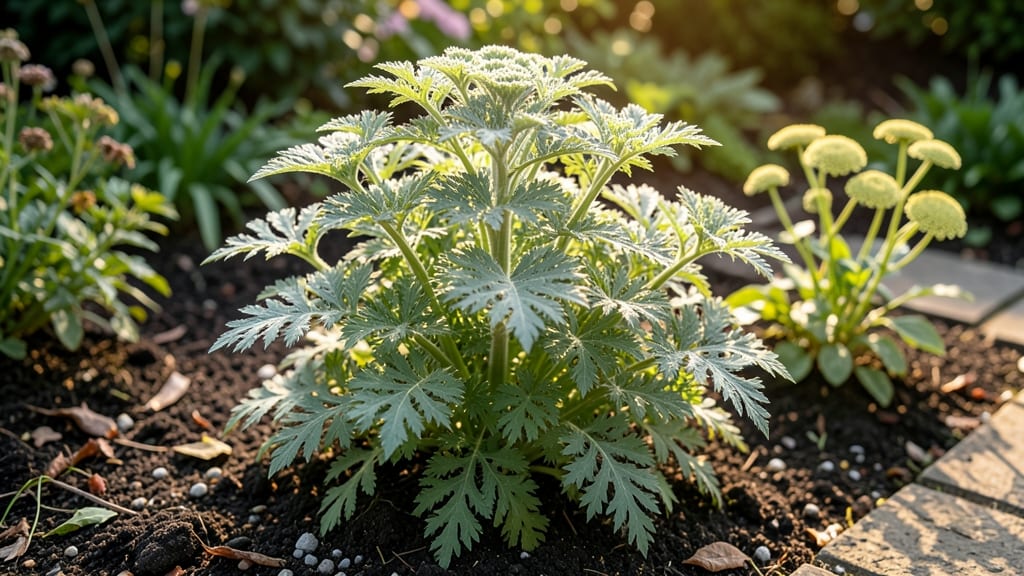
Mastering yarrow leaf identification can feel like solving a botanical puzzle—until you know the 15 key traits that separate healthy plants from lookalikes. 🌿 I've spent years comparing yarrow to Queen Anne's lace, wild carrot, and even feverfew, and the differences become obvious once you spot the fern-like leaflets and feathered veins.
What starts as a guesswork game turns into a reliable skill with just a few close inspections.
The secret lies in those delicate, pinnate leaflets that look like tiny ferns, the white or yellow flower clusters that appear mid-summer, and the aromatic scent when crushed.
Healthy leaves are bright green with serrated edges, while diseased ones develop brown spots or yellowing—signs it's time to check for powdery mildew or aphids. Confusing yarrow for wild parsnip? Look closer: yarrow's stems are hollow, and its leaves never have the thick, waxy coating of its lookalikes.
You'll quickly learn to spot the three-lobed basal leaves of common yarrow (Achillea millefolium) or the broader leaflets of Russian yarrow (Achillea ptarmica). The veins create a web-like pattern that's unmistakable once you know what to look for.
Even pest damage becomes easier to diagnose—chewed edges from deer or lacewing larvae, or sticky residue from aphids.
This skill saves gardeners from misidentifying weeds or missing medicinal varieties. Whether you're foraging, pruning, or troubleshooting, the right leaf traits become your go-to reference. Let's break down the visual clues that make yarrow unmistakable.
What Triggers Leaf Confusion
Understanding why yarrow leaves can be tricky to identify starts with recognizing the natural and environmental factors at play. Misidentification often stems from a mix of biological traits, growth conditions, and human observation errors.
Here’s a breakdown of the key reasons why distinguishing yarrow species by leaf alone can be challenging—and how to spot the clues correctly.
Yarrow (Achillea millefolium and related species) belongs to a diverse genus with over 100 recognized species, many of which hybridize or share overlapping traits.
This genetic diversity means: - Leaf shape shifts: Some species, like Achillea ptarmica (sneezeweed), have broader, more rounded leaves compared to the finely divided, fern-like foliage of Achillea millefolium.
These differences arise from evolutionary adaptations to their native habitats. - Hybrid vigor: Crossbreeding between species (e.g., Achillea x lewisii) can produce leaves that blend traits, making them resemble neither parent perfectly.
For example, a hybrid might have intermediate lobe depth or stiffer stems, throwing off identification guides. - Cultivar quirks: Ornamental yarrows (e.g., Achillea ‘Moonshine’) are bred for specific leaf colors or textures, often sacrificing the classic fern-like structure for flatter, broader forms.
Actionable tip: 🔍 Compare multiple leaves from the same plant—hybrids and cultivars may show inconsistent patterns, while wild species tend to be more uniform.
A plant’s surroundings dramatically alter its leaf development. Yarrow, in particular, reacts to: - Light exposure: - Shade: Leaves grow larger and less divided (fewer lobes) to maximize light capture.
A yarrow in partial shade might look like Achillea tomentosa (woolly yarrow) due to its broader, fuzzy leaves. - Sun: Leaves become more finely dissected (narrower lobes) to reduce water loss, a trait seen in desert-adapted species like Achillea lanulosa. - Water availability: - Drought: Triggers thicker, waxier leaves with deeper incisions (e.g., Achillea filipendulina in arid climates). - Overwatering: Can cause yellowing or drooping, masking natural leaf shape.
Wet conditions may also encourage fungal growth, distorting leaf edges. - Soil nutrients: - Nitrogen-rich soil: Promotes lush, darker green leaves with softer lobes (closer to Achillea collina). - Poor soil: Leads to smaller, paler leaves with sharper angles, mimicking stress responses in Achillea clavennae.
Pro tip: 🌡️ Observe the plant’s habitat—if yarrow is growing in rocky, dry soil, its leaves will likely be more "aggressive" in their division. In moist, fertile ground, expect broader, less intricate foliage.
Even with perfect leaves, misidentification happens due to:
- Over-reliance on one trait: Focusing only on leaf shape ignores critical details like:
- Stem hairiness (Achillea tomentosa has woolly stems vs. smooth stems in A. millefolium).
- Flower cluster shape (flat-topped in A. ptarmica vs. rounded in A. millefolium).
- Aroma (true yarrow has a strong, spicy scent; some lookalikes, like Tanacetum, smell like camphor).
- Color confusion:
- Silver-gray leaves (e.g., Achillea ‘Silver Mile’) can be mistaken for lamb’s ear (Stachys byzantina) if only color is considered.
- Variegation (white or yellow edges) is common in cultivars but rare in wild species.
- Leaf damage:
- Pests (e.g., aphids) cause curls or holes, distorting natural shape.
- Disease (e.g., powdery mildew) creates white patches, making leaves appear broader or irregular.
Quick fix: 🎯 Use a field guide or app (like iNaturalist) to cross-reference leaf traits with flower, stem, and habitat data—no single feature should be decisive.
Quick Fixes for Yarrow Leaf Confusion
Identifying yarrow leaves can feel like solving a botanical puzzle—especially when similar species blur the lines. But with the right approach, you can turn uncertainty into confidence. Below are practical, step-by-step solutions tailored to common challenges in yarrow leaf identification, from misidentifying lookalikes to dealing with seasonal changes.
Problem: You’re staring at two yarrow species with nearly identical leaf shapes, and you’re stuck.
Solution:
- Check the Leaf Arrangement 🌿
- Milfoil yarrow (Achillea millefolium) grows in basal rosettes with finely divided leaves.
- Common yarrow (Achillea ptarmica) has smooth, less feathery leaves arranged alternately along the stem.
- Pro Tip: 💡 Flip the leaf over—some species (like Achillea filipendulina) have hairy stems or glandular dots that others lack.
- Compare Flower Clusters 🌼
- Yarrow flowers are key! Achillea millefolium has flat-topped clusters, while Achillea ptarmica often has spherical or rounded blooms.
- Quick Test: Snap off a flower head and hold it up to light—some varieties (like Achillea ‘Cloth of Gold’) have distinctive bract colors (e.g., golden vs. white).
- Smell the Leaves 👃
- Some yarrow species (like Achillea odorata) emit a citrusy or camphor-like scent when crushed. Others? Almost none.
Problem: Yarrow leaves look drastically different in spring vs. summer—how do you keep them straight?
Solution:
- Track Growth Patterns 📅
- Spring: Leaves are softer, less divided, and may appear broad-lobed (especially in young plants).
- Summer: Leaves become highly dissected (fern-like) as the plant matures.
- Fix: Take monthly photos of your yarrow patch to spot trends.
- Use a Reference Guide 📖
- Download a field guide app (like iNaturalist or PlantNet) to compare real-time images.
- Pro Tip: ✨ Bookmark the "Yarrow Species Comparison" section in the [USDA Plants Database](https://plants.usda.gov/) for side-by-side traits.
- Press a Sample 📎
- Place leaves between parchment paper in a heavy book for 1–2 weeks. Compare pressed specimens to dried herbarium samples online.
Problem: You’re overcomplicating it—here’s how to simplify.
Solution:
- Start with the Basics 🧑🔬
- Leaf Shape: Fern-like = Achillea millefolium; broad and toothed = Achillea lanulosa.
- Stem Hairiness: Smooth = likely Achillea ptarmica; fuzzy = probably Achillea tomentosa.
- Quick Cheat Sheet:
| Trait | Common Yarrow | Fernleaf Yarrow |
|---|---|---|
| Leaf Division | Moderately lobed | Highly dissected (fern-like) |
| Flower Color | White, pink, or yellow | Often flat-topped clusters |
| Scent | Usually none | Sometimes citrusy |
- Eliminate the Obvious ❌
- If your yarrow has blue flowers, it’s not true yarrow (those are Eryngium species).
- If leaves are succulent or thick, it’s likely a sedum or sempervivum imposter.
- When in Doubt, Dig Deeper 🔨
- Root Check: Yarrow roots are fibrous and aromatic when crushed. Non-yarrow roots often smell earthy or bland.
- Leaf Texture: Run your fingers over the leaf—sandpaper-like = Achillea millefolium; smooth = Achillea ptarmica.
- Label Your Plants 📝
- Use waterproof plant tags with the species name and date planted. Add a small sketch of the leaf shape for quick reference.
- Grow a "Comparison Patch" 🌱
- Plant 3–4 yarrow varieties side by side in your garden. Observe how they differ over seasons.
- Join a Plant Forum 💬
- Post photos in groups like r/whatsthisplant or Gardeners’ World for instant ID help.
- Use Tech Tools 📱
- Apps like PlantSnap or Google Lens can instantly match leaves to databases—just snap a clear photo!
Final Reminder: 🎯 Yarrow identification is a skill that improves with practice. The more you handle, smell, and observe these leaves, the sharper your eye becomes. Happy foraging!
Frequently asked questions
How do I tell yarrow leaves apart from Queen Anne's lace?
Yarrow leaves are finely divided into fern-like leaflets with a feathered vein pattern, while Queen Anne's lace (wild carrot) has lacy, lacy-cut leaves with a more delicate, almost transparent appearance. Another key difference: crush the leaves—yarrow releases a spicy, camphor-like scent, while Queen Anne's lace has no distinct aroma.
Why do my yarrow leaves look yellow or have brown spots?
Yellowing leaves often signal overwatering or nutrient deficiency, while brown spots usually mean fungal issues (like powdery mildew) or pest damage (e.g., aphids or spider mites). Check the undersides of leaves for webbing or tiny insects. If the soil stays soggy, reduce watering—yarrow prefers well-draining soil and can rot in wet conditions.
Can I use yarrow leaves for tea if they’re from a wild plant?
Only if you’re 100% certain it’s true yarrow (Achillea millefolium) and hasn’t been sprayed with pesticides. Avoid plants growing near roadsides or agricultural areas. Wild yarrow leaves are safe for tea when brewed at 1 teaspoon per cup of boiling water for 5-10 minutes. For medicinal use, harvest leaves before flowering for maximum potency.
What’s the difference between yarrow and feverfew leaves?
Yarrow leaves are highly divided into fine, fern-like segments, while feverfew (Tanacetum parthenium) has deeply lobed but broader leaves with a stronger camphor scent. Feverfew also produces smaller, daisy-like flowers with yellow centers, whereas yarrow flowers are usually white or yellow in flat-topped clusters. Both are in the Asteraceae family but belong to different genera.
How do I preserve yarrow leaves for later use?
For drying, bundle fresh leaves with rubber bands and hang upside down in a dark, dry place for 1-2 weeks. Once brittle, store in an airtight container away from light. For freezing, chop leaves and spread them on a tray before transferring to a bag (lasts 6 months). Always label your stash—yarrow leaves lose potency after 1 year of storage.