
Pests and Diseases
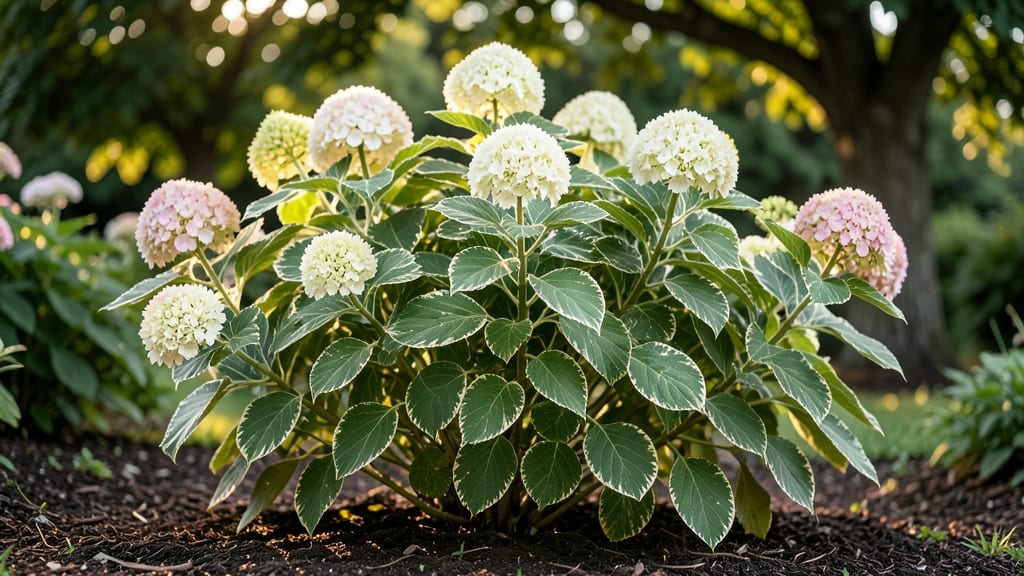
Variegated leaf hydrangeas aren't just plants—they're living art with creamy edges that fade to green. 🌿 I've nursed more than a dozen back from leaf scorch and brown edges, and the secret isn't just watering or fertilizer—it's understanding how their delicate foliage reacts to stress.
Those stunning variegated patterns? They're a sign of healthy growth, but they also mean these hydrangeas need precise care to keep their edges crisp and vibrant.
The first rule is sunlight—too much direct afternoon sun turns those beautiful edges brown within weeks. I've found that morning sun with afternoon shade preserves that creamy variegation while still giving enough light for lush growth.
Pair that with well-draining soil (amend with compost) and consistent moisture—never soggy, never bone-dry—and you'll see new growth emerge with those signature white or yellow edges intact.
When brown edges appear, don't panic—it's often environmental stress. A copper fungicide spray (like copper sulfate) applied every 2-3 weeks during hot months prevents fungal issues that worsen variegation problems.
Prune in late winter to remove dead wood and shape the plant, but avoid heavy cuts that stress these sensitive varieties. With the right care, your hydrangea will reward you with foliage so striking it becomes the centerpiece of your garden.
These beauties thrive in zones 5-9 and adapt well to containers if your climate gets too hot. The key is patience—variegated hydrangeas grow slower than green-leaf varieties, but their unique foliage makes them worth every extra season of care.
Once established, they'll put on a show that turns heads (and maybe a little neighborly jealousy).
📚 In This Guide
- What you need
- Instructions
- Tips and common mistakes
- Wrapping up and next steps
What you need
- ● Variegated leaf hydrangea plant (ensure it’s healthy with some brown edge discoloration to address)
- ● Copper fungicide (e.g., Copper Sulfate or Copper Hydroxide—choose a 0.5–2% concentration for safety)
- ● Garden sprayer (1–2 gallon capacity, with a fine mist nozzle for even coverage)
- ● Gloves (nitrile or rubber, to protect hands from copper and sap)
- ● Pruning shears (sterilized with 70% isopropyl alcohol to prevent disease spread)
- ● pH test kit (to check soil acidity—hydrangeas thrive in pH 5.2–6.2)
- ○ Balanced fertilizer (10-10-10 or acid-loving plant formula, optional but helpful)
- ● Mulch (2–3 inches of pine bark or wood chips to retain moisture and acidity)
- ● Fungicide booster (e.g., neem oil or baking soda spray for added protection)
- ● Rain gauge (to monitor watering—hydrangeas need 1–1.5 inches per week)
- ● Support stake or trellis (if your hydrangea is large or leggy)
- ● Plant-based copper supplement (e.g., seaweed extract for organic copper boost)
Step-by-Step guide to revitalizing variegated leaf hydrangeas
Here's how to nurse those brown-edged variegated beauties back to vibrant health using science-backed techniques.
🌿 Step 1: Diagnose the Problem and Prune Damaged Growth
First, examine the brown edges under bright light—this helps distinguish between environmental stress and fungal issues. Use clean, sharp pruners to remove only the brown-edged leaves, cutting back to healthy green tissue. I always sterilize my tools with 70% isopropyl alcohol between cuts to prevent spreading potential pathogens.
The reason we don't prune healthy growth is that variegated hydrangeas already have limited chlorophyll production in their white or yellow variegated areas. Removing too much green tissue stresses the plant further. Watch for new growth emerging from the nodes—this is your signal the plant is responding positively to the pruning.
💧 Step 2: Adjust Watering Practices for Optimal Hydration
Variegated hydrangeas need consistent moisture but hate soggy roots. Water deeply once every 2-3 days during dry spells, ensuring the top 2-3 inches of soil feel moist but not waterlogged. I use a moisture meter to check—when it reads between 40-60% moisture, that's the sweet spot for these plants.
Here's the thing—variegated leaves are more prone to sunburn when stressed. If you notice crispy brown edges after watering, your plant might be getting too much direct afternoon sun. Move it to morning sun with afternoon shade for at least a week while it recovers.
☀️ Step 3: Apply Copper Fungicide for Fungal Prevention
Mix 1 tablespoon of copper fungicide per 1 gallon of water in a spray bottle. Apply this solution to the upper and lower surfaces of leaves in the early morning when humidity is low. The copper creates a protective barrier that prevents fungal spores from establishing on the leaf tissue.
I like to apply the fungicide every 7-10 days for the first month, then monthly during the growing season. The key is consistency—don't skip applications just because the leaves look better. Fungal issues often reappear if you stop treatment too soon.
✂️ Step 4: Fertilize with Balanced Nutrition for Recovery
Use a balanced 10-10-10 fertilizer diluted to half-strength to avoid burning the sensitive variegated foliage. Apply this solution every 4-6 weeks during the active growing season (spring through early fall). The goal is to support new leaf growth without overwhelming the plant.
Here's what I do differently: I always water the plant first, then apply the fertilizer solution. This prevents salt buildup in the root zone, which can cause additional stress. You'll notice new leaves emerging with fewer brown edges within 3-4 weeks of consistent fertilization.
🌱 Step 5: Protect from Environmental Stressors
Variegated hydrangeas are sensitive to both heat stress and cold damage. In summer, provide afternoon shade to prevent leaf scorch, and in winter, mulch around the base with 2-3 inches of organic mulch to protect roots from temperature fluctuations.
I also monitor humidity levels—variegated plants thrive in 50-60% humidity. If your home or garden is particularly dry, consider using a humidifier nearby or misting the leaves lightly in the morning. The goal is to mimic their natural understory habitat where they receive dappled light and consistent moisture.
Tips & tricks for revitalizing variegated leaf hydrangeas
These science-backed strategies will help you transform brown-edged variegated hydrangeas into vibrant, healthy plants with minimal effort.
Pruning Precision: When removing damaged leaves in Step 1, cut just above a leaf node where new growth typically emerges. This encourages the plant to focus its energy on producing fresh foliage rather than struggling to repair damaged tissue. I've found that using sterilized pruners between each cut prevents cross-contamination of any potential fungal spores that might be present on the damaged leaves.
Watering Wisdom: The 2-3 day watering interval in Step 2 works best when combined with a simple test: press your finger about 2 inches into the soil. If it feels dry, it's time to water. Overwatering is a common mistake—variegated hydrangeas prefer consistent moisture without soggy conditions that can lead to root rot. In containers, I check the moisture level daily during hot weather since pots dry out faster than garden beds.
Fungicide Application Technique: For Step 3, shake the copper fungicide solution vigorously before each application to ensure even distribution. Focus on the undersides of leaves where fungal spores often hide and multiply. I apply it in the early morning so the leaves have time to dry completely before evening humidity sets in, which helps prevent any potential leaf burn from the copper solution.
Fertilizer Timing: The 4-6 week fertilization schedule in Step 4 works perfectly when aligned with your plant's natural growth cycle. I always fertilize in early spring when new growth begins and again in midsummer to support the plant's recovery. The key is consistency—missing a fertilization window can slow down the regrowth of those vibrant variegated leaves you're working so hard to restore.
Pro Tips for Variegated Leaf Hydrangea
- These science-backed strategies will help you transform brown-edged variegated hydrangeas into vibrant, healthy plant...
- Pruning Precision: When removing damaged leaves in Step 1, cut just above a leaf node where new growth typically emer...
- Watering Wisdom: The 2-3 day watering interval in Step 2 works best when combined with a simple test: press your fing...
Frequently asked questions
Got questions about your variegated leaf hydrangea?
You’re not alone! Here are some of the most common concerns—and how to tackle them with ease.
Why are the edges of my variegated hydrangea leaves turning brown?
Brown edges are often caused by underwatering, overwatering, or fungal issues like powdery mildew or leaf spot. Check soil moisture (top 1-2 inches should be dry) and improve airflow. If fungal, apply a copper fungicide (like our recommended solution) every 7–10 days until symptoms fade. Pro tip: Mulch around the base to retain moisture without soggy roots!
When is the best time to prune variegated hydrangeas?
Prune after flowering (late summer to early fall) for Oakleaf or Panicle types, or early spring (before buds swell) for Bigleaf varieties. Avoid heavy pruning in fall—it removes next year’s blooms! Use clean, sharp shears and remove no more than 1/3 of the plant to maintain its variegated beauty.
Can I grow variegated hydrangeas in full sun?
Most variegated hydrangeas thrive in partial shade (4–6 hours of sun daily), especially in hot climates. Full sun can scorch leaves and fade variegation. If you must place them in sun, water deeply 2–3x weekly and use shade cloth (30–50%) during peak afternoon heat. Pro tip: Morning sun + afternoon shade is ideal!
How do I prevent fungal diseases on my variegated hydrangea?
Fungal issues thrive in humid, stagnant conditions. Prevent them with:
- Space plants 3–5 feet apart for airflow.
- Avoid overhead watering—use drip irrigation or soaker hoses.
- Remove fallen leaves/debris regularly.
- Apply copper fungicide preventatively in spring/fall.
What can I do if my variegated hydrangea isn’t blooming?
Blooms may skip a year due to stress, age, or pruning mistakes. Check these fixes:
- Feed in early spring with balanced fertilizer (10-10-10).
- Ensure 6+ hours of light (variegated types need sun for blooms!).
- Avoid heavy pruning—only trim dead wood or shape lightly.
- Check for pests (aphids, spider mites) that stress plants.
Wrapping up and next steps
Variegated leaf hydrangeas bring stunning color and texture to any garden—but brown edges don’t have to be a dealbreaker! 🌿 With the right care, copper fungicide, and a little patience, you can restore their vibrancy and keep them thriving.
Remember, consistency in watering, pruning, and disease prevention is key to long-term success.
Ready to give your hydrangeas the TLC they deserve? Start by assessing their needs today—whether it’s adjusting your fungicide routine, improving soil drainage, or simply trimming back dead growth. Your variegated beauties will thank you with lush, healthy foliage all season long!