Leaf Blower
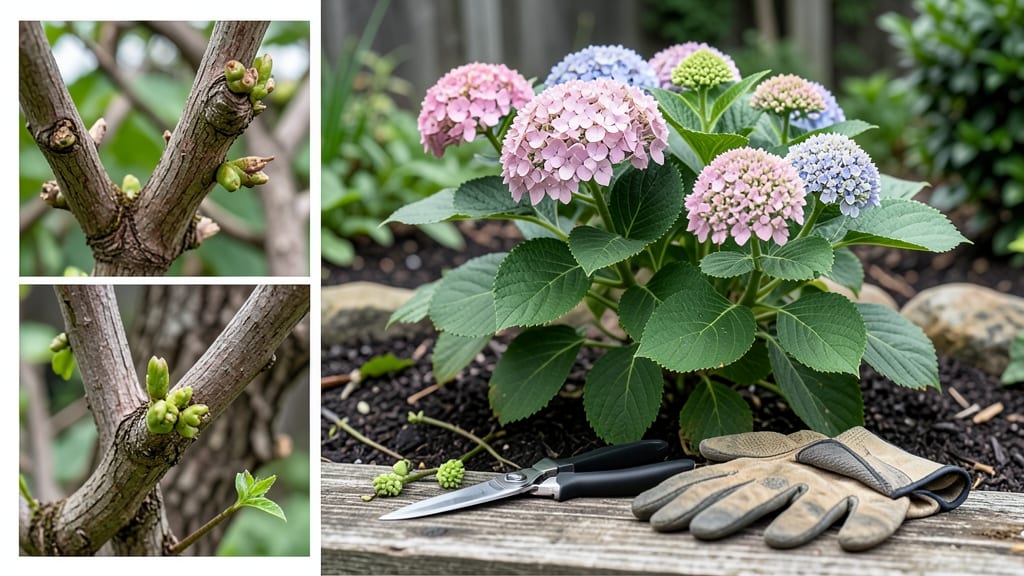
Big leaf hydrangeas grow on old wood, which means their flower buds develop on the previous year's stems. This makes careful pruning essential to avoid cutting off next season's blooms—always trim only after flowering to protect future growth.
This unique growth habit explains why big leaf hydrangeas often look leggy by late summer—they're focusing energy on next year's flowers rather than new stems. 🌿 The buds form during late summer/fall on mature wood, then remain dormant through winter to bloom in spring.
Unlike reblooming varieties (like panicle hydrangeas), these plants can't compensate for aggressive cuts—they'll simply skip flowering that season. I've learned the hard way that even a single overzealous snip can mean months without those signature blue or pink blooms!
For gardeners, this means patience is key. The best approach is to wait until late summer or early fall after blooms fade, then trim back only 1/3 of the oldest stems to maintain shape while preserving next year's flowers.
This selective pruning keeps the plant healthy without sacrificing its stunning floral display.
💡 In This Article
- How Big Leaf Hydrangea Flower Buds Develop on Old Wood
- Best Pruning Practices for Big Leaf Hydrangeas
How big leaf Hydrangea flower buds develop on old wood
The flower buds of big leaf hydrangeas (Hydrangea macrophylla) form in late summer or early fall on the previous year's stems—what botanists call "old wood." This process begins when the plant enters dormancy, typically between September and November, depending on your climate zone.
During this period, the plant's energy shifts from leaf production to developing flower buds along the mature stems. These buds remain dormant through winter, protected by the plant's natural insulation, and only swell in spring when temperatures rise above 50°F.
The buds themselves are tiny, often no larger than a pinhead when they first form, but they contain everything needed to become the showy blooms we admire.
What makes this growth habit unique is the plant's inability to produce new flower buds on current season's growth—unlike reblooming varieties such as panicle hydrangeas (Hydrangea paniculata) that can form buds on both old and new wood.
This biological limitation means that any stem you prune away in spring or early summer could be carrying next year's flowers, which is why timing is everything. 🌸
Understanding this process helps explain why big leaf hydrangeas often look leggy by late summer—they're prioritizing energy storage in their roots and stems for next year's blooms rather than producing new shoots.
The plant's natural cycle means that by the time you see those lush green leaves in spring, the flower buds are already forming on stems that may appear woody or bare.
This is why experienced gardeners often describe these plants as "lazy" in their first few years—they focus on establishing strong roots before putting energy into flowers.
The science behind this growth pattern involves a hormone called auxin, which regulates cell growth and differentiation. In big leaf hydrangeas, auxin concentrations remain higher in mature stems during the bud formation window, signaling the plant to develop flowers rather than leaves.
This hormonal pathway is what makes these plants so sensitive to pruning timing—cutting back too early disrupts the auxin balance and can prevent bud formation entirely. For comparison, reblooming varieties have a more flexible hormonal response, allowing them to produce flowers on new growth if old wood is removed.
What most gardeners don't realize is that these flower buds are actually compound structures containing both sterile (showy) and fertile (seed-producing) flowers. The sterile flowers are what give big leaf hydrangeas their characteristic large, colorful blooms, while the fertile flowers are smaller and often hidden in the center.
This dual-flower structure is another reason why aggressive pruning can be disastrous—you're potentially removing both the current year's show and next year's potential. The plant's survival strategy is all about balancing these reproductive priorities year after year.
To visualize this, imagine the plant's growth cycle as a three-act play: Act 1 (spring) is about leaf production and early root development, Act 2 (summer) focuses on energy storage, and Act 3 (fall/winter) is when the magic happens—flower buds form on last year's stems.
Any interference with this cycle, particularly through improper pruning, can throw the entire system off balance. This is why the old gardening adage "wait until after the flowers fade" is so critical for big leaf hydrangeas—it allows the plant to complete its natural reproductive cycle before making any cuts. ✨