
Pests and Diseases
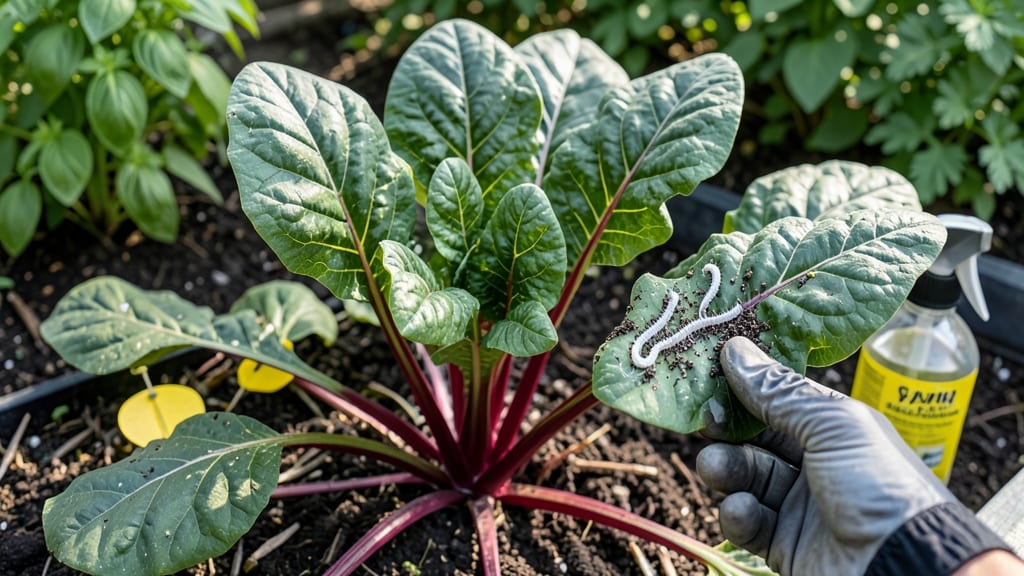
Swiss chard leaf miner devastation turns vibrant leaves into skeletonized messes. 🌿 I’ve seen it ruin entire beds in weeks—tiny white larvae tunneling through leaves, leaving behind a trail of destruction that no amount of pruning can fix.
The key to saving your harvest isn’t just reacting to the damage; it’s stopping the miners before they start.
These pests thrive in warm weather, sneaking in through tiny eggs laid on the undersides of leaves. Most gardeners only notice the problem when it’s too late—wilting, stunted plants with telltale mines.
But with the right organic spray barrier, you can block their access entirely, protecting your chard without harsh chemicals. The best part? It works for both backyard gardens and container setups.
You’ll learn to spot early signs, apply a foolproof spray that smothers larvae on contact, and use simple preventive tricks like row covers or companion planting.
By the time harvest season rolls around, your chard will be thriving, not struggling. No more watching your hard work turn to lace in days.
Whether you’re growing in raised beds or a small backyard patch, these methods adapt easily. The secret is acting fast—before the miners get a foothold. Let’s get your chard back to its vibrant best.
Root Causes Of Leaf Damage
Understanding why these tiny pests target your Swiss chard is the first step in stopping them. Swiss chard leaf miners—specifically the larvae of moths like Phytomyza atricornis—don’t just appear out of nowhere.
Their presence is often tied to specific environmental and agricultural factors. Let’s break down the key reasons these pests invade your garden and wreak havoc on your greens.
Swiss chard, like all plants, relies on a balanced diet of nutrients to build strong, resilient leaves. When soil lacks essential minerals—particularly nitrogen, potassium, or micronutrients like magnesium and iron—your plants become stressed and more vulnerable to pests.
- Nitrogen deficiency weakens leaf structure, making them easier for larvae to penetrate.
- Potassium shortages reduce the plant’s ability to repair damage, leaving it susceptible to repeated attacks.
- Micronutrient imbalances (e.g., low calcium or boron) can impair cell wall integrity, giving leaf miners an easier entry point.
Actionable fix: Conduct a soil test to identify deficiencies, then amend the soil with compost, worm castings, or organic fertilizers like fish emulsion or kelp meal. Healthy plants are less appealing to pests!
Leaf miners thrive in gardens where plants are stressed or competing for resources. Overcrowding forces Swiss chard to grow rapidly in poor conditions, producing tender, nutrient-poor leaves that attract egg-laying adults.
- Competition for sunlight leads to weak, thin leaves—perfect for larvae to burrow into.
- Poor air circulation (common in dense plantings) creates humid microclimates, ideal for moth reproduction.
- Waterlogged or drought-stressed soil weakens roots, making plants more attractive to pests seeking easy meals.
Actionable fix: Space Swiss chard 12–18 inches apart to improve airflow and sunlight penetration. Mulch with straw or shredded leaves to retain moisture without overwatering. Rotate crops annually to disrupt pest life cycles.
Leaf miners are opportunistic pests, and their populations explode when conditions favor their life cycle. Adult moths lay eggs on the undersides of leaves, and larvae hatch in 1–2 weeks under ideal temperatures (60–85°F).
- Greenhouses or shaded areas provide consistent warmth, accelerating egg hatching and larval growth.
- Weedy or unkempt gardens offer alternative host plants (like spinach or beet greens), increasing moth populations nearby.
- Late-season plantings (after summer heat) can coincide with peak moth activity, leading to sudden infestations.
Actionable fix:
- Monitor adult moths (tiny, gray, with clear wings) and remove egg masses by hand if spotted.
- Avoid planting Swiss chard near known host plants like beets or spinach.
- Use row covers in early spring to block moths from laying eggs before larvae become a problem.
Leaf miners are highly sensitive to weather patterns, and certain conditions trigger their activity:
| Factor | How It Helps Pests | How to Mitigate |
|---|---|---|
| Warm, dry springs | Speeds up moth emergence and egg-laying. | Plant early-season varieties and use shade cloth if needed. |
| Humid summers | Extends larval survival and pupation. | Improve drainage and reduce overhead watering. |
| Cool, wet falls | Delays natural predators (like parasitic wasps). | Encourage beneficial insects with nectar-rich plants. |
Actionable fix: Time your plantings to avoid peak moth seasons. In many regions, early spring or late summer plantings see fewer infestations.
Leaf miners don’t always win—nature’s pest control often keeps them in check. However, when gardens lack biodiversity, these predators disappear, allowing miners to multiply unchecked.
- Parasitic wasps (like Diglyphus isaea) lay eggs inside leaf miner larvae, killing them.
- Ladybugs and lacewings feed on eggs and young larvae.
- Birds and ground beetles consume pupae hiding in soil.
Actionable fix:
- Plant companion flowers (dill, fennel, yarrow) to attract beneficial insects.
- Avoid broad-spectrum pesticides that harm predators.
- Install birdhouses near your garden to encourage feathered helpers.
Sometimes, leaf miners hitch a ride into your garden through infested soil, compost, or tools.
- Reused soil or compost from previous infestations may contain pupae or eggs.
- Shared gardening tools (like trowels or pruners) can transfer larvae between plants.
Actionable fix:
- Sterilize tools with rubbing alcohol between uses.
- Avoid composting heavily infested plant debris—instead, bag and discard it.
- Rotate planting locations to prevent soil-borne pests from building up.
Leaf miners don’t target weak plants randomly—they exploit opportunities created by poor growing conditions. By addressing nutrition, spacing, climate, and biodiversity, you can make your Swiss chard less appealing and more resilient. The key is proactive care, not just reactive sprays! 🌿✨
Organic Fixes for Leaf Munchers
When those tiny leaf miners start tunneling through your Swiss chard, panic isn’t the answer—action is! The good news? You can fight back with organic, effective strategies that protect your plants without harsh chemicals.
Below, we’ve mapped out practical solutions based on the root causes (like larvae buildup, weak plant defenses, or poor garden hygiene) and paired them with prevention tips to keep your greens thriving.
If you’ve spotted serrated mines or chewed leaves, the larvae are already at work. Here’s how to evict them fast:
🍳 DIY Spray Barriers (Non-Toxic but Effective)
Use these homemade sprays to suffocate eggs and deter adults:
- Neem Oil Spray 🌿
- Mix 1 tbsp neem oil + 1 tsp mild soap + 1 quart water.
- Spray early morning or late evening (avoid direct sun—it burns leaves).
- Reapply every 5–7 days or after rain.
- Why it works: Disrupts larvae development and repels adult flies.
- Garlic & Chili Pepper Spray 🌶️🧄
- Blend 4 garlic cloves + 1 tbsp cayenne pepper + 1 quart water. Strain and add 1 tsp soap.
- Spray directly on leaves (test a small area first).
- Pro tip: Reapply after rain—this one washes off quickly!
- Kaolin Clay Barrier 🏗️
- Mix 1 cup kaolin clay + 1 gallon water until smooth.
- Lightly coat leaves (avoid over-saturating).
- Bonus: Also deters aphids and reduces fungal risks.
👨🍳 Hand-Pick & Trap Adult Flies
- Yellow Sticky Traps 🎯
- Hang yellow cards coated in petroleum jelly near plants.
- Adult flies are attracted to yellow—they’ll stick and die before laying eggs.
- Row Covers (Early Prevention) 🛡️
- Use fine mesh fabric over young plants to block flies entirely.
- Remove when flowers appear (flies need pollen to reproduce).
Weak or stressed Swiss chard is an open invitation for leaf miners. Boost resilience with:
💡 Nutrient Boost for Tougher Leaves
- Compost Tea or Fish Emulsion 🌱
- Feed plants weekly with a balanced organic fertilizer (high in nitrogen for leafy growth).
- Signs of deficiency: Yellowing leaves = more vulnerable to pests.
- Mulch Heavily 🍂
- Apply 2–3 inches of straw or wood chips to retain moisture and deter fly eggs from hatching.
🌡️ Rotate & Space Plants Smartly
- Crop Rotation 🔄
- Avoid planting Swiss chard or beets (same family) in the same spot for 3+ years.
- Why? Larvae overwinter in soil—rotation breaks their cycle.
- Wide Spacing 📏
- Space plants 12–18 inches apart for better airflow (less humidity = fewer flies).
Leaf miners thrive in cluttered, neglected gardens. A little sanitation goes a long way:
- Remove & Destroy Infested Leaves 🗑️
- Pick off chewed or mined leaves daily and compost them in a sealed bin (or burn them).
- Never compost infested debris in the garden—larvae survive!
- Till Soil in Fall 🌱🔄
- After harvest, loosen top 6 inches of soil to expose and kill overwintering pupae.
- Caution: Do this only in fall—spring tilling can bring pupae to the surface too soon.
- Interplant with Repellents 🌿🚫
- Surround Swiss chard with:
- Nasturtiums (trap crop—flies prefer them over chard).
- Dill or Fennel (attracts predatory wasps that eat leaf miner larvae).
- Surround Swiss chard with:
| Task | When to Do It | Why It Works |
|---|---|---|
| Apply neem oil spray | Every 7–10 days | Stops larvae before they mine leaves |
| Hang yellow traps | At first sign of flies | Catches adults before egg-laying |
| Mulch & water deeply | Planting season | Reduces stress = stronger pest resistance |
| Rotate crops | Annual garden planning | Breaks leaf miner lifecycle |
| Clean up debris | Weekly + fall/winter | Removes hiding spots for pupae |
💡 Pro Tip: If infestations persist, sacrifice a few plants as a "trap crop" farther from your main garden. Plant Swiss chard or beets in a separate patch, spray it heavily with neem, and let the flies congregate there—then remove and destroy it.
With these organic, targeted fixes, you’ll outsmart leaf miners and keep your Swiss chard lush, healthy, and pest-free—no chemicals required! 🚀
Frequently asked questions
What do Swiss chard leaf miner mines look like?
Leaf miner damage appears as irregular, winding tunnels between leaf veins, often with serrated edges. Infested leaves may also show brown or black frass (larval waste) inside the mines. Early signs include small white larvae moving under leaves—check undersides daily during warm weather.
Can I still harvest Swiss chard with leaf miners?
Yes, but remove only the outer leaves showing damage. The inner leaves remain safe to eat. For severe infestations, harvest young leaves first (they’re less likely to be mined) and destroy heavily damaged foliage immediately to prevent spread.
Will neem oil harm beneficial insects?
Neem oil is selectively toxic—it targets leaf miners while being low-risk to bees and ladybugs when used correctly. Apply early morning or late evening to avoid pollinators, and avoid spraying flowers directly. For extra safety, use azadirachtin-free neem oil (less harmful to beneficials).
How long does it take for leaf miner treatments to work?
Most organic sprays (like neem or kaolin clay) show results in 3–7 days, but consistency is key. Reapply every 5–7 days until new growth appears. For severe cases, combine sprays with yellow sticky traps—adult flies may take 10–14 days to fully disappear from the garden.
Can I use row covers after planting Swiss chard?
Row covers work best at planting time, but you can still use them for young plants (under 6 inches). Remove covers when flowers appear (flies need pollen to reproduce). For established plants, switch to sprays or traps—row covers restrict airflow and may stress mature chard.