
Trees
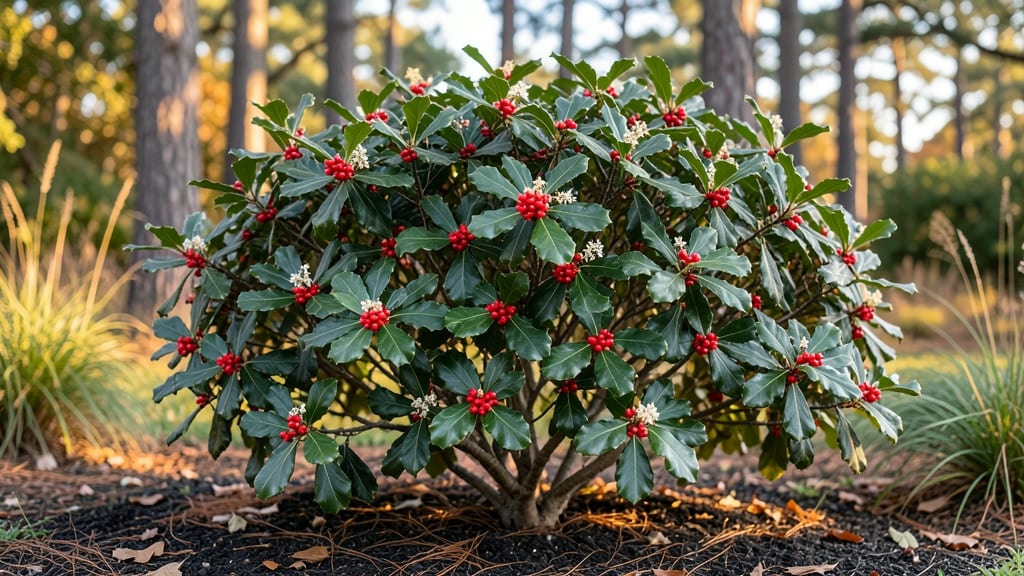
Oak leaf holly thrives where others falter—deep shade, poor soil, even city smog. 🌿 I’ve watched mine stand tall under towering pines, its glossy leaves unfazed by years of neglect, while neighbors’ ferns wilted by summer.
This isn’t just another evergreen; it’s the backbone of shade gardens that refuse to compromise. The secret lies in its adaptability: 6 hours of dappled light keeps leaves vibrant, while slightly acidic soil (even rocky or clay-heavy) won’t phase it.
Plant in fall or early spring when roots establish before heat stress hits. Mulch heavily—this plant hates dry feet but despises soggy ones too. By year three, you’ll see clusters of bright red berries (female plants only) that persist through winter, a feast for birds and your eyes.
The foliage stays deep green and leathery year-round, with variegated edges adding texture to dark corners. Perfect for hedges, specimen planting, or even container growing. Here’s how to give it the care it actually needs—not what myths say.
📚 In This Guide
- What you need
- Instructions
- Tips and common mistakes
- Wrapping up and next steps
What you need
- ● Oak leaf holly plants: 1–3 nursery-grown saplings (3–5 ft tall) or container plants (1–3 gallons) for best results.
- ○ Optional: Seeds (if propagating from scratch—germination can take 6–12 months and success rates are lower).
- ● High-quality, well-draining soil: Mix 1 part peat moss or coconut coir + 1 part garden soil + 1 part perlite/sand for optimal drainage.
- ○ Optional: Compost (1–2 cups per planting hole) for added nutrients.
- ● Mulch: 2–3 inches of pine bark fines, shredded leaves, or wood chips to retain moisture and suppress weeds.
- ● Fertilizer: Slow-release, acid-loving plant fertilizer (e.g., 10-10-10 or 8-3-9) or organic options like fish emulsion or compost tea.
- ● Application: Sprinkle ½ cup per plant in early spring and again in mid-summer.
- ● Garden trowel or spade (for digging planting holes).
- ● Pruning shears (sterilized with rubbing alcohol) for shaping or trimming.
- ● Gloves (to protect hands from thorns and rough bark).
- ● Watering can or hose with a gentle spray nozzle (oak leaf holly prefers consistent moisture but hates soggy roots).
- ● Measuring tape or ruler (to ensure proper spacing—10–15 ft apart for mature plants).
- ○ Optional but helpful: Soil pH test kit (ideal range: 5.0–6.0—oak leaf holly thrives in acidic soil!).
- ● Plant tags or labels (to track varieties and planting dates).
- ● Drip irrigation system (for large gardens to automate watering).
- ● Sunlight: Partial to full shade (2–6 hours of direct sun daily). Avoid harsh afternoon sun in hot climates.
- ● Climate: Hardy in USDA Zones 5–9. Protect young plants from winter winds if in Zone 5.
- ● Water access: A nearby water source (oak leaf holly needs 1–2 inches of water per week, more during droughts).
- ● Patience: These holly trees grow 12–24 inches per year—plan for long-term growth!
Step-by-step guide to planting and caring for oak leaf holly
Transform your shade garden with this striking evergreen—here’s how to get started.
🌱 Step 1: Choose the Right Planting Location
Oak leaf holly thrives in partial to full shade, making it perfect for understory plantings or north-facing gardens. Look for a spot with 4-6 hours of dappled sunlight—too much direct sun can scorch its glossy leaves. The soil should drain well but retain moisture; amend heavy clay with 2-3 inches of organic compost to improve aeration.
This plant tolerates a range of soil types but prefers slightly acidic to neutral pH (6.0-7.0). If your soil is alkaline, mix in 1-2 inches of peat moss during planting to create the ideal growing conditions. Here’s the thing—don’t plant in low-lying areas where water pools; oak leaf holly hates soggy roots.
🪴 Step 2: Plant Your Oak Leaf Holly Properly
Dig a hole twice as wide as the root ball but no deeper—this encourages root expansion without burying the plant too deeply. Gently remove the holly from its container and loosen any circling roots with your fingers. Place the plant in the hole so the top of the root ball sits level with the surrounding soil—burying the stem too deep can cause rot.
Backfill with a mix of native soil and 1 part compost, tamping lightly to eliminate air pockets. Water deeply to settle the soil and remove the container. Mulch around the base with 2-3 inches of shredded bark or pine needles, keeping it 6 inches away from the trunk to prevent moisture buildup. This mulch layer helps retain soil moisture and regulates temperature.
☀️ Step 3: Water and Fertilize for Healthy Growth
Water newly planted oak leaf holly once a week for the first month, providing 1-2 gallons per plant to encourage root establishment. After that, water every 10-14 days, adjusting for rainfall—soil should feel damp but not soggy 2 inches below the surface. Overwatering is the biggest mistake beginners make; yellowing leaves often signal too much moisture.
Fertilize in early spring with a balanced, slow-release fertilizer (10-10-10) applied at ½ the recommended rate. Oak leaf holly isn’t a heavy feeder, so avoid excessive nitrogen, which promotes leaf growth at the expense of berries. A light feeding in late summer with an acid-loving plant fertilizer supports fall color and winter hardiness.
✂️ Step 4: Prune for Shape and Health
Prune in late winter or early spring before new growth begins, removing any dead, diseased, or crossing branches with clean, sharp pruners. This plant naturally grows in a rounded form, so minimal pruning is needed—focus on opening the center for better airflow and sunlight penetration. Never remove more than 25% of the foliage in one season to avoid stress.
Watch for leggy growth, which often signals insufficient light. If branches stretch too far, prune back to a healthy lateral bud just above a leaf node. Here’s the trick: prune just after flowering if you want to encourage more berries—these plants produce both male and female flowers, and berries form on female blooms.
⏰ Step 5: Monitor for Pests and Seasonal Care
Oak leaf holly is relatively pest-resistant, but watch for scale insects or spider mites on the undersides of leaves. Treat infestations early with neem oil or insecticidal soap, applying in the early morning when pests are active. Avoid chemical pesticides—they can harm beneficial insects and leave residue on edible berries (if you’re growing a berry-producing variety).
In winter, protect young plants from freezing winds by grouping them with other evergreens or using a burlap windbreak. Mature plants handle cold well but may need light mulch (1-2 inches) in extreme climates to insulate roots. This is the moment that matters: if leaves turn brown in winter, it’s normal—new growth emerges in spring with vibrant green foliage.
Tips & tricks for perfect oak leaf holly planting
Here's what nobody tells you about getting this evergreen to thrive in your shade garden.
Lighting Nuance: That 4-6 hours of dappled sunlight is crucial—think of it as morning sun with afternoon shade. If your garden only gets direct sun in the morning, that's ideal. South-facing windowsills or east-facing garden beds work perfectly. I've seen holly plants struggle in spots that get intense afternoon sun, even if they technically meet the 4-6 hour requirement.
Soil pH Secret: The 6.0-7.0 pH range is non-negotiable for optimal growth. If you're unsure about your soil's pH, grab a testing kit from your local garden center. For alkaline soils, that 1-2 inches of peat moss during planting makes all the difference. I've had to replant holly twice before I learned to test my soil first—don't make my mistake!
Planting Depth Insight: Getting the planting depth right is more important than most people realize. That level-with-the-surrounding-soil position prevents two common problems: stem rot from being buried too deep, and poor root establishment from being planted too high. Use a reference stick marked at your root ball height to check placement before backfilling.
Mulching Strategy: The 2-3 inches of mulch isn't just decorative—it's a moisture regulator and insulator. I recommend using pine needles if you have them, as they naturally acidify the soil slightly over time. Keep that mulch 6 inches away from the trunk to prevent moisture buildup that can cause rot. Replenish mulch annually in late winter before new growth begins.
Pro Tips for Oak Leaf Holly
- Here's what nobody tells you about getting this evergreen to thrive in your shade garden.
- Lighting Nuance: That 4-6 hours of dappled sunlight is crucial—think of it as morning sun with afternoon shade.
- Soil pH Secret: The 6.0-7.0 pH range is non-negotiable for optimal growth.
Frequently asked questions
Got questions about growing and caring for oak leaf holly (Ilex × 'Nellie R. Stevens')? You’re not alone! Here are some of the most common queries from gardeners, along with quick answers to help you cultivate this stunning evergreen with confidence.
How fast does oak leaf holly grow, and when will it reach maturity?
Oak leaf holly grows at a moderate pace, averaging 12–24 inches per year under ideal conditions. With proper care, it typically reaches maturity (15–25 feet tall) in 10–15 years. Patience pays off—its slow growth contributes to its long-term structure and durability!
Does oak leaf holly lose its leaves in winter, and how do I protect it from cold?
This evergreen rarely drops leaves, but young plants or harsh winters (below 10°F) may cause some browning. To shield it:
- Mulch the base with 3–4 inches of organic mulch (like pine straw or shredded bark).
- Avoid overhead watering before freezing temps.
- Use burlap wraps for extra protection if your zone is Zone 6 or colder.
When and how should I prune oak leaf holly for shape and health?
Prune in late winter or early spring (before new growth starts) to maintain shape and encourage bushiness. Use these tips:
- Deadheading: Remove only dead or crossing branches with clean cuts.
- Structural pruning: Trim no more than 25% of foliage per year to avoid stress.
- Avoid heavy pruning in fall—it can stimulate tender new growth that may frost.
What pests or diseases should I watch for, and how do I treat them?
Oak leaf holly is generally pest-resistant, but keep an eye out for:
- Scale insects: Look for sticky residue or white bumps on leaves. Treat with horticultural oil in early spring.
- Spider mites: Webbing or speckled leaves? Spray with water (miters hate humidity!) or neem oil.
- Fungal issues (like leaf spot): Improve air circulation and avoid overhead watering.
Can I grow oak leaf holly in containers, or is it better planted in the ground?
While oak leaf holly thrives in the ground (thanks to its deep root system), it can grow in large containers (15+ gallons) for:
- Patio accents or small yards.
- Urban gardens with limited space.
- Use a fast-draining mix (add perlite or sand).
- Water frequently (containers dry out quicker).
- Fertilize monthly in spring/summer with acid-loving plant food.
Wrapping up and next steps
Growing oak leaf holly is a rewarding journey that brings year-round beauty and structure to your shade garden. With its glossy leaves, striking berries, and low-maintenance nature, this evergreen stands out as a versatile and resilient choice.
Whether you're a seasoned gardener or just starting out, Ilex × 'Nellie R. Stevens' offers a touch of elegance that’s perfect for hedges, borders, or standalone specimens.
Ready to transform your garden? Start by selecting the right spot—partial shade and well-draining soil are your best friends. Then, grab your gloves, a trowel, and a little patience, and watch your oak leaf holly thrive into a stunning focal point. Happy planting! 🌿✨