
Pests and Diseases
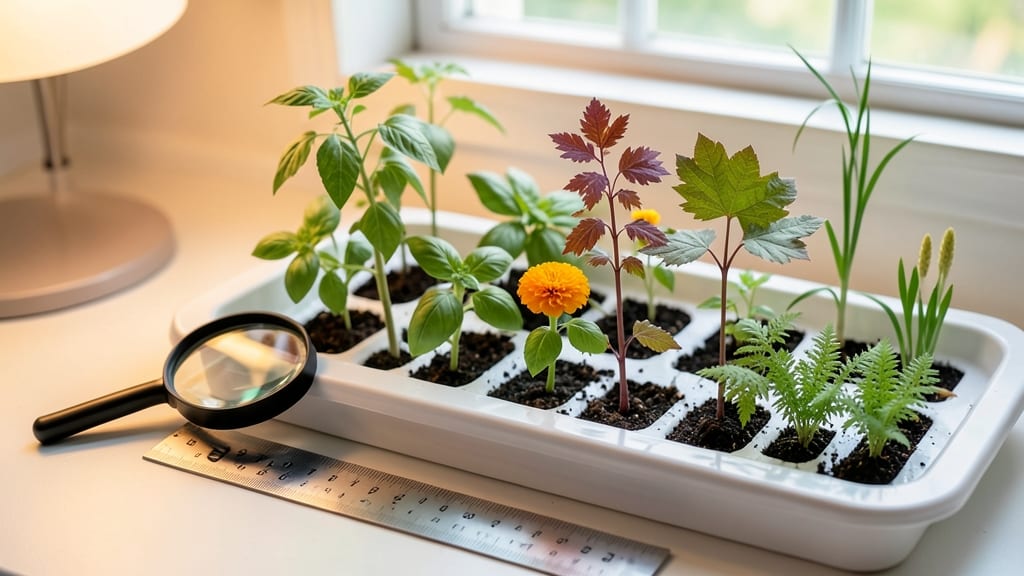
Mastering leaf shape seedling identification saves you from pulling out the wrong plants—and my first garden disaster taught me that lesson the hard way. 🌱 Those tiny leaves hold clues to what’s growing beneath, and once you learn the patterns, you’ll spot tomato seedlings from pepper seedlings before they even sprout true leaves.
The key is noticing the edges, veins, and overall shape: lobed, serrated, smooth, or compound.
Take basil, for example—its oval leaves with scalloped edges appear almost immediately, while pepper seedlings show two rounded cotyledons followed by jagged, almost sawtooth leaves. Even weeds have distinctive shapes: dandelion’s deeply lobed leaves look nothing like the smooth, heart-shaped ones of a squash seedling.
A magnifying glass helps when leaves are smaller than a dime, but your eyes will adapt quickly.
This skill transforms how you care for seedlings. You’ll know when to thin crowded rows (tomatoes need 18 inches apart, herbs just 6), when to transplant delicate seedlings (like those with fine, fern-like leaves), and which mystery sprouts to pull before they compete with your main crops.
No more guessing games—just confident gardening from day one.
Works for any garden bed, container, or seed-starting tray. Once you’ve mastered these 10 shapes, you’ll recognize seedlings faster than you can say “true leaf.” Let’s get identifying!
Genetic and Environmental Triggers
Understanding why seedlings develop specific leaf shapes—whether broad, lobed, serrated, or needle-like—often boils down to a mix of inherited traits and external factors. Here’s a breakdown of the key causes:
A seedling’s leaf shape is primarily dictated by its genetic code, passed down from parent plants. Think of it like a blueprint: - Species Traits: Each plant species has a unique leaf morphology.
For example, oak seedlings grow lobed leaves due to genes that regulate cell division and growth patterns in their meristems (growth zones). These traits are hardwired and consistent across generations. - Hybridization: Crossbreeding plants can produce seedlings with unpredictable leaf shapes, blending traits from both parents.
This is why some gardeners grow "monster" or "sport" seedlings with bizarre foliage—it’s a genetic mix-up! - Epigenetics: Environmental stress during seed development (like drought or extreme heat) can temporarily alter gene expression, leading to subtle or dramatic changes in leaf shape.
These changes aren’t permanent but can influence early seedling growth.
Actionable Tip: 💡 If you’re growing seedlings from seeds, research the parent plants’ leaf characteristics. This helps you predict—and even select for—desired traits early on.
While genetics set the stage, environmental conditions can dramatically reshape a seedling’s foliage. Here’s how:
| Factor | Effect on Leaf Shape | Example |
|---|---|---|
| Light Exposure | Low light → larger, thinner leaves (to maximize photosynthesis). High light → smaller, thicker leaves (to reduce water loss). | A shade-loving fern seedling in direct sun may develop stunted, crispy leaves. |
| Water Stress | Drought → smaller, curled, or lobed leaves (to conserve moisture). Overwatering → yellowing or distorted growth. | Desert-adapted seedlings (like cacti) may sprout spiky, reduced leaves when dry. |
| Temperature | Cold snaps → slower growth, smaller leaves (metabolic slowdown). Heat stress → thicker, waxy leaves (to retain water). | A tomato seedling in a heatwave might grow broad, leathery leaves instead of typical serrated ones. |
| Soil Nutrients | Nitrogen deficiency → pale, elongated leaves. Phosphorus deficiency → dark, purple-tinged, or misshapen leaves. | A nitrogen-starved maple seedling may produce leaves with fewer lobes than expected. |
Pro Tip: 🌡️ Monitor your seedlings’ growing conditions. If leaves deviate from the "normal" shape for their species, check for light, water, or nutrient imbalances—often, adjusting these fixes the issue!
Not all leaf shape changes are harmless—some are red flags for problems:
- Fungal Infections (e.g., powdery mildew, rust):
- Leaves may develop distorted growth, curling, or abnormal patterns (like white spots or dark streaks).
- Example: A rose seedling with mildew might grow leaves that are puckered or stunted instead of smooth and serrated.
- Viral Infections:
- Viruses like Tobacco Mosaic Virus (TMV) can cause mosaic patterns, stunted growth, or leaf malformation.
- Example: A pepper seedling infected with TMV may produce yellowed, crinkled leaves instead of healthy, lance-shaped ones.
- Insect Damage (e.g., aphids, spider mites, caterpillars):
- Chewing insects can distort leaf edges, causing irregular shapes or holes.
- Example: A cabbage seedling with aphids might grow ragged, serrated leaves due to constant feeding damage.
Warning Sign: ⚠️ If leaf deformities are accompanied by spots, webbing, or sticky residue, isolate the seedling and treat for pests/diseases immediately.
Even well-meaning gardeners can accidentally alter leaf shapes with improper chemical use:
- Excessive Fertilizer:
- Too much nitrogen → soft, pale, or overly large leaves.
- Too much phosphorus → dark, leathery, or curled leaves.
- Herbicide Drift:
- Systemic herbicides (like glyphosate) can mimic nutrient deficiencies, causing stunted or malformed leaves.
- Hormonal Disruptors:
- Some synthetic growth regulators (used in commercial nurseries) can stunt growth or alter leaf shape temporarily.
Solution: 🔧 Always follow label instructions for fertilizers and pesticides. For seedlings, dilute solutions or use organic alternatives to avoid overstimulation.
Fixing leaf shape issues in seedlings
If your seedlings are sporting unexpected leaf shapes—whether too broad, jagged, curled, or stunted—don’t panic! Most issues stem from common environmental or care-related factors. Below, we’ve mapped out practical solutions tailored to the root cause, along with prevention tips to keep your seedlings thriving. 🌱🔍
Seedlings exposed to extreme temperatures often develop distorted or discolored leaves as a survival response. Here’s how to correct it:
- Move seedlings to a stable environment: Relocate them to a spot with consistent temps between 65–75°F (18–24°C) during the day and 55–65°F (13–18°C) at night. Avoid drafts near AC units or heaters. 🏡❄️
- Use shade cloth: If temps exceed 85°F (29°C), drape 30–50% shade cloth to filter direct sunlight without blocking light entirely. Monitor leaf recovery within 3–5 days. ☀️🛡️
- Adjust watering: Cold stress? Water slightly more to help roots absorb warmth. Heat stress? Water early in the morning to reduce evaporation. 💧⏰
Prevention:
- Use a seedling heat mat (70–75°F) for cold-sensitive plants like tomatoes or peppers.
- Harden off seedlings gradually if transitioning from indoors to outdoors.
Leaf shape changes—like yellowing, wilting, or crispy edges—often signal hydration issues. Fix it with these steps:
| Problem | Solution |
|---|---|
| Overwatering (soft, mushy leaves) |
|
| Underwatering (crispy, curled edges) |
|
Prevention:
- Use moisture meters or your finger to test soil depth (stick in 1 inch—should feel damp, not soggy).
- Group seedlings together to create a microclimate that retains moisture.
Pale, stunted, or oddly shaped leaves often mean your seedlings are hungry. Target the deficiency with these fixes:
- Nitrogen deficiency (yellow lower leaves):
- Apply a balanced liquid fertilizer (e.g., 10-10-10) at half-strength.
- Add compost tea or a handful of worm castings to the soil.
- Phosphorus deficiency (dark green/purple stems):
- Use a phosphorus-rich fertilizer (e.g., bone meal) or switch to a 5-10-10 blend.
- Ensure soil pH is 6.0–7.0 (test with a kit).
- Micronutrient issues (distorted growth):
- Spray leaves with a chelated micronutrient spray (contains iron, zinc, manganese).
- Avoid over-fertilizing—stick to every 2–3 weeks once seedlings have true leaves. 🌱💪
Prevention:
- Start with a seed-starting mix enriched with slow-release fertilizer.
- Rotate fertilizer types to avoid buildup (e.g., alternate organic and synthetic).
Chewed edges, holes, or sticky residue on leaves? Pests or pathogens are likely culprits. Act fast:
- Identify the pest:
- Aphids: Tiny green/black bugs on undersides → Spray with soapy water (1 tsp mild soap per quart of water).
- Spider mites: Fine webbing + speckled leaves → Blast off with water, then apply neem oil (1 tbsp per quart).
- Fungal issues (powdery mildew): White fuzzy coating → Remove affected leaves and treat with baking soda spray (1 tsp baking soda + 1 quart water + drop of soap).
- Isolate seedlings: Move infested plants away from healthy ones to prevent spread. 🚫🐞
- Improve airflow: Thin out seedlings or use a small fan (on low) to dry leaves faster and deter pests.
Prevention:
- Inspect new seedlings before transplanting—quarantine for 48 hours if unsure.
- Rotate crops yearly to disrupt pest life cycles.
Not all leaf shapes are problems! Some seedlings simply inherit unique traits from their parent plants. For example:
- Variegated leaves (e.g., Swiss chard or some herbs) are normal—just ensure the green parts are healthy.
- Deeply lobed leaves (like oak seedlings) are a sign of maturity, not stress.
When to act: If the leaf shape changes abruptly (e.g., suddenly curled or spotted), revisit the causes above. Otherwise, enjoy your botanical oddities! 🌿✨
Frequently asked questions
What's the fastest way to tell basil seedlings apart from pepper seedlings?
Look for the first true leaves after the initial cotyledons: basil sprouts oval leaves with scalloped edges almost immediately, while pepper seedlings develop jagged, sawtooth-like leaves that look like tiny versions of mature pepper foliage. The basil's edges are rounded, while peppers have sharp points.
Can I use a magnifying glass to identify seedlings?
A 10x magnifier helps when leaves are smaller than a dime, especially for distinguishing fine details like vein patterns or hair-like textures on leaves. It's particularly useful for identifying herb seedlings (like dill or parsley) where subtle differences matter. Just avoid pressing too hard to prevent damage.
What should I do if my seedlings have weird leaf shapes but look otherwise healthy?
Some plants naturally develop unique shapes—like variegated leaves in Swiss chard or deeply lobed leaves in oak seedlings. If the leaves are green, firm, and growing normally, it's likely just a genetic trait. Only intervene if you notice spots, curling, or stunted growth, which could signal stress or pests.
How do I know when a seedling's first true leaves have emerged?
The first pair of leaves (called cotyledons) are simple and often look similar across species. True leaves appear next—they're smaller, more complex, and species-specific (e.g., serrated for tomatoes, lobed for squash). Watch for these second set of leaves to start identifying your seedlings accurately.
Are there any apps that help with seedling identification?
Yes! Try PictureThis or PlantNet—upload a photo of your seedling's leaves, and they'll suggest matches. For beginners, these apps are great for cross-checking your visual observations. Just ensure good lighting and clear focus on the leaf shapes.