
Leaf Blower
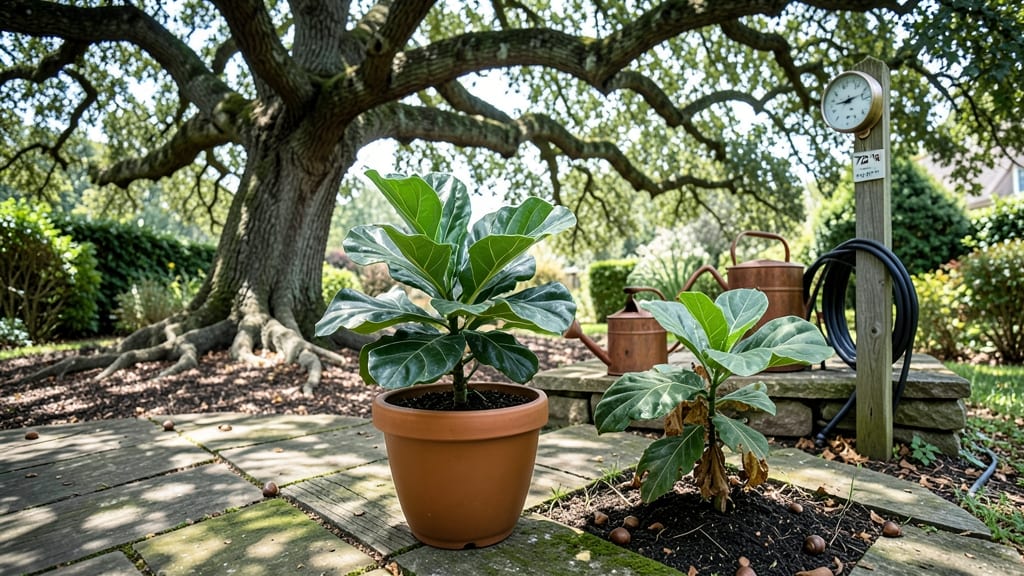
You can put your fiddle leaf fig outside during mild seasons, but only after hardening it off gradually and ensuring it gets filtered sunlight—never direct sun, frost, or extreme heat without protection.
Fiddle leaf figs thrive indoors but can adapt to outdoor spaces when conditions are just right.
The key is mimicking their natural tropical environment—think dappled shade, consistent moisture, and temperatures between 55°F and 80°F. 🌿 I’ve found that even a few hours of morning sun on a shaded patio works wonders, while sudden temperature drops or scorching afternoons will stress the plant.
Start by placing it in a sheltered spot for a week, then slowly increase exposure over 10-14 days to let it adjust.
Watch for early warning signs like crispy leaf edges or sudden wilting—they’re your cues to move it back inside. Pro tip: Group it with other plants to create a microclimate that retains humidity, which these tropical beauties crave.
And always bring it indoors before nighttime temps dip below 60°F or daytime highs hit 85°F.
💡 In This Article
- Fiddle Leaf Fig Outdoor Adaptation: Sunlight and Temperature Rules
- Step-by-Step Guide to Safely Transitioning Your Fiddle Leaf Fig Outdoors
Fiddle leaf fig outdoor adaptation: sunlight and temperature rules
Fiddle leaf figs (Ficus lyrata) originate from the rainforests of West Africa, where they thrive under the forest canopy. This means they’re adapted to bright, indirect light—not the harsh, direct sunlight that can cause leaf scorch.
When you move your plant outside, think of it like giving it a sunburn test. Direct midday sun (especially between 10 AM and 4 PM) can raise leaf surface temperatures to 100°F or higher, while the plant’s ideal range is 65-80°F. The result?
Brown, crispy patches that start at the leaf edges and spread inward like a slow-motion sunburn.
The key to outdoor success is replicating that dappled light environment. Place your fiddle leaf fig under a 50-70% shade cloth or near a building with northern exposure (which receives the least intense sunlight).
A patio with a sheer curtain or a spot under a tree with sparse branches works well. Humidity is another critical factor—these plants need air moisture levels between 40-60%.
In dry climates, misting leaves twice daily or grouping plants together can create a microclimate that mimics their tropical roots. 💫
Temperature fluctuations are where most owners make mistakes. Fiddle leaf figs can tolerate brief outdoor exposure when daytime temps stay above 55°F and nighttime temps don’t dip below 60°F. However, temperatures below 50°F trigger stress responses, while anything above 85°F causes cellular damage.
Watch for early warning signs: yellowing leaves (a sign of overwatering or root stress), brown leaf edges (usually from low humidity or salt buildup from tap water), or sudden leaf drop (a response to temperature shock). These symptoms appear within 3-7 days of exposure to unsuitable conditions.
Here’s what’s actually happening at the cellular level: When temperatures drop below 55°F, the plant’s stomata (tiny pores on leaves) close to conserve moisture, but this also halts photosynthesis. Meanwhile, high temperatures above 85°F cause proteins in the leaves to denature, leading to irreversible damage.
The plant’s waxy cuticle, which normally protects against water loss, becomes brittle and cracks under intense sunlight, creating entry points for pathogens. This is why gradual acclimation—starting with just 1-2 hours of morning sun—is so crucial.
Consider these key factors when choosing an outdoor spot:
- Light intensity: East-facing porches receive gentle morning sun, while west-facing areas get harsh afternoon rays. South-facing spots should be avoided entirely.
- Wind protection: Drafts dry out leaves quickly. Place your plant in a corner where it’s shielded from breezes.
- Soil temperature: Potted plants can experience root stress if soil temps drop below 60°F. Use a heat mat in cooler months if keeping it outside overnight.
The best time to move your fiddle leaf fig outside is during the spring and fall when temperatures are stable. Start by placing it in a sheltered spot for 3-5 days to let it adjust, then gradually increase exposure over 10-14 days.
Always monitor the plant’s response—if you see even minor stress signs, it’s better to err on the side of caution and bring it back inside. 🌿