
Tools
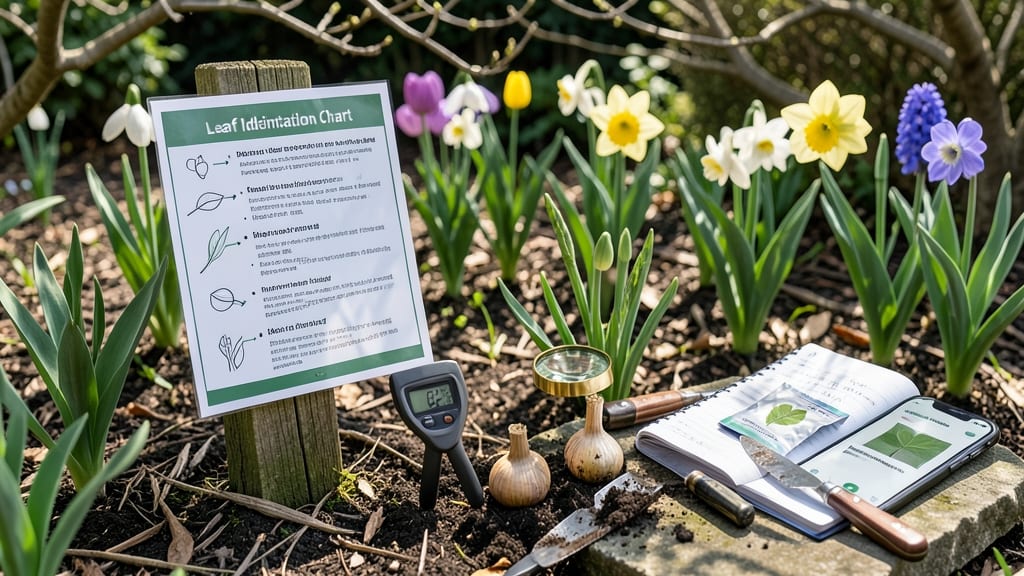
Mastering bulb identification by leaf saves you from planting mistakes that waste money and time. 🌱 The first mistake I made was planting daffodil bulbs as tulips—until the wrong flowers popped up in spring.
Leaf shape, size, and arrangement are your secret weapons for telling them apart before any blooms appear.
Start with the basics: tulip leaves are long and sword-shaped, while daffodil leaves are strappy and flat. Hyacinth leaves grow in a tight cluster, almost like a fan, and alliums have broad, rounded leaves that look almost like onion tops.
The texture matters too—smooth leaves belong to tulips, while slightly fuzzy ones might be grape hyacinths.
Once you master these visual clues, you’ll plant with confidence, knowing exactly which bulb goes where. No more guessing games or springtime surprises. The payoff? A garden that blooms exactly when you expect, with the right colors and heights for stunning displays.
This method works for 10 common varieties, from crocuses to snowdrops, and even helps distinguish between similar-looking bulbs like fritillaries and lilies. Grab a notebook, snap a few photos, and soon you’ll spot the differences without hesitation.
📚 In This Guide
- What you need
- Instructions
- Tips and common mistakes
- Wrapping up and next steps
What you need
- ● 10–20 fresh leaf samples (or high-quality photos if collecting is tricky!)
- ● Field guide or printed reference sheet (for cross-checking shapes, textures, and vein patterns)
- ● Magnifying glass (10x or higher) (to inspect fine details like hairiness or edge serrations)
- ● Ruler or measuring tape (for leaf length/width comparisons)
- ● Notebook + pen (to jot down observations like color, arrangement, and growth patterns)
- ● Camera or smartphone (for documenting leaves in natural light)
- ● Leaf press or heavy book (to flatten samples for long-term reference)
- ● Color chart or paint swatches (for precise hue matching)
- ● Garden shears or pruners (for clean sample collection)
- ● Plant identification app (e.g., PictureThis, PlantNet) (for AI-assisted verification)
- ● Gloves (if handling thorny or prickly leaves)
How to identify garden bulbs by their leaves
Here's how I distinguish bulbs by leaf shape, size, and growth pattern—no digging required.
🌱 Step 1: Observe Leaf Shape and Arrangement
Start by examining the leaf base where it meets the stem. Narrow, strap-like leaves with parallel veins (like a sword blade) are classic daffodil or allium family members. I always check for these first—they're the most distinctive. Look for smooth edges and a slight curve along the length; daffodil leaves tend to be wider at the base and taper gradually.
Flat, broad leaves with a pronounced midrib (the central vein) belong to tulips or hyacinths. Tulip leaves are typically oval with a pointed tip, while hyacinth leaves are more lance-shaped and slightly fleshy. Notice how tulip leaves grow in a fan-like arrangement from the base—this is a key identifier. If leaves appear in a rosette pattern close to the ground, you're likely looking at a hyacinth or grape hyacinth.
🌿 Step 2: Measure Leaf Width and Texture
Use your thumb and forefinger to gauge leaf width at its widest point. Leaves under ½ inch wide with a waxy, slightly bluish-green surface are almost certainly muscari (grape hyacinth). These leaves have a distinctive rolled edge when young, which flattens as they mature. I've found that muscari leaves often appear in clusters of 3-5 stems rising from a single bulb.
For broader leaves, measure at the base. Daffodil leaves typically reach ½ to 1 inch wide, while tulip leaves max out around 1 inch. Run your fingers along the leaf surface—smooth, slightly leathery leaves belong to tulips, whereas daffodil leaves often feel slightly rougher with a slight hairiness along the edges. This texture difference is subtle but reliable once you notice it.
☀️ Step 3: Check Growth Pattern and Stem Placement
Observe how leaves emerge from the base. Allium leaves grow in a tight, cylindrical cluster that resembles a bundle of onions. The stems are hollow when cut lengthwise, and the leaves have a papery, almost translucent quality. I always look for this onion-like grouping—it's unmistakable once you know what to spot.
For hyacinth and grape hyacinth, notice how the leaves grow in a tight spiral from the base, creating a compact rosette. The stems are solid and fleshy, unlike alliums. Tulip leaves, meanwhile, grow more upright from the base, with each leaf emerging at a slight angle from the previous one. This staggered arrangement helps distinguish them from daffodils, whose leaves grow more uniformly around the stem.
✂️ Step 4: Examine Leaf Tips and Edges
Inspect the leaf tips for shape. Tulip leaves always have a pointed tip that narrows to a sharp point, while daffodil leaves have a more rounded or slightly notched tip. This difference is subtle but consistent. Run your finger along the leaf edge—tulip leaves have smooth, even edges, whereas daffodil leaves often show slight serrations or a wavy texture near the tip.
Check for any markings or patterns. Bluebell leaves (if in your region) will have a distinctive horizontal banding pattern along the leaf blade, though these are less common in most gardens. Most other bulbs have plain green leaves, but allium leaves sometimes develop a slight purple tint along the edges, especially in full sun. This color change is a good indicator when leaves appear uniformly green elsewhere.
🪴 Step 5: Compare to Known Samples
If you're still unsure, compare your findings to a reference guide or known plants in your garden. I keep a small notebook with leaf sketches of my established bulbs—just a quick outline of shape, width, and arrangement. When new growth appears, I match it against my notes. This visual comparison method works best when you have multiple bulbs blooming side by side for direct comparison.
Pay attention to the timing of leaf emergence. Tulips often send up leaves 2-3 weeks before blooming, while daffodils may take 4-6 weeks for leaves to fully develop before flowers appear. This staggered growth pattern can help narrow down your identification when leaf shapes alone are ambiguous. If leaves appear late in the season (after summer), you're likely dealing with fall-blooming crocus or colchicum, both of which have narrow, grass-like leaves.
Tips & tricks for mastering bulb identification by leaf
These refined techniques will sharpen your eye for distinguishing bulbs without ever digging up a single plant.
Leaf Base is Your First Clue: In Step 1, when examining leaf bases, pay special attention to the angle where leaves meet the stem. Daffodil leaves often show a slight twist or spiral at the base, while tulip leaves attach more directly. I've found that holding the leaf between your fingers and gently rotating it reveals these subtle differences more clearly than visual inspection alone.
Texture Tells the Story: The texture differences mentioned in Step 2 are more pronounced when leaves are fresh. For example, muscari leaves should feel almost slippery when young due to their waxy coating, while daffodil leaves develop a rougher texture as they mature. Run your fingers along the leaf surface multiple times—your tactile memory will start recognizing these patterns faster than your eyes alone.
Growth Patterns Reveal Hidden Secrets: When checking growth patterns in Step 3, consider the leaf arrangement in relation to sunlight. Tulip leaves often grow more upright to maximize light exposure, while daffodil leaves spread more horizontally. This adaptation helps distinguish them when shapes alone are ambiguous. Observe how leaves angle toward light sources during different times of day for additional clues.
Seasonal Timing is Key: The timing differences in Step 5 are crucial for late-season identification. Fall-blooming bulbs like crocus often have leaves that emerge after summer's heat has passed, while spring bulbs appear much earlier. I recommend tracking leaf emergence dates in your garden notebook—this creates a timeline that becomes invaluable for future identification.
Pro Tips for Bulb Identification By Leaf
- These refined techniques will sharpen your eye for distinguishing bulbs without ever digging up a single plant.
- Leaf Base is Your First Clue: In Step 1, when examining leaf bases, pay special attention to the angle where leaves m...
- Texture Tells the Story: The texture differences mentioned in Step 2 are more pronounced when leaves are fresh. For e...
Frequently asked questions
Got questions about identifying bulbs by their leaves? You’re not alone!
Here are some of the most common queries—and straightforward answers—to help you master this skill like a pro.
Why can’t I find my bulb’s leaf in the store?
Many garden centers sell bulbs before they sprout, so leaves won’t be visible. Look for labeled packaging or use a bulb identification guide (like this one!) to match descriptions. If you’re unsure, ask staff for help—they often stock common varieties like tulips or daffodils year-round.
When is the best time to check leaves for bulb ID?
The ideal window is early spring, when leaves emerge but flowers haven’t bloomed yet. This is when leaf shapes are most distinct. Avoid late summer/fall—leaves may yellow or die back, making identification trickier. Pro tip: Snap a photo if you’re unsure and compare it later!
What if my bulb’s leaves look different from the pictures?
Leaf shapes can vary slightly due to age, sunlight, or soil conditions. Focus on key traits: leaf width, texture (smooth vs. striped), and growth pattern (straight vs. arched). For example, daffodil leaves are smooth and flat*, while tulip leaves are pointed and ribbed. When in doubt, dig up the bulb (gently!) and check its size/color.
Can I identify bulbs by leaves if they’re already flowering?
Yes, but it’s harder! Flowers are flashier, but leaves often hold the clues. For instance, hyacinths have narrow, grass-like leaves, while crocuses have broad, strap-like ones. If flowers are in bloom, note their color and leaf shape—this combo narrows it down fast.
What if I can’t tell the difference between two similar bulbs?
No stress! Dig up the bulb (if possible) and check its size, shape, and papery skin. For example, alliums have round, onion-like bulbs, while tulips are more elongated. If digging isn’t an option, consult a local gardening forum or share a photo—experts love helping!
Still stumped? Bookmark this guide and revisit it next growing season. Practice makes perfect—and soon, you’ll spot a daffodil leaf from 10 feet away!
Wrapping up and next steps
Mastering bulb identification by leaf turns gardening into an exciting detective game! 🌱 With just a few key traits—shape, edges, and veins—you can confidently match leaves to their bulbous roots.
Whether you’re troubleshooting a mystery plant or planning your next garden layout, this visual guide gives you the power to know before you grow.
Ready to put your new skills to work? Grab a notebook, snap a few photos of your garden’s greenery, and start building your own bulb ID library. Happy gardening—your future blooms will thank you! 🌸