
Diseases
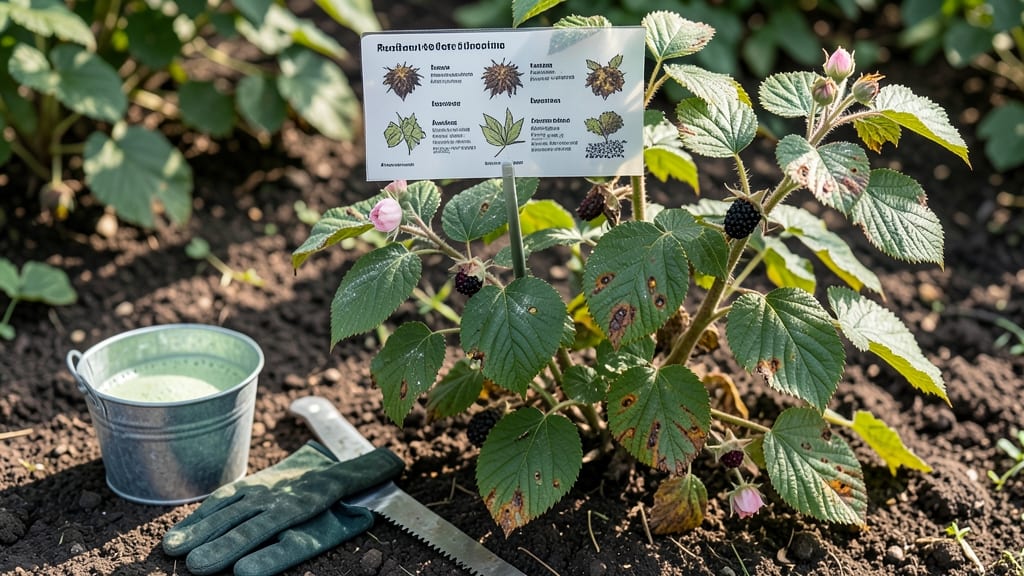
Blackberry leaf diseases can turn your thriving bushes into sad, spotted shadows in just a few weeks. 🌿 I’ve watched anthracnose and rust transform lush canes into yellowed, crinkled messes—until I learned to spot the early signs and act fast.
The good news? Most fungal threats respond to simple, organic fixes once you know what to look for.
Start by checking for dark spots with yellow halos (anthracnose), orange pustules (rust), or water-soaked patches (bacterial leaf spot). These diseases thrive in wet, shady conditions, so prune for airflow and water at the base—not the leaves.
My bushes bounce back every time I catch the problem early and use a copper fungicide spray or baking soda mix (1 tbsp per gallon of water + a drop of dish soap).
Prevention is easier than cleanup: remove fallen leaves in fall, space plants for sunlight, and avoid overhead watering. Within 2-3 weeks of treatment, new growth emerges clean and strong. The key is acting before the fungus spreads to next year’s canes—because once it does, you’re fighting a losing battle.
Works for raspberries too, and even saves struggling brambles. Here’s how to diagnose and treat each type—before your harvest suffers.
Root Causes Of Leaf Damage
Blackberry bushes are resilient, but their leaves are prime targets for fungal infections, bacterial attacks, and environmental stressors. Understanding the why behind leaf diseases helps you take proactive steps to protect your crop. Below, we break down the key factors that create the perfect storm for blackberry leaf problems.
Fungi are the most common culprits behind blackberry leaf diseases, thriving in warm, damp conditions. These microscopic invaders spread through spores that latch onto leaves, stems, and even soil. Here’s how they gain a foothold:
- High Humidity: Fungi love moisture—think of them as aquatic invaders. When blackberry leaves stay wet for prolonged periods (like after rain or overhead watering), fungal spores germinate and infect tissues.
- Poor Air Circulation: Dense foliage or overcrowded plants create a cozy, humid microclimate. Fungi like Botrytis (gray mold) and Anthracnose flourish in these conditions because spores can’t dry out.
- Weakened Plant Defenses: Stress from drought, nutrient deficiencies, or physical damage (like thorn pruning cuts) makes leaves more susceptible to fungal invasion.
- Old or Debris-Ridden Soil: Fungal spores can survive in old leaf litter, mulch, or plant debris. If you don’t clean up fallen leaves or rotate crops, spores reinfect new growth year after year.
💡 Pro Tip: Space plants properly (3–4 feet apart) and avoid wetting foliage during irrigation to starve fungi of their favorite conditions.
Unlike fungi, bacteria are single-celled organisms that multiply rapidly in ideal conditions. They enter blackberry leaves through natural openings (like stomata) or wounds (from pruning or hail). Key triggers include:
- Wet Leaf Surfaces: Bacteria like Xanthomonas (causing angular leaf spot) thrive when leaves stay damp. Rain splashing or overhead sprinklers spread bacteria from infected to healthy leaves.
- Contaminated Tools or Hands: Pruners, gloves, or even your fingers can transfer bacterial cells between plants. If you prune infected leaves first, you risk spreading disease.
- Extreme Temperature Shifts: Sudden heat or cold stress weakens leaves, making them easier targets for bacterial invasion.
- Poor Sanitation: Bacterial cells can hibernate in soil or plant debris. If you don’t sterilize tools or remove infected plant parts, the cycle repeats.
✨ Key Action: Always sterilize pruners with rubbing alcohol (70% or higher) between cuts, and water plants at the base—not overhead—to prevent bacterial spread.
Leaf diseases don’t just appear out of nowhere—they exploit weaknesses caused by environmental factors. Here’s how your blackberry’s growing conditions might be inviting trouble:
| Stressor | How It Helps Diseases Spread | Solution |
|---|---|---|
| 🌞 Too Much Sun | Leaves scorch, losing protective cuticles and becoming prone to fungal/bacterial entry. | Provide afternoon shade (especially in hot climates) with shade cloth (30–50%). |
| 💧 Overwatering or Poor Drainage | Soggy soil and wet leaves create fungal paradises like Phytophthora root rot. | Amend soil with compost, use raised beds, and ensure drainage holes in containers. |
| 🍃 Nutrient Deficiencies | Low nitrogen or potassium weakens leaves, making them easier targets for pathogens. | Test soil and fertilize with a balanced 10-10-10 or organic compost tea. |
| 🌀 Strong Winds or Hail | Physical damage opens wounds where bacteria/fungi can enter. | Use windbreaks (like tall grasses or fences) and protect plants with row covers during storms. |
🎯 Prevention Tip: Monitor your blackberry’s growing conditions year-round. Healthy plants resist diseases better than stressed ones!
By addressing these root causes—fungal/bacterial entry points and environmental stressors—you’ll disrupt the cycle that leads to blackberry leaf diseases. Next, we’ll dive into how to spot these issues early so you can act fast.
Practical ways to revive your blackberry leaves
Now that you’ve identified the culprit behind your blackberry plant’s leaf troubles, it’s time to act! The good news? Most fungal diseases can be managed—or even reversed—with the right approach.
Below, we’ve mapped out targeted fixes for each common blackberry leaf disease, along with preventive strategies to keep your bushes thriving. Think of this as your blackberry plant’s first-aid kit!
Fix:
- 🔪 Remove Infected Leaves & Canes
- Snip off yellowing, spotted, or blighted leaves (and any canes with lesions) using sterilized pruners (wipe with rubbing alcohol between cuts).
- Dispose of debris in the trash—do not compost—to prevent spores from spreading.
- 💦 Apply Fungicide
- Spray with a copper-based fungicide (like copper sulfate) or a bactericide (e.g., Serenade Garden). Reapply every 10–14 days during wet seasons.
- For organic growers, try a neem oil spray (1 tsp neem oil + 1 tsp mild soap per quart of water).
- 🌡️ Boost Airflow & Light
- Thin out overcrowded canes to improve circulation—fungi love damp, shaded spots.
- Prune branches to let sunlight reach the center of the plant.
Prevent It:
- 🌧️ Water at the base (avoid overhead sprinkling).
- 🗓️ Plant resistant varieties like ‘Triple Crown’ or ‘Natchez’.
- 🧼 Sterilize tools before and after pruning.
Fix:
- 🔥 Burn or Bag Infected Leaves
- Rust spores overwinter on fallen leaves, so remove all debris from the soil.
- If composting, bury leaves deeply (not in surface piles).
- 🛡️ Use Fungicides Early
- Apply copper fungicide (e.g., Bordeaux mixture) before symptoms appear in spring.
- Repeat every 2–3 weeks during rainy periods.
- 🌿 Mulch Strategically
- Use straw or wood chips (not leaves) to keep soil dry and reduce spore splash.
Prevent It:
- 🌱 Space plants 4–6 feet apart to reduce humidity.
- 💡 Choose rust-resistant varieties like ‘Chester’ or ‘Ouachita.’
Fix:
- 🍳 Homemade Spray Recipe Mix 1 tsp baking soda + 1 tbsp horticultural oil + 1 quart water + a drop of soap. Spray both sides of leaves until powdery residue appears. Repeat weekly until mildew clears.
- 🌬️ Improve Ventilation
- Prune to open up the plant and let air flow.
- Avoid dense mulch around the base.
- 🔄 Rotate Fungicides
- If mildew persists, alternate between sulfur spray and potassium bicarbonate.
Prevent It:
- ⏰ Water in the morning so leaves dry quickly.
- 🌿 Avoid overhead irrigation—use drip systems instead.
- 🌡️ Monitor humidity—fungi thrive above 75% humidity.
Use a fan in greenhouses if needed. - 🔄 Crop rotation—don’t plant blackberries in the same spot for 3+ years. - 🌱 Soil health matters—add compost to strengthen plant resistance. - 📅 Early action is key—catch diseases before they spread to canes or fruit.
Remember: Patience is key! Some treatments take 2–4 weeks to show results. Stay consistent, and your blackberry bushes will bounce back—healthier than ever! 🍇✨
Frequently asked questions
What’s the fastest way to tell anthracnose from rust on blackberry leaves?
Check for dark, sunken spots with yellow borders (anthracnose) vs. orange powdery pustules on leaf undersides (rust). Anthracnose spots often appear first on older leaves, while rust pustules spread rapidly in humid conditions. Use a magnifying glass if needed!
Can I still harvest fruit if my blackberry leaves have bacterial leaf spot?
Yes, but remove all infected leaves first. Bacterial leaf spot rarely spreads to fruit, but prune heavily to prevent next year’s infection. Harvest berries only if they’re firm and unblemished—discard any with spots or lesions. Always wash fruit thoroughly before eating.
Why does my blackberry plant keep getting powdery mildew even after treatment?
Powdery mildew thrives in high humidity (above 75%) and poor airflow. If it keeps returning, improve circulation by pruning dense growth, water at the base (never overhead), and rotate fungicides (e.g., alternate between sulfur and neem oil). A small fan in greenhouses can also help!
How do I know if my blackberry plant is too stressed to recover from disease?
Look for wilted canes, no new growth for 2+ weeks, or severe defoliation (over 50% of leaves lost). If the roots are mushy (sign of root rot) or the plant feels hollow when tapped, it may not recover. In these cases, replace the bush and sterilize the soil.
Are there any blackberry varieties that naturally resist leaf diseases?
Yes! Varieties like ‘Triple Crown’ (anthracnose-resistant), ‘Chester’ (rust-resistant), and ‘Natchez’ (disease-tolerant) are bred for durability. Always check seed packets or nursery descriptions for disease resistance ratings before planting. Start fresh with resistant varieties if your current bushes are chronically infected.