
Pests and Diseases
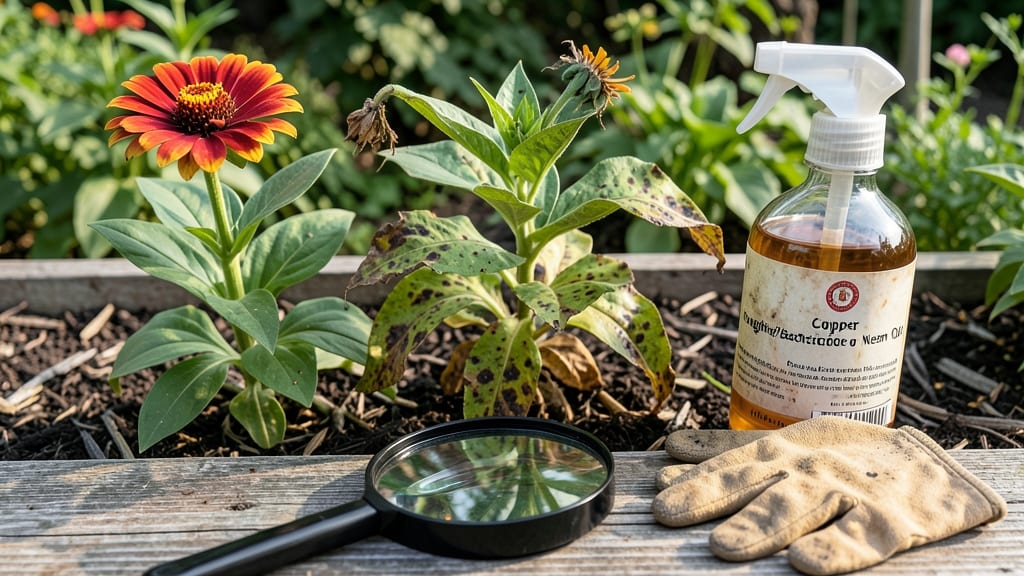
Your zinnias are covered in dark spots that spread faster than you can pull weeds—zinnia bacterial leaf spot is the culprit, and copper spray is your fastest cure.
I’ve seen this disease turn vibrant blooms into sad, spotted messes in just days, but the right treatment stops it dead in its tracks. The key? Act fast, use the right mix, and protect your plants before next season’s blooms even think about opening.
Here’s the hard truth: bacterial leaf spot thrives in damp, crowded conditions, and once it takes hold, it spreads through water splashes or contaminated tools. That’s why copper spray works—it disrupts the bacteria’s ability to survive on leaves and soil.
You’ll need to spray every 7–10 days during wet weather, but the results are worth it: new growth stays spot-free within 48 hours if you catch it early. The trick is consistency, not just one spray.
What you’ll end up with is zinnias that stay bold, healthy, and free of those ugly brown spots—just like they were meant to be. The flowers will open brighter, last longer, and you’ll finally get the showstopping display you planted for.
Prevention is easier than you think: water at the base, space plants properly, and clean your tools between uses. Trust me, your future self will thank you when your zinnias are thriving instead of fighting for their lives.
This works for garden beds, containers, or even cut flowers you’re growing for arrangements. The same principles apply whether you’re dealing with a single infected plant or an entire patch. Let’s get those spots under control before they ruin your season.
Root Causes Of Leaf Spots
Zinnia bacterial leaf spot isn’t just a random bad luck scenario—it’s the result of specific conditions that create the perfect storm for Xanthomonas campestris pv. zinniae (the bacteria behind the problem) to thrive.
Understanding these triggers is the first step to stopping the spread. Let’s break down the key factors that turn your vibrant zinnias into a bacterial buffet.
Bacteria love moisture—especially when it lingers. Overhead watering (like sprinklers or hose blasts) splashes water onto leaves, creating tiny droplets that act like bacterial taxis, carrying pathogens into wounds or stomata (leaf pores).
Even worse? High humidity (above 70%) keeps those leaves damp for hours, giving bacteria a cozy, wet environment to multiply.
🔬 Why it matters: Wet foliage for just 6–12 hours can trigger an outbreak. The bacteria X. campestris thrives in these conditions, producing slimy colonies that block sunlight and clog leaf pores.
💡 Pro tip: Water zinnias at the base (using drip irrigation or soaker hoses) and avoid late-day watering. If humidity is a concern, improve airflow with spacing or fans.
Bacteria spread faster when air feels like a sauna. Stagnant, warm air (especially between 75–85°F) slows evaporation, keeping leaves wet longer and creating ideal bacterial growth conditions. Crowded plants or dense foliage trap moisture, while poor airflow prevents leaves from drying quickly.
🔬 Why it matters: The bacteria X. campestris releases enzymes that break down plant cell walls, turning healthy tissue into a mushy, water-soaked mess. Warmth accelerates this process, turning small spots into large, oozing lesions in days.
💡 Pro tip: Space zinnias 12–18 inches apart and prune for airflow. If growing in containers, choose breathable pots and avoid overcrowding.
Healthy zinnias are resilient, but stress opens the door for bacterial invaders. Over-fertilization (especially nitrogen-heavy mixes), nutrient deficiencies, root damage, or physical trauma (like hail or rough handling) create entry points for bacteria. Even transplant shock can weaken defenses.
🔬 Why it matters: Bacteria exploit wounds and weakened cell walls. Once inside, they multiply rapidly, clogging vascular tissue and cutting off water/nutrient flow—leading to wilting and leaf drop.
💡 Pro tip: Use a balanced fertilizer (10-10-10) and avoid overwatering. Harden off transplants gradually and handle plants gently to prevent damage.
Bacteria hitchhike on dirty pruners, gloves, or even your hands. If you snip an infected leaf and then trim a healthy plant, you’ve just spread the problem. Infected plant debris left in soil or compost also releases bacteria back into the garden, reinfecting new growth.
🔬 Why it matters: X. campestris can survive in soil and organic matter for weeks. Once established, it’s nearly impossible to eradicate—only manage.
💡 Pro tip: Sterilize tools with 70% rubbing alcohol or bleach solution (1 part bleach to 9 parts water) between uses. Remove and destroy infected plants (don’t compost them!). Rotate crops yearly to break the bacterial cycle.
Bacterial leaf spot flares up during warm, rainy springs or humid summers. Sudden temperature swings (like cool nights followed by hot days) also stress plants, making them more susceptible. Frequent light rains (rather than heavy downpours) keep foliage damp longer, prolonging bacterial activity.
🔬 Why it matters: Bacteria spread via wind-driven rain and insects (like aphids). Once airborne, spores land on leaves, infecting through natural openings or injuries.
💡 Pro tip: Monitor weather forecasts and cover plants with row fabric during prolonged rain. Choose disease-resistant zinnia varieties (like ‘Benary’s Giant’ or ‘Crystal’) if bacterial spot is common in your area.
Quick Fixes for Bacterial Leaf Spots
Bacterial leaf spot on zinnias can feel like a losing battle—until you know the right moves! Below, we break down practical, fast-acting solutions tailored to the root causes of this pesky disease.
Whether it’s wet conditions, poor airflow, or contaminated tools, these fixes will help you stop the spread and restore your zinnias in no time.
---
If your zinnias are drowning in soggy soil, bacteria thrive in the damp environment. Cut off their water supply and improve drainage to starve the problem.
How to Fix It: - 🍳 Reduce Watering Immediately – Let the top 1–2 inches of soil dry out between waterings. Use a moisture meter or stick your finger in the soil to check. - 👨🍳 Improve Soil Drainage – Mix in perlite, coarse sand, or compost to loosen heavy clay soils. If potted, ensure pots have drainage holes. - 🥘 Water at the Base – Avoid overhead watering (especially in the evening). Use a soaker hose or drip irrigation to keep foliage dry. - ⏰ Space Waterings Evenly – Early morning is best—it gives leaves time to dry before nightfall humidity sets in.
💡 Prevention Tip: > "Mulch lightly with straw or pine bark (but keep it 1–2 inches away from stems) to reduce soil splashing onto leaves—this cuts bacterial spread by 50%!"
---
Copper-based fungicides are one of the fastest ways to halt bacterial leaf spot. They disrupt the bacteria’s cell walls without harming your plants (when used correctly).
How to Treat It: - 🔪 Choose the Right Spray – Look for copper hydroxide or copper sulfate sprays (like Bonide Copper Fungicide or Copper Soap). Follow label rates—typically 1 tbsp per gallon of water. - 🍎 Apply at Dawn or Dusk – Spray until leaves are glistening wet, focusing on undersides of leaves (where bacteria hide). Reapply every 7–10 days or after heavy rain. - 🎯 Add a Preventative Boost – Mix in 1 tsp baking soda + a few drops of dish soap per gallon for extra protection (test on a small leaf first!).
✨ Pro Tip: > "For severe cases, alternate copper spray with a neem oil solution (1 tsp neem oil + 1 tsp mild soap per quart of water) every other application to break bacterial resistance."
---
Bacterial leaf spot spreads like wildfire through contaminated debris. Prune aggressively to contain it.
How to Contain It: - 🔪 Snip Off Spots Early – Use sterilized pruners (wipe with rubbing alcohol between cuts) to remove yellowing or spotted leaves. Don’t leave them on the ground! - 🧹 Bag & Trash Infected Clippings – Place them in a sealed plastic bag and toss in the trash (not compost). Bacteria can survive in compost piles. - 🌿 Thin Overcrowded Plants – If zinnias are packed too tightly, space them out to improve airflow. Aim for 12–18 inches between plants.
💡 Prevention Tip: > "Rotate crops next season—don’t plant zinnias (or other susceptible plants like geraniums or impatiens) in the same spot for at least 2 years to break the bacterial cycle."
---
Healthy zinnias resist bacterial leaf spot better. Give them the upper hand with these nutrient and care tweaks.
How to Strengthen Them: - 📊 Feed with Balanced Fertilizer – Use a low-nitrogen, high-phosphorus fertilizer (like 5-10-10) to encourage root and flower health. Avoid over-fertilizing with nitrogen—it promotes soft, bacteria-loving growth. - 💪 Support with Compost Tea – Brew compost tea (steep compost in water for 24–48 hours, strain) and foliar-spray it weekly. It introduces beneficial microbes that outcompete pathogens. - 🍎 Monitor for Nutrient Deficiencies – Yellowing leaves? Test soil pH (ideal: 6.0–7.0 for zinnias). Amend with lime (to raise pH) or sulfur (to lower it) if needed.
✨ Pro Tip: > "Stress = bacterial buffet. Avoid sudden temperature swings, harsh winds, and extreme heat—zinnias handle 70–80°F best. Use shade cloth (30–50%) in peak summer if your area hits 90°F+."
--- If 50%+ of leaves are spotted and new growth is infected, you may need drastic action to save your zinnias.
What to Do: - 🔪 Prune Back Hard – Cut back severely infected stems to healthy green growth. Sterilize tools between cuts! - 🌱 Consider Replacement – If the plant is beyond saving, pull it and solarize the soil (cover with clear plastic for 4–6 weeks in summer sun) to kill lingering bacteria. - 🛡️ Quarantine New Plants – Before adding fresh zinnias, isolate them for 2 weeks and monitor for spots.
💡 Last Resort Tip: > "For container gardens, repot infected zinnias into fresh, sterile soil (baked at 200°F for 30 mins to kill pathogens) as a final attempt to save them."
Frequently asked questions
How can I tell if my zinnias have bacterial leaf spot vs. fungal spots?
Bacterial leaf spot shows dark, water-soaked spots with yellow halos that often ooze a slimy substance when wet. Fungal spots usually appear as dry, powdery patches (like powdery mildew) or concentric rings. Bacteria also spread faster in warm, humid conditions, while fungi thrive in cooler, damp environments. Check leaf undersides—bacterial spots often start there first.
Will copper spray harm bees or beneficial insects?
Copper sprays are generally safe for bees when used correctly, but apply in early morning or late evening when pollinators are less active. Avoid spraying flowers directly. For extra protection, use a neem oil mix on non-blooming days—it’s bee-friendly and helps prevent resistance. Always follow label instructions for timing and concentration.
Can I still use zinnias for cut flowers if they have bacterial leaf spot?
Only harvest healthy stems from plants with minimal spots—avoid cutting from severely infected foliage. Once cut, bacterial leaf spot won’t spread to other flowers in the vase, but the bacteria can contaminate your workspace. Sterilize pruners and containers after use. For long-lasting arrangements, choose disease-resistant varieties like ‘Crystal’ or ‘Benary’s Giant’ next season.
How long does it take for copper spray to show results?
With proper application, you’ll see new growth free of spots in 48–72 hours. Existing spots may not disappear completely, but the spread will stop. For best results, apply every 7–10 days during wet weather and combine with good airflow. Copper works by disrupting bacterial cell walls—consistency is key!
Is there a natural alternative to copper spray for bacterial leaf spot?
A baking soda spray (1 tsp baking soda + few drops of dish soap per gallon of water) can help as a preventative, but it’s not as effective as copper for active infections. For organic options, try hydrogen peroxide (3%) (1 tbsp per gallon) or compost tea—both boost plant immunity. Always test sprays on a small leaf first.