
Size
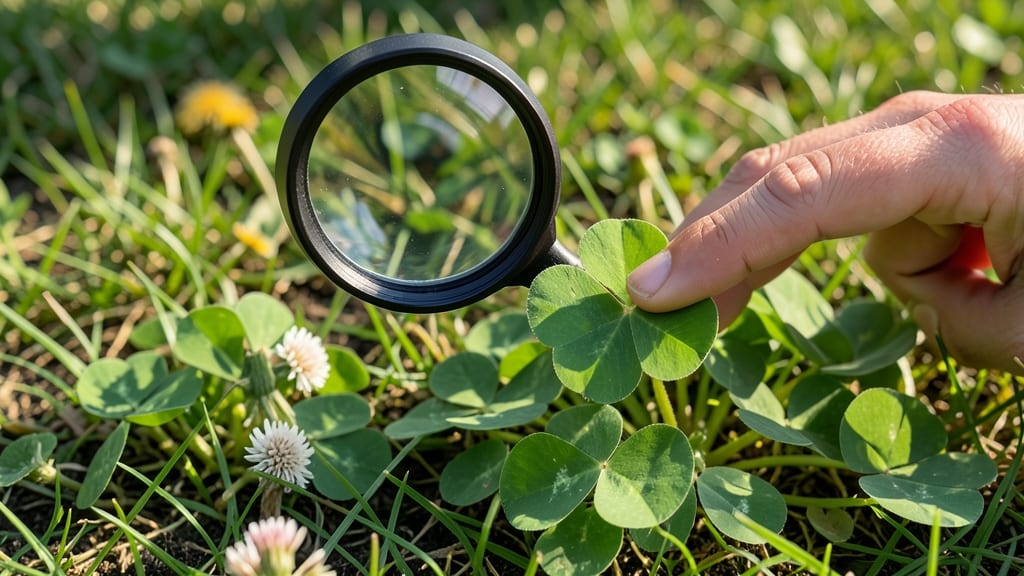
You can find a four-leaf clover in dense grassy areas like lawns, meadows, and shaded forest edges during spring or early summer, where moist, cool soil with partial sunlight creates ideal growing conditions. These rare plants often grow in clusters near white clover patches.
Four-leaf clovers are nature's hidden treasures, appearing in about 1 in 10,000 three-leaf varieties due to a genetic mutation. 🌱 The best hunting grounds are moist, shaded spots with partial sunlight—think dappled forest floors or north-facing lawns.
I've had my most success in early summer when the plants are lushest, though they can appear year-round in temperate climates. Pro tip: wear gloves and use a magnifying glass to spot them without damaging the delicate foliage.
Urban parks and golf courses often yield results because they receive regular maintenance that encourages dense clover growth. Rural fields and wildflower meadows are also prime locations, especially after rain when the plants are more visible.
The key is patience—scan systematically in clusters rather than randomly, as four-leaf clovers tend to grow near their three-leaf relatives.
💡 In This Article
- Best Environmental Conditions for Four-Leaf Clover Growth
- Top Locations to Spot Four-Leaf Clovers in Nature
Best environmental conditions for four-leaf clover growth
Four-leaf clovers aren't just lucky—they're biological anomalies. Their rare appearance stems from a recessive genetic mutation where a fourth leaf grows from the plant's central stem, occurring in about 1 in 10,000 three-leaf varieties.
This mutation thrives under specific conditions: temperatures between 50-75°F and consistent moisture levels of 40-60% soil humidity. The partial sunlight requirement (about 4-6 hours of dappled shade daily) prevents the delicate foliage from scorching while maintaining the energy needed for mutation development.
The soil composition plays a critical role too.
Four-leaf clovers prefer slightly acidic soil (pH 6.0-6.5) rich in organic matter, which mimics their natural habitat in meadows and forest edges. 🌿 Unlike their three-leaf counterparts, they're more sensitive to drought and extreme heat, which is why they're most abundant in temperate climates during spring and early summer.
In regions with hot summers, they may appear in cooler microclimates like shaded garden corners or north-facing slopes where temperatures stay 10-15°F cooler than open areas.
What most people don't realize is how timing affects mutation visibility. The four-leaf mutation becomes noticeable when the plant reaches 2-3 inches tall, which typically occurs 4-6 weeks after germination.
This is why early summer searches yield better results—the plants are fully grown but haven't yet flowered, making the leaves more prominent.
The mutation rate actually increases slightly during periods of gentle stress (like light frost or moderate drought), which may explain why some gardeners report finding them after unusual weather patterns.
Climate significantly impacts regional prevalence. In northern Europe and the Pacific Northwest, four-leaf clovers appear more frequently due to cooler summers and frequent rainfall, while southern U.S. states require searches in high-altitude areas or shaded urban spaces.
The mutation rate doesn't change—it's the environmental conditions that determine whether the mutation will survive to maturity. This is why you'll find them more consistently in areas with moderate seasonal variation rather than extreme climates.
One fascinating detail is how the fourth leaf's position varies. While most appear symmetrically opposite the third leaf, about 15% of mutations produce an asymmetrical fourth leaf that grows from the stem's underside. These "hidden" leaves are harder to spot but appear more frequently in dense clusters where leaves overlap.
This variation might explain why some searchers report finding multiple four-leaf clovers in the same patch—it's not just luck, but the plant's natural growth patterns.
For the most reliable hunting, focus on areas with consistent moisture and partial shade—these conditions create the perfect balance for mutation survival. The key isn't just finding the right spot, but understanding how these environmental factors work together to produce nature's rarest clover variation. 🌱