
Leaf Blower
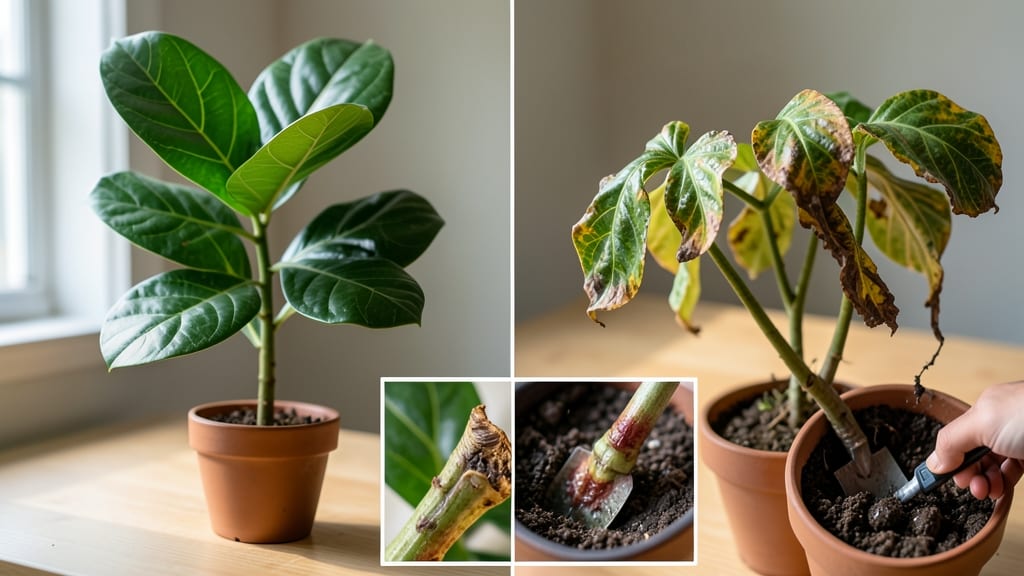
An overwatered fiddle leaf fig looks like a sad, soggy mess—yellowing leaves, drooping stems, and mushy roots that scream for help. 🌿 I’ve nursed more than my share of these plants back to health, and the first step is recognizing the warning signs before it’s too late.
The leaves start wilting at the edges, then turn yellow or brown, while the soil stays damp for days after watering.
Root rot is the real villain here, turning healthy roots black and slimy as they suffocate. Stick your finger in the soil—if it’s still wet two inches down after a week, you’re overdoing it.
The plant might also develop brown spots on the leaves or drop them entirely, even when the soil seems dry on top. It’s a delicate balance, but once you spot these clues, you can turn things around.
What you’ll achieve is a plant that perks back up in weeks with the right care: letting the top inch of soil dry out completely before watering again and ensuring the pot has drainage holes.
The leaves will firm up, new growth will emerge, and you’ll avoid the heartbreak of losing your fiddle leaf fig to overenthusiasm with the watering can.
This works for any fiddle leaf fig, whether it’s a new cutting or a mature plant that’s been struggling. The key is consistency—don’t panic if you see these signs, just adjust your routine. You’ve got this!
Root Causes Of Overwatering
When your fiddle leaf fig (Ficus lyrata) starts showing signs of distress—like yellowing leaves, mushy stems, or drooping fronds—it’s often a cry for help from its roots.
Overwatering isn’t just about giving too much water; it’s about disrupting the delicate balance of oxygen, nutrients, and moisture that roots need to thrive. Let’s break down the key reasons this happens, so you can fix the problem at its source.
🌱 Poor Drainage In The Soil
Fiddle leaf figs are tropical plants, but their roots hate sitting in soggy conditions. When soil lacks proper drainage—whether from compacted earth, a lack of perlite or sand, or a pot without drainage holes—water pools around the roots instead of draining away.
This creates an anaerobic environment (low or no oxygen), which suffocates the roots and triggers root rot.
🔍 Why it matters:
- Oxygen deprivation: Roots rely on oxygen for respiration. Without it, they can’t absorb water or nutrients efficiently, leading to cellular damage.
- Fungal and bacterial growth: Stagnant water becomes a breeding ground for pathogens like Phytophthora and Pythium, which attack healthy roots.
- Nutrient lockout: Excess water flushes out essential minerals (like nitrogen and potassium), starving the plant even as it sits in wet soil.
💡 Pro tip: Test your soil’s drainage by filling a pot with water, then timing how long it takes to drain completely. If it takes more than 10–15 minutes, your mix is too dense. Amend with orchid bark, pumice, or coco coir to improve aeration.
💧 Inconsistent Watering Habits
One of the most common mistakes is watering on a schedule rather than based on the plant’s actual needs. Fiddle leaf figs are drought-tolerant and prefer to dry out between waterings.
If you water every week—regardless of humidity, light, or season—you risk keeping the soil perpetually damp, even if the top layer feels dry.
🔍 Why it matters:
- Over-saturation: Healthy soil should be 60% air, 30% water, and 10% organic matter. Overwatering tips this balance, drowning the roots.
- Seasonal mismatches: In winter, fiddle leaf figs enter a dormant phase and need far less water (sometimes as little as every 3–4 weeks). Ignoring this leads to waterlogged soil.
- Pot size shock: Small pots dry out faster, but if you repot into a larger container without adjusting your watering routine, the extra soil stays wet for weeks.
💡 Pro tip: Use the finger test: Stick your index finger 2–3 inches into the soil. If it’s dry at that depth, water lightly until it drains from the bottom. If it’s still moist, wait 3–5 more days.
🏺 Wrong Pot Materials Or Size
Not all pots are created equal—and choosing the wrong one can turn your watering routine into a root-drowning disaster. Terracotta pots, for example, wick moisture away, but if they’re glazed or too large, they trap humidity.
Plastic pots, while lightweight, don’t allow for proper airflow and can lead to root rot in as little as 2 weeks of overwatering.
🔍 Why it matters:
- Material matters:
- Terracotta: Breathable but dries out fast—great for hot climates but may need more frequent watering in cool homes.
- Plastic: Retains moisture longer, increasing rot risk unless you’re vigilant.
- Self-watering pots: Convenient but dangerous if overfilled—they’re designed to keep soil wet, which fiddle leaf figs despise.
- Size matters: A pot that’s too large holds excess water for days, while one that’s too small dries out too quickly, leading to compensatory overwatering.
💡 Pro tip: Choose a pot that’s only 1–2 inches larger in diameter than the root ball. If repotting, upgrade size gradually (e.g., 6” → 8” → 10”) and adjust watering accordingly. Terracotta or fabric pots are ideal for fiddle leaf figs.
🌡️ Environmental Factors You’re Ignoring
Humidity, temperature, and airflow play a huge role in how quickly soil dries out. If your home is cool, humid, or poorly ventilated, your fiddle leaf fig’s roots stay wet longer—even if you’re following a "standard" watering schedule.
🔍 Why it matters:
- High humidity: Air with 60%+ humidity slows evaporation, keeping soil damp for days. Fiddle leaf figs thrive in 40–50% humidity.
- Low light + cold temps: In dim, chilly corners (below 60°F), the plant’s metabolic rate slows, reducing water uptake. Stagnant water then pools around the roots.
- No airflow: Stagnant air (like in a closed bathroom) traps moisture near the soil, mimicking a rainforest—which is not where fiddle leaf figs evolved!
💡 Pro tip: Place your plant near a dehumidifier or use a pebble tray with water (but keep the pot elevated to avoid sitting in moisture). In winter, move it away from drafty windows and use a grow light if natural light is scarce.
🚨 Signs You’re Overwatering (Even If It Doesn’t Look Like It)
Sometimes, overwatering is silent—no visible wilting, just subtle clues. Watch for:
- 🟡 Yellowing leaves with green veins: A classic sign of root rot (chlorosis from nutrient starvation).
- 🍄 Mushy, black, or foul-smelling roots: Pull up the plant gently—healthy roots are firm and light brown.
- 🌡️ Cold soil: Overwatered soil stays chilly to the touch because it’s waterlogged, not because it’s dry.
- 🕳️ Leaves that feel soft or mushy: This indicates cellular breakdown from oxygen deprivation.
Revive Your Fiddle Leaf Fig Now
---
If your fiddle leaf fig is looking sadder than a rainy-day cat, don’t panic—there’s still hope! Overwatering can be reversed with the right care, and your plant can bounce back to its lush, leafy glory.
Below, we’ll tackle the most common signs of overwatering and match them with simple, actionable fixes. Think of this as a step-by-step rescue mission for your green friend! 🌿💦
---
Cause: Overwatering suffocates roots, cutting off oxygen and causing leaves to turn yellow (often starting at the bottom).
Fix: 1. 👨🍳 Stop Watering Immediately - Let the top 1–2 inches of soil dry out completely before watering again. Stick your finger in the soil—if it’s damp, wait.
2. 🔪 Trim the Damaged Leaves - Snip off yellow or mushy leaves with clean scissors to redirect energy to healthy growth.
3. 🌡️ Improve Drainage - Repot your fiddle leaf fig in a container with drainage holes (if it isn’t already). Use a well-draining mix like: - 50% potting soil - 30% perlite or pumice - 20% orchid bark or coco coir
4. ⏰ Adjust Your Watering Schedule - Water only when the top 2–3 inches of soil are bone-dry. In winter, reduce watering to every 3–4 weeks.
💡 Pro Tip: If your plant is in a decorative pot without drainage, place it inside a cache pot with holes or use a self-watering system with a moisture meter.
---
Cause: Waterlogged roots can’t absorb nutrients, leading to limp stems and a sad, floppy appearance.
Fix: 1. 💦 Check for Root Rot - Gently remove the plant from its pot and inspect the roots. Healthy roots are firm and white; rotten roots are mushy, brown, or black.
2. 🔪 Prune the Rotten Roots - Use sterilized scissors to trim away any squishy or discolored roots. Keep only the firm, white roots.
3. 🌱 Repot in Fresh Soil - Place the plant in a clean pot with fresh, well-draining soil. Avoid compacting the soil—let it stay airy.
4. 🌿 Let It Rest - Avoid watering for at least 5–7 days to allow the roots to recover. Place the plant in bright, indirect light (no direct sun yet).
✨ Prevention Tip: Use a moisture meter to avoid guesswork. Aim for a reading of 2–4 on the meter before watering.
---
Cause: Severe root rot can spread to the stem, causing it to soften or darken at the base.
Fix: 1. 🚨 Act Fast - If the stem is mushy but still firm, you may save the plant. If it’s collapsing or smells foul, the plant is likely beyond saving.
2. 🔪 Propagate Healthy Cuttings - Cut just above a healthy node (where leaves grow) and propagate in water or a well-draining mix. Keep the cutting in bright, indirect light.
3. 🌱 Start Fresh - Discard the old pot and soil to prevent reinfection. Use a new container and sterilized tools for any future plantings.
🎯 Long-Term Fix: Invest in a humidity tray with pebbles and water (but keep the pot elevated) to maintain ideal moisture without overwatering.
---
Once your plant is back on track, follow these habits to avoid future overwatering disasters:
- 💪 Water Less, Not More: Fiddle leaf figs prefer underwatering over overwatering. When in doubt, wait. - 🥗 Use the Right Pot: Terracotta pots dry out faster than plastic—great for forgetful waterers! - 🍎 Monitor Light Levels: Too little light = slower drying soil.
Keep your plant in bright, indirect light (east or north-facing windows are ideal). - 🌡️ Adjust for Seasons: In winter, reduce watering by half since growth slows down.
---
With these fixes, your fiddle leaf fig should start perking up in 2–4 weeks. Stay patient, and soon you’ll be the proud owner of a thriving, leafy beauty again! 🌟
Frequently asked questions
How can I tell if my fiddle leaf fig is overwatered vs. underwatered?
Overwatered fiddle leaf figs show yellow leaves with green veins, drooping stems, and mushy roots. Underwatered plants have brown, crispy leaf edges and dry soil that pulls away from the pot. The key difference? Overwatered soil stays damp for days, while underwatered soil feels completely dry even at 2 inches deep.
Why do the leaves turn yellow first when overwatered?
Yellowing leaves are your fiddle leaf fig’s way of saying its roots can’t breathe! When soil stays soggy, oxygen gets cut off, and roots can’t absorb nutrients. The plant then breaks down chlorophyll (the green pigment) in older leaves first to conserve energy—hence the yellowing starting at the bottom.
Can I save a fiddle leaf fig with root rot?
Yes, but you must act fast! Gently remove the plant, trim away all mushy black roots with sterilized scissors, and repot in fresh, well-draining soil. Avoid watering for 5-7 days to let roots recover. If the stem is also rotting, propagation may be your best option—cut healthy stems and root them in water or soil.
How often should I water my fiddle leaf fig in winter?
In winter, reduce watering to every 3-4 weeks—fiddle leaf figs grow slower in cooler months. Stick your finger 2-3 inches deep into the soil: if it’s dry, water lightly until it drains from the bottom. Never water on a schedule; always check soil moisture first.
What’s the best soil mix to prevent overwatering?
Use a chunky, airy mix with 50% potting soil, 30% perlite/pumice, and 20% orchid bark. This combo improves drainage while retaining enough moisture. Avoid dense garden soil—it compacts and traps water, suffocating roots. Always use a pot with drainage holes!