
Diseases
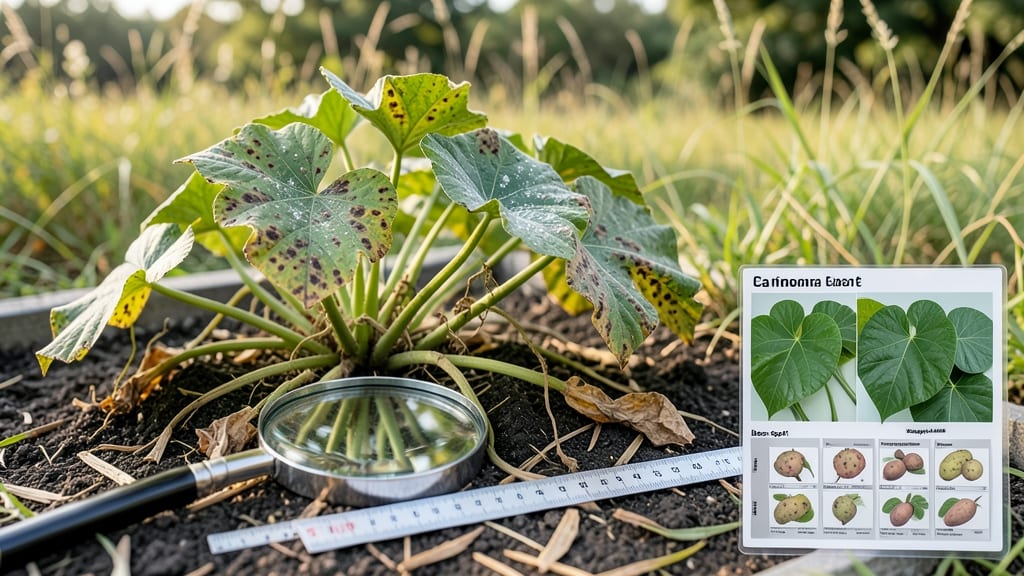
Sweet potato leaf diseases pictures can turn your thriving plants into a sad, spotted mess if you don’t catch them early. 🌿 I’ve seen blackened leaves, yellowing vines, and wilting plants—all from diseases like fungal leaf spot and bacterial wilt.
The good news? Spotting them early means you can save your crop with the right fixes.
Most diseases start with tiny brown or black spots on leaves, often with yellow halos. Fungal spots spread fast in humid weather, while bacterial wilt causes sudden wilting and a slimy stem. The key is acting fast—prune infected leaves, improve airflow, and avoid overhead watering to stop the spread.
You’ll fix most issues with copper sprays, neem oil, or baking soda mixtures (yes, really!). For severe cases, fungicides like chlorothalonil work, but prevention—like rotating crops and choosing disease-resistant varieties—keeps your plants healthy all season.
This guide breaks down each disease with clear descriptions (and where to find pictures) so you can diagnose and treat before it’s too late. No more guessing—just healthy, happy sweet potatoes.
Understanding root causes of leaf issues
Sweet potato leaves are tough, but they’re not invincible. When diseases strike, they often leave behind telltale marks—spots, wilting, or discoloration—that hint at deeper problems. But why do these issues even happen?
Let’s break down the science behind the most common culprits, so you can spot the warning signs early and take action.
🍄 Fungi are the #1 enemy of sweet potato leaves, thriving in warm, humid conditions. These microscopic organisms don’t just appear—they exploit weaknesses in your plants’ defenses.
- Overcrowded Plants 🌱 Fungi spread like wildfire in tight spaces because poor airflow traps moisture. When leaves brush against each other, spores hitch a ride and infect healthy foliage. Solution: Prune regularly and space plants 12–18 inches apart for better circulation.
- Excess Moisture on Leaves 💧 Water droplets on leaves create the perfect breeding ground for fungi like Alternaria and Cercospora. These pathogens cause dark, concentric spots that expand over time. Solution: Water at the base (not overhead) and harvest leaves in the morning when dew dries faster.
- Weakened Plant Immunity 🛡️ Stressed plants—from nutrient deficiencies, drought, or transplant shock—are prime targets. Fungi like Phytophthora (which causes root rot) attack when roots can’t absorb water efficiently. Solution: Use balanced fertilizer (10-10-10) and mulch to retain soil moisture without waterlogging.
🦠 Bacteria move quickly, often through wounds or contaminated tools. Unlike fungi, they don’t need spores—they multiply via water splashes and insect vectors.
- Contaminated Pruning Tools ⚔️ A single cut with a dirty knife can introduce Xanthomonas or Pseudomonas, causing bacterial leaf spot. These bacteria ooze yellowish pus and spread in 48 hours. Solution: Sterilize tools with 70% isopropyl alcohol between uses.
- Poor Drainage & Waterlogging 🌊 Stagnant water in soil creates anaerobic conditions, weakening roots and inviting bacterial infections like Erwinia. Look for yellowing leaves with water-soaked edges. Solution: Amend clay soil with compost and ensure raised beds or containers have drainage holes.
- Insect Vectors (Aphids & Whiteflies) 🐜 These pests don’t just suck sap—they carry bacterial pathogens on their bodies. Infested leaves develop irregular brown spots with yellow halos. Solution: Spray plants with neem oil or introduce ladybugs to control pests.
🌡️ Extreme conditions—whether too hot, too cold, or too dry—can mimic disease symptoms, confusing even experienced growers.
- Temperature Fluctuations ❄️☀️ Sweet potatoes thrive in 75–85°F (24–29°C). Below 60°F (15°C), leaves develop cold stress spots (grayish, water-soaked patches). Above 95°F (35°C), heat stress causes yellowing and curling. Solution: Use shade cloth in summer and row covers in early spring/fall.
- Nutrient Imbalances 🧪 Too much nitrogen = lush but weak leaves (susceptible to pests). Too little potassium or magnesium = interveinal chlorosis (yellowing between veins), which fungi like Fusarium exploit. Solution: Test soil pH (aim for 5.8–6.5) and supplement with Epsom salt (magnesium sulfate) if needed.
- UV or Hail Damage 🌪️ Sudden exposure to intense sunlight (e.g., after transplanting) or hail can create necrotic (dead) tissue, which fungi colonize. Solution: Acclimate seedlings gradually to full sun and protect plants with netting during storms.
👨🌾 Sometimes, the problem isn’t nature—it’s us. Common gardening mistakes create the perfect storm for diseases.
- Overhead Irrigation 💦 Splashing water from sprinklers spreads fungal spores like Colletotrichum (anthracnose), which causes sunken, dark lesions. Solution: Switch to drip irrigation or soaker hoses.
- Reusing Infected Plant Debris 🗑️ Leaving diseased leaves in the soil over winter preserves pathogens. Solution: Remove all plant waste, compost only healthy material, and rotate crops yearly.
- Ignoring Early Symptoms 🚨 Waiting until spots cover 30% of the leaf means the disease is already systemic. Solution: Isolate affected plants immediately and treat with copper fungicide (for bacteria) or baking soda spray (1 tsp baking soda + 1 quart water + a drop of dish soap).
Pro Tip: 💡 Keep a disease diary! Note weather patterns, watering habits, and symptoms. Over time, you’ll spot patterns—like fungal outbreaks after heavy rain—and adjust your routine to prevent future problems.
Fixing Sweet Potato Leaf Problems
Sweet potato leaves may look like a tough, resilient plant, but they’re just as vulnerable to diseases as any other greens. The good news? Most issues have simple, effective fixes—if you catch them early.
Below, we’ve mapped out practical solutions for common fungal spots, bacterial infections, and environmental stress, along with prevention tips to keep your plants thriving. Let’s get your sweet potatoes back to their healthy, vibrant selves! 🌱💚
Causes: Alternaria, Cercospora, or Phytophthora fungi thrive in wet, humid conditions or from contaminated soil/tools.
🔥 Step-by-Step Treatment
- Prune the Damage 🪒
- Use sterilized scissors (wipe with rubbing alcohol) to remove infected leaves—don’t compost them! Toss in the trash or burn them.
- Cut at least 1 inch below the spot to ensure the fungus doesn’t linger.
- Fungicide Spray (Organic or Chemical) 💦 - Neem oil spray (1 tbsp neem oil + 1 tsp mild soap + 1 quart water): Spray early morning or evening when humidity is high.
Reapply every 7–10 days. - Copper fungicide (like Bordeaux mixture): Follow label instructions for preventive sprays during rainy seasons. - Chemical option: Chlorothalonil (e.g., Daconil) for severe outbreaks—rotate with organic sprays to avoid resistance.
- Improve Airflow 🌬️
- Space plants 12–18 inches apart to reduce humidity buildup.
- Remove weeds around the base to prevent fungal spores from hiding.
- Use drip irrigation instead of overhead watering to keep leaves dry.
- Soil Sterilization 🌱
- Solarize soil: Cover beds with clear plastic for 4–6 weeks in hot sun to kill fungal spores.
- Add compost or aged manure to boost soil health and plant resilience.
💡 Prevention Tips
- Rotate crops: Avoid planting sweet potatoes in the same spot for 3+ years.
- Plant resistant varieties: Look for ‘Beauregard’ or ‘Covington’, which tolerate diseases better.
- Water in the morning so leaves dry by evening—fungi love dampness!
Causes: Bacterial infections spread via contaminated water, tools, or wind, especially in warm, wet climates.
👨🍳 Treatment Steps
- Remove Infected Leaves Immediately ⏰
- Do NOT compost—bag and dispose of them to stop spread.
- Wear gloves to avoid transferring bacteria to other plants.
- Copper Bactericide Spray 🛡️
- Use copper hydroxide (like Kocide) every 7–10 days for 3+ weeks.
- Mix with baking soda (1 tbsp baking soda + 1 tsp soap + 1 gallon water) for a low-cost alternative.
- Sanitize Everything 🧼
- Wash hands after handling plants.
- Disinfect tools with 10% bleach solution (1 part bleach to 9 parts water).
- Avoid overhead watering—use a watering wand at the base.
- Boost Plant Immunity 💪
- Fertilize with compost tea or kelp meal to strengthen leaves.
- Reduce nitrogen (too much = softer, more vulnerable leaves).
🎯 Prevention Tips
- Use sterile potting mix if growing in containers.
- Avoid working in gardens when leaves are wet (bacteria spreads easily).
- Remove volunteer sweet potato plants (they can harbor bacteria).
Causes: Overwatering, nutrient deficiency, or heat stress—not always a disease!
✨ Quick Fixes
- Check Watering Habits 💧
- Sweet potatoes hate soggy soil—let the top 2 inches dry out between waterings.
- Mulch with straw to retain moisture without drowning roots.
- Test Soil & Fertilize 📊
- Yellow lower leaves? → Nitrogen deficiency → Add blood meal or fish emulsion.
- Purple stems? → Phosphorus deficiency → Use bone meal.
- Brown edges? → Potassium or magnesium → Try Epsom salt spray (1 tbsp per gallon).
- Shade from Intense Sun ☀️
- If leaves scorch in heat, provide 30% shade cloth during peak afternoon sun.
- Morning sun is best—avoid planting in south-facing beds with no protection.
- Adjust pH if Needed 🌡️
- Sweet potatoes prefer pH 5.8–6.5. Test soil and amend with lime (to raise pH) or sulfur (to lower pH).
🔥 Prevention Tips
- Plant in well-draining soil (mix in perlite or sand if clay-heavy).
- Avoid compacted soil—loosen with a garden fork before planting.
- Monitor weather forecasts—cover plants if sudden heat waves are expected.
If more than 50% of leaves are diseased or the plant is wilting beyond recovery, pull it up and destroy it to prevent spread. Start fresh with healthy slips from a trusted nursery.
Remember: The key to happy sweet potato leaves is early action + prevention. Once you spot a problem, act fast, sterilize tools, and keep your garden clean—your future harvests will thank you! 🍠🌿
Frequently asked questions
Where can I find accurate pictures of sweet potato leaf diseases?
For visual identification, check these trusted sources: University of Florida IFAS Extension (ufifas.ufl.edu), Purdue Extension (extension.purdue.edu), or PlantVillage (plantvillage.psu.edu). These sites offer labeled images of fungal spots, bacterial wilts, and viral symptoms with descriptions. For quick reference, search "sweet potato leaf spot pictures" on Google Images and filter by "Creative Commons" for educational use.
How do I tell if my sweet potato leaves have a fungal infection vs. bacterial disease?
Fungal diseases (like Alternaria) show concentric rings or powdery growth on undersides, while bacterial spots (like Xanthomonas) ooze yellow pus and have irregular edges. Fungi thrive in damp conditions; bacteria spread via contaminated tools or water. Test with a sterilized knife—if the tissue smells musty, it’s likely fungal.
Can I save my sweet potatoes if the leaves are already 50% diseased?
It depends! If the roots are still firm and no wilting has occurred, prune all infected foliage, treat with copper fungicide, and improve airflow. However, if the plant is systemically infected (e.g., bacterial wilt), remove it immediately to prevent spread. For severe cases, start fresh with disease-resistant varieties like 'Beauregard' or 'Covington'.
What’s the fastest home remedy for sweet potato leaf spots?
Mix 1 tablespoon baking soda + 1 teaspoon mild dish soap + 1 quart water and spray on leaves in the early morning. This raises leaf pH, inhibiting fungal spores. For bacterial issues, use neem oil spray (1 tbsp neem + 1 tsp soap + 1 quart water). Reapply every 7 days until symptoms disappear. Always sterilize your sprayer between uses!
Why do my sweet potato leaves get yellow even when I water them regularly?
Yellowing leaves often signal nutrient deficiencies (like nitrogen or magnesium) or overwatering. Check soil moisture—sweet potatoes prefer well-draining soil. If lower leaves yellow first, it’s likely nitrogen deficiency (add blood meal). If yellowing spreads with brown edges, it’s potassium/magnesium deficiency (try Epsom salt spray). Test soil pH (5.8–6.5 is ideal).