
Trees
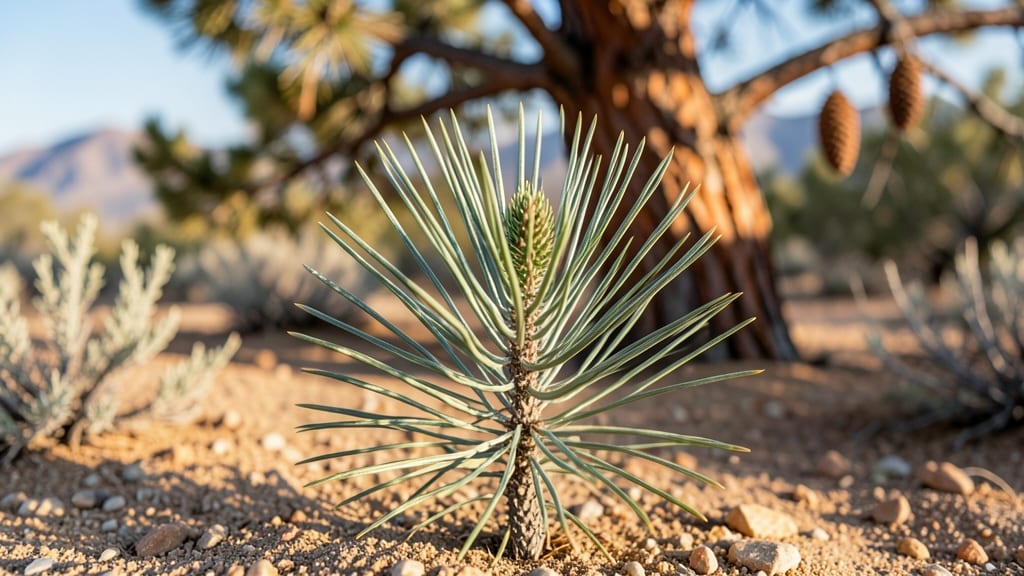
Growing a single-leaf pinyon pine transforms your yard into a desert oasis that thrives on neglect. 🌵 This cold-hardy evergreen handles drought like a pro, making it perfect for arid climates where other trees struggle.
I planted mine in a rocky slope last spring, and it’s now the toughest, most resilient plant in my garden—no watering, no fuss, just stunning blue-green needles year-round.
The secret lies in its love for well-draining soil and full sun—think gravelly, sandy mixes that mimic its native Southwest habitat. Unlike fussy trees, pinyon pines don’t need rich soil; they’ll grow in poor conditions as long as water drains fast.
Seedlings take a few years to mature, but once established, they’re nearly indestructible, even in Zone 4 with proper winter protection.
You’ll end up with a tree that produces edible pine nuts (yes, really!) and adds dramatic texture to any landscape. The twisted branches create natural shade, while the silver-blue foliage stands out against hot, dry summers.
It’s the ultimate low-maintenance stunner for xeriscaping projects or large yards where other trees would wilt.
Whether you’re planting a single specimen or a windbreak, this pine adapts to containers for small spaces or sprawling landscapes. Just avoid overwatering—it’s the fastest way to kill this drought warrior. Ready to grow one that outlasts everything else in your garden?
📚 In This Guide
- What you need
- Instructions
- Tips and common mistakes
- Wrapping up and next steps
What you need
- ● Single leaf pinyon pine seeds or sapling: 1–3 seeds (if starting from scratch) or 1 healthy sapling (3–5 years old for best results)
- ● Pro tip: 💡 Seeds may take 1–2 years to germinate—patience is key!
- ● Well-draining soil: 60% sandy loam (or cactus/succulent mix for containers)
- ● 20% perlite or pumice (for aeration)
- ● 20% compost or organic matter (for nutrients)
- ● Pot or planting site: Containers: 1–2 gallon pots (minimum 12" deep) with drainage holes
- ● Outdoor: Full-sun location (6+ hours daily) with rocky, well-drained soil (pH 6.0–8.0)
- ● Garden gloves (1 pair, heavy-duty for rocky soil)
- ● Trowel or shovel (for transplanting or digging holes)
- ● Watering can or hose with nozzle (gentle spray for seedlings)
- ○ Mulch (optional but recommended): 1–2 inches of gravel or bark chips (to retain moisture and deter weeds)
- ○ Fertilizer (optional): Slow-release low-nitrogen fertilizer (e.g., 5-10-10 ratio, 1 tbsp per plant annually)
- ● Climate: USDA Zones 4–9 (cold-hardy but hates soggy roots!)
- ● Timing: Seeds: Plant in fall (stratification helps germination)
- ● Saplings: Transplant in early spring or fall (avoid summer heat)
- ● Water source: Access to water for the first 2 weeks (then minimal watering—this tree is drought-tolerant!)
Step-by-Step guide to growing single leaf pinyon pine
This cold-hardy beauty thrives in harsh conditions—here's how to cultivate it successfully.
🌱 Step 1: Select the Right Planting Site
Choose a location with full sun exposure (6+ hours daily) and well-draining soil. Single leaf pinyon pines despise soggy roots, so avoid low spots where water pools. If your soil is heavy clay, amend it with 3-4 inches of coarse sand or gravel mixed into the top 12 inches of soil.
Test the site's natural drainage by digging a 1-foot hole—if water stands for more than 30 minutes, improve drainage before planting. The pine's shallow root system thrives in rocky, arid conditions, so mimic its native habitat by avoiding rich, moist garden soil.
🌿 Step 2: Prepare the Planting Hole
Dig a hole twice as wide as the root ball but only as deep as the container. The pine's roots are sensitive to being buried too deeply, which can suffocate them. Gently loosen the root ball if it's tightly packed, using your fingers to tease apart any circling roots.
Place the plant in the hole so the top of the root ball sits 1 inch above ground level. This slight elevation prevents water from pooling around the base. Backfill with the native soil, tamping lightly every 2 inches to eliminate air pockets without compacting the roots.
☀️ Step 3: Water Deeply and Mulch Correctly
Water the newly planted pine deeply right after planting—aim for 1 gallon per inch of trunk diameter. For example, a 2-inch diameter tree needs about 2 gallons. This initial soak helps settle the soil and encourages root expansion into the surrounding area.
Apply a 2-3 inch layer of gravel or small rocks around the base, keeping it 3-4 inches away from the trunk. Organic mulches like wood chips can harbor moisture, which this species dislikes. The rocky mulch mimics natural desert conditions and helps regulate soil temperature.
✂️ Step 4: Provide Minimal Care After Establishment
Single leaf pinyon pines are drought-tolerant once established, so water only when the soil feels bone-dry 3-4 inches down. During the first growing season, water every 2-3 weeks during dry spells, but reduce this to monthly in winter when growth slows.
Prune only to remove dead or damaged branches, using sterilized pruners to make clean cuts just above a healthy bud. Avoid heavy pruning, as this species grows slowly and responds poorly to aggressive trimming. The natural, open form requires little shaping intervention.
🪴 Step 5: Protect from Overzealous Gardeners
Resist the urge to fertilize—single leaf pinyon pines thrive in nutrient-poor soils. Excess nitrogen promotes weak growth and makes the tree more susceptible to stress. If your soil tests extremely low in essential minerals, apply a light scattering of compost around the drip line once a year in early spring.
Monitor for pests like bark beetles, which can attack stressed trees. Healthy pinyon pines rarely suffer from infestations, but if you notice tiny holes or sawdust-like frass, treat with neem oil applied in early morning to avoid harming beneficial insects. This species' resilience means most problems stem from overwatering or poor site selection.
Tips & tricks for cultivating thriving single leaf pinyon pines
These insights will help you replicate the arid conditions these resilient trees naturally thrive in—without the guesswork.
Site Selection Wisdom: The 6+ hours of daily sun requirement isn't just about sunlight—it's about creating a microclimate. I've found that south-facing slopes receive the most consistent sun exposure, especially in northern hemisphere locations. If your yard has limited full-sun spots, consider planting near reflective surfaces like light-colored walls or gravel paths that bounce additional heat onto the tree.
The Drainage Test That Saves Trees: That 30-minute drainage test in Step 1 is non-negotiable. I once planted a pinyon in what I thought was well-draining soil, only to watch it decline after heavy rains. The key is to dig deeper than you think—water will always find the lowest point. If your test hole fills beyond 30 minutes, create a raised bed mound instead of trying to amend the entire area.
Root Ball Handling Technique: When loosening the root ball in Step 2, focus on the outer edges where roots often circle the container. I use my fingers to gently separate these roots—this prevents root damage while encouraging outward growth. Pro tip: If your tree comes in a plastic pot, score the sides with a utility knife before removing it to minimize root disturbance.
Watering Strategy for Long-Term Success: The initial 1-gallon-per-inch-of-trunk watering might seem excessive, but it's crucial for breaking through the soil's natural resistance. I've seen pinyons establish better when watered in two sessions: first half immediately after planting, then the remaining half 24 hours later. This two-step approach prevents water from running off while allowing the soil to absorb gradually.
Pro Tips for Single Leaf Pinyon Pine
- These insights will help you replicate the arid conditions these resilient trees naturally thrive in—without the gues...
- Site Selection Wisdom: The 6+ hours of daily sun requirement isn't just about sunlight—it's about creating a microcli...
- The Drainage Test That Saves Trees: That 30-minute drainage test in Step 1 is non-negotiable. I once planted a pinyon...
Frequently asked questions
about the single leaf pinyon pine—your go-to guide for growing this drought-resistant beauty!How cold can single leaf pinyon pine tolerate?
The single leaf pinyon pine thrives in USDA zones 5-8, handling temperatures as low as -20°F (-29°C). Its cold-hardiness makes it perfect for harsh climates, though young trees may need winter protection in zone 5.
How long does it take for a single leaf pinyon pine to mature?
This slow-growing tree typically reaches maturity in 30-50 years, with a mature height of 15-25 feet. Patience pays off—its pine nuts and drought resistance make the wait worthwhile!
How often should I water a young single leaf pinyon pine?
Water deeply once a week for the first year, then taper to every 2-3 weeks once established. Overwatering is the biggest risk—this tree loves drought once rooted!
Can I grow single leaf pinyon pine in containers?
While possible, it’s not ideal due to its size. Use a large container (3+ feet deep) with excellent drainage, but expect slower growth. Best for small spaces? Opt for a dwarf cultivar like Pinus edulis 'Glauca'.
Are single leaf pinyon pine nuts edible, and how do I harvest them?
Yes! Harvest pine nuts in late fall/winter when cones open naturally. Wear gloves—cones are tough! Toast nuts for 30 minutes at 300°F to remove resin and enhance flavor.
What pests or diseases should I watch for?
Common issues include pine beetles (watch for boreholes) and fungal root rot (from overwatering). Healthy trees are resilient—focus on well-draining soil and avoid wounding the trunk.
Wrapping up and next steps
The single leaf pinyon pine isn’t just a tree—it’s a resilient, drought-resistant powerhouse that brings year-round beauty to even the harshest climates. 🌲 Whether you're a gardener seeking low-maintenance charm or a homeowner dreaming of a sustainable landscape, this evergreen gem delivers.
Ready to transform your outdoor space? Start by sourcing a healthy sapling, preparing the soil, and giving it the care it deserves—your future shade (and wildlife haven!) will thank you.
Next step: Visit a local nursery or reputable online seller to bring home your single leaf pinyon pine today!