
Shrubs
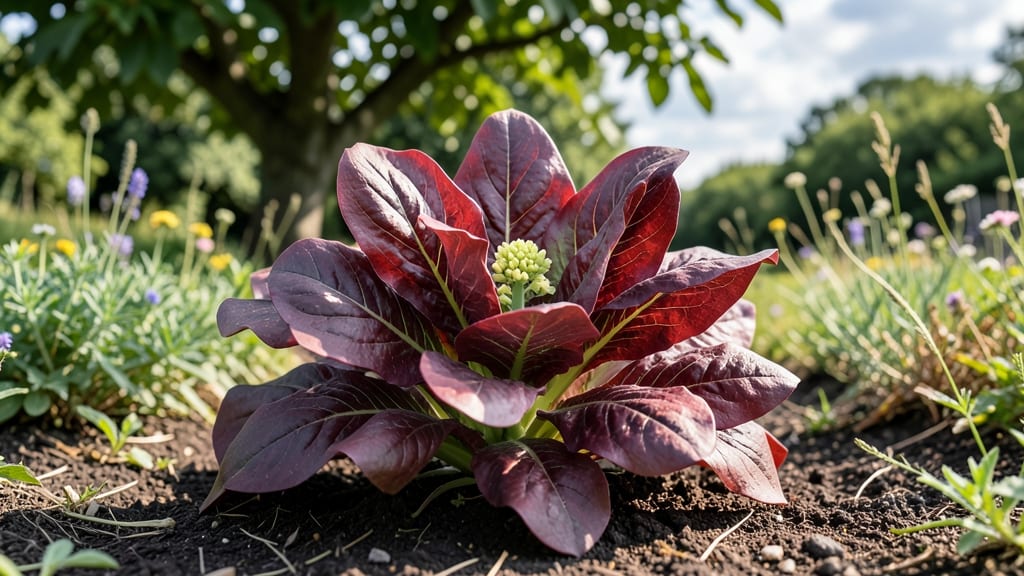
Growing Ruby Red Leaf lettuce turns your garden into a vibrant edible masterpiece that thrives when others bolt. 🌿 Its deep burgundy leaves stay crisp even in summer heat, making it the perfect salad base or ornamental border plant.
I've grown this variety for years, and it never fails to impress with its bold color and sweet flavor.
Start with well-draining soil rich in organic matter—think compost mixed into your garden beds or containers. Plant seeds ¼ inch deep, spacing them 12 inches apart for full heads or closer for baby leaves.
Ruby Red Leaf loves cool weather but handles heat better than most lettuces, so it's ideal for spring or fall planting in most climates.
Keep the soil consistently moist but not soggy, and mulch to retain moisture. A light application of balanced fertilizer every 3-4 weeks keeps growth steady. Harvest outer leaves first to encourage continuous production, and you'll enjoy fresh, crisp greens for 6-8 weeks from planting.
This variety's heat tolerance and striking appearance make it perfect for containers, raised beds, or garden borders. With minimal care, you'll have a reliable harvest that looks as good as it tastes—no fancy tricks required.
📚 In This Guide
- What you need
- Instructions
- Tips and common mistakes
- Wrapping up and next steps
What you need
- ● Ruby Red Leaf Lettuce Seeds – 1 packet (approx. 500 seeds) or 2-3 seeds per planting hole if starting from seed.
- ● Well-draining potting mix or garden soil – 10-12 inches deep, enriched with compost (3-4 inches mixed in).
- ● Containers or garden bed – 6-12 inches deep (for containers) or a sunny, well-drained garden spot (6+ hours of sunlight daily).
- ● Organic fertilizer – Balanced (10-10-10) or high-nitrogen (for leafy growth).
- ● Watering can or hose with a gentle spray nozzle – Keep soil consistently moist but not soggy.
- ○ Mulch (optional but recommended) – Straw or shredded leaves to retain moisture and suppress weeds.
- ● Gloves & hand trowel – For planting and soil prep.
- ● Seedling trays (if starting indoors) – 2-3 trays for early sowing (4-6 weeks before last frost).
- ○ Shade cloth (optional) – 30-50% coverage for hot climates to prevent bolting.
- ● Pruning shears – For harvesting outer leaves without damaging the plant.
Step-by-step instructions for growing ruby Red Leaf lettuce
Here’s how to coax vibrant, heat-tolerant Ruby Red Leaf lettuce that stays crisp and colorful even when summer hits.
🌱 Step 1: Prepare the Soil for Optimal Germination
Ruby Red Leaf thrives in loose, nutrient-rich soil with excellent drainage. Work in 2-3 inches of compost into the top 6 inches of your garden bed or container mix. The goal is soil that crumbles easily between your fingers—like a damp sponge—so those delicate roots can spread without resistance. Avoid compacted or clay-heavy soil; amending with 1 part perlite or coarse sand per 3 parts soil helps if your native mix is dense.
Test your soil’s moisture level by squeezing a handful: it should hold together lightly but not drip water. Overly wet soil suffocates seeds, while dry soil prevents them from absorbing moisture. I like to prep the bed a week ahead so the compost integrates fully before planting—this jumpstarts microbial activity that feeds young roots.
🌿 Step 2: Sow Seeds at the Right Depth and Spacing
Scatter seeds ¼ inch deep in rows spaced 12 inches apart, or broadcast them thinly if sowing directly in beds. Ruby Red Leaf’s small seeds are easy to overcrowd, so I use the finger-sprinkle method: tap the packet gently to release seeds one at a time, then lightly cover with soil. Aim for 10-12 seeds per foot of row—you’ll thin later, but starting too sparse wastes space.
Water gently with a fine mist until the soil surface looks uniformly moist but not soggy. A heavy stream can bury seeds too deep or wash them away. After sowing, place a lightweight row cover or clear plastic dome over the area to retain humidity. Seeds germinate best in 60-65°F soil—if your nights dip below 50°F, wait until daytime temperatures warm up.
☀️ Step 3: Provide Shade and Consistent Moisture
Once seedlings emerge (usually 7-10 days), remove the cover immediately to prevent damping-off. Ruby Red Leaf handles partial shade better than most lettuces, so provide 3-4 hours of morning sun and dappled afternoon shade during peak heat. In containers, move pots to a sheltered spot if temperatures exceed 85°F—wilting leaves recover but may turn bitter if stressed.
Water at the soil level—never overhead—to keep leaves dry and reduce fungal risks. Aim for 1 inch of water per week, delivered in the morning so foliage dries quickly. Mulch with 1 inch of straw to retain moisture and suppress weeds. You’ll know your watering is right when the soil feels damp 1 inch down but not waterlogged at the surface.
✂️ Step 4: Thin and Harvest for Continuous Production
When seedlings reach 2 inches tall, thin to 6 inches apart by snipping unwanted plants at the base with clean scissors. This prevents competition and gives remaining leaves room to develop their signature deep red hues. Harvest outer leaves first—cut just above the soil line—to encourage regrowth. A single plant yields 4-6 harvests over 6-8 weeks if managed correctly.
For heat tolerance, I harvest in the early morning when leaves are crispest. If bolting (sending up flower stalks) starts, trim the center stem immediately—this redirects energy to leaf production. Ruby Red Leaf’s bold color fades slightly in intense heat, but partial shade and consistent moisture keep it vibrant longer than most varieties.
Tips & tricks for perfect ruby Red Leaf lettuce
These game-changing insights will help you grow lettuce that stays vibrant and crisp even when summer temperatures climb.
Soil Prep Secret: The key to that perfect "damp sponge" texture is actually a simple kitchen trick. Mix your 2-3 inches of compost with 1 part perlite and spread it on a baking sheet. Gently press down—if it holds its shape but crumbles when squeezed, it's ready. This pre-test prevents over-amending, which can suffocate delicate roots. Too much compost leads to leggy seedlings that bolt quickly.
Seedling Timing: Those 7-10 days for germination can feel like forever, but patience pays off. Place your seed tray on a seedling heat mat set to 65°F to speed things up slightly—just don't exceed 75°F or seeds may rot. I've found that using a clear plastic dome creates a mini greenhouse effect, cutting germination time by 2-3 days while preventing damping-off. Remove it immediately once sprouts appear to avoid fungal issues.
Heat Tolerance Hack: When temperatures hit 85°F, your Ruby Red Leaf will start showing stress—but not if you pre-condition it. Two weeks before peak heat, gradually reduce afternoon sun exposure by 1 hour each day. This acclimates the plants to higher temperatures. For container growers, use black plastic pots (they absorb heat) and bury them halfway in the soil to stabilize temperatures. The roots stay cooler while the leaves adapt.
Harvesting Insight: The 6-8 week timeline assumes you're harvesting outer leaves, but there's a pro trick for maximum yield: cut leaves at a 45-degree angle just above the soil line. This creates a larger surface area for new growth while keeping the plant compact. I've gotten 10-12 harvests from single plants using this method—just be sure to sterilize your scissors with rubbing alcohol between cuts to prevent disease spread.
Pro Tips for Ruby Red Leaf Lettuce
- These game-changing insights will help you grow lettuce that stays vibrant and crisp even when summer temperatures climb.
- Soil Prep Secret: The key to that perfect "damp sponge" texture is actually a simple kitchen trick.
- Seedling Timing: Those 7-10 days for germination can feel like forever, but patience pays off.
Frequently asked questions
Got questions about growing ruby red leaf lettuce? You’re not alone—this vibrant variety has its own quirks! Here are answers to the most common queries to help you cultivate bold, crisp leaves with confidence.
How long does it take for ruby red leaf lettuce to mature?
Ruby red leaf lettuce typically reaches harvest-ready maturity in 30–45 days from seed, depending on temperature and growing conditions. For baby leaves, you can start harvesting as early as 21–28 days—just snip the outer leaves to encourage continuous growth. Pro tip: If heat slows growth, try succession planting every 2 weeks for a steady supply!
Can ruby red leaf lettuce survive hot weather?
While it’s more heat-tolerant than iceberg, ruby red leaf lettuce still prefers cool temperatures (50–75°F). In scorching heat, it may bolt (go to seed) or turn bitter. To beat the heat:
- Provide afternoon shade with row covers or shade cloth.
- Keep soil consistently moist (not soggy) to reduce stress.
- Harvest early in the morning for the crispest leaves.
How do I store ruby red leaf lettuce to keep it crisp?
Store your lettuce like a pro with these tricks:
- Wrap loosely in a damp paper towel and place in a sealed container.
- Store in the crispest drawer of your fridge (or a bowl of ice water for longer shelf life).
- Avoid washing until ready to eat—excess moisture speeds up spoilage.
What can I plant alongside ruby red leaf lettuce for companion planting?
Ruby red leaf lettuce thrives with these companion plants that deter pests and improve growth:
- Carrots – Repel aphids and share space well.
- Radishes – Act as trap crops for flea beetles.
- Chives or garlic – Naturally deter pests like slugs.
Why are my ruby red leaf lettuce leaves turning yellow or wilted?
Yellow or wilted leaves usually signal one of these issues:
Problem
Solution
Overwatering
Let soil dry slightly between waterings; improve drainage.
Underwatering
Water deeply 1–2 inches per week; mulch to retain moisture.
Nutrient deficiency (e.g., nitrogen)
Fertilize with a balanced organic fertilizer or compost tea.
Pests (slugs, aphids)
Handpick pests or use beer traps/diatomaceous earth.
Wrapping up and next steps
Ruby Red Leaf Lettuce isn’t just a feast for the eyes—it’s a delicious, heat-tolerant superstar for your garden! With the right soil, spacing, and care, you’ll enjoy bold, crisp leaves that shine in salads, wraps, or sandwiches. 🌱
Ready to grow your own? Start by gathering your supplies, then dive into planting—your future harvest (and bragging rights) are just weeks away! 🌿