
Flowers
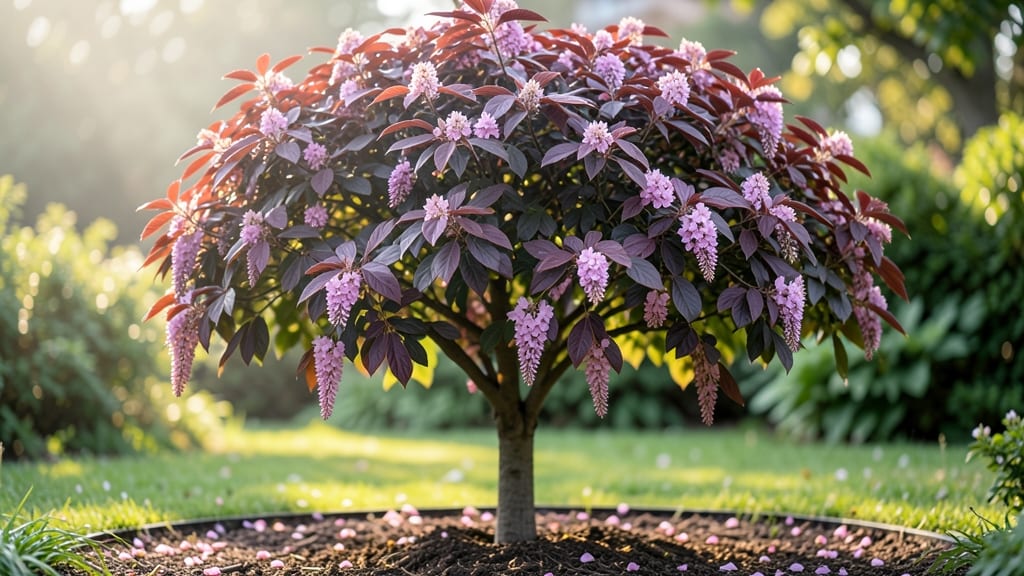
Your yard could be bursting with purple leaf plum tree flowers that turn heads from spring through fall—with almost no extra effort once established. 🌸 These trees are the unsung heroes of small gardens, offering vibrant foliage and delicate blooms that attract pollinators while requiring less fuss than most ornamentals.
The secret lies in their adaptability: they thrive in tight spaces, tolerate urban pollution, and even handle occasional drought once rooted.
Planting is the easiest part—just dig a hole twice as wide as the root ball, mix in some compost for drainage, and water deeply.
The real magic happens in full sun to partial shade, where the leaves deepen to burgundy and the spring flowers explode in soft pink or white.
Prune in late winter to shape the tree and encourage dense growth, but skip heavy cuts—these trees reward patience with year-round interest, not just seasonal flashes of color.
What you’ll love most is how low-maintenance they are. No special soil amendments, no weekly watering once established, and minimal pest issues. The flowers may only last a few weeks in spring, but the foliage stays show-stopping all season—think velvety purple leaves that glow under autumn sunlight.
Even in winter, the bare branches have a sculptural beauty that adds structure to the landscape.
Perfect for urban gardens, small yards, or even large containers. If you’ve ever wanted a tree that looks expensive but costs next to nothing to grow, this is it. Let’s get you started with the exact care routine that keeps mine blooming like crazy every year.
📚 In This Guide
- What you need
- Instructions
- Tips and common mistakes
- Wrapping up and next steps
What you need
- ● Purple leaf plum tree: 1 bare-root or container-grown sapling (3–5 ft tall for best color impact)
- ● Prunus cerasifera ‘Atropurpurea’ (most popular cultivar) or similar
- ● Planting site: Full sun exposure (6+ hours/day)
- ● Well-draining soil (amend with compost if clay-heavy)
- ● Space: 15–20 ft apart (or wider for larger varieties)
- ● Tools: Shovel or spade
- ● Garden trowel
- ● Pruning shears (sterilized)
- ● Wheelbarrow (for soil/compost)
- ● Soil amendments: 5–10 lbs organic compost (per hole)
- ● 1 cup slow-release fertilizer (10-10-10 or similar)
- ● Mulch: 2–3 inches wood chips or shredded bark (keep 6" away from trunk)
- ● Tree stakes & ties (if planting in windy areas)
- ● Drip irrigation system (for drought-prone climates)
- ● Epsom salt (1 tbsp in water) for vibrant foliage (apply in spring)
- ● Tree guard or protective wrap (for young trees in cold zones)
- ● Decorative rocks or edging (to enhance garden aesthetics)
How to grow a stunning purple leaf plum tree with year-round flowers
Here’s how to coax vibrant blooms and rich foliage from your purple leaf plum—with less fuss than you’d expect.
🌱 Step 1: Plant in the Right Spot for Sun and Drainage
Choose a location with full sun exposure (6-8 hours daily)—this tree thrives where others wilt. Purple leaf plums love warmth but hate soggy roots, so amend heavy soil with 3-4 inches of compost before planting. The ideal spot has slightly acidic to neutral soil (pH 6.0-7.0).
Dig a hole twice as wide as the root ball but no deeper. This encourages roots to spread horizontally for stability. Water the hole thoroughly before placing the tree in—settling the soil around roots prevents air pockets that strangle growth. Tap the soil gently after planting to eliminate gaps.
☀️ Step 2: Water Deeply and Mulch for Retention
Water immediately after planting to help roots establish, then soak the soil to a depth of 12 inches once a week during the first year. Purple leaf plums are drought-tolerant once established, but young trees need consistent moisture. You’ll know it’s right when the top inch of soil feels dry to the touch.
Spread 2-3 inches of mulch around the base (keep it 3 inches away from the trunk). Use organic mulch like wood chips or shredded bark—it retains moisture, regulates soil temperature, and slowly enriches the earth. Refresh the mulch annually to maintain its protective layer.
✂️ Step 3: Prune for Shape and Airflow in Late Winter
Prune before buds swell (late winter or early spring) to remove dead, crossing, or inward-growing branches. This encourages strong growth and prevents disease. Cut just above a bud or lateral branch to promote healthy regrowth. Purple leaf plums bloom on old wood, so avoid heavy pruning after flowers appear.
Shape the tree into an open vase form—this allows sunlight to reach all branches, ensuring vibrant foliage and abundant blooms. Thin out crowded areas to improve airflow, which reduces fungal risks. After pruning, apply a balanced 10-10-10 fertilizer to support new growth.
🌿 Step 4: Feed and Protect for Year-Round Color
Fertilize in early spring with ½ cup of 10-10-10 fertilizer spread evenly under the canopy. Purple leaf plums respond well to light feeding but don’t overdo it—too much nitrogen reduces flowering. Water thoroughly after applying fertilizer to prevent root burn.
Watch for pests like aphids or scale, which love tender new growth. Spray with neem oil if you spot sticky residue (honeydew) on leaves. In colder climates, protect young trees with burlap wraps during harsh winters. Mature trees handle frost well, but their vibrant purple leaves fade in extreme cold—just a seasonal trade-off for their resilience.
Tips & tricks for perfect purple leaf plum tree flowers
Between us, these little details make all the difference when your purple leaf plum puts on its best floral show.
Sunlight Strategy: If your yard has partial shade, position the tree where it gets the most direct sunlight possible—even 5-6 hours daily will work, but the 6-8 hours in full sun is what triggers those vibrant blooms. I've seen trees in east-facing spots thrive because morning sun is gentler but still effective. Just avoid west-facing spots where afternoon heat can stress the tree.
Soil Test Tip: Before planting, grab a soil test kit from your local garden center—it's only $10 and tells you exactly what your soil needs. Purple leaf plums prefer slightly acidic to neutral soil (pH 6.0-7.0), but if your test shows different, you can adjust with lime (to raise pH) or sulfur (to lower it). The 3-4 inches of compost mentioned helps, but testing gives you precision.
Mulch Mastery: That 2-3 inches of mulch isn't just for looks—it's a living blanket for your tree's roots. I like to use shredded bark because it breaks down slowly, adding organic matter over time. The key is keeping it 3 inches away from the trunk to prevent rot. Refresh it every spring before new growth starts, and you'll see healthier foliage and more flowers.
Pruning Timing: The late winter pruning window is critical because it lets the tree focus energy on flowering rather than healing wounds. I mark my calendar for when buds start to swell—that's your cue to finish pruning. And remember, these trees bloom on old wood, so don't get carried away with summer pruning. Just a light cleanup of dead branches is all you need then.
Pro Tips for Purple Leaf Plum Tree Flowers
- Between us, these little details make all the difference when your purple leaf plum puts on its best floral show.
- Sunlight Strategy: If your yard has partial shade, position the tree where it gets the most direct sunlight possible—...
- Soil Test Tip: Before planting, grab a soil test kit from your local garden center—it's only $10 and tells you exactl...
Frequently asked questions
Got questions about keeping your Purple Leaf Plum Tree blooming beautifully? We’ve got answers!
Here are some of the most common queries from gardeners—whether you’re a beginner or a seasoned pro looking to troubleshoot.
When do Purple Leaf Plum Trees flower?
These showstoppers typically burst into color in early spring (March–April), often before leaves emerge. Some varieties may rebloom lightly in late summer if pruned correctly. Pro tip: Plant near a window or path so you don’t miss the spectacular show!
Why aren’t my Purple Leaf Plum flowers opening?
Several factors could be at play: late frosts (below 20°F) can damage buds, over-fertilizing with nitrogen (promotes leaves over blooms), or poor sunlight (they need 6+ hours of sun daily). Try thinning dense branches to improve airflow and reduce stress.
Can I grow a Purple Leaf Plum Tree in a pot?
Yes! Choose a large container (15+ gallons) with drainage holes and use well-draining soil. Dwarf varieties like ‘Okame’ are ideal for pots. Warning: Root-bound trees may struggle to flower. Repot every 2–3 years and prune roots if they circle the pot.
Are Purple Leaf Plum flowers toxic to pets?
Unfortunately, yes. All parts of the tree—flowers, leaves, and pits—contain hydrogen cyanide and can cause vomiting or lethargy if ingested. Keep pets away from fallen petals or chewed branches. Opt for pet-safe alternatives like Crapemyrtle if needed.
What can I plant near a Purple Leaf Plum for year-round color?
Pair it with spring bulbs (daffodils, tulips), summer perennials (lavender, catmint), or evergreen shrubs (boxwood, holly). Avoid competitive plants like hostas—they’ll steal sunlight and water. Design tip: Use mulch to retain moisture and suppress weeds!
How do I protect my tree from winter damage?
Purple Leaf Plums are hardy to USDA Zones 5–9, but young trees benefit from wrapping the trunk with burlap or tree guard. Avoid heavy mulch piles near the base (keep 3–4 inches away) to prevent rot. Bonus: Late-winter pruning (after frost) encourages healthier blooms next season!
Wrapping up and next steps
Ready to transform your garden into a vibrant, low-maintenance paradise? The purple leaf plum tree delivers year-round beauty—from striking foliage to breathtaking spring blooms—with minimal effort. Whether you’re a seasoned gardener or just starting out, this tree is a game-changer for adding color and charm to any space.
Now’s the perfect time to plant or prune! Check local planting zones, gather your tools, and get ready to enjoy decades of stunning displays. Your future self—and your neighbors—will thank you! 🌸✨