
Propagation
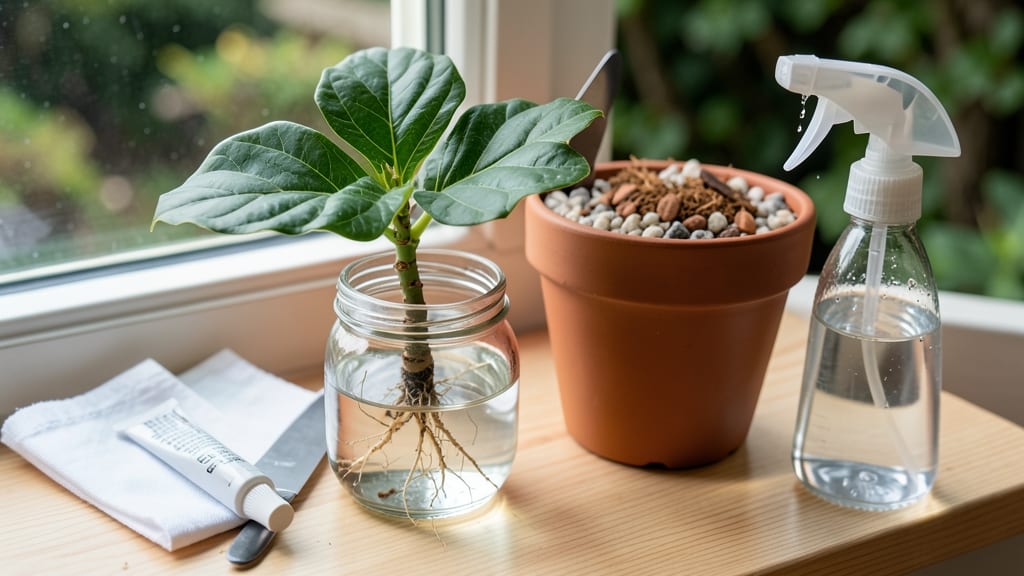
A propagated fiddle leaf fig cutting can grow roots in just 2-4 weeks—if you follow the right steps. 🌱 I’ve rooted a dozen cuttings this way, and the secret isn’t complicated: it’s about humidity, light, and patience. Water propagation speeds things up, but soil methods build stronger plants faster.
The tools you need fit in a shoebox: sharp scissors, rooting hormone (optional), small pots, and a humidity dome or plastic bag. My favorite method?
Stem cuttings in water with a drop of cinnamon to prevent rot—roots pop up in under 3 weeks if you keep the water fresh and the leaves dry. Once roots hit 1-2 inches, transplant to soil and watch your new plant thrive.
The key is keeping it cozy: bright, indirect light and 60-70% humidity mimic its tropical home. Mist often, but avoid soggy soil—this is where most cuttings fail. Works for beginners and pros alike.
Here’s how to avoid the most common mistakes and get your propagated fiddle leaf fig off to a flying start.
📚 In This Guide
- What you need
- Instructions
- Tips and common mistakes
- Wrapping up and next steps
What you need
- ● Healthy fiddle leaf fig cutting: 4–6 inches long with at least 2–3 leaves (ensure it has a node where roots will sprout).
- ● Sharp pruning shears or scissors: Sterilized to avoid disease (rubbing alcohol wipe works!).
- ○ Rooting hormone (optional but recommended): A small jar (1 oz) of powder or gel (e.g., Rootone or Clonex).
- ● Water propagation: Clear glass or jar (8–16 oz, wide-mouth preferred).
- ● Filtered or distilled water (1 cup).
- ● Soil propagation: Well-draining potting mix (e.g., African violet mix or cactus/succulent soil + perlite, 50/50 ratio).
- ● Small propagation pot (2–4 inches wide) or seed tray.
- ● Spray bottle: For misting soil (8 oz, fine-mist setting).
- ○ Plastic bag or humidity dome: To retain moisture (optional but helpful for soil rooting).
- ● Grow lights or bright indirect sunlight: LED grow bulb or south-facing window.
- ● Labels & markers: To track cuttings (e.g., date, method).
- ● Newspaper or tray: To catch water drips during propagation.
Step-by-step instructions for propagating a fiddle leaf fig
Here's how to get roots growing fast—whether you prefer water or soil propagation.
🌱 Step 1: Select and Prepare the Cutting
Choose a healthy stem with at least 4-5 leaves and 2-3 nodes (those little bumps where leaves attach). Use clean, sharp pruning shears to make a 45-degree angle cut just below a node—this gives the cutting more surface area to grow roots. Let the cut end sit for 10-15 minutes so it calluses over slightly; this prevents rot when you place it in water or soil.
If you're propagating in water, place the cutting in a jar filled with room-temperature water (not tap water, which can contain chlorine). Submerge only the bottom 1-2 nodes—never the leaves. Change the water every 3-5 days to keep it fresh and prevent bacterial growth. For soil propagation, dip the cut end in rooting hormone (optional but speeds things up) before placing it in moist potting mix.
💧 Step 2: Encourage Root Growth in Water or Soil
For water propagation, place the jar in bright, indirect light—direct sun can overheat the water and stress the cutting. You'll see tiny white roots emerge from the nodes in 2-4 weeks, depending on temperature and humidity. Keep the water level just enough to cover the nodes; as roots grow, you can gradually add more water to keep them submerged.
If you're using soil, plant the cutting in a small pot with well-draining potting mix and cover it loosely with a plastic bag to retain humidity. Place the pot in a warm spot with medium to bright indirect light. Mist the soil lightly every 2-3 days to keep it moist but not soggy. Roots will form in 4-6 weeks, but be patient—soil propagation is slower than water.
☀️ Step 3: Monitor and Transition to Soil
Once roots reach 1-2 inches long in water, it's time to transition the cutting to soil. Before planting, rinse the roots gently to remove any chlorine or impurities from the water. Plant the cutting in a small pot with fresh potting mix, burying the roots and the lower nodes just below the surface. Water lightly to settle the soil around the roots.
For soil-propagated cuttings, wait until you see new growth—usually 4-6 weeks after planting. This confirms the cutting has established roots and is ready to grow. Keep the soil consistently moist but not waterlogged, and avoid fertilizing until you see new leaves emerging. Once the cutting is thriving, you can gradually introduce it to your regular care routine.
✂️ Step 4: Care for Your New Fiddle Leaf Fig
After transitioning to soil, place your propagated fiddle leaf fig in bright, indirect light—this is critical for keeping the leaves vibrant and healthy. Water when the top 1-2 inches of soil feel dry, and avoid letting the plant sit in standing water. Mist the leaves occasionally to increase humidity, especially if your home is dry.
You'll know your cutting has successfully rooted when it produces new leaves and continues growing steadily. At this point, you can repot it into a slightly larger container if needed. Keep an eye out for yellowing leaves or wilting, which can signal overwatering or underwatering. With the right care, your propagated fiddle leaf fig will thrive just like a mature plant!
Tips & tricks for propagating fiddle leaf figs
Here's how to speed up root growth and avoid common pitfalls when growing your fiddle leaf fig from cuttings.
Timing is Everything: The 10-15 minute callusing period in Step 1 is crucial—don't skip it! This step prevents rot by letting the cut end form a protective layer. I've seen cuttings rot within days when this step was missed. If you're in a hurry, you can reduce this to 5 minutes, but the longer callus period gives you better success rates.
Light Matters More Than You Think: Bright, indirect light is non-negotiable for both water and soil propagation. I've tried placing cuttings in direct sun, and within days, the leaves turn yellow and crispy. Position your jar or pot near an east-facing window for perfect light conditions. For soil propagation, a grow light on a timer works wonders if natural light is limited.
Water Quality Makes the Difference: Never use tap water for your water-propagated cuttings—chlorine and other chemicals can inhibit root growth. Let tap water sit out for 24 hours before using, or use filtered or distilled water instead. When changing the water every 3-5 days, I like to add a drop of hydrogen peroxide (3%) to keep the water fresh and prevent bacterial growth.
Root Growth Hack: For water propagation, add a small piece of activated charcoal to the water. It keeps the water clean and prevents algae growth, which can happen surprisingly fast. I've noticed cuttings with charcoal in the water develop roots about 30% faster than those without. Just be sure to use food-grade charcoal designed for aquariums—not the kind from barbecues!
Pro Tips for Propagated Fiddle Leaf Fig
- Here's how to speed up root growth and avoid common pitfalls when growing your fiddle leaf fig from cuttings.
- Timing is Everything: The 10-15 minute callusing period in Step 1 is crucial—don't skip it!
- Light Matters More Than You Think: Bright, indirect light is non-negotiable for both water and soil propagation.
Frequently asked questions
Got questions about propagating your fiddle leaf fig? Here are some of the most common ones—and their answers—to help you grow new plants with confidence!
How long does it take for a propagated fiddle leaf fig to root in water?
A propagated fiddle leaf fig cutting typically takes 4 to 8 weeks to develop roots in water, depending on conditions like light, temperature, and water quality. Check for roots by gently tugging the cutting—if resistance is felt, roots are likely forming! Keep the water fresh to avoid bacterial growth.
Can I propagate a fiddle leaf fig directly in soil instead of water?
Yes! Soil propagation is popular for fiddle leaf figs. Dip the cutting in rooting hormone, then plant it in a well-draining mix (like perlite and peat). Keep the soil moist but not soggy and place it in bright, indirect light. Roots usually appear in 6 to 12 weeks, though soil propagation can be slower than water.
Why is my propagated fiddle leaf fig cutting turning yellow or mushy?
Yellowing or mushy stems usually mean overwatering, rot, or bacterial infection. If propagating in water, change it every 5 to 7 days to prevent stagnation. For soil, ensure the mix is fast-draining and avoid letting the cutting sit in wet soil. Trim affected areas and treat with a fungicide if needed.
How do I know when my propagated fiddle leaf fig is ready to transplant?
Your cutting is ready for transplant when it has 2 to 3 inches of healthy roots (for water propagation) or shows signs of new growth (for soil). For water-grown cuttings, acclimate to soil by misting the roots before planting. Use a pot 1 to 2 inches larger than the root ball and avoid disturbing the roots too much.
What’s the best temperature for propagating fiddle leaf figs?
Fiddle leaf figs thrive in temperatures between 65°F and 80°F (18°C–27°C). Avoid drafts, cold windowsills, or sudden temperature drops, which can stress cuttings. A humid environment (50%+ humidity) also speeds up rooting. Use a humidity dome or pebble tray if needed!
Wrapping up and next steps
Growing a propagated fiddle leaf fig is a rewarding journey that blends patience with the joy of nurturing new life! Whether you choose water or soil propagation, the key is consistency—monitoring moisture, light, and humidity while avoiding common pitfalls like overwatering or root rot.
With the right care, your cutting will soon sprout roots and thrive into a stunning, lush plant. 🌱
Now that you’re armed with tips and tricks, take the next step—pick a healthy cutting, gather your supplies, and start propagating! Share your progress with fellow plant lovers or experiment with different methods. Happy growing! 🌿✨