
How To
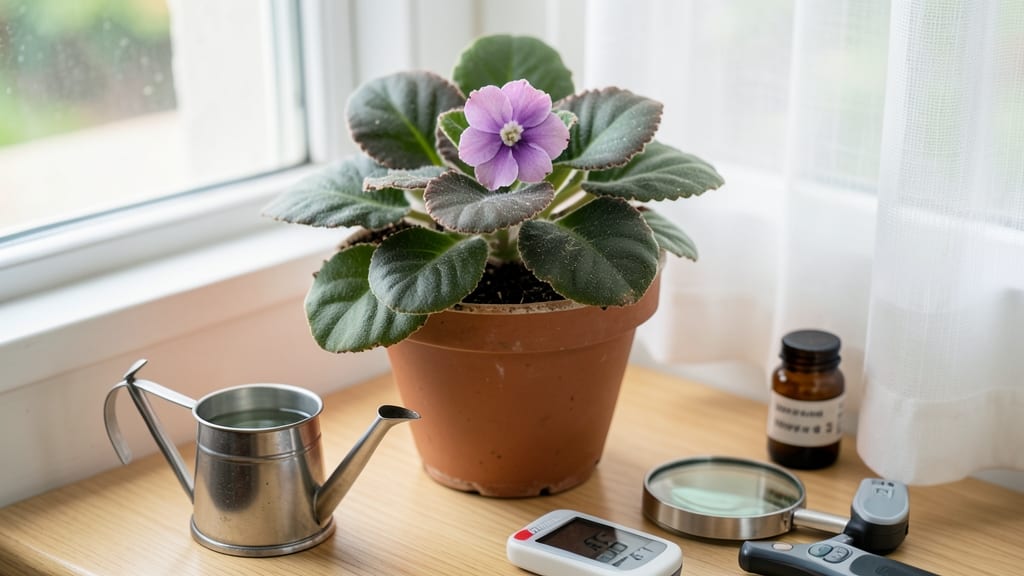
African violets with brown leaf tips are silently screaming for help—usually from water stress. 💧 I’ve nursed back dozens of these plants by fixing just two things: how and when you water, and the soil’s ability to drain. The good news? It’s almost always reversible with simple adjustments.
Overwatering is the #1 culprit, but underwatering and low humidity can cause the same crunchy edges. The fix starts with your finger: if the top inch of soil feels damp, wait.
If it’s bone-dry, you’ve been neglecting them. African violets hate soggy roots but also despise thirsty soil—aim for consistently moist (not wet) soil.
Prune the brown tips with clean scissors, then move your plant to a humidity tray or mist lightly daily. Within 2-3 weeks, you’ll see fresh growth pushing out, and those crispy edges will disappear. The key is patience—these plants bounce back faster than you’d expect.
Prevent future stress by watering only when the top inch is dry, using room-temperature water, and keeping them away from drafts or heating vents. A pebble tray under the pot adds free humidity without fuss. Trust me—your violets will thank you with shockingly lush new leaves.
Root Causes Of Leaf Damage
African violets are delicate beauties, and when their leaves start showing brown tips, it’s usually a cry for help from the plant. Understanding the why behind this issue is the first step to bringing your violet back to vibrant health.
Let’s break down the most common culprits—each with a clear, science-backed explanation—so you can diagnose the problem like a pro.
African violets thrive in consistently moist but never soggy soil. When you overwater—or worse, let them sit in waterlogged conditions—the roots struggle to absorb oxygen. This leads to root rot, a fungal infection that cuts off the plant’s nutrient supply.
Without proper hydration, the leaf edges (which are the oldest and most sensitive parts) dry out first, turning crispy brown.
The science: Brown tips from overwatering often start at the edges and work inward, sometimes accompanied by yellowing between the veins. Check the soil: if it’s damp more than 1 inch below the surface for days, you’re overdoing it. African violets prefer their soil to dry out slightly between waterings—think of a sponge that’s damp but not dripping.
On the flip side, insufficient water or dry air forces African violets to conserve moisture by shedding damaged leaf tissue. These plants are native to tropical regions where humidity hovers around 50-70%.
In dry indoor environments (especially near heaters or AC vents), the leaf edges lose moisture faster than the center, leading to desiccation—a slow, painful dehydration.
The science: Brown tips from underwatering or low humidity typically appear dry, papery, and brittle, often curling slightly at the edges. The damage may also spread to the entire leaf margin rather than just the tips. A quick fix? Group your violets together (they love company!) or use a pebble tray with water to boost humidity without direct root contact.
Hard water—packed with calcium, magnesium, and chlorine—can wreak havoc on African violets. When these minerals accumulate in the soil, they alter its pH and disrupt nutrient uptake.
The result? Leaf tips turn brown and crispy as the plant struggles to process essential minerals like potassium and magnesium, which are vital for cell health.
The science: Look for brown tips paired with white, crusty deposits on the soil surface. Tap water with a high TDS (Total Dissolved Solids) reading (above 100-200 ppm) is the usual suspect. The solution? Use filtered, distilled, or rainwater for watering. If you must use tap water, let it sit out for 24 hours to allow chlorine to evaporate.
African violets are light feeders, and too much fertilizer—especially one high in salts—can cause osmotic stress. When salt levels spike in the soil, the plant’s roots can’t absorb water efficiently, leading to marginal browning as the leaves lose turgor pressure.
Even low-quality or expired fertilizer can disrupt the soil’s microbial balance, starving the plant of essential nutrients.
The science: Brown tips from fertilizer issues often appear uneven and may include yellowing between veins (a sign of nutrient deficiency). If you’ve recently fertilized, flush the soil with distilled water to leach out excess salts. For future feedings, use a balanced, water-soluble fertilizer (like 10-10-10) diluted to half strength every 4-6 weeks during spring and summer.
African violets are tropical divas—they despise extremes. Cold drafts, sudden temperature swings, or scorching afternoon sun can cause cellular damage, leading to brown, brittle tips. The edges of the leaves are particularly vulnerable because they’re the first to react to rapid moisture loss when stressed.
The science:
- Too much direct sun? Leaves may show bleached or sunburned patches along with brown tips.
- Cold drafts (below 60°F/15°C)? The tips may turn brown and feel mushy or soft to the touch.
- Fluctuating temps? The plant’s metabolic processes slow down, causing uneven water distribution and tip burn.
Pro tip: Keep your violets in bright, indirect light (east or north-facing windows are ideal) and maintain a consistent temperature between 65-75°F (18-24°C). Avoid placing them near windows, doors, or vents where conditions can shift abruptly.
How to solve it
African violets are delicate divas—when their leaves start showing brown leaf tips, it’s usually a cry for help. But don’t panic! With the right care tweaks, you can nurse them back to lush, vibrant health.
Below, we’ve mapped out the most common causes of brown leaf tips and the practical solutions to revive your plant. Plus, we’ll share prevention tips to keep those crispy edges from returning.
If your African violet’s soil stays soggy, roots suffocate, leading to brown, mushy tips and even rot. Here’s how to fix it:
- 🔥 Stop watering immediately—let the top inch of soil dry out completely before watering again.
- 🍳 Repot if needed: If the soil is compacted or waterlogged, transfer your violet to a well-draining mix (like a 50/50 blend of peat moss and perlite). Avoid heavy garden soil!
- 👨🍳 Check the pot: Ensure it has drainage holes—no exceptions! If not, repot into one that does.
- ⏰ Water only when dry: Stick your finger in the soil up to your first knuckle. If it’s damp, wait. If it’s bone dry, it’s time to hydrate!
💡 Pro Tip: Use a spray bottle for bottom-watering—fill a saucer with water, place the pot in it, and let the plant soak up moisture for 10–15 minutes. Drain excess water to avoid soggy roots.
Brown, papery tips often mean your African violet is thirsty—or the air is too dry. Try these fixes:
- 🥘 Water thoroughly: Soak the soil until water runs out the drainage holes, then empty the saucer. Repeat every 5–7 days (adjust based on humidity and light).
- 🌡️ Boost humidity: Place a pebble tray under the pot (fill a tray with pebbles and water, then set the pot on top) or use a humidifier nearby.
- 🎯 Avoid cold drafts: African violets hate sudden temperature drops. Keep them away from AC vents, windows in winter, or doors that open often.
✨ Prevention Hack: Group your violets together—they’ll create their own mini humid microclimate! Just ensure they’re not touching leaves to prevent fungal spread.
Direct sunlight or sitting near a hot window can scorch leaves, causing brown, crispy edges. Move your plant to a bright, indirect spot (like an east-facing window or a few feet from a south-facing one).
- 🔪 Trim damaged leaves: Use clean, sharp scissors to snip off brown tips at a 45-degree angle just above a healthy leaf node.
- 🌿 Rotate the pot: Every few weeks, turn the plant a quarter turn to ensure even light exposure.
- 🌡️ Keep temps stable: Ideal range is 65–75°F (18–24°C). Avoid placing near heaters or radiators.
💡 Quick Fix: If moving isn’t an option, use a light sheer curtain to filter harsh sunlight while still allowing plenty of light.
Hard water (high in chlorine, fluoride, or minerals) can leave brown, crunchy tips. Here’s how to flush out the buildup:
- 🚰 Use filtered or distilled water for watering—this is the easiest fix and prevents future damage.
- 🍎 Flush the soil: Place the pot in a sink, run lukewarm water through the soil for 1–2 minutes, and let it drain completely. Repeat weekly for a month.
- 🌱 Wipe leaves gently: Use a damp cloth to remove any mineral deposits on the foliage.
💡 Budget Tip: If filtered water isn’t an option, let tap water sit out overnight in an open container to allow chlorine to evaporate.
Sometimes, brown tips are just old leaves saying goodbye. African violets naturally shed older leaves, but you can help by:
- 🔪 Snip with care: Trim brown tips or entire leaves at the base with clean scissors. Avoid tearing the leaf.
- 🌿 Fertilize lightly: Use a balanced, water-soluble fertilizer (like 10-10-10) diluted to half strength every 4–6 weeks in spring/summer to promote new growth.
- 🌱 Encourage blooms: Deadhead spent flowers and avoid overcrowding—this helps the plant focus energy on healthy new leaves.
✨ Bonus: African violets love a light trim—it encourages bushier, fuller growth!
With these fixes, your African violet should start showing signs of recovery in 2–4 weeks. The key is consistency: monitor soil moisture, humidity, and light, and adjust as needed. Soon, those brown tips will be a distant memory, and your violet will be thriving like never before! 🌿✨
Frequently asked questions
Why do my African violet leaves only get brown tips instead of the whole leaf?
The leaf edges are the most sensitive parts because they absorb moisture last. When your violet is stressed from underwatering, low humidity, or hard water, the tips dry out first while the center stays plump. Think of it like a sponge—if you squeeze the edges, the middle stays moist longer.
Can I save my African violet if the brown tips have spread to half the leaf?
Yes! Trim the damaged portions with clean scissors at a 45-degree angle just above a healthy leaf node. The plant will grow new tissue from there. If over 50% of the leaf is brown, it's better to remove the whole leaf to redirect energy to healthier growth.
How often should I check my African violet's soil moisture?
Test daily by sticking your finger 1 inch deep into the soil. If it's damp, wait. If dry, water thoroughly until it drains from the bottom. African violets prefer consistent moisture—never let them dry out completely between waterings, but avoid soggy conditions.
Will my African violet recover if I've been overwatering for months?
Recovery is possible but may take 4-8 weeks of proper care. First, stop watering and let the soil dry completely. Repot into fresh, well-draining mix if the roots smell mushy. Move to bright, indirect light and increase humidity. New growth will signal recovery—be patient!
Can I use coffee grounds to fix brown leaf tips?
Coffee grounds can actually worsen the problem—they're too acidic and can burn roots. Instead, use distilled or filtered water and a pebble tray for humidity. If you want organic matter, mix in a little worm castings (10%) with fresh potting soil for nutrients.