
Pests and Diseases
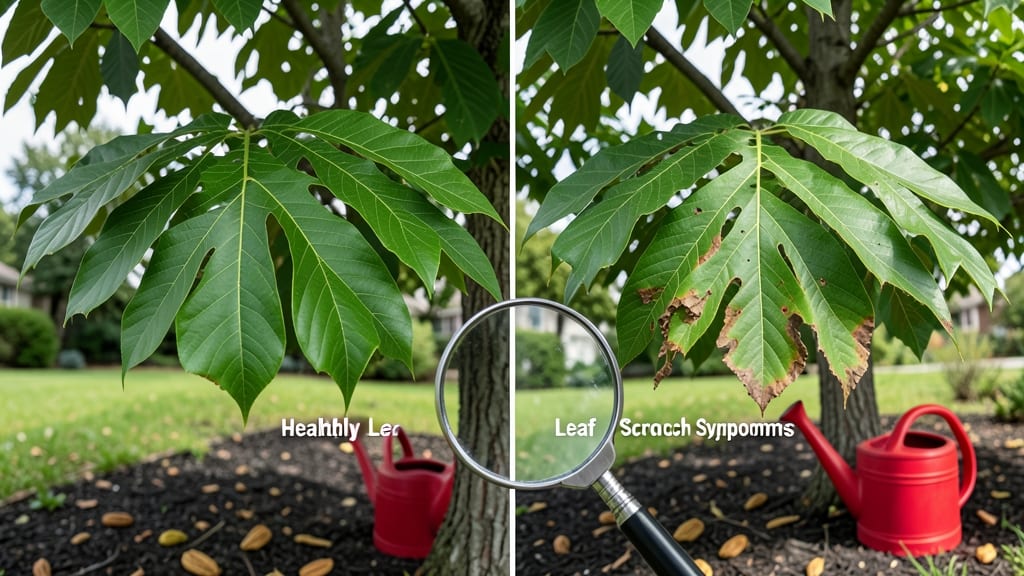
Your pecan tree’s crispy brown edges from the pecan leaf scorch aren’t a death sentence—just a fungal wake-up call. 🌿 The moment I spotted those jagged, necrotic leaf edges last summer, I knew Cercospora had arrived, and copper spray became my secret weapon.
This isn’t just about saving leaves; it’s about stopping the disease before it moves to next year’s crop.
Most gardeners panic when they see those dark, scorched patches, but the fix starts with pruning. Grab your shears and snip out every infected branch—don’t skimp, or the fungus spreads like gossip at a garden club.
After that, copper fungicide (organic or chemical) applied every 2-3 weeks during wet seasons is your best defense. I’ve seen trees go from looking like they’d been sunburned to lush and green in just 6 weeks with consistent care.
Here’s the kicker: prevention is easier than cleanup. Space your trees for better airflow, water at the base (not overhead), and mulch to keep roots happy.
A healthy tree fights off scorch better than any spray. By next spring, your pecans will be thriving—and your neighbors will be asking for your secret.
If the scorch keeps coming back year after year, it might be time to call in a professional. Sometimes, the real issue is hidden in the soil or tree structure.
But for most of us? A little copper, some pruning, and a watchful eye will turn those brown edges into vibrant green in no time.
Root Causes Of Leaf Discoloration
Pecan trees are resilient, but when their leaves develop those telltale dark, scorched edges, it’s usually a sign of stress—often tied to bacterial infections, environmental factors, or nutrient imbalances. Understanding the why behind leaf scorch is the first step to restoring your tree’s health.
Below, we break down the primary culprits and their scientific mechanisms, so you can take targeted action.
---
The most common cause of pecan leaf scorch is Xylella fastidiosa, a bacterium that clogs the tree’s water-conducting vessels (xylem). Here’s how it works:
- How it spreads: - Sap-feeding insects (like spittlebugs and leafhoppers) transmit the bacteria from infected to healthy trees. - Pruning tools or contaminated water can also spread it if not sterilized. - Weakened trees (due to drought, poor soil, or prior disease) are prime targets.
- Symptoms beyond scorch: - Leaf edges turn dark brown or black, often with a "scorched" appearance. - Premature leaf drop (leaves may fall in midsummer). - Stunted growth or dieback in severe cases.
- Why it’s tricky: The bacteria thrive in warm, dry conditions, making late spring to early summer peak infection periods. Once established, it’s incurable—but you can manage it aggressively to slow spread.
---
Pecan trees are drought-tolerant, but prolonged water stress—whether from underwatering, poor drainage, or extreme heat—triggers leaf scorch symptoms that mimic bacterial infection.
- How it happens: - Insufficient water uptake: Roots struggle to absorb moisture, causing hydraulic failure in leaf tissues. - Overhead irrigation: Wet foliage at night encourages fungal growth (like Phomopsis), which competes with the tree for resources. - Compacted or clay soil: Roots can’t penetrate deeply, leading to oxygen deprivation and stress signals.
- Key indicators: - Scorch appears on leaves first exposed to sun (south/southwest sides). - Wilting or curling leaves (even with adequate soil moisture). - Soil pulls away from the pot (if potted) or cracks in clay soil (outdoor trees).
- Pro tip: 🌡️ Check soil moisture 2–3 inches deep—if it’s dry, water deeply (1–2 inches per week in summer). Mulch (3–4 inches of organic matter) retains moisture and regulates temperature.
---
Leaf scorch can also stem from nutrient imbalances, particularly potassium (K) or magnesium (Mg) deficiencies, which weaken the tree’s ability to regulate water and disease resistance.
- Potassium (K) deficiency: - Why it matters: Potassium helps cell membrane stability and osmotic regulation—critical for drought tolerance. - Visual clues: - Yellowing between leaf veins (chlorosis) that progresses to brown, crispy edges. - Stunted new growth or weak shoots. - Fix it: Apply potassium sulfate (0.5–1 lb per 100 sq ft) or wood ash (sparingly) in early spring.
- Magnesium (Mg) deficiency: - Why it matters: Magnesium is central to chlorophyll production—without it, leaves can’t photosynthesize efficiently. - Visual clues: - Interveinal yellowing (starting on older leaves) that turns brown and necrotic. - Cupped or distorted leaves. - Fix it: Use Epsom salt (magnesium sulfate)—spray foliage (2 tbsp per gallon) or soil-drench (1 lb per 100 sq ft).
- Other culprits: - Nitrogen (N) excess: Can lead to soft, sappy growth vulnerable to pests/disease. - Calcium (Ca) deficiency: Causes blossom end rot in new leaves (though rare in pecans).
---
Pecan trees often face abiotic stress when environmental conditions push them beyond their limits.
- Heat stress: - How it works: High temperatures (above 95°F) increase transpiration rates, causing leaves to lose water faster than roots can replace it. - Result: Marginal necrosis (dead tissue at leaf edges) as cells dehydrate. - Solution: Shade cloth (30–50%) during peak heat or drip irrigation to keep roots cool.
- Windburn: - How it works: Desiccating winds (especially in dry climates) strip moisture from leaves, leading to brown, papery edges. - Solution: Windbreaks (evergreen hedges or fencing) or anti-transpirants (wax sprays) in extreme cases.
- Frost damage: - How it works: Late spring frosts can kill new growth, causing blackened, crinkled leaves that resemble scorch. - Solution: Frost cloth or row covers for young trees.
--- Sometimes, leaf scorch is a symptom of deeper issues: - Fungal infections (e.g., Cercospora or Phomopsis): Thrive in wet, humid conditions, clogging stomata and causing stress. - Herbicide drift: Glyphosate or 2,4-D can cause brown, scorched leaf edges if oversprayed. - Root damage: Girdling roots, construction injury, or soil compaction starve the tree of water/nutrients.
--- Key takeaway: Leaf scorch in pecans is rarely just one thing—it’s often a combination of bacterial infection, water stress, and nutrient gaps.
Start with a soil test and pruning hygiene, then address the most likely culprit first. 💡 Pro move: If bacterial scorch is confirmed, copper-based sprays (like copper hydroxide) can help suppress spread—we’ll cover that in the next section!
Revive Your Pecan Tree Now
Pecan trees suffering from leaf scorch need prompt action to restore health and prevent further damage. The good news? Many fixes are simple, cost-effective, and can be done with basic gardening tools.
Below, we’ve mapped the most common causes of leaf scorch to practical solutions—plus prevention tips to keep your tree thriving.
---
If your pecan leaves show darkened, wavy edges or blackened veins, a fungal or bacterial infection (like Xanthomonas or Cercospora) is likely the culprit.
#### 🔥 Step 1: Prune Infected Branches - 🔪 Use sterilized pruners (wipe with rubbing alcohol between cuts) to remove all leaves and branches with symptoms. - 🗑️ Dispose of infected debris in a sealed bag—do not compost it. - ⏰ Best time: Early morning when humidity is lower to reduce spore spread.
#### 🍳 Step 2: Apply Copper-Based Fungicide Copper sprays are highly effective against fungal/bacterial scorch.
Here’s how: - 🛒 Choose a product: Look for copper hydroxide or copper sulfate (e.g., Bonide Copper Fungicide). - 💦 Mix & spray: Follow label instructions (typically 1-2 tbsp per gallon of water). - 🌧️ Apply on a calm, dry day—avoid spraying if rain is forecast within 24 hours. - 📅 Frequency: Spray every 7-14 days until new leaves emerge (usually 3-4 applications).
#### 💡 Pro Tip: - 🌡️ Timing is key! Start spraying at the first sign of scorch (early spring or late fall) to prevent spread. - 🌿 Add a wetting agent (like dish soap, 1 tsp per gallon) to help the spray stick to leaves.
---
If leaves show brown, crispy edges but no fungal signs, your tree may be struggling with water imbalance.
#### 👨🍳 Step 1: Check Soil Moisture - 🕳️ Dig 2-3 inches deep—soil should be moist but not soggy. - 💧 Adjust watering: - Drought stress? Water deeply 2-3 times per week (early morning). - Overwatering? Let soil dry slightly between waterings—pecans hate "wet feet."
#### 🌧️ Step 2: Mulch Properly - 🍂 Apply 2-3 inches of mulch (wood chips or pine straw) around the base (not touching the trunk). - 💡 Pro Tip: Mulch retains moisture and regulates soil temperature—critical in extreme heat.
#### ✨ Prevention for Future Seasons - 📊 Install a soil moisture sensor to monitor water levels. - 🌳 Plant pecans in well-draining soil—avoid clay-heavy areas. - 🌿 Water deeply but less often—encourages deep root growth.
---
Pests like scale insects or spider mites can weaken trees, making them susceptible to scorch.
#### 🔪 Step 1: Inspect for Pests - 🔍 Look for: - Sticky residue (honeydew) on leaves (sign of scale). - Fine webbing (spider mites). - Sawdust-like frass (borers).
#### 🍳 Step 2: Treat with Organic or Chemical Controls | Pest | Solution | |----------------|-----------------------------------------------------------------------------| | Scale | Spray with horticultural oil (1% concentration) or neem oil. | | Spider Mites | Water blast (forceful spray) + insecticidal soap. | | Borers | Beneficial nematodes (for larvae) or trunk injections (professional). |
#### 💡 Pro Tip: - 🌿 Introduce predator insects (like ladybugs) to naturally control pests. - 🌡️ Avoid spraying when temps exceed 90°F—can harm beneficial insects.
---
Prevention is the best cure! Strengthen your pecan tree with these year-round tips:
- 📊 Fertilize in early spring with a balanced 10-10-10 fertilizer (follow soil test results). - 🌿 Prune in late winter to improve airflow and sunlight penetration. - 🌳 Monitor for early signs of stress—catch scorch before it spreads! - 🌧️ Avoid overhead watering (encourages fungal growth)—use drip irrigation instead.
--- 🎯 Final Reminder: Pecan leaf scorch is manageable with the right approach. Start with copper sprays for fungal issues, adjust watering for stress, and treat pests early. With consistent care, your tree can bounce back—and produce sweet, healthy nuts** for years to come!
Frequently asked questions
What are the first signs that my pecan tree has leaf scorch?
Look for dark brown or blackened edges on leaves that appear crispy or dried out, often starting on the older leaves. You may also notice premature leaf drop or stunted growth in affected branches. These symptoms typically appear first on leaves exposed to direct sunlight.
Can I use household items like vinegar or baking soda to treat pecan leaf scorch?
No, these won't work effectively. Vinegar is too acidic and can harm the tree, while baking soda lacks the necessary fungicidal properties. For bacterial or fungal scorch, copper-based fungicides (like copper hydroxide) are the most effective treatment. Always follow label instructions for proper application.
How often should I apply copper spray to prevent leaf scorch?
Apply copper spray every 7-14 days during peak growing seasons (spring and summer) or whenever you notice new symptoms. For prevention, start applying in early spring before symptoms appear. Always spray in the early morning on a calm day to maximize effectiveness.
Will pruning infected branches help stop the spread of leaf scorch?
Yes! Pruning removes the source of infection. Use sterilized pruners (wipe with rubbing alcohol) to cut out all infected leaves and branches. Dispose of infected material in a sealed bag—never compost it. Prune in early morning when humidity is lower to reduce spore spread.
Is pecan leaf scorch contagious to other trees in my yard?
Yes, it can spread through sap-feeding insects (like leafhoppers) or contaminated pruning tools. To prevent spread, sterilize tools between trees, remove infected debris immediately, and avoid overhead watering (which can splash spores). Keep your pecan trees spaced for good airflow to reduce infection risk.