
Pests and Diseases
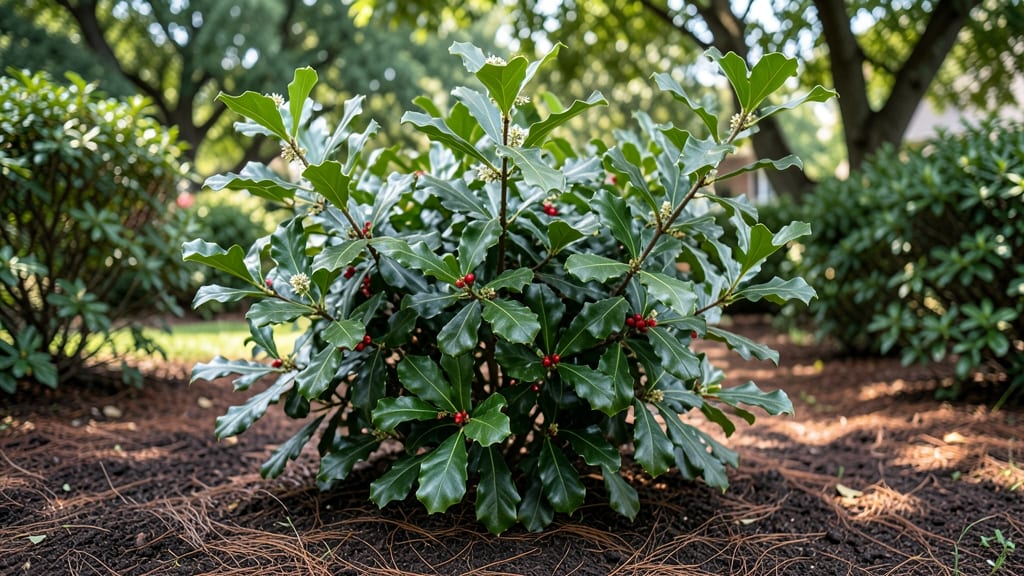
Oakleaf holly leaf delivers the perfect mix of texture and color for a privacy screen that never goes out of style. 🌿 Their deep green, leathery foliage with serrated edges and glossy finish creates a lush backdrop year-round, while the occasional red berries add seasonal drama.
The real magic happens in fall, when leaves turn fiery red or purple—something most evergreens can't do. Pruning is simple: shape in late winter before new growth starts, and fertilize lightly in early spring to encourage dense, healthy foliage.
Unlike other hollies, oakleaf varieties handle shade better, making them ideal for fences, hedges, or foundation plantings.
You'll love how these leaves stay vibrant even in winter, their waxy surface repelling rain and snow. The berries attract birds while adding a pop of color, and the mature height of 15-25 feet creates instant privacy. Just watch for scale insects—their only real enemy—and treat early with horticultural oil.
Perfect for Southern gardens (zones 6-9), oakleaf holly thrives where other hollies struggle. The key is patience—full structure takes 5-7 years, but once established, it's nearly maintenance-free. Let's get yours growing!
📚 In This Guide
- What you need
- Instructions
- Tips and common mistakes
- Wrapping up and next steps
What you need
- ● Oakleaf holly plants (Ilex × 'Nellie R. Stevens') – 10-20 plants per 10-foot section (spaced 3-4 feet apart for a dense hedge). Choose 1-2 year-old nursery-grown plants for best establishment.
- ● High-quality topsoil or native soil mix – Enough to fill planting holes (12-18 inches deep). Amend with compost (20-30%) for better drainage.
- ● Organic mulch (pine bark, shredded leaves, or wood chips) – 2-3 inches deep, applied in a 3-foot radius around each plant.
- ○ Slow-release fertilizer (10-10-10 or 12-4-8) – 1-2 pounds per 100 sq. ft. (optional but recommended for faster growth).
- ● Drip irrigation system or soaker hoses – For consistent moisture (especially critical during the first year).
- ● Shovel or spade – For digging planting holes.
- ● Garden trowel – For loosening roots and backfilling soil.
- ● Wheelbarrow – For mixing soil and mulch.
- ● Measuring tape – To ensure proper spacing (3-4 feet between plants).
- ● Pruning shears or hedge trimmer – For shaping (avoid heavy pruning in the first year).
- ● Gloves & knee pads – Because comfort matters!
- ● Epsom salt (magnesium sulfate) – 1 tbsp per plant (boosts green color if soil is deficient).
- ● Pest control (neem oil or horticultural oil) – For preventative treatment against spider mites or scale.
- ● Fertilizer spikes or liquid feed – For monthly supplements during growing seasons.
- ● Edging tools – To define the hedge’s border neatly.
How to plant and maintain an oakleaf holly privacy screen
Here's how to create a lush, year-round privacy barrier that stays green even in winter.
🌱 Step 1: Choose Planting Locations and Prepare the Site
Oakleaf hollies thrive in partial shade to full sun, but they tolerate more shade than other hollies. For a 4-foot-tall screen, space plants 4-6 feet apart in rows 6 feet apart. Mark your layout with stakes to avoid overcrowding as they mature.
Dig holes twice as wide as the root ball but no deeper. Amend the native soil with 2-3 inches of compost mixed into the bottom of each hole. This improves drainage and provides nutrients for the first critical growing season. I always loosen the sides of the hole with a shovel to encourage root spread.
🪴 Step 2: Plant Oakleaf Hollies at the Right Depth
Remove the plant from its container and gently loosen the roots if they're circling. Position the holly so the top of the root ball sits 1 inch above ground level—this prevents water from pooling around the stem and causing rot. Place it in the hole and backfill with native soil mixed with compost.
Press the soil firmly around the base to eliminate air pockets, but don't compact it. Water deeply to settle everything, then add a 2-inch layer of mulch (keeping it 6 inches away from the stem). Mulch conserves moisture and regulates soil temperature, which is especially important during summer droughts.
☀️ Step 3: Water and Fertilize for Strong Establishment
Water newly planted hollies deeply 2-3 times per week for the first 3 months, ensuring the soil stays moist but not soggy. You'll know it's right when the top 2 inches of soil feel damp but not wet. After that, water once weekly unless it rains, adjusting for extreme heat or drought.
Apply a balanced, slow-release fertilizer (10-10-10) in early spring and again in mid-summer. Follow the package rate—over-fertilizing burns tender roots. I also side-dress with a handful of compost around each plant in spring to boost organic matter without risking salt buildup.
✂️ Step 4: Prune for Shape and Health
Prune oakleaf hollies in late winter or early spring before new growth begins. Remove dead, diseased, or crossing branches first, cutting back to the nearest healthy bud. Then shape the plant by trimming 1/3 of the oldest stems to encourage new growth from the base.
For a denser screen, lightly shear the outer growth in late spring after flowering. Avoid heavy pruning—these hollies grow slowly, and aggressive cuts can leave unsightly gaps. Watch for yellowing leaves, which often signal overwatering or poor drainage, and adjust care accordingly.
🌿 Step 5: Maintain Year-Round for Long-Term Beauty
Check your screen monthly for pests like spider mites or scale, which thrive on stressed plants. Treat infestations early with neem oil or insecticidal soap—organic options work best to preserve the plant's natural defenses. I also inspect for browning leaf edges, which usually means winter windburn, and protect young plants with burlap wraps if needed.
Every 3-4 years, refresh the mulch and test soil pH—oakleaf hollies prefer slightly acidic soil (pH 5.0-6.0). If your soil is too alkaline, amend with sulfur or pine needles to keep the environment ideal. With consistent care, your screen will fill in beautifully, offering privacy, structure, and seasonal interest for decades.
Tips & tricks for perfect oakleaf holly privacy screens
Your oakleaf holly screen will thrive with these simple but game-changing strategies.
Site Selection Wisdom: Before digging, test your location's sunlight patterns throughout the day. Oakleaf hollies tolerate more shade than other hollies, but their signature red berries develop best with at least 4-6 hours of sunlight. I've seen screens planted in full shade still grow well, but they'll produce fewer berries and may grow more slowly. If your space has morning sun but afternoon shade, that's actually ideal—it prevents afternoon heat stress during summer droughts.
Root Ball Preparation: When loosening circling roots in Step 2, don't go overboard—just gently separate them enough to encourage outward growth. I've seen people cut roots aggressively, thinking it helps, but this actually stresses the plant. The key is to create just enough space for roots to spread naturally into the surrounding soil. After planting, give the root ball a good soak to help it settle into its new home.
Watering Technique: The 2-3 times per week watering in Step 3 works best when you water deeply each time—aim for about 1 gallon per plant per watering session. I use a soaker hose to deliver water slowly at the base, which prevents evaporation and keeps water where the roots need it most. Early morning watering (before 8 AM) minimizes fungal risks, and watering in the evening can lead to mildew problems.
Pruning Strategy: When shaping your screen in Step 4, focus on creating an open center rather than a solid wall. This allows air circulation, which reduces disease risk and helps the screen fill in more uniformly. I like to step back every few cuts to visualize the overall shape—you're aiming for a natural, layered look rather than a manicured hedge. Remember, these plants grow slowly, so patience pays off in the long run.
Pro Tips for Oakleaf Holly Leaf
- Your oakleaf holly screen will thrive with these simple but game-changing strategies.
- Site Selection Wisdom: Before digging, test your location's sunlight patterns throughout the day.
- Root Ball Preparation: When loosening circling roots in Step 2, don't go overboard—just gently separate them enough to encourage outward growth.
Frequently asked questions
Got questions about oakleaf holly leaves? You’re not alone!
Here are answers to the most common concerns—from pests to pruning—so you can keep your evergreen privacy screen thriving.
Q: How do I prevent pests like spider mites or scale on oakleaf holly leaves?
Spider mites and scale thrive in dry conditions, so water deeply during droughts and mist leaves occasionally. For infestations, spray with neem oil or insecticidal soap (follow label instructions). Prune affected branches to improve airflow—healthy circulation = fewer pests!
Q: Why are my oakleaf holly leaves turning yellow or brown?
Yellowing often signals overwatering or poor drainage, while brown edges may mean underwatering or winter burn. Check soil moisture (top 2 inches should be dry) and mulch 2–3 inches deep to retain moisture. In winter, protect young plants with burlap wraps if temps drop below 10°F.
Q: How fast does oakleaf holly grow, and when can I expect full privacy?
Oakleaf holly grows 12–24 inches per year, but growth slows in shade. For a 6–8 ft tall hedge, plan 3–5 years of maintenance. Prune lightly in late winter/early spring to encourage bushier growth. Patience pays off—this evergreen stays lush year-round!
Q: Can I use oakleaf holly as a hedge and for wildlife?
Oakleaf holly’s red berries attract birds and wildlife, but they’re mildly toxic if ingested in large quantities—keep pets/kids away from fallen berries. For extra wildlife appeal, plant near native shrubs like wax myrtle or American beautyberry.
Q: What’s the best time to prune oakleaf holly for shape and health?
Prune after flowering (late spring to early summer) to avoid removing next year’s blooms. Use clean, sharp shears to make cuts at a 45° angle just above a leaf node. Avoid heavy pruning in fall—it can stress the plant before winter. Pro tip: Shape gradually to prevent “staghorn” growth!
Q: Are there drought-tolerant alternatives to oakleaf holly?
If your climate is very dry, consider Chinese holly (Ilex cornuta) or yaupon holly (Ilex vomitoria)—both handle heat better. For low-maintenance options, leucothoe or boxwood (with proper irrigation) work well. Always check your USDA hardiness zone for matches!
Wrapping up and next steps
The oakleaf holly is a standout choice for year-round privacy and structure, offering glossy, disease-resistant foliage and striking berries that keep your landscape vibrant in every season.
While pests and diseases like spider mites or leaf spot can occasionally pose challenges, proactive care—like proper spacing, mulching, and targeted treatments—keeps your holly thriving. With the right knowledge, you’re well-equipped to create a low-maintenance yet stunning privacy screen that turns heads and deters common issues.
Ready to transform your space? Start by assessing your yard’s conditions and picking the perfect oakleaf holly variety—then roll up your sleeves for a lush, pest-resistant retreat! 🌿✨