
Planting
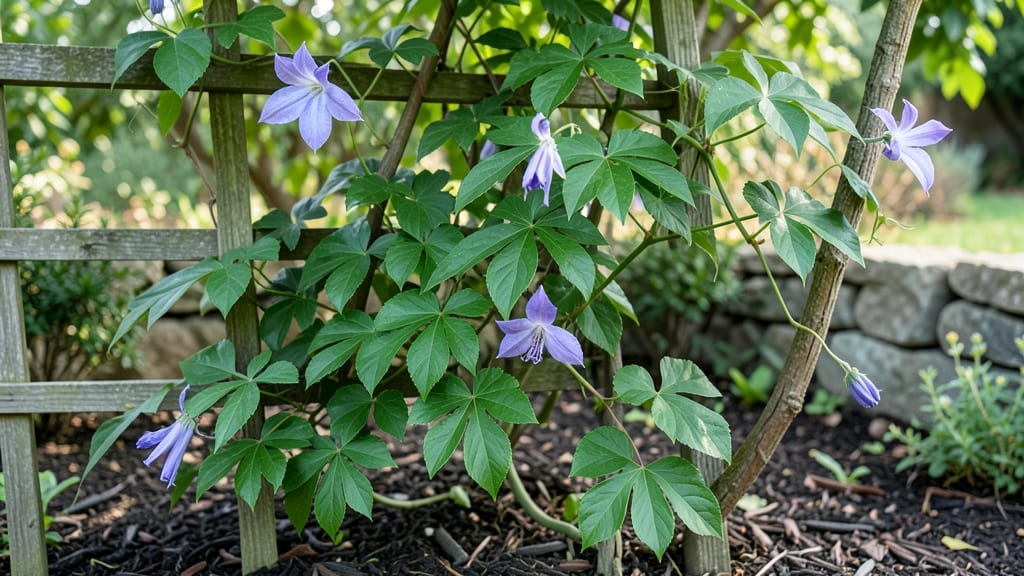
That mysterious vine creeping up your trellis could be anything from ivy to poison ivy—identifying climbing plants by leaf starts with a few simple observations. 🌿 I’ve spent years untangling vines in my garden, and the key is always the leaf: its shape, edges, and how it attaches to the stem.
A lobed leaf might be Virginia creeper, while smooth, heart-shaped leaves point to Boston ivy or even a clematis variety.
Grab a magnifying glass (or just your phone camera) and check three things: leaf shape (lobed, serrated, or smooth?), texture (hairy or silky?), and arrangement (opposite or alternating?). Wisteria leaves grow in three leaflets, while honeysuckle’s are oval and paired.
Once you spot these details, compare them to a reference chart or plant database—most apps let you upload a photo for instant matches.
Knowing your vine unlocks the right care: prune wisteria after blooming, train clematis with strong supports, or pull ivy before it smothers your foundation. Misidentifying a plant can mean wasted effort or even damage—like using the wrong fertilizer for a sensitive vine.
By the end, you’ll spot vines like a pro and keep your garden thriving.
This method works year-round, whether you’re dealing with spring growth or winter-dormant stems. Start with common vines in your area, then expand to rare finds—your garden’s mysteries will start making sense. Here’s how to begin your vine detective work!
Plant Leaf Traits Explained
Climbing plants use their leaves as nature’s fingerprint—each shape, texture, and arrangement tells a unique story. But why do these traits vary so dramatically between species? Understanding the scientific and evolutionary reasons behind leaf characteristics helps you decode which vine you’re staring at.
Here’s the breakdown of the key forces shaping climbing plant foliage.
Leaves aren’t just decorative—they’re survival tools. Climbing plants often face harsh conditions like limited sunlight, competition for space, or nutrient-poor soil. Their leaves evolve to maximize efficiency in these environments:
- Light Capture: Vines like Clematis (with divided, feathery leaves) or Passiflora (palmate lobes) spread out to intercept dappled sunlight filtering through canopies. Why? Thin, lobed leaves increase surface area without adding excess weight, letting the plant photosynthesize efficiently in low-light zones.
- Water Conservation: Succulent-leaved vines (e.g., Sedum or Hoya) store moisture in thick, fleshy leaves. Why? Their waxy coatings and reduced stomata (pores) minimize water loss in dry climates. Pro tip: If a vine’s leaves feel rubbery or have a blue-gray tint, it’s likely adapted to arid conditions.
- Climbing Mechanics: Some vines (like Boston Ivy) develop opposite or alternate leaf arrangements to wrap around supports or create a sturdy framework. Why? This positioning helps distribute weight and reduces energy spent on rooting—critical for plants that rely on other structures for stability.
Where a vine grows directly influences its leaf design. Three major environmental factors drive these adaptations:
| Factor | Leaf Adaptation | Example Vines |
|---|---|---|
| 💧 Humidity | Large, thin leaves with prominent veins (e.g., Monstera deliciosa) to maximize gas exchange in moist air. | Philodendron, English Ivy |
| ☀️ Sun Exposure | Small, leathery leaves (e.g., Jasmine) to reduce water loss and reflect excess sunlight. | Star Jasmine, Wisteria |
| 🌍 Soil Nutrients | Deeply lobed or compound leaves (e.g., Virginia Creeper) to access more nutrients from thin, poor soil. | Poison Ivy, Grape Vines |
Key takeaway: A vine’s leaf texture and size are often a direct response to its native habitat. For example, tropical vines like Rhododendron have broad, waxy leaves to handle high humidity, while desert-adapted vines (e.g., Aloe Vera) have spiky, water-storing leaves.
Not all leaf differences are environmental—some are hardwired into a plant’s DNA. Here’s how genetics play a role:
- Leaf Shape as a Species Marker: The compound vs. simple leaf distinction is often genetic. For instance, Honeysuckle always has opposite, simple leaves, while Pea Vines feature compound leaves with 3 leaflets. Why? These traits are linked to the plant’s reproductive strategy and pollinator attraction.
- Venation Patterns: The way veins branch (e.g., palmate in Passionflower or pinnate in Wisteria) is determined by growth hormones like auxin, which dictate cell division during leaf development.
- Toxicity as a Defense: Some vines (like Poison Ivy) develop serrated edges or glossy surfaces to deter herbivores. Why? These traits are genetically encoded to protect the plant from being eaten, even if the environment changes.
Actionable tip: When identifying a vine, compare leaf traits across multiple plants of the same species. Genetic consistency (e.g., always 5 leaflets in a Virginia Creeper) trumps temporary environmental changes.
Next time you’re staring at a mysterious vine, remember: its leaves are not random. They’re the result of millions of years of adaptation, survival strategies, and genetic blueprints. Use this knowledge to narrow down your search—and impress your gardening friends with your newfound botanical detective skills! 🕵️♂️🌿
Master Leaf Identification Like a Pro
Now that you understand why climbing plants can be tricky to identify by leaf, let’s tackle the how—with clear, actionable steps to simplify the process. Whether you’re a gardening newbie or a seasoned plant enthusiast, these solutions will help you confidently match leaves to vines.
Before diving in, equip yourself with the essentials to avoid frustration:
- A field guidebook or app (like iNaturalist or PictureThis) for quick comparisons.
- A magnifying glass to inspect leaf details (veins, texture, edges).
- A camera or sketchbook to capture or draw leaf shapes, colors, and arrangements.
- A small notebook to jot down observations (e.g., "heart-shaped, serrated edges, climbs counterclockwise").
💡 Pro Tip: Take photos in natural light—shadows can distort colors and make identification harder.
Break down the leaf into five key categories to narrow down possibilities. Use this checklist:
| Trait | What to Look For | Example Questions |
|---|---|---|
| Shape | Lobed, heart-shaped, needle-like, etc. | Is it wider than it is tall? |
| Edge (Margin) | Smooth, serrated, lobed, or wavy | Are the edges jagged like a saw? |
| Venation | Parallel, palmate, or pinnate veins | Do veins branch out like a hand (palmate)? |
| Arrangement | Opposite, alternate, or whorled | Do leaves grow in pairs at each node? |
| Climbing Method | Twining, tendrils, adhesive pads, or thorns | Does it grip with tiny hooks or spiral around supports? |
🔥 Quick Fix: If a leaf is compound (multiple leaflets), note whether the leaflets are toothed, smooth, or feather-like—this is a game-changer for ID!
If you’re still stuck, leverage technology:
- Plant ID apps: Upload a photo to PlantNet or Google Lens for instant matches.
- Social media groups: Post in gardening forums (e.g., r/whatsthisplant on Reddit) with clear images.
- University extension offices: Many offer free plant ID services via email or phone.
✨ Bonus: Some apps (like Seek by iNaturalist) provide real-time audio cues to help identify plants by sound and sight.
If you prefer a hands-on approach:
- Flip through a regional field guide (e.g., The Sagebrush Sea for Western U.S. vines).
- Match your leaf traits to illustrated examples.
Focus on: - Leaf color (green, purple, variegated). - Size (palm-sized vs. finger-sized). - Unique features (e.g., Honeysuckle leaves are oval with smooth edges; Poison Ivy has three leaflets). 3. Check the vine’s growth habit: Does it climb fences (Morning Glory) or trees (Virginia Creeper)?
🎯 Precision Tip: Note if the vine has aromatic leaves (e.g., Mint family)—this can rule out many options.
Even experts trip up—here’s how to sidestep pitfalls:
- Don’t rely on color alone: Many vines change hue with seasons (e.g., Boston Ivy turns red in fall).
- Watch for seasonal changes: Some leaves (like Wisteria) appear different in spring vs. summer.
- Consider location: A vine thriving in Zone 5 won’t match a tropical species found in Zone 10.
- Rule out lookalikes: Poison Oak and Virginia Creeper can be confused—check for clusters of 3 vs. 5+ leaflets.
Turn identification into a habit with these long-term strategies:
- Label your plants as you learn them (use waterproof tags for outdoor gardens).
- Join a local botanical society: Field trips and workshops accelerate learning.
- Keep a plant journal: Log new discoveries with dates and locations.
- Start a "mystery vine" file: Clip unknown leaves and revisit them monthly—patterns emerge over time!
If all else fails, consult a local nursery or arborist. Many offer free consultations, and their expertise can save you from costly (or toxic!) misidentifications—like mistaking English Ivy (non-native, invasive) for Boston Ivy (a great native alternative).
With these steps, you’ll go from squinting at leaves to naming that vine in seconds. Happy identifying! 🌿🔍
Frequently asked questions
What are the most important leaf features to note when identifying a climbing vine?
Focus on these five key traits: leaf shape (lobed, heart-shaped, or needle-like), edges (smooth, serrated, or wavy), venation (how veins branch), arrangement (opposite or alternating), and size. For example, Honeysuckle has smooth, oval leaves in opposite pairs, while Virginia Creeper features 5-7 leaflets in a compound arrangement.
How can I tell if a vine is poisonous just by looking at its leaves?
Watch for these warning signs: three leaflets (like Poison Ivy or Poison Oak), red or shiny stems, or serrated edges. Always avoid touching unknown vines—when in doubt, consult a local nursery or use a plant ID app like PictureThis for a safe match.
Why do some climbing plants have compound leaves while others have simple leaves?
Compound leaves (like Wisteria) often help vines maximize sunlight capture in shaded areas, while simple leaves (like Jasmine) are more common in sunny climates where water conservation matters. The arrangement also affects climbing mechanics—some vines use leaflets to grip supports more effectively.
What’s the best time of year to identify climbing plants by their leaves?
Spring and early summer are ideal because leaves are fully developed and easy to see. In fall/winter, many vines shed leaves or change color, making identification harder. If you must check in colder months, look for bud shapes or stem patterns instead.
Can I use a smartphone app to identify a climbing plant by leaf?
Apps like PlantNet, Google Lens, or iNaturalist let you upload photos for instant matches. For best results, take clear shots of both leaves and flowers (if present) in natural light. If the app is unsure, try posting in gardening forums like r/whatsthisplant for expert help.