
Watering
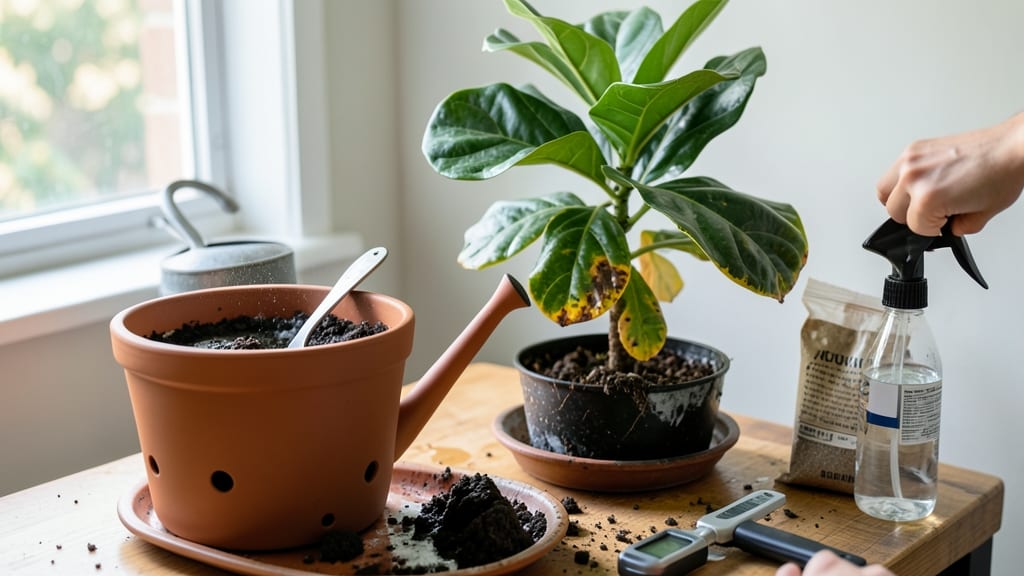
How to fix an overwatered fiddle leaf fig—your drooping leaves and yellowing stems are screaming for help, but root rot is beatable in 72 hours. 🌱 I’ve nursed back more overwatered figs than I’d like to admit, and the fix starts with stopping water entirely and assessing the damage. The first sign of overwatering is often mushy, black roots that smell foul—healthy roots should be firm and pale. If you see this, trim the bad sections with clean scissors and repot in fresh, well-draining soil. Skip the peat-heavy mixes; cactus or succulent blends work best for revival. Within days, you’ll see new growth as the roots recover. Keep the soil barely moist (stick your finger in—if it’s damp past your first knuckle, wait longer). A humidity tray or pebble tray can speed up recovery by mimicking their tropical habitat without drowning them. This works for any fiddle leaf fig, whether it’s a new plant or a seasoned favorite. The key is patience—root revival isn’t instant, but it’s worth it for that lush, glossy comeback.
Root of the Problem
Overwatering your fiddle leaf fig (Ficus lyrata) isn’t just a minor misstep—it’s a silent killer that chokes the plant’s roots, suffocates its growth, and triggers a cascade of distress signals.
But why does this happen so easily? Let’s break down the science behind the soggy soil syndrome and uncover the real culprits behind your plant’s waterlogged woes.
Your fiddle leaf fig’s roots need oxygen to breathe—just like you do! When soil stays too wet, it displaces air pockets, creating an anaerobic (oxygen-free) environment.
This forces roots to switch to fermentation (a survival mode for plants), producing ethanol—yes, like in alcohol—as a byproduct. 🍷 While this might sound harmless, ethanol is toxic to roots over time, leading to:
- Root rot (Phytophthora or Pythium fungi thrive in soggy conditions).
- Stunted growth (the plant diverts energy to survival, not leaves).
- Yellowing leaves (a SOS signal from nutrient-starved roots).
Actionable fix? Use well-draining soil mixes (60% potting mix + 40% perlite/pumice) and terracotta pots (they wick away moisture faster than plastic).
Fiddle leaf figs are drought-tolerant tropicals—they evolved to handle dry spells, not soggy bottoms. Yet, many gardeners water on a schedule (e.g., every Monday) instead of checking soil moisture. Here’s the catch:
- Topsoil dries faster than deeper layers, tricking you into thinking the plant is thirsty when it’s not.
- Humidity and temperature affect evaporation rates—cool weather = slower drying = overwatering risk.
- Pot size matters: A 6-inch pot dries out in 5–7 days, while a 12-inch pot can take 2–3 weeks.
Pro tip: Stick your finger 2 inches deep—if it’s dry, water; if damp, wait. 🌡️
Tight, clay-heavy, or reused soil compacts over time, reducing porosity and trapping water like a sponge. Without air gaps, roots suffocate, and beneficial microbes (which help break down excess moisture) die off. Symptoms include:
- Mushy, black roots (a classic rot sign).
- Wilting despite wet soil (the plant can’t uptake water efficiently).
- Slow recovery after "fixing" the issue (because the soil structure is still broken).
Solution: Refresh your soil every 1–2 years with a chunky, aerated mix (add orchid bark or coco coir for fluffiness).
Not all containers are created equal. Plastic pots trap moisture longer, while glazed ceramic can hold water against the sides. Even "self-watering" pots can backfire if the reservoir isn’t drained properly. Here’s how pots contribute to overwatering:
| Pot Material | Moisture Retention | Risk Level | Best For |
|---|---|---|---|
| Terracotta | Low (breathable) | Low | Beginners |
| Plastic | High (traps water) | High | Temporary use |
| Glazed Ceramic | Medium (varies) | Medium | Aesthetic pots (drain well!) |
| Self-Watering | Very High | Very High | Expert-level (monitor closely) |
Fix: If using plastic, add a layer of gravel at the bottom for drainage—or switch to unglazed pots with drainage holes.
Your fiddle leaf fig isn’t working in a vacuum—humidity, light, and temperature all play a role in how quickly soil dries. For example:
- Low light = slower evaporation = longer wet periods.
- High humidity (e.g., bathrooms) = soil stays damp longer.
- Cold drafts (e.g., near AC vents) = roots struggle to process moisture.
Adjustments:
- Boost light to 6+ hours of bright, indirect sunlight.
- Use a hygrometer to keep humidity 40–60% (dehumidifiers help in damp climates).
- Avoid cold spots—roots prefer 65–75°F (18–24°C).
Over-fertilizing (especially with high nitrogen or synthetic salts) can burn roots, making them more susceptible to rot. The salts disrupt osmosis, forcing roots to work harder to absorb water—leading to waterlogging stress.
Signs of fertilizer-induced rot:
- Brown, crispy leaf edges (but roots are mushy).
- White crust on soil surface (salts leaching up).
- Slow growth despite "feeding" the plant.
Fix: Flush the soil with room-temperature water for 10 minutes to leach out salts, then reduce fertilizer to every 6–8 weeks in spring/summer. 💡
Revive Your Fig Fast
Overwatered fiddle leaf figs can feel like a death sentence, but with the right moves, you can nurse them back to health in 72 hours or less. The key is acting fast, diagnosing the damage, and applying targeted fixes.
Below, we break down the exact steps to save your plant, tailored to the root cause of the problem.
Cause: Overwatering without drainage or proper soil moisture balance. Fix: Cut off the water immediately—no excuses. Let the soil dry out before touching it again.
- 🔥 Emergency Drainage: If your pot lacks drainage holes, repot ASAP into a container with holes (even a temporary one). No holes?
Place the pot in a tray of water for 10–15 minutes to flush out excess moisture, then drain completely. - 👨🍳 Soil Test: Stick your finger 2–3 inches deep into the soil. If it’s damp or sticky, wait 2–3 more days before checking again.
Only water when the top 1–2 inches are bone-dry. - ⏰ Prevention: Switch to a self-watering pot with a moisture meter or group plants with similar water needs to avoid confusion.
Cause: Waterlogged roots suffocating from fungus/bacteria. Fix: Root pruning + fresh soil to revive the system.
- 🔪 Trim the Damage: - Remove the plant from its pot and gently rinse roots under lukewarm water to wash away gunk. - Use sterilized scissors (wipe with rubbing alcohol) to snip off black, mushy, or slimy roots.
Healthy roots are firm, white, or tan. - Pro Tip: 💡 If half or more roots are rotten, your plant may need propagation—snip healthy stems and root them in fresh soil.
- 🌡️ Revive with Fungicide (If Needed):
- Mix 1 tsp hydrogen peroxide (3%) per cup of water and soak roots for 10 minutes to kill fungus.
- Alternative: Use a store-bought fungicide (like Neem Oil or Mycorrhizal Powder) if rot is severe.
- 🥗 Repot in Fresh, Fast-Draining Mix:
- Use a chunky, airy potting mix (e.g., 50% potting soil + 30% perlite + 20% orchid bark).
- Add a thin layer of charcoal (1 tbsp) to the bottom of the pot to prevent future rot.
- Prevention: 🎯 Upgrade your pot—terracotta or fabric pots wick away moisture better than plastic.
Cause: Stress from poor recovery conditions (low light + high humidity = moldy soil). Fix: Optimize the environment to speed up healing.
- 🌿 Light Therapy:
- Move your fig to bright, indirect light (east or north-facing windows). Avoid direct sun—it stresses weak roots.
- Pro Tip: 🌡️ If leaves are yellowing, it’s a sign of chlorosis (nutrient deficiency from root damage). Boost light gradually over 3–5 days.
- 💨 Humidity Control:
- Lower humidity (40–50%) to prevent fungal growth. Use a small fan on low near the plant or place a dehumidifier nearby.
- Avoid: Mist leaves—wet foliage traps bacteria. Instead, use a pebble tray with water (but keep leaves dry).
Cause: Ignoring soil moisture signals leads to repeat overwatering. Fix: Master the "finger test" and schedule.
- 📊 The 72-Hour Rule: - First 24 hours: No water—let roots recover. - Days 2–3: Check soil moisture daily.
If the top 1 inch is dry, give a light sip (water until it drains from the bottom). - After 72 hours: Return to a biweekly watering schedule (adjust for season—less in winter, more in summer).
- 🍎 Hydration Hacks:
- Bottom-watering method: Place the pot in a tray of water for 10–15 minutes, then drain. This prevents over-saturating the topsoil.
- Ice cube trick (for weak plants): Drop 1–2 ice cubes on the soil surface to slow-mo hydrate without shocking roots.
Cause: Old habits die hard—skipping checks leads to repeat damage. Fix: Set up a plant care system to avoid future floods.
- 🔍 Weekly Soil Check:
- Poke a chopstick into the soil. If it comes out clean, you’ve overwatered. If it’s dry at the tip, it’s safe to water.
- 🌡️ Seasonal Adjustments:
- Winter: Water every 3–4 weeks (growth slows).
- Summer: Water every 7–10 days (but check soil first!).
- 🚫 Red Flags to Watch For:
- Yellow leaves with crisp edges = overwatering.
- Drooping but firm leaves = underwatering.
- Black spots on leaves = fungus (time for fungicide!).
💡 Final Pro Tip: Keep a plant journal—note watering dates, soil changes, and leaf reactions. Your fiddle leaf fig will thank you with lush, vibrant growth in no time!
Frequently asked questions
How do I know if my fiddle leaf fig has root rot from overwatering?
Check the roots—healthy ones are firm, white, or tan, while rotten roots are mushy, black, and may smell foul. Pull the plant gently: if it slides out easily with little resistance, root rot is likely. Yellowing leaves with crisp edges also signal overwatering stress.
Can I save a fiddle leaf fig if most of its roots are rotted?
Yes, but you may need to propagate healthy stems. Trim away all black/mushy roots, then snip healthy stems and root them in fresh, well-draining soil. Use a rooting hormone for better success—new roots typically form in 4–6 weeks.
What’s the best soil mix to prevent future overwatering?
Use a chunky blend of 50% potting mix, 30% perlite, and 20% orchid bark. This creates air pockets to prevent waterlogging. Add a thin charcoal layer at the pot’s bottom to absorb excess moisture.
How often should I water after fixing overwatering damage?
Wait until the top 2 inches of soil are completely dry—usually every 7–10 days in summer and every 3–4 weeks in winter. Always check with your finger before watering to avoid repeating the mistake.
Will my fiddle leaf fig recover if I’ve had yellow leaves for months?
New growth can still emerge, but old yellow leaves won’t revert. Focus on root recovery first—healthy roots = new leaves. Trim dead leaves to redirect energy. With proper care, you’ll see fresh green foliage within 6–8 weeks.