
Pests and Diseases
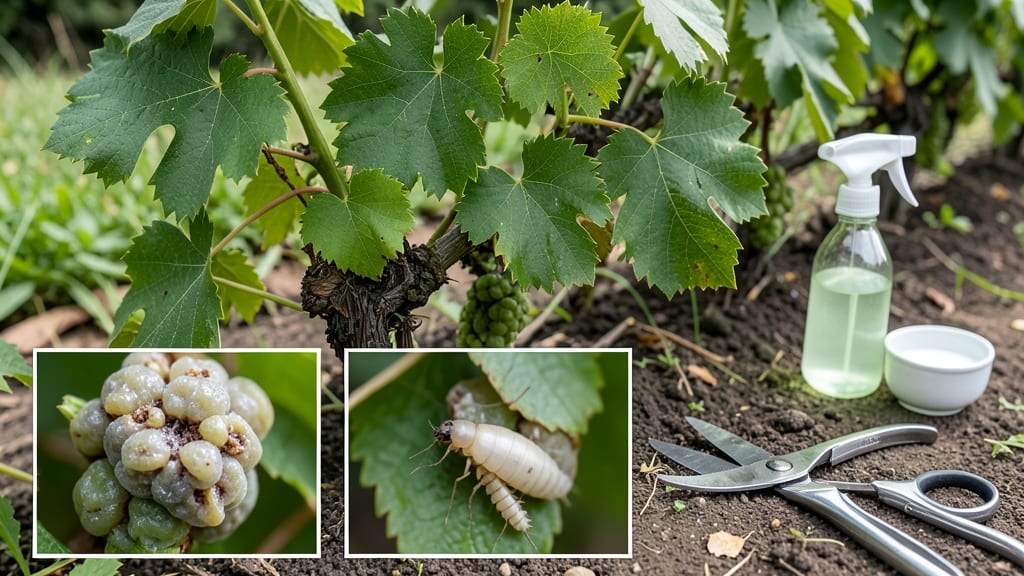
Those unsightly grape leaf galls are ruining your vines—and they’re not just cosmetic. 🌿 I’ve spent years battling these wasp-induced bumps, and I’ll show you how to remove them organically without harming your plants or future harvests.
The galls start as tiny swellings on leaves, then grow into hard, woody lumps that distort the foliage. Worse, they signal a wasp larvae infestation that weakens the vine over time. The good news?
You can prune them out, disrupt the wasp cycle, and restore your vines to healthy growth by late summer. By following these steps—timing your cuts right, cleaning up debris, and encouraging natural predators—you’ll see fewer galls next season.
Your vines will focus energy on fruit production instead of fighting off pests, and those leaves will finally look like they belong on a thriving plant. Works for both table grapes and wine grapes, and the methods scale from backyard vines to small commercial plantings.
Let’s get those leaves back in shape!
📚 In This Guide
- What you need
- Instructions
- Tips and common mistakes
- Wrapping up and next steps
What you need
- ● Pruning shears or sharp bypass pruners – 1 pair (sterilized with rubbing alcohol or bleach solution to prevent disease spread). Look for bypass blades for clean cuts.
- ● Heavy-duty gloves – 1 pair (nitrile or leather for protection against thorns and sap).
- ● Disposable pruning bags or bucket – 1-2 (for collecting galls and infected debris).
- ● Garden hose with adjustable nozzle – 1 (for rinsing leaves post-treatment).
- ● Organic insecticidal soap – 1 bottle (16-32 oz) (e.g., Safer® Brand or Dr. Bronner’s). Active ingredient: Potassium salts of fatty acids (7-10%).
- ● Neem oil (100% cold-pressed) – 1 bottle (16 oz) (for spraying; mix with water per label instructions).
- ○ Horticultural oil (dormant spray oil) – 1 gallon (optional, for preventive applications during dormant season).
- ● Magnifying glass – 1 (to inspect galls and identify early signs of infestation).
- ● Spray bottle (16 oz) – 1-2 (for targeted applications of neem oil or insecticidal soap).
- ● Compost bin or trash bag – 1 (for disposing of heavily infested leaves away from the garden).
- ○ Beneficial nematodes (Phasmarhabditis hermaphrodita) – 1-2 lbs (optional, for soil-dwelling gall wasp larvae; apply during cool, moist conditions).
- ● Copper spray (Bordeaux mixture) – 1 quart (for fungal prevention if galls are accompanied by mildew).
- ● ✅ Best time to act: Early morning or late evening (when temps are <65°F/18°C and humidity is high for better spray adhesion).
- ● ⚠️ Avoid treating if rain is forecasted within <24 hours (washes off sprays).
- ● 🌡️ Temperature check: Never apply neem oil or horticultural oil if temps are below <50°F (10°C) or above <90°F (32°C).
- ● 🚫 Do NOT use synthetic pesticides (e.g., malathion) near grapevines—they harm pollinators and beneficial insects.
How to remove grape leaf galls organically for vine health
Here's the straightforward, vine-safe approach I use to tackle leaf galls without harming your grapes.
🌿 Step 1: Identify and Assess the Damage
First, examine your vines for grape leaf galls—those distinctive, rounded growths on leaves caused by wasp larvae. They're usually ½ to 1 inch wide and appear as hard, raised bumps. I like to check leaves systematically, starting from the bottom of the vine and working upward. Healthy galls are firm but won't crumble when gently pressed.
Don't confuse galls with other growths like fungal spots or insect damage. Galls are typically smooth and have a distinct shape, while fungal issues often appear powdery or irregular. If you see more than 20% of leaves affected, you'll need to act quickly—this is when vines start showing stress.
✂️ Step 2: Prune Infested Leaves at the Right Time
Timing matters here. Remove galls when they're fully formed but before they release wasps in late summer. I target mid-to-late June in most climates. Grab sharp pruning shears and snip the entire leaf containing the gall—don't just cut the gall off, as this can spread sap and attract more pests.
Drop the pruned leaves directly into a sealed plastic bag. You'll want to dispose of them in the trash, not compost, since the wasp larvae can survive decomposition. Wear gloves if you're sensitive to plant sap—the juice from grape leaves can be mildly irritating.
💧 Step 3: Apply Organic Sprays for Prevention
After pruning, give your vines a protective boost with a neem oil spray (1 tablespoon per quart of water with a drop of dish soap as an emulsifier). Spray both the upper and lower leaf surfaces, focusing on new growth areas. Neem oil disrupts the wasp life cycle without harming beneficial insects.
For added protection, I mix in 1 tablespoon of horticultural oil per gallon of water and apply it every 7-10 days during the growing season. The oil smothers any remaining eggs or larvae. Always spray in the early morning or late evening to avoid burning leaves in direct sunlight.
☀️ Step 4: Monitor and Maintain Vine Health
Healthy vines resist galls better. After treatment, ensure your grapes get 6-8 hours of sunlight daily and water deeply at the base 1-2 times per week during dry spells. I mulch around the base with 2-3 inches of organic mulch to retain moisture and regulate soil temperature.
Keep an eye out for new galls forming on fresh leaves. If you spot any, remove them immediately before they mature. Regular inspections every 2 weeks during the growing season help catch problems early. Strong vines with proper care rarely develop severe gall infestations.
🌱 Step 5: Encourage Beneficial Insects
Ladybugs and lacewings are natural predators of the wasps that cause galls. Plant companion flowers like marigolds, alyssum, or dill near your vines to attract these beneficial insects. I place a few pots of these flowers at the base of my grape trellis—they bloom all season and provide constant food for predators.
You'll know beneficial insects are doing their job when you see them actively patrolling your vines. Avoid using broad-spectrum pesticides, as they'll kill these helpful allies along with pests. A healthy ecosystem in your garden is your best defense against grape leaf galls.
Tips & tricks for managing grape leaf galls effectively
These practical insights will help you tackle grape leaf galls like a seasoned gardener—keeping your vines thriving without harsh chemicals.
Timing is Everything: In Step 2, when you're targeting mid-to-late June for pruning, don't wait until you see new galls forming on fresh leaves. The key window is when galls are fully developed but before wasps emerge. I've found that checking vines every 7-10 days starting in early June helps me catch the perfect moment—when galls are firm but haven't yet released pests. This prevents the wasp life cycle from continuing.
Visual Cues for Early Detection: When you're examining leaves in Step 1, look for subtle signs beyond just the galls themselves. New galls often appear as small, pale bumps that gradually darken. I also watch for tiny holes in leaves—these are exit points for emerging wasps. Catching these early gives you more time to act before damage spreads. The earlier you identify affected leaves, the less stress on your vine.
Spray Application Technique: For Step 3's neem oil spray, focus on thorough coverage but avoid oversaturating leaves. I use a handheld sprayer with a fine mist setting to reach both leaf surfaces completely. The key is to apply until the solution just begins to drip off—this ensures good coverage without creating a soggy environment that could promote fungal growth. Remember to spray in early morning or late evening to prevent leaf burn from sunlight.
Companion Plant Placement: When encouraging beneficial insects in Step 5, position your companion flowers strategically. Place them within 3-4 feet of your grape vines so predators can easily patrol between the two. I've noticed ladybugs and lacewings are particularly effective when they have both food sources (the flowers) and hunting grounds (your grape leaves) readily available. This creates a natural pest control system that works year-round.
Pro Tips for Grape Leaf Galls
- These practical insights will help you tackle grape leaf galls like a seasoned gardener—keeping your vines thriving without harsh chemicals.
- Timing is Everything: In Step 2, when you're targeting mid-to-late June for pruning, don't wait until you see new galls forming on fresh leaves.
- Visual Cues for Early Detection: When you're examining leaves in Step 1, look for subtle signs beyond just the galls themselves.
Frequently asked questions
Got questions about grape leaf galls? You’re not alone!
Here are answers to the most common concerns—from identification to organic fixes—so you can keep your vines thriving without harsh chemicals.
What do grape leaf galls look like, and how do I confirm it’s the issue?
Grape leaf galls appear as wart-like growths or pustule clusters on leaf surfaces, often yellowish or greenish. They’re caused by midge larvae (not a fungus or bacteria). Compare them to photos online or gently slice one open—if you see tiny white larvae inside, it’s a gall. Pro tip: Check the underside of leaves first!
When is the best time to remove grape leaf galls for maximum effectiveness?
Act early—remove galls as soon as you spot them, ideally in spring (April–May) when larvae are young and vulnerable. By June, they’ll have matured, making removal less impactful. Fall cleanup (post-harvest) is also key to reduce overwintering pests. Tip: Prune before midges lay eggs in June!
Can I use neem oil or other organic sprays to prevent grape leaf galls?
Yes! Neem oil (1–2% solution) or kaolin clay can deter midges when sprayed weekly during peak flight (May–June). For extra defense, horticultural oil in dormant season smothers overwintering eggs. Warning: Avoid sprays during bloom—wait until flowers fall to protect pollinators.
Will removing grape leaf galls affect my grape harvest or vine health long-term?
No—early removal actually boosts yield by reducing stress on vines. Galls drain nutrients, so pruning them prevents leaf drop and improves fruit quality. Over time, consistent gall control strengthens vines, making them more resilient to pests. Pro tip: Pair removal with balanced fertilization for faster recovery!
What’s an alternative if I can’t remove galls manually due to scale or vine fragility?
Try biological controls like parasitic wasps (e.g., Aphidius colemani) or beneficial nematodes (Steinernema feltiae) to target midge larvae in soil. For large vines, high-pressure water blasting (gentle setting!) can dislodge galls. Last resort: Row covers in spring block midges entirely.
How do I know if my grape leaf galls are severe enough to warrant professional help?
Seek help if 50%+ of leaves are galled, or if vines show wilting, stunted growth, or excessive leaf drop. A local cooperative extension office can test for midge populations or recommend targeted organic treatments. Red flag: If galls appear every year despite your efforts, the midge colony may be established.
Wrapping up and next steps
Grape leaf galls may seem like a frustrating challenge, but with the right organic methods—like pruning, neem oil applications, and cultural practices—you can restore your vines to health without harsh chemicals. 🌱 Your efforts will pay off in stronger, more resilient plants and a thriving harvest! Ready to take action?
🌿 Next Steps:
- Monitor regularly: Check your vines weekly for early signs of galls.
- Experiment with remedies: Try a few organic methods to see what works best for your climate.
- Share your success: Join gardening communities to swap tips and inspire others!