
How To
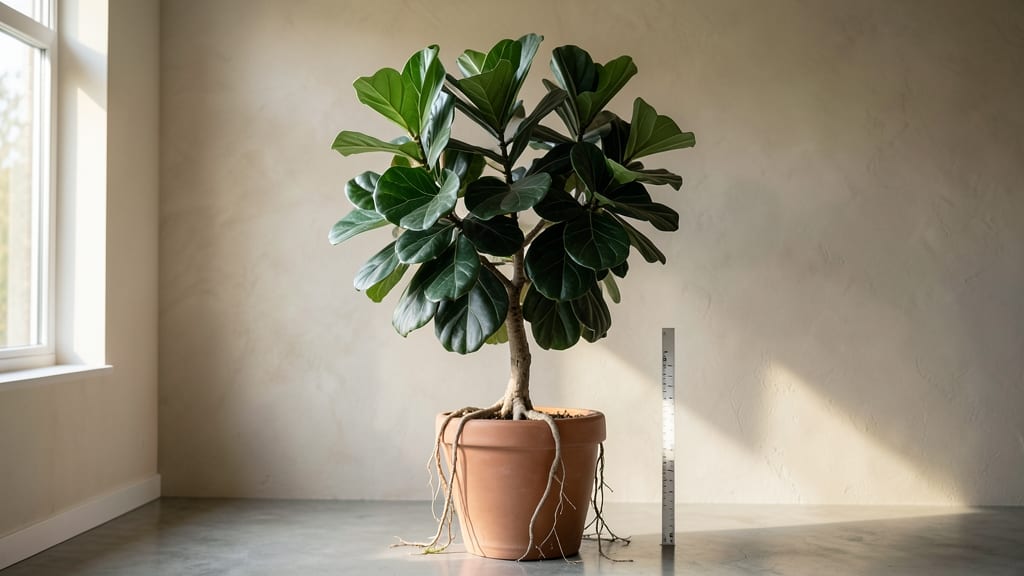
A fiddle leaf fig 🌿 grows between 6 and 10 feet tall indoors with the right care, but many plant owners underestimate how quickly it can reach for the ceiling.
Picture this: You bring home a tiny fiddle leaf fig as a tabletop statement piece, and by year three, it’s towering over your couch. That’s not a myth—it’s math. Without pruning or space planning, these tropical beauties stretch toward light, sometimes growing 12 inches a year in their prime.
But here’s the good news: You can control its height with smart pruning, the right pot size, and a little strategic placement. Whether you want a floor-filling centerpiece or a compact accent plant, the key lies in understanding its growth habits and giving it what it needs.
In this guide, I’ll break down the mature height ranges, how to read your plant’s growth signals, and the simplest tricks to keep it at your ideal height—without sacrificing those stunning leaves.


Fiddle leaf fig mature height: how tall do they grow indoors vs. outdoors?
The fiddle leaf fig (Ficus lyrata) is a showstopper in any space, but its mature height can vary wildly depending on where you grow it. Indoors, these plants typically reach 5 to 10 feet tall, while outdoors, they can soar to 10 to 15 feet with optimal conditions.
Understanding these differences helps you plan for its long-term care and space needs. Whether you're dreaming of a floor-to-ceiling statement plant or need a more manageable size, knowing the growth potential is key to keeping your fiddle leaf fig happy—and your home harmonious.
Your fiddle leaf fig’s height isn’t just about genetics; it’s heavily influenced by light exposure, pruning habits, and container size. For example, a plant basking in bright, indirect light will grow taller faster than one tucked in a dim corner.
Meanwhile, regular pruning can keep it compact or encourage bushier growth. Let’s break down the specifics so you can tailor your care to your space and goals.
Here’s a quick comparison to set expectations: A standard fiddle leaf fig indoors will often hit 8 feet in 5–7 years, while an outdoor specimen in ideal conditions can reach 12 feet in the same timeframe.
If you’re working with limited ceiling height, don’t worry—dwarf varieties aren’t common, but strategic pruning can mimic their effect. Let’s dive into the details to help you visualize and manage your plant’s growth trajectory.
| Factor | Indoor Growth (5–10 ft) | Outdoor Growth (10–15 ft) |
|---|---|---|
| Light Exposure | Bright, indirect light (6+ hours/day) | Full sun to partial shade (6+ hours/day) |
| Container Size | Pot-bound slows growth; 12–18" diameter ideal | Ground planting or large containers (20"+ diameter) |
| Pruning Frequency | Annual pruning to control height | Minimal pruning; natural growth encouraged |
| Growth Rate (Year 1–3) | 6–12 inches/year (slower in winter) | 12–24 inches/year (faster with warm climate) |
| Mature Height Range | 5–10 feet (varies by care) | 10–15 feet (taller in tropical climates) |
One of the biggest misconceptions about fiddle leaf figs is that they grow at the same rate indoors and outdoors. In reality, outdoor plants often outpace their indoor counterparts by nearly 50% due to better light, humidity, and space.
For example, a fiddle leaf fig grown outdoors in USDA Zone 10 or higher might hit 12 feet in 5 years, while an identical plant indoors in a small apartment might only reach 6 feet in the same time.
This discrepancy is why many plant owners opt to start with a smaller variety or plan for regular pruning if ceiling space is limited.
If you’re wondering how to manage your fiddle leaf fig’s height, start by assessing your space. A 10-foot ceiling might feel like plenty, but a fiddle leaf fig can grow 2–3 feet per year under ideal conditions.
To keep it in check, prune in late winter or early spring before new growth begins. Use clean, sharp pruners to cut just above a leaf node, and consider propagating the cuttings to share with friends or expand your collection.
This not only controls height but also encourages a fuller, bushier plant.
For those with outdoor growing space, your fiddle leaf fig will thrive in warm, humid climates like Florida or California, where it can grow taller and faster than in cooler regions.
If you live in a Zone 9 or lower, treat it as a tropical houseplant during winter, bringing it indoors before temperatures drop below 50°F.
Outdoor plants may also need winter protection, like a thick mulch layer or a move to a sheltered patio, to prevent cold damage that could stunt growth.
Real-world examples show just how adaptable these plants can be. Take Sarah from Miami, who grew her fiddle leaf fig outdoors in a large ceramic pot and watched it reach 12 feet in 4 years.
Meanwhile, Mark in Chicago kept his indoors near a south-facing window and saw only 5 feet of growth in 5 years. The difference? Light intensity, temperature, and container size.
These factors aren’t just details—they’re the keys to unlocking your plant’s full potential or keeping it at a manageable height.
If you’re concerned about your fiddle leaf fig becoming a ceiling hazard, don’t despair. Even if you don’t have a dwarf variety, you can train it to grow horizontally by pruning the top and allowing lower branches to fill out.
This technique, called pollarding, is popular among plant enthusiasts and can transform a towering tree into a lush, bushy statement piece. It’s a great way to enjoy your fiddle leaf fig’s stunning foliage without sacrificing your home’s vertical space.
Lastly, remember that patience is key when it comes to fiddle leaf figs. These plants grow slowly in their early years but can have growth spurts once they’re established. Monitor your plant’s progress, adjust your care as needed, and don’t hesitate to ask for advice from fellow plant lovers.
With the right approach, your fiddle leaf fig can be the perfect blend of height, drama, and manageability—no matter where you grow it.
🌿
Fiddle leaf fig growth rate: how fast do they grow per year?
Your fiddle leaf fig (Ficus lyrata) may start as a modest houseplant, but its growth rate can surprise you—especially when given the right conditions. Young plants typically grow 6–12 inches per year, while mature specimens slow to 3–6 inches annually.
This tropical beauty thrives on consistency, so understanding its seasonal rhythms helps you predict—and even speed up—its progress.
Growth isn’t steady year-round. In spring and summer, your fiddle leaf fig enters its prime, with leaves unfurling rapidly and stems elongating. During fall and winter, growth slows as the plant conserves energy.
With ideal care—like bright indirect light and moderate humidity—you’ll see those iconic fiddle-shaped leaves emerge faster, turning your plant into a lush centerpiece.
🌱 Fiddle Leaf Fig Growth Myths vs. Facts
- 🔹 Myth: "They grow 2 feet per year." Fact: Young plants max out at 12 inches/year; mature growth slows to 3–6 inches.
- 🔹 Myth: "Outdoor fiddle leaf figs grow faster." Fact: Outdoors, they may reach 10–15 ft, but indoor growth is slower due to limited light.
- 🔹 Myth: "Big leaves = fast growth." Fact: Leaf size reflects maturity, not speed. Slow, steady growth yields healthier leaves.
- 🔹 Myth: "Fertilizer = instant growth." Fact: Over-fertilizing burns roots. Use balanced 10-10-10 in spring/summer only.
- 🔹 Myth: "They stop growing after 5 years." Fact: With care, they can grow for decades, just slower. Pruning rejuvenates growth.
To accelerate growth, focus on three key factors: light, humidity, and fertilizer. Place your plant near an east or west window for 6+ hours of bright indirect light daily.
If your home is dry, use a pebble tray or humidifier to mimic its tropical habitat—low humidity causes leaf drop and stunted growth. Feed your fiddle leaf fig with a balanced fertilizer (like 10-10-10) every 6–8 weeks during spring and summer.
Seasonal adjustments are crucial. In spring, increase watering and resume fertilizing to kickstart growth. By summer, monitor soil moisture closely—overwatering leads to root rot, which halts growth entirely.
In fall, reduce feeding and watering slightly to prepare for dormancy. Winter is the time to let your plant rest; avoid fertilizing and only water when the top 2 inches of soil dry out.
Patience is key with fiddle leaf figs. While they may not grow as fast as some houseplants, their slow-and-steady approach ensures a sturdy, long-lived specimen.
With the right care, your plant can reach its mature height of 6–10 feet over 5–10 years—making it a rewarding, long-term investment for your home decor.
Pro tip: Rotate your plant quarterly to ensure even growth. Uneven light exposure leads to lopsided growth or leggy stems. A little extra attention now means a fuller, healthier fiddle leaf fig in the years ahead. 🌿