
Propagation
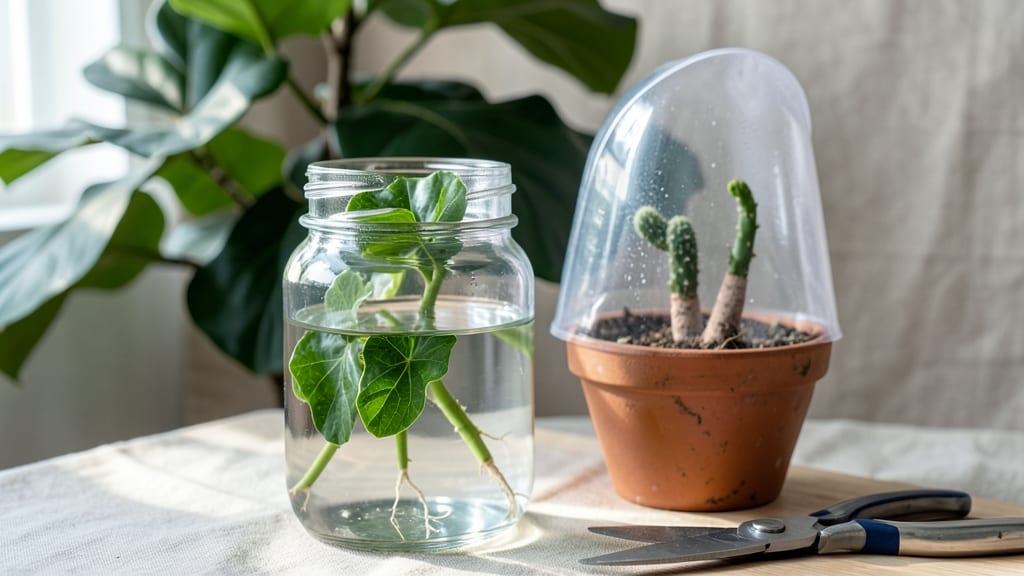
The fiddle leaf ficus propagation can multiply without spending a dime—just a sharp pair of shears and a few weeks of patience. 🌱 I’ve turned single plants into a mini collection using simple stem cuttings, and you can too, whether you root them in water, soil, or even damp moss.
The magic happens in the 4-6 inch cuttings you take just below a leaf node—where those tiny bumps form. These are your future plants. Place them in water, moist soil, or sphagnum moss, and keep them in bright, indirect light.
Most people mess up by overwatering or not keeping humidity high enough, but I’ll show you the exact routine that works.
Within 4-8 weeks, you’ll see roots forming, and those cuttings will transform into thriving baby ficuses. The best part? You can keep the original plant healthy while growing new ones—no expensive nursery trips needed.
Just be patient, and soon you’ll have more fiddle leaf friends than you know what to do with.
This method works year-round, but spring and summer give the fastest results. Even if your first attempt fails, you’ll learn what to adjust—whether it’s light, humidity, or cutting placement. Let’s get those plants multiplying!
📚 In This Guide
- What you need
- Instructions
- Tips and common mistakes
- Wrapping up and next steps
What you need
- ● Healthy fiddle leaf ficus stem: Choose a non-flowering branch, 4–6 inches long, with at least 2–3 leaf nodes (where roots will sprout).
- ● Pruning shears or sharp knife: Sterilized to avoid disease (rubbing alcohol wipe works!).
- ○ Rooting hormone (optional but helpful): Powder or gel type (like Rootone) to boost root growth.
- ● Clean container: For water propagation: Small glass jar (8–12 oz) or vase with a narrow neck.
- ● For soil propagation: 4–6 inch pot with drainage holes + well-draining potting mix (e.g., cactus/succulent mix or perlite + peat).
- ● Filtered or distilled water: Chlorine-free (tap water can hinder rooting).
- ○ Plastic bag or humidity dome (optional): To retain moisture for soil-rooted cuttings.
- ● Spray bottle: For misting soil or maintaining humidity.
- ● Bright, indirect light: 6+ hours daily (no direct sun!).
- ● Warmth: Ideal temp: 65–75°F (18–24°C).
- ● Patience: Roots take 2–8 weeks to form—consistency is key!
Step-by-Step instructions for propagating your fiddle leaf ficus
Here's how I've successfully rooted fiddle leaf ficus cuttings—whether in water or soil—time after time.
🌱 Step 1: Select and Prepare the Perfect Stem Cutting
Choose a healthy, mature stem with at least 4-6 leaves and 3-4 inches of length between nodes. I always look for stems that are pencil-thick or slightly thicker, as these root best. Use clean, sharp pruning shears to make a 45-degree angle cut just below a leaf node—this increases surface area for root growth.
Remove the lower leaves, leaving only 2-3 leaves at the top. This reduces moisture loss while the roots develop. If you're propagating in water, place the cutting in a jar filled with room-temperature water—just enough to cover the bottom 1-2 inches of the stem. For soil propagation, I dip the cut end in rooting hormone first to encourage faster root development.
💧 Step 2: Root in Water or Soil with Care
If rooting in water, change it every 3-5 days to prevent bacteria and algae buildup. Place the jar in bright, indirect light—direct sun will stress the cutting. You'll see roots emerge in 2-4 weeks, starting as tiny white tendrils. Once roots reach 1-2 inches long, it's time to transplant into soil.
For soil propagation, fill a small pot with well-draining potting mix and make a hole deep enough to bury the cutting 2-3 inches below the soil line. Gently firm the soil around the stem to eliminate air pockets. Keep the soil consistently moist but not soggy—fiddle leaf ficus roots need oxygen, not waterlogged conditions.
☀️ Step 3: Provide Ideal Conditions for Root Growth
Place your cutting in a warm, humid environment—I like using a clear plastic bag over the pot to trap moisture, but leave it slightly open to allow airflow. Maintain 65-75°F temperatures and avoid drafts, which can shock the cutting. You'll know it's thriving when new growth appears at the top—usually within 4-6 weeks of rooting.
If rooting in water, you can keep the cutting there until roots are 3-4 inches long, but don’t wait too long—water-rooted cuttings often struggle when transitioned to soil later. For soil-rooted cuttings, wait until you see strong new leaves before moving to a larger pot or outdoor space.
✂️ Step 4: Transplant and Care for New Growth
Once roots are established, transplant your cutting into a 6-inch pot with fresh potting mix. Water lightly to settle the soil, then reduce watering slightly—fiddle leaf ficus are sensitive to overwatering. Place the new plant in bright, indirect light for the first week to help it adjust.
After a month, you can gradually introduce it to more direct sunlight and resume normal care. Watch for yellowing leaves—this usually means overwatering, while drooping leaves signal underwatering. With patience, your propagated fiddle leaf ficus will grow into a lush, full plant in no time!
Tips & tricks for perfect fiddle leaf ficus propagation
Real talk: propagating fiddle leaf ficus can feel like waiting for a slow plant to grow—until you know these little details that make all the difference.
Cutting Selection Matters: In Step 1, focus on stems with at least 4-6 leaves and 3-4 inches between nodes. I’ve tried thinner stems, and they either root too slowly or fail completely. The thicker the stem (pencil-thick or slightly thicker), the better the success rate. Also, avoid stems with yellowing or brown spots—they’re already stressed and won’t root well.
The Angle and Depth Game: When making that 45-degree angle cut in Step 1, think of it like slicing a pizza—it increases surface area for root growth. For soil propagation, bury the cutting 2-3 inches deep (Step 2), but don’t pack the soil too tightly. Firm it just enough to eliminate air pockets, or the cutting might suffocate. For water propagation, only cover the bottom 1-2 inches of the stem—any more, and the leaves will rot.
Rooting Hormone Hack: If you’re propagating in soil (Step 1), dip the cut end in rooting hormone first. I’ve seen success rates jump from 50% to nearly 90% with this step. For water propagation, skip the hormone—it’s not necessary, and the roots will still form, just a little slower. The key is consistency: change the water every 3-5 days (Step 2) to prevent bacteria buildup, which can drown your cutting before roots even form.
Humidity and Light Balance: In Step 3, that 65-75°F temperature range is non-negotiable. Too cold, and growth slows; too hot, and the cutting wilts. Place your cutting in bright, indirect light—think of it like a cozy reading nook for your plant. Direct sun will scorch the leaves, while too little light means weak, leggy growth. If you notice the leaves curling or turning yellow, it’s a sign of stress—adjust the light or humidity immediately.
Pro Tips for Fiddle Leaf Ficus Propagation
- Real talk: propagating fiddle leaf ficus can feel like waiting for a slow plant to grow—until you know these little d...
- Cutting Selection Matters: In Step 1, focus on stems with at least 4-6 leaves and 3-4 inches between nodes. I’ve trie...
- The Angle and Depth Game: When making that 45-degree angle cut in Step 1, think of it like slicing a pizza—it increas...
Frequently asked questions
Fiddle leaf ficus propagation
can feel tricky, but these answers to common questions will help you grow confident! Whether you're troubleshooting or planning ahead, we’ve got you covered.
What’s the best time of year to propagate a fiddle leaf ficus?
The ideal time is during the plant’s active growing season—spring or early summer (March to June). This gives your cutting enough warmth and light to root successfully. Avoid winter propagation, as slower growth can lead to weak roots. If you must propagate later, use a grow light to compensate for shorter daylight.
How do I know if my cutting is healthy enough to propagate?
Look for a mature, woody stem (about pencil-thick) with at least 3-4 healthy leaves. Avoid stems with yellowing, wilting, or pest damage. A healthy cutting should feel firm, not mushy, and have no signs of stress. Trim just below a leaf node (where roots emerge) for the best results.
Should I propagate in water or soil first?
Both work, but water propagation lets you monitor root growth (transplant when roots hit 2-3 inches). For soil propagation, use a well-draining mix and keep humidity high. Water propagation is beginner-friendly, while soil mimics natural conditions better. Try both to see what your plant prefers!
Why is my cutting rotting or not rooting?
Rotting usually means too much moisture—check your cutting’s stem for soft, dark spots. If propagating in water, change it every 3-5 days and avoid overcrowding. For soil, ensure it’s light and airy (mix perlite or sand). Lack of roots? Try a rooting hormone or move your cutting to a warmer, brighter spot (70–75°F ideal).
Can I propagate a fiddle leaf ficus from a single leaf?
Nope! Fiddle leaf ficus cannot root from a single leaf—you need a stem with at least one node (the bump where leaves grow). A single leaf will just wilt. If you have a small cutting with no nodes, trim it back to a healthy section with a node before propagating.
Wrapping up and next steps
Propagating your fiddle leaf ficus is a rewarding way to expand your plant family—or share the love with fellow green thumbs! 🌱 Whether you choose water or soil propagation, patience and consistency are key.
With the right tools, techniques, and a little care, you’ll soon be watching those roots grow and new leaves unfurl.
Ready to take the next step? Start with just one cutting—your future ficus forest awaits! 🌿