
How To
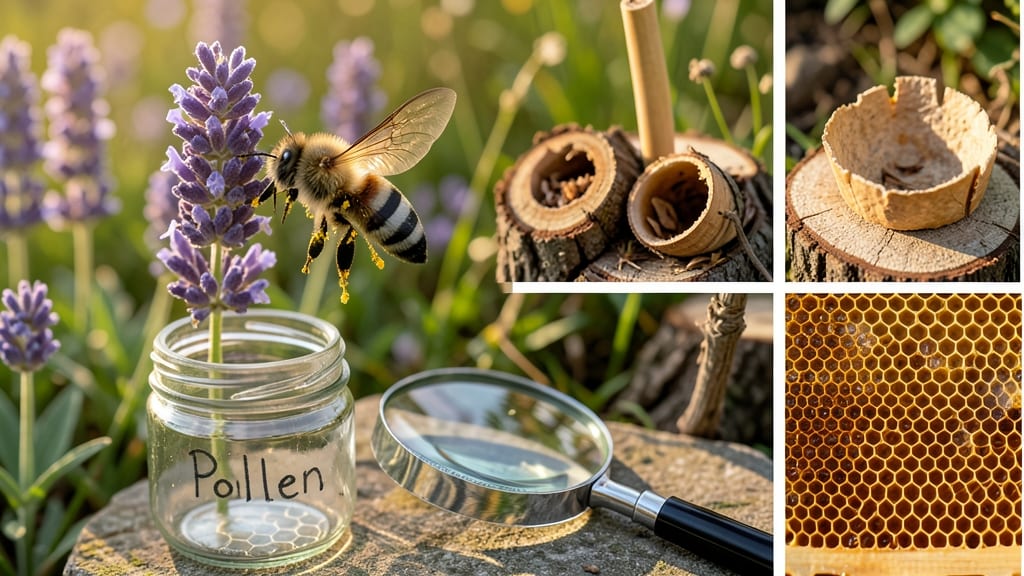
Leaf cutter bees do not make honey; instead, they collect pollen and nectar to feed their larvae in nests built from chewed plant leaves, often using soft plant materials like roses or fruit trees.
Leaf cutter bees are often mistaken for honey producers because of their name, but their role in nature is entirely different. 🌿 These solitary bees focus on creating specialized nests by cutting circular sections from leaves, which they use to house their offspring.
The pollen and nectar they gather serve as a protein-rich food source for their larvae, rather than being stored as honey. Their nesting habits make them excellent pollinators for many plants, including vegetables and fruits.
Unlike honeybees, leaf cutter bees don't live in large colonies or produce honeycomb. Instead, each female builds her own nest, often in pre-existing cavities or even rolled leaves.
This unique behavior helps explain why they're so beneficial for gardens—they're hardworking pollinators that don't require the same level of management as honeybee hives.
💡 In This Article
- How Leaf Cutter Bees Build Their Unique Nests
- Benefits of Leaf Cutter Bees for Pollination
How leaf cutter bees build their unique nests
Leaf cutter bees construct their nests using a fascinating process that begins with precise leaf-cutting. Each female bee uses her mandibles to slice perfectly round sections—about 1/4 to 1/2 inch in diameter—from soft plant leaves like roses, fruit trees, or raspberry canes.
The texture of the leaf matters; they prefer tender, flexible growth that yields clean cuts without tearing. 🌿 This contrasts sharply with honeybees, which build hexagonal wax combs in communal hives.
The cut leaf sections are then folded into tubular shapes, forming individual brood cells where each egg will develop. Inside each cell, the mother bee deposits a mixture of pollen and nectar—this "bee bread" provides protein and energy for the larvae as they grow.
A single female may create 5-10 nests in her lifetime, often in pre-existing cavities like hollow stems or even rolled leaves. The pollen supply is carefully measured; studies show they collect about 0.001 grams per cell, enough to sustain a larva through metamorphosis.
What makes their nests remarkable is the engineering behind them. Unlike honeybee hives that require thousands of workers, leaf cutter bees operate entirely alone. Each nest is a self-contained unit, with the mother bee sealing the entrance after laying an egg.
This solitary lifestyle eliminates competition for resources, allowing them to thrive in smaller spaces. The leaf material they use is naturally antimicrobial, preventing mold growth in their nests—a clever adaptation that ensures their larvae's survival.
You might notice their work in your garden as small, precise holes in leaves or stems. These bees favor plants like alfalfa, lavender, and even some vegetables, which is why gardeners often find their leaf-cutting activity beneficial despite the minor damage.
The contrast with honeybees couldn't be greater: while honeybees create complex social structures, leaf cutter bees focus on individual efficiency, using plant materials that are readily available in their environment.
Temperature plays a crucial role in their nesting success. Leaf cutter bees are most active during 70-85°F days, which is why they're commonly found in gardens during late spring and summer. The warmth helps soften plant leaves, making them easier to cut, while also accelerating the development of their larvae.
This precise environmental dependence explains why they're rarely seen in colder climates or during winter months.
One fascinating detail is how they select nesting sites. Female bees often return to the same location year after year, creating what scientists call "nest site fidelity." This behavior helps them maximize efficiency, as they already know which cavities or plant materials will work best.
The result is a highly organized nesting system that requires minimal energy compared to the communal efforts of honeybee colonies.
Understanding their nesting habits helps explain why they're such effective pollinators.
As they move between plants to gather pollen, they transfer pollen more efficiently than many other bee species, making them invaluable to both wild and cultivated plants. 🌱 Their solitary nature also means they don't compete with honeybees for resources, creating a balanced ecosystem where both types of bees can thrive together.